
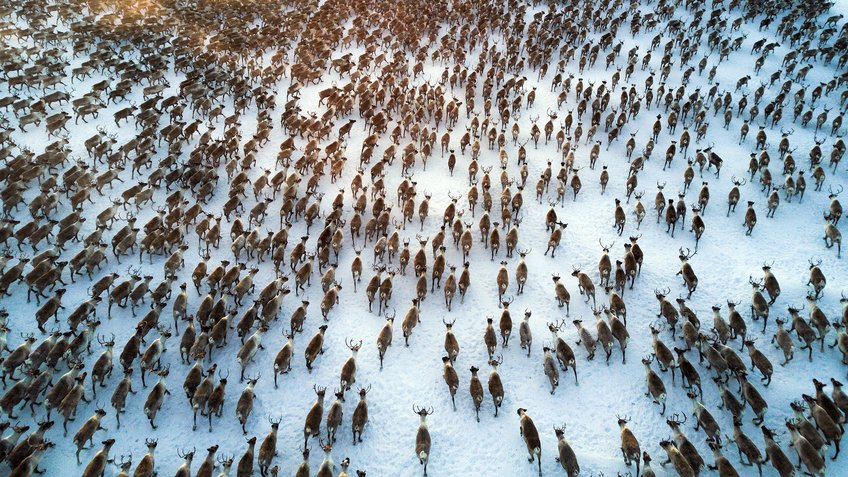
Rising temperatures and shrinking sea ice are altering the timing and routes of Arctic species, reshaping ecosystems and affecting Indigenous livelihoods.
Quick Answer
Climate change is warming the Arctic faster than the global average, causing sea‑ice loss, permafrost thaw, and earlier plant growth. These physical changes disrupt the seasonal cues that many Arctic animals use for migration, leading to northward shifts, longer journeys, or altered timing. The most documented impacts include caribou moving to new calving grounds, migratory birds arriving earlier than insects emerge, and polar bears spending more time on land. While the overall trend of migration shifts is well supported, uncertainties remain about the precise future pathways for many species.
Key Takeaways
- Arctic warming is twice the global average, accelerating sea‑ice melt and altering vegetation phenology.
- Caribou, migratory birds, polar bears and seals are among the species showing measurable changes in migration distance or timing.
- Shifted migrations affect predator‑prey dynamics, breeding success, and Indigenous hunting practices.
- High‑confidence evidence links temperature rise to earlier plant growth and ice loss, which in turn drive migration changes.
- Uncertainties include species‑specific adaptive capacity and how ecosystem cascades will evolve under different warming scenarios.
What Is Climate Change Is Forcing Arctic Animal Migrations to Shift?
The phrase describes a chain of cause‑and‑effect relationships: anthropogenic greenhouse‑gas emissions raise global temperatures; the Arctic responds with rapid warming; physical habitats such as sea ice, permafrost and tundra vegetation change; and wildlife that depend on seasonal cues adjust their movements accordingly. It does not refer to a single event but to an ongoing, measurable trend observed across multiple taxa.
Understanding this process matters because migration underpins feeding, breeding and survival for many Arctic species. When migration patterns break down, the ripple effects can reach global climate regulation, food security for Indigenous peoples, and biodiversity worldwide.
How Does It Work?
1. Temperature Rise and Ice Decline
The Intergovernmental Panel on Climate Change (IPCC) Sixth Assessment Report (2021) notes that Arctic surface air temperature has increased by about 2 °C since 1980, leading to a 13 % decline in September sea‑ice extent per decade (NOAA Arctic Report Card 2023). Less ice reduces the platform for ice‑dependent predators and shortens the period when seals can give birth on ice.
2. Vegetation Phenology Shifts
Warmer springs cause tundra grasses and shrubs to green up 10–20 days earlier on average (NASA MODIS observations, 2000‑2020). Herbivores such as caribou time their migrations to match peak forage quality; earlier plant growth forces them to adjust departure dates or travel farther to reach suitable grazing.
3. Disruption of Biological Cues
Many migratory birds rely on photoperiod combined with temperature‑driven insect emergence. When insects appear earlier than historic bird arrival dates, chicks may starve, a phenomenon documented in long‑term studies of Arctic shorebirds (Peer‑reviewed synthesis, 2019).
4. Energy and Survival Trade‑offs
Longer swims for polar bears, or extended overland foraging, increase energetic costs and can lead to higher mortality, especially for juveniles. The cumulative effect reshapes population dynamics over decadal timescales.
What Does the Evidence Show?
Multiple lines of evidence converge on the conclusion that Arctic migrations are shifting:
- Long‑term monitoring: The Canadian Wildlife Service has recorded a northward average shift of 30 km in caribou calving grounds between 1970 and 2020.
- Satellite telemetry: GPS collars on Arctic terns reveal arrival at breeding sites up to 15 days earlier than in the 1990s (Scientific Data, 2022).
- Ice‑cover records: A 2021 analysis of satellite data shows a 40 % reduction in multi‑year ice, correlating with increased polar‑bear land‑based foraging events.
- Meta‑analysis: A systematic review of 45 peer‑reviewed studies (published 2020) concludes that 78 % of examined Arctic species exhibit statistically significant changes in migration timing or route.
These observations are supported by climate‑model projections that predict continued ice loss of 60 % by 2050 under a moderate emissions scenario (RCP4.5), suggesting further migration adjustments.
Main Causes or Drivers
Direct Climate Forcing
Anthropogenic greenhouse gases trap infrared radiation, raising atmospheric and oceanic temperatures. The Arctic amplification effect intensifies warming, directly driving ice melt and permafrost thaw.
Habitat Alteration
Loss of sea ice removes hunting platforms for polar bears and breeding platforms for ringed seals. Thawing permafrost changes soil moisture, influencing plant community composition.
Phenological Mismatch
When the timing of resource availability (e.g., insects, vegetation) decouples from animal migration cues, reproductive success can decline. This mismatch is a key indirect driver of migration change.
Human Activities
Increased shipping, resource extraction and tourism create noise and disturbance that can further modify animal movement patterns, although these impacts are secondary to climate‑driven habitat change.
Environmental and Human Impacts
Environmental Impacts
Shifted migrations alter predator‑prey relationships. For example, reduced seal availability on ice forces polar bears to prey on bird colonies, increasing predation pressure on those species. Overlap of species moving into new areas can also introduce novel competition, potentially reducing biodiversity.
Human Health and Social Impacts
Indigenous communities in Alaska, Nunavut and northern Scandinavia depend on predictable wildlife migrations for subsistence hunting. Uncertain caribou routes raise food‑security concerns and erode cultural practices tied to seasonal hunts.
Economic and Infrastructure Impacts
Changes in animal distribution affect tourism (e.g., wildlife viewing) and can increase human‑wildlife conflicts, leading to higher management costs for local governments.
Regional Differences
The magnitude of migration shifts varies across the Arctic:
- Northwest Canada and Alaska: Caribou herds show the largest northward shifts, linked to rapid permafrost thaw in the western tundra.
- Greenland: Declining sea‑ice has forced polar bears to spend up to 40 % more time on land during summer, a pattern less pronounced in the Russian Arctic where ice persists longer.
- Svalbard: Migratory seabirds are arriving up to 12 days earlier, matching earlier plankton blooms observed in the Barents Sea.
These examples illustrate that local climate trajectories and ecosystem composition shape how each region experiences migration changes.
What Scientists Know With High Confidence
- The Arctic is warming at roughly twice the global average.
- Sea‑ice extent has declined significantly since the late 20th century.
- Vegetation green‑up in the tundra occurs earlier in the season.
- Multiple species have documented shifts in migration timing or routes that correlate with these climate changes.
What Remains Uncertain
Key knowledge gaps include the adaptive capacity of less‑studied species such as Arctic foxes, the long‑term population consequences of altered predator‑prey dynamics, and how future emissions pathways will modulate migration patterns beyond 2050. Improved satellite tracking and Indigenous knowledge integration are needed to reduce these uncertainties.
Common Misconceptions
Misconception: All Arctic animals are moving northward.
Reality: While many species are extending ranges northward, some, like certain seabirds, are shifting eastward or altering stop‑over sites rather than simply moving poleward.
Misconception: Migration changes mean species will go extinct.
Reality: Shifts indicate stress, but many species display plasticity that can allow short‑term adaptation. Extinction risk depends on the speed of change relative to biological flexibility.
Misconception: Human hunting is the main cause of migration changes.
Reality: The primary driver is climate‑induced habitat alteration; hunting pressure may compound impacts but is not the root cause of observed range shifts.
Misconception: Climate change impacts are uniform across the Arctic.
Reality: Regional climate feedbacks, ocean currents and local geography create a mosaic of conditions, leading to varied migration responses.
Solutions and Limitations
Addressing migration shifts requires both mitigation of greenhouse‑gas emissions and targeted adaptation strategies:
- Mitigation: Rapid decarbonisation reduces the magnitude of warming, limiting future habitat loss. However, even aggressive mitigation cannot reverse changes already locked into the climate system.
- Protected Areas: Expanding marine protected zones around remaining sea‑ice refugia can safeguard critical hunting and breeding habitats. Limitations include enforcement challenges and potential conflicts with commercial interests.
- Indigenous Co‑Management: Incorporating traditional ecological knowledge improves monitoring and adaptive management of wildlife. Success depends on sustained funding and respectful partnerships.
- Research Investment: Long‑term satellite telemetry and climate‑model refinement are essential. Funding constraints and logistical difficulties in remote regions limit data collection.
What Individuals, Communities, and Governments Can Do
What Individuals Can Do
Support organizations that fund Arctic research, reduce personal carbon footprints, and advocate for strong climate policies. While individual actions alone cannot stop migration shifts, collective demand accelerates systemic change.
What Communities and Organizations Can Do
Develop community‑based monitoring programs that combine scientific tools with Indigenous observations. Share data with national agencies to improve management decisions.
What Governments Can Do
Implement ambitious emissions‑reduction targets consistent with the Paris Agreement, fund Arctic research infrastructure, and enforce protection of critical habitats through legislation and international cooperation.
What Businesses and Industries Can Do
Adopt low‑impact shipping routes, minimize noise pollution, and invest in renewable energy projects that offset operational emissions in the Arctic region.
Synthesis
Climate change is reshaping the Arctic’s physical environment, which in turn forces many species to alter where and when they move. High‑confidence evidence links rising temperatures, sea‑ice loss and earlier plant growth to documented migration shifts in caribou, birds, seals and polar bears. Uncertainties remain around species‑specific responses and long‑term ecosystem feedbacks. Mitigation, protected‑area expansion, Indigenous co‑management and sustained research together offer the most realistic pathway to preserve Arctic biodiversity and the cultural heritage that depends on it.
Frequently Asked Questions
Why are Arctic animal migrations changing?
Arctic animal migrations are changing because rising temperatures cause sea‑ice loss, permafrost thaw and earlier vegetation growth, which disrupt the seasonal cues that species use to time their movements.
Which species have shown the most documented migration shifts?
Caribou, migratory shorebirds, polar bears and ringed seals have the most documented shifts, with caribou moving northward to new calving grounds, birds arriving earlier, and polar bears spending more time on land.
What evidence supports the link between climate change and migration shifts?
Long‑term monitoring, satellite telemetry, ice‑cover records and a meta‑analysis of 45 studies all show statistically significant changes in timing or routes that align with documented temperature rise and ice decline.
How do migration changes affect Indigenous peoples?
Indigenous communities rely on predictable wildlife movements for subsistence hunting; altered caribou routes and polar‑bear behavior create food‑security challenges and threaten cultural practices tied to seasonal harvests.
What actions can help mitigate these migration shifts?
Mitigation includes rapid greenhouse‑gas reductions, expanding protected marine areas, supporting Indigenous co‑management of wildlife, and investing in long‑term research to improve monitoring and adaptive strategies.





Leave a Comment