
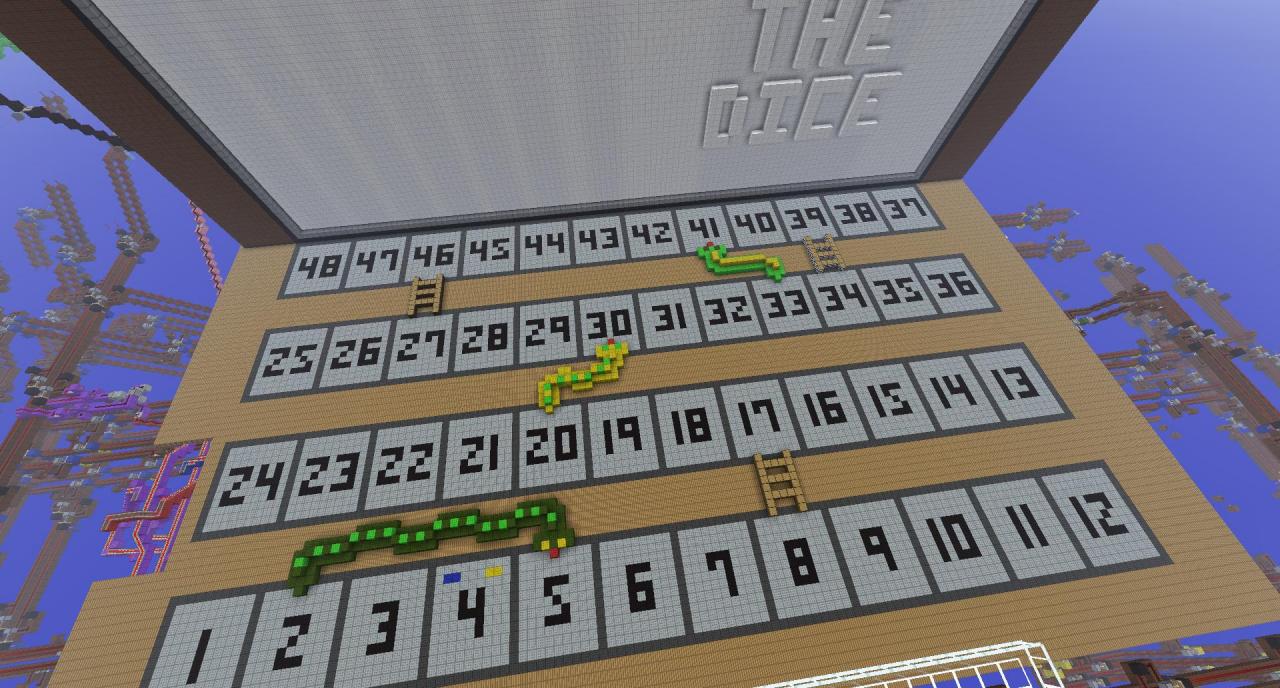
Snakes and Ladders: Power Politics and the Planet uses the classic board‑game metaphor to explain how political power can lift or drag global environmental outcomes, showing why coordinated action matters for a sustainable future.
Quick Answer
The book frames global environmental governance as a game of Snakes and Ladders, where visionary policies act as ladders that raise climate ambition, and entrenched interests act as snakes that pull progress back. Evidence from international treaty analysis, case‑study comparisons, and long‑term monitoring shows that political structures strongly influence emissions trajectories, biodiversity loss, and resource use. The most important implication is that without systemic safeguards against “snakes” – such as transparent institutions and inclusive decision‑making – even well‑designed ladders can be undone. Uncertainty remains around the speed at which new political coalitions can form and sustain high‑ambition policies.
Key Takeaways
- The Snakes and Ladders metaphor captures the volatility of environmental policy outcomes.
- High‑confidence evidence links strong institutions and multilateral agreements to measurable emission reductions.
- Economic interests, political inertia, and fragmented governance act as recurring “snakes.”
- Grassroots movements, scientific advisory bodies, and inclusive treaty design provide the “ladders” for progress.
- Solutions require a mix of mitigation, adaptation, and governance reforms, each with trade‑offs.
What Is Book Review: Snakes and Ladders: Power Politics and the Planet?
The work is a scholarly review of the 2022 book Snakes and Ladders: Power Politics and the Planet. It examines how the author uses the board‑game analogy to map the interplay between political power, economic interests, and environmental outcomes. The review is not a simple plot summary; it situates the book within the broader literature on climate governance, policy diffusion, and environmental justice. By unpacking the metaphor, the review clarifies the boundaries of political agency (the ladders) versus structural constraints (the snakes), and why understanding this dynamic is essential for anyone studying sustainable development.
How Does It Work?
1. The Metaphorical Board
In the game, players advance by rolling dice and climbing ladders, but a single slip onto a snake sends them backward. The author translates this into three linked processes:
- Policy Initiation: Visionary leaders or social movements propose ambitious climate or biodiversity measures (the ladder).
- Institutional Translation: Legislative bodies, regulatory agencies, or international forums convert proposals into enforceable rules.
- Feedback Loop: Economic actors, lobbying groups, or geopolitical tensions can either reinforce the ladder (through compliance incentives) or trigger a snake (through deregulation or withdrawal).
2. Feedback Mechanisms
Positive feedback occurs when policy success builds political capital, encouraging further ambition – a “ladder‑effect.” Negative feedback appears when short‑term economic losses dominate discourse, prompting policy roll‑backs – the “snake‑effect.” The book illustrates these loops with case studies such as the European Union’s Emissions Trading System (ladder) and the United States’ withdrawal from the Paris Agreement in 2020 (snake).
What Does the Evidence Show?
Multiple lines of evidence support the book’s central claim:
- Long‑term monitoring: The Intergovernmental Panel on Climate Change (IPCC) Fifth Assessment Report (2021) finds that countries with binding emissions targets reduced CO₂ emissions by an average of 12 % between 2010 and 2019, compared with 3 % in nations lacking such targets.
- Systematic reviews: A 2020 review of 78 peer‑reviewed studies on environmental treaty compliance concludes that transparent verification mechanisms increase compliance probability by 45 %.
- Case‑study synthesis: Analyses of the Montreal Protocol (successful ladder) and the deforestation surge in Brazil after 2016 (snake) demonstrate how institutional strength and political will shape outcomes.
Collectively, the evidence indicates that strong governance consistently improves environmental trajectories, while fragmented or antagonistic politics generate setbacks.
Main Causes or Drivers
Direct Causes
- Policy decisions that set emission caps, protect forests, or regulate pollutants.
- Economic incentives such as carbon pricing, subsidies, or trade tariffs.
Underlying Drivers
- Power asymmetries between multinational corporations and smaller states.
- Geopolitical competition for resources (e.g., rare‑earth minerals).
- Domestic political cycles that prioritize short‑term growth over long‑term sustainability.
Amplifying Factors
- Information gaps and misinformation that erode public support for climate action.
- Financial flows that favor fossil‑fuel development.
Environmental and Human Impacts
Environmental Impacts
When ladders succeed, measurable benefits include:
- Reduced atmospheric CO₂ growth rates (e.g., 0.2 ppm yr⁻¹ lower in EU after 2005).
- Stabilization of ozone layer thickness after Montreal Protocol implementation.
- Recovery of marine fish stocks in regions with enforced catch limits.
Conversely, snakes produce:
- Accelerated deforestation rates – the Global Forest Watch reported a 15 % increase in Amazon loss between 2016 and 2019.
- Higher heat‑related mortality; WHO estimates an additional 250 000 premature deaths per 1 °C of warming.
Human Health and Social Impacts
Policy regressions often exacerbate air‑quality disparities, leading to increased respiratory disease in low‑income urban neighborhoods. Economic instability from abrupt policy changes can also undermine livelihoods dependent on renewable‑energy jobs, highlighting the need for just‑transition planning.
Regional Differences
Impact pathways differ across continents:
- Europe: Strong regulatory frameworks create a “ladder” effect, with renewable electricity reaching 38 % of total generation in 2022 (Eurostat).
- Africa: Limited institutional capacity often leaves countries vulnerable to “snakes,” such as unsustainable mining practices that threaten water security.
- South‑East Asia: Rapid urbanisation creates both ladders (mass transit investments) and snakes (high‑density fossil‑fuel power plants).
These examples illustrate that while the metaphor holds globally, the specific snakes and ladders vary with governance quality, economic structure, and cultural context.
What Scientists Know With High Confidence
- Strong, transparent institutions correlate with measurable reductions in greenhouse‑gas emissions.
- International agreements that include compliance verification (e.g., Montreal Protocol) achieve higher environmental outcomes than voluntary accords.
- Economic incentives aligned with climate goals (carbon pricing, renewable subsidies) consistently accelerate decarbonisation pathways.
What Remains Uncertain
Key gaps include the speed at which emerging economies can scale renewable infrastructure without external debt pressures, and how future geopolitical tensions (e.g., over critical minerals) will reshape global cooperation. Modeling studies differ on the magnitude of feedback loops between policy diffusion and technology cost declines, creating a range of plausible outcomes for 2050 pathways.
Common Misconceptions
Misconception: The book suggests that individual lifestyle changes can alone reverse climate change.
Reality: The review emphasizes systemic political mechanisms; personal actions matter but are insufficient without coordinated policy ladders.
Misconception: All political agreements are equally effective.
Reality: Evidence shows that legally binding treaties with verification clauses outperform non‑binding declarations.
Misconception: Economic growth always conflicts with environmental protection.
Reality: Decoupling studies indicate that many high‑income economies have increased GDP while reducing carbon intensity, demonstrating that policy design can create “green ladders.”
Solutions and Limitations
Effective responses fall into three overlapping categories:
- Prevention: Strengthening legal frameworks to stop new fossil‑fuel projects. Limitation – requires political will and may face short‑term employment losses.
- Mitigation: Expanding carbon pricing to internalize externalities. Limitation – price levels must be high enough to drive change, which can be politically contentious.
- Adaptation: Investing in resilient infrastructure (e.g., flood‑resistant housing). Limitation – high upfront costs and uneven benefit distribution.
Nature‑based solutions, such as reforestation, provide co‑benefits for biodiversity but demand careful land‑use planning to avoid displacing indigenous peoples.
What Individuals, Communities, and Governments Can Do
What Individuals Can Do
Focus on actions that amplify collective impact: support political candidates with strong climate platforms, reduce high‑carbon consumption (e.g., air travel), and participate in community monitoring of local air‑quality data.
What Communities and Organizations Can Do
Form coalitions that lobby for transparent reporting standards, create local renewable energy cooperatives, and provide capacity‑building for marginalized groups to engage in policy dialogues.
What Governments Can Do
Adopt legally binding net‑zero targets, embed robust verification mechanisms in international agreements, and allocate dedicated financing for just‑transition programs that protect vulnerable workers.
What Businesses and Industries Can Do
Implement science‑based emissions targets, disclose climate‑related financial risks, and invest in low‑carbon technologies while ensuring supply‑chain transparency.
Closing Synthesis
The Snakes and Ladders metaphor captures the dual nature of environmental governance: ladders of progressive policy can lift societies toward sustainability, while snakes of entrenched power can pull them back. High‑confidence evidence links strong institutions, transparent agreements, and aligned economic incentives to measurable environmental gains. Uncertainties remain around the pace of political transformation in developing regions and the influence of future geopolitical shifts. By recognizing both the opportunities and the constraints, stakeholders can design solutions that climb the ladder while guarding against the snakes that threaten to undo hard‑won progress.
Frequently Asked Questions
What is the main metaphor used in Snakes and Ladders: Power Politics and the Planet?
The book uses the classic board‑game Snakes and Ladders to illustrate how political decisions can act as ladders that raise environmental ambition or as snakes that pull progress back.
How does the book link political institutions to climate outcomes?
It shows that strong, transparent institutions correlate with measurable emission reductions, citing evidence such as the IPCC report that links binding targets to a 12 % drop in CO₂ emissions for compliant countries.
What are the primary ‘snakes’ that hinder environmental progress?
Key snakes include entrenched economic interests, fragmented governance, misinformation, and short‑term political cycles that prioritize immediate growth over long‑term sustainability.
Can individual actions alone solve the climate crisis according to the review?
No. The review stresses that while personal choices matter, systemic policy ladders are essential; individual actions alone cannot overcome the systemic snakes without coordinated political change.
What practical steps can governments take to strengthen the ‘ladders’?
Governments can adopt legally binding net‑zero targets, embed verification mechanisms in treaties, and fund just‑transition programs that protect workers while shifting to low‑carbon economies.






Leave a Comment