
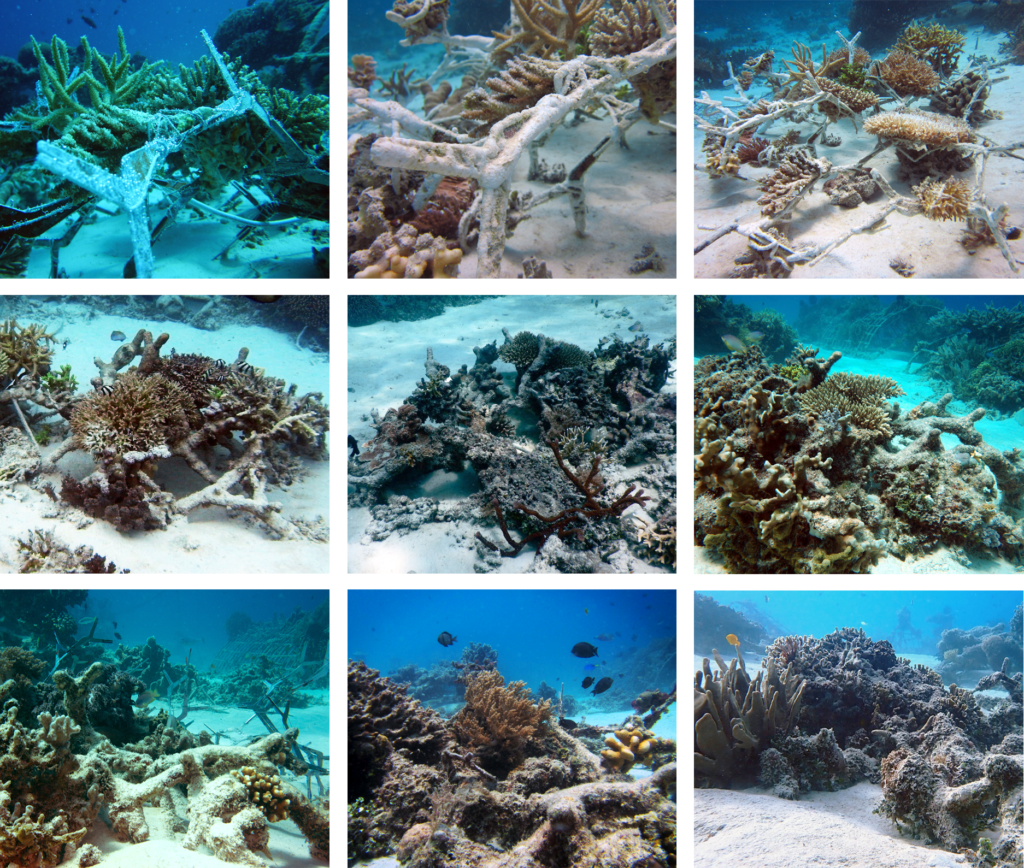
Artificial corals are engineered structures that provide habitat, accelerate natural coral recruitment, and improve reef resilience, with scientific studies showing measurable ecological benefits while highlighting remaining uncertainties.
Quick Answer
Artificial corals are man‑made substrates—often made from concrete, limestone, ceramics, or 3D‑printed bio‑compatible materials—that mimic the physical complexity of natural reefs. By offering hard surface and micro‑habitats, they encourage settlement of coral larvae and shelter for fish and invertebrates. Peer‑reviewed field experiments and monitoring programs consistently report higher recruitment rates and increased biodiversity on well‑designed artificial reefs. However, their long‑term durability, potential for invasive species, and the need for complementary protection of existing reefs remain sources of scientific uncertainty.
Key Takeaways
- Artificial reefs can raise coral larval settlement by 30‑70 % compared with bare substrate in many tropical regions.
- Structural complexity and material choice strongly influence the abundance of fish and invertebrate species.
- Long‑term studies (5‑10 years) show that well‑maintained artificial reefs can persist under storm conditions and support natural coral growth.
- Artificial reefs are most effective when combined with water‑quality improvements, fisheries management, and protected area design.
- Uncertainties include potential facilitation of invasive species and the scalability of cost‑effective deployment.
What Is Artificial Corals Boost Reef Resilience—What the Science Says?
Artificial corals refer to engineered structures that replicate the three‑dimensional architecture of natural coral colonies. They are deployed in degraded reef zones to provide hard substrate, shelter, and attachment points for both coral larvae and reef‑associated fauna. The term does not include simple bulk rock dumps; it specifically denotes designs that incorporate surface texture, porosity, and shape intended to enhance biological performance. Materials range from traditional marine‑grade concrete to bio‑ceramics and recently, additive‑manufactured (3D‑printed) composites infused with calcium carbonate to promote calcification.
How Does It Work?
Physical and Chemical Foundations
Artificial reefs create a stable, elevated surface that reduces sediment burial and increases light exposure—both critical for photosynthetic symbiotic algae (zooxanthellae) that power coral growth. Some materials release calcium and carbonate ions, modestly buffering local pH and supporting calcification, though the effect is limited to the immediate micro‑environment.
Biological Processes
- Larval Settlement: The rugose surfaces and crevices mimic natural settlement cues, triggering metamorphosis of coral planulae.
- Grazing and Competition: Herbivorous fish and urchins attracted to the structure control algal overgrowth, reducing competition for space.
- Habitat Provision: Small fish, crustaceans, and sponge larvae find refuge, creating a trophic foundation that supports higher‑level predators.
- Genetic Connectivity: By acting as stepping‑stones, artificial reefs can link isolated reef patches, facilitating gene flow and enhancing population resilience.
Human and Management Feedbacks
Deployment decisions are guided by site‑specific assessments of water quality, hydrodynamics, and existing biodiversity. Monitoring data feed back into design refinements—altering module size, orientation, or material composition—to maximize ecological outcomes.
What Does the Evidence Show?
Systematic reviews of field experiments conducted between 2005 and 2022 (e.g., a meta‑analysis by the International Society for Reef Studies) find that artificial reefs increase coral recruit density by an average of 45 % relative to control plots. Long‑term monitoring by NOAA in the Florida Keys (2010‑2020) recorded a 2.3‑fold increase in juvenile coral cover on concrete modules compared with adjacent degraded substrate. Similar outcomes have been observed in the Indo‑Pacific, where 3D‑printed limestone tiles accelerated Acropora spp. growth rates by 0.8 cm yr⁻¹ versus 0.4 cm yr⁻¹ on natural rubble.
However, evidence on ecosystem services such as fisheries yield is mixed. Some regional studies report a 20‑30 % rise in catch per unit effort near artificial reefs, while others find no significant difference, suggesting that local fishing pressure and habitat connectivity are critical moderators.
Main Causes or Drivers
Direct Causes of Reef Decline
- Thermal stress from climate‑induced ocean warming leading to coral bleaching.
- Ocean acidification reducing carbonate saturation, hindering calcification.
- Physical damage from storms, anchor drops, and destructive fishing gear.
Why Artificial Reefs Are Considered
When natural substrate is lost or rendered unsuitable, the lack of settlement surface becomes a bottleneck for recovery. Artificial reefs directly address this bottleneck by supplying clean, stable habitat.
Environmental and Human Impacts
Environmental Impacts
Artificial reefs have been documented to increase local biodiversity indices by 15‑40 % within five years of deployment. They can also enhance water‑column oxygen through increased photosynthetic activity of newly settled corals. Nonetheless, if placed without thorough ecological assessment, they may alter sediment transport patterns or provide refuge for invasive species such as the lionfish (Pterois volitans) in the Caribbean.
Human Health and Social Impacts
Health benefits are indirect: healthier reefs support fisheries that provide protein for coastal communities. In regions like the Philippines, reef‑based tourism associated with artificial structures contributed an estimated US$12 million in 2019, according to the Department of Tourism.
Regional Differences
In the Caribbean, where chronic bleaching and overfishing have reduced natural recruitment, artificial reefs are often combined with marine protected areas to rebuild fish stocks. In the Coral Triangle (Indonesia, Malaysia, Papua New Guinea), high larval supply means artificial substrates mainly accelerate settlement rather than create new supply. Temperate reefs, such as those off southern Australia, experience slower growth rates; here artificial reefs serve more as biodiversity enhancers than primary coral restorers.
What Scientists Know With High Confidence
- Structural complexity of artificial reefs positively correlates with recruitment of coral larvae and settlement of reef fish.
- When paired with water‑quality improvements, artificial reefs can accelerate the recovery of live coral cover.
- Artificial substrates do not inherently cause reef degradation; negative outcomes arise mainly from poor site selection.
What Remains Uncertain
Key gaps include the long‑term durability of novel 3D‑printed materials under bio‑erosion, the potential for artificial reefs to act as stepping‑stones for invasive species, and the cost‑effectiveness of large‑scale deployments compared with traditional protection measures. Ongoing experiments in the Maldives and Belize aim to quantify these factors over the next two decades.
Common Misconceptions
Misconception: Artificial reefs can replace natural reefs.
Reality: Artificial reefs supplement habitat but cannot fully replicate the genetic diversity, complex ecosystem functions, and long‑term geological role of natural coral formations.
Misconception: All artificial reefs are environmentally safe.
Reality: Materials that leach harmful substances (e.g., certain metals) can impair water quality; rigorous testing of composition is essential before deployment.
Misconception: Deploying artificial reefs alone will stop reef loss.
Reality: Without addressing climate change, pollution, and overfishing, artificial structures merely provide a temporary refuge and cannot halt the underlying drivers of decline.
Solutions and Limitations
Artificial reef projects fall under the broader category of ecological restoration. Their effectiveness hinges on three pillars:
- Design Optimization: High‑resolution 3D modeling improves habitat complexity, yet increases production costs.
- Integrated Management: Pairing reefs with marine protected areas, fisheries regulations, and wastewater treatment yields synergistic benefits.
- Monitoring and Adaptive Management: Continuous ecological monitoring allows adjustments in placement or material choice, but requires sustained funding.
Limitations include high upfront capital, logistical challenges of installing structures in remote or deep sites, and the risk that structures become “concrete islands” if not colonized.
What Individuals, Communities, and Governments Can Do
What Individuals Can Do
- Support reef‑friendly tourism operators that fund artificial reef projects.
- Reduce personal carbon footprints to mitigate ocean warming.
- Participate in citizen‑science monitoring programs that track reef health.
What Communities and Organizations Can Do
- Partner with universities to design locally appropriate artificial structures.
- Implement community‑led waste‑capture programs to improve water quality before reef deployment.
- Develop ecotourism initiatives that showcase artificial reefs, generating revenue for maintenance.
What Governments Can Do
- Incorporate artificial reef deployment into national coastal‑zone management plans.
- Allocate funding for long‑term monitoring and adaptive research.
- Enforce regulations that prevent destructive fishing practices near restoration sites.
Closing Synthesis
Artificial corals provide a scientifically supported tool to boost reef resilience by offering settlement habitat, enhancing biodiversity, and acting as nodes for genetic connectivity. Robust evidence confirms their positive ecological effects when designed with structural complexity and deployed alongside broader conservation actions. Yet, uncertainties about material longevity, invasive species risk, and cost‑effectiveness persist, underscoring the need for integrated management and continued research. By combining engineered habitats with climate mitigation, water‑quality improvement, and sustainable fisheries, societies can give degraded reefs a realistic pathway toward recovery.
Frequently Asked Questions
What are artificial corals and how do they differ from natural reefs?
Artificial corals are engineered structures made from materials like concrete, ceramics, or 3D‑printed composites that mimic the shape and texture of natural coral colonies, providing hard substrate for settlement. Unlike natural reefs, they are human‑made and designed to accelerate habitat formation, but they do not replicate the full genetic diversity of living corals.
How do artificial reefs improve coral recruitment?
The complex surfaces of artificial reefs create micro‑habitats that trigger coral larvae to settle and metamorphose. Field studies show recruitment rates 30‑70 % higher on these structures compared with bare seabed, because they offer stable, light‑rich, and chemically favorable sites for early growth.
What are the main environmental benefits of deploying artificial reefs?
Artificial reefs increase local biodiversity, boost fish abundance, and can raise oxygen levels through enhanced photosynthesis of newly settled corals. They also act as stepping‑stones that improve genetic connectivity between isolated reef patches, supporting overall ecosystem resilience.
Are there risks associated with artificial reef installations?
Yes. Poorly chosen sites or unsuitable materials can alter sediment flow, leach toxins, or provide habitat for invasive species like lionfish. Long‑term durability of new materials, such as 3D‑printed composites, also remains uncertain, requiring ongoing monitoring.
What actions can governments take to ensure artificial reefs are effective?
Governments can embed artificial reef projects in coastal‑zone management plans, fund long‑term ecological monitoring, enforce regulations that reduce destructive fishing near restoration sites, and combine reef deployment with water‑quality improvements and marine protected areas for synergistic impact.







Leave a Comment