
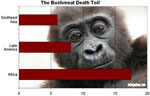
The bushmeat trade in Africa, driven by food needs, cultural practices and poverty, is causing rapid declines in wildlife populations and undermining ecosystem health across the continent.
Quick Answer
Africa’s bushmeat trade refers to the hunting, processing and sale of wild animals for food and income, often outside formal markets. The practice combines subsistence hunting with commercial exploitation, creating a feedback loop that reduces wildlife numbers, disrupts ecological functions, and can increase zoonotic disease risk. Scientific assessments consistently show population declines in dozens of species, especially primates, ungulates and large mammals. While the trade provides essential protein and cash for many rural households, the long‑term ecological costs outweigh short‑term benefits, and the exact future trajectory remains uncertain because of data gaps in remote regions.
Key Takeaways
- Over million animals are killed each year, affecting more than 100 species.
- Both subsistence needs and lucrative informal markets drive the trade.
- Population declines have been documented for primates, antelopes, elephants and many bird species.
- Habitat loss, climate stress and weak law enforcement amplify the threat.
- Community‑based conservation, alternative livelihoods and stronger governance show the most promise.
What Is Africa’s Bushmeat Trade: A Growing Threat to Wildlife and Ecosystems?
The term “bushmeat” describes meat harvested from wild terrestrial animals such as primates, ungulates, rodents, bats and birds. In Africa, the trade encompasses three overlapping components: (1) traditional subsistence hunting that supplies household protein, (2) small‑scale commercial hunting that supplies local markets, and (3) larger‑scale illegal operations that target high‑value species for urban or export markets. The trade differs from legal wildlife farming because most of the animals are taken directly from wild populations, often without permits, and the supply chain lacks traceability. Understanding the trade matters because wildlife provides ecosystem services—seed dispersal, pollination, predator regulation—and because many of the hunted species are already listed as threatened by the IUCN Red List.
How Does It Work?
1. Hunting and Harvest
Hunters use snares, firearms, bows or dogs to capture animals in forest, savanna or wetland habitats. In many regions, hunting is seasonal, aligning with animal breeding cycles, but market pressure can extend effort year‑round.
2. Processing and Transport
Carcasses are skinned, butchered and sometimes smoked or dried to extend shelf life. Processed meat is carried on foot, by bicycle or motorbike to village markets, roadside stalls or larger towns.
3. Sale and Consumption
Buyers range from local families seeking protein to traders who aggregate meat for resale in urban centers. Prices can exceed those of cultivated livestock, providing a significant cash flow for households with limited alternatives.
4. Feedback Loops
Higher income from bushmeat can fund additional hunting equipment, expanding effort and deepening penetration into protected areas. Declining wildlife makes hunting harder, prompting hunters to travel farther, increasing habitat disturbance and contact with humans.
What Does the Evidence Show?
Long‑term monitoring by the Wildlife Conservation Society and national wildlife agencies indicates that between 2000 and 2020, primate abundances fell by an average of 30 % across Central African forests (IUCN, 2022). A systematic review of 48 field studies (Fa et al., 2021) found that overharvesting is the primary driver of local extinctions for 62 % of surveyed species. Remote‑sensing analyses link expanding road networks to a 15 % increase in hunting pressure within 5 km of new roads (World Bank, 2023). These independent lines of evidence converge on the conclusion that bushmeat hunting is a major determinant of biodiversity loss in tropical Africa.
Main Causes or Drivers
Direct Causes
- High demand for affordable protein in rural and low‑income urban areas.
- Lucrative markets for prized species such as pangolins, chimpanzees and antelope.
Underlying Drivers
- Poverty and limited livelihood options in forest‑dependent communities.
- Weak law‑enforcement capacity and corruption in wildlife management agencies.
- Infrastructure expansion (roads, logging roads) that provides access to previously remote habitats.
- Cultural traditions that valorize hunting as a rite of passage or status symbol.
Amplifying Factors
- Climate‑induced shifts in fruiting patterns that reduce alternative food sources for both humans and wildlife.
- Population growth increasing overall protein demand.
Environmental and Human Impacts
Environmental Impacts
Removal of large herbivores reduces seed dispersal, leading to lower forest regeneration rates (Bennett et al., 2019). Predator declines can cause mesopredator release, altering prey dynamics and increasing disease vectors. Over‑hunting of bats has been linked to changes in insect populations, potentially affecting crop pest regulation.
Human Health and Social Impacts
Contact with wildlife during hunting and butchering raises zoonotic spill‑over risk; the 2014 Ebola outbreak in West Africa was traced to handling of infected bushmeat (WHO, 2015). Moreover, reliance on bushmeat can mask underlying food insecurity, as protein from wild animals is often less reliable than cultivated sources.
Economic and Infrastructure Impacts
While bushmeat provides short‑term cash, the long‑term loss of wildlife tourism revenue can outweigh these gains. Countries such as Tanzania estimate that wildlife‑based tourism contributes over US$ 4 billion annually; declines in charismatic species directly threaten this income stream.
Regional Differences
In the Congo Basin, dense forest and limited road access mean most hunting is subsistence‑based, yet the cumulative impact on primates is severe. In West Africa’s Sahel fringe, bushmeat is increasingly commercial, with cross‑border trade in species like the African civet. East African savannas experience a mix of pastoralist hunting and illegal trade in ivory‑bearing elephants, where elephant poaching overlaps with bushmeat markets.
What Scientists Know With High Confidence
What Scientists Know With High Confidence
- Unsustainable hunting rates are driving population declines in many African mammal and bird species.
- Road expansion and market access are strong predictors of increased hunting pressure.
- Loss of key seed‑dispersing mammals reduces forest regeneration capacity.
- Handling of infected wildlife is a documented pathway for zoonotic disease emergence.
What Remains Uncertain
What Remains Uncertain
Data gaps persist in remote forest interiors where monitoring is limited, making it difficult to quantify exact harvest rates for many small‑bodied species. The long‑term socio‑economic impacts of substituting bushmeat with alternative livelihoods are still being evaluated, as are the potential unintended consequences of strict enforcement, such as displacement of hunting effort to protected core zones.
Common Misconceptions
Common Misconceptions
Misconception: Bushmeat is only a cultural tradition.
Reality: Cultural practices are one component, but economic necessity and market demand drive the majority of the trade, especially in areas where alternative protein is scarce.
Misconception: All bushmeat hunting is illegal.
Reality: Subsistence hunting is legal in many countries under specific quotas, yet the line between legal and illegal blurs when hunters exceed limits or sell meat beyond permitted channels.
Misconception: Reducing bushmeat will immediately solve wildlife declines.
Reality: Even with reduced hunting, habitat loss, climate stress and illegal poaching of high‑value species continue to threaten populations.
Solutions and Limitations
Effective responses combine demand‑reduction, livelihood diversification, improved governance and ecological monitoring. Community‑managed wildlife zones that allow sustainable harvest have shown mixed results; success depends on clear rules, strong local institutions and market access for alternative products. Ecotourism can generate income, but it is vulnerable to political instability and global travel shocks. Law‑enforcement reforms increase deterrence but require sustained funding and can provoke conflict if not paired with community benefits. Finally, protein substitution programs (e.g., poultry, fish farms) reduce reliance on wild meat, yet they need investment, training and reliable supply chains.
What Individuals, Communities, and Governments Can Do
What Individuals Can Do
- Support NGOs that fund sustainable livelihood projects in bushmeat‑impacted regions.
- Advocate for responsible sourcing policies that discourage illegal wildlife products.
- Raise awareness about zoonotic disease risks linked to bushmeat handling.
What Communities and Organizations Can Do
- Develop community‑based monitoring systems that track hunting pressure and report violations.
- Implement small‑scale livestock or fish‑culture projects that provide alternative protein.
- Partner with conservation NGOs to create eco‑tourism or forest‑product enterprises that reward wildlife protection.
What Governments Can Do
- Strengthen wildlife law enforcement, improve training for rangers and reduce corruption.
- Integrate bushmeat considerations into national nutrition and rural development policies.
- Invest in road‑impact assessments and limit new road construction in high‑biodiversity zones.
- Provide subsidies or micro‑credit for alternative livelihood schemes targeting high‑risk communities.
Synthesis
The African bushmeat trade is a complex socio‑ecological challenge that intertwines food security, cultural identity and biodiversity loss. Robust evidence confirms that unsustainable hunting is a primary driver of wildlife declines, while the precise future trajectory remains uncertain because of monitoring gaps and evolving market dynamics. Solutions that blend community empowerment, economic alternatives and stronger governance offer the greatest chance of reducing pressure without compromising human wellbeing. Continued research, transparent data collection and inclusive policy design are essential to turning the tide for both wildlife and the people who depend on the forest.
Frequently Asked Questions
What exactly is meant by “bushmeat” in the African context?
Bushmeat refers to meat harvested from wild terrestrial animals such as primates, antelopes, rodents, bats and birds that are taken directly from natural habitats and sold for food or income.
How does bushmeat hunting affect forest regeneration?
Many hunted species, especially large herbivores and frugivores, act as seed dispersers; their removal reduces the spread of seeds, slowing forest regeneration and altering plant community composition.
Which species are most at risk from the bushmeat trade?
Primates, large ungulates, elephants, pangolins and certain bird species have shown the steepest population declines, with many listed as threatened or endangered by the IUCN Red List.
Are there proven alternatives that can replace bushmeat for protein?
Livestock, poultry and small‑scale fish farming have reduced reliance on bushmeat in some pilot projects, but success depends on adequate training, market access and sustained investment.
What role does road expansion play in increasing bushmeat hunting?
New roads provide easier access to remote forests, allowing hunters to travel farther and bring more meat to market; studies show a 15 % rise in hunting pressure within five kilometres of new roads.





Leave a Comment