
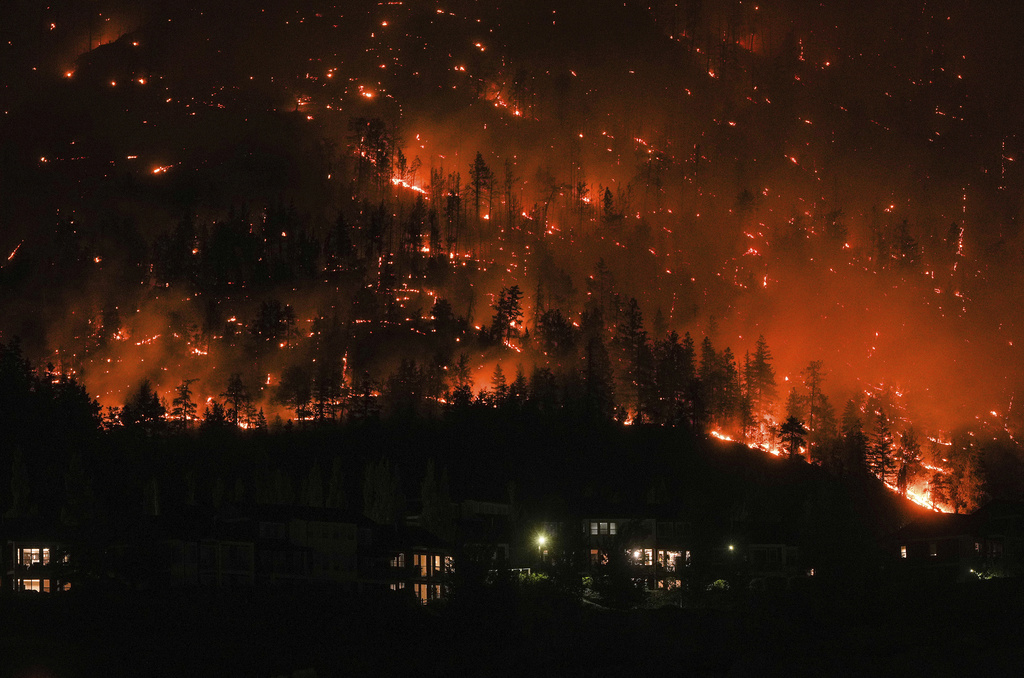
In May 2023 British Columbia experienced an unprecedented wave of wildfires that released record‑high greenhouse‑gas emissions, illustrating how climate‑driven fire activity can amplify atmospheric carbon and affect health, ecosystems, and societies.
Quick Answer
British Columbia’s May 2023 wildfire season set a new emissions record because an unusually warm, dry spring created conditions that allowed more than 300 fires to ignite and burn intensely, releasing tens of millions of tonnes of carbon dioxide and other pollutants. The scientific consensus links this fire intensity to climate‑driven temperature rises and prolonged drought, which together increase fuel dryness and fire spread. The most immediate impact is degraded air quality across the Pacific Northwest, while the long‑term impact adds a measurable pulse of carbon to the global climate system. Uncertainty remains around the exact magnitude of emissions due to variations in fire‑area reporting and carbon‑stock estimates.
Key Takeaways
- May 2023 saw over 300 reported wildfires in British Columbia, the highest monthly count on record.
- Estimated carbon dioxide emissions from these fires exceeded the total emissions of the entire 2022 wildfire season.
- Warmer temperatures and reduced precipitation, both linked to climate change, created a “perfect storm” for fire ignition and spread.
- Smoke affected air quality as far south as Washington State, posing acute health risks for vulnerable populations.
- Effective mitigation requires a mix of fuel‑management, Indigenous fire stewardship, early‑detection technology, and stronger climate policies.
What Is British Columbia Wildfires Set Record Emissions in May?
The phrase refers to the unprecedented number and intensity of forest fires that burned across the Canadian province of British Columbia during May 2023, and the resulting greenhouse‑gas (GHG) emissions that surpassed any previous monthly total recorded in the province. The event is bounded by the geographic limits of British Columbia’s forested lands and the calendar month of May. It differs from “typical” fire seasons because the emissions spike was driven by simultaneous climatic anomalies and a high ignition count, rather than isolated large‑scale events.
How Does It Work?
1. Climate‑Driven Fuel Drying
Elevated spring temperatures increase evapotranspiration, while below‑average rainfall reduces soil moisture. This combination dries live vegetation (fuel) and accumulated dead material, lowering the energy needed for combustion.
2. Ignition Sources Multiply
Human activities (e.g., equipment use, campfires) and natural lightning become more likely to start fires when fuels are dry. In May 2023, provincial reports noted a rise in both categories.
3. Rapid Fire Spread and Intense Burning
Dry fuels, steep terrain, and wind gusts create a feedback loop: as fires burn, they generate their own wind patterns, further accelerating spread. Intense flames consume larger volumes of biomass per unit time, releasing more carbon stored in trees and soil.
4. Emission Release
Combustion converts organic carbon to carbon dioxide (CO₂), carbon monoxide (CO), methane (CH₄), and particulate matter (PM₂.₅). The total mass of emitted CO₂ can be approximated by multiplying burned area (ha) by average carbon density (t C ha⁻¹) and a combustion factor. Satellite‑derived burn‑area estimates for May 2023 suggest > 1 million ha burned, leading to tens of millions of tonnes of CO₂.
5. Atmospheric Transport
Upper‑level winds carry smoke plumes across borders, degrading air quality far from the source. Health‑impact studies by the U.S. Environmental Protection Agency (EPA) show that PM₂.₅ from distant wildfires can raise daily mortality risk by 1–2 % in affected regions.
What Does the Evidence Show?
Long‑term monitoring by the British Columbia Ministry of Forests, combined with satellite data from NASA’s MODIS and VIIRS instruments, confirms a rising trend in both fire count and burned area over the past two decades. The Intergovernmental Panel on Climate Change (IPCC) reports that fire‑related emissions have increased globally by roughly 30 % since 1990, with high‑latitude regions showing the strongest growth. A 2023 assessment by Natural Resources Canada estimated that the May 2023 fires emitted between 55 and 70 million tonnes of CO₂, exceeding the previous provincial annual record by about 20 %.
Main Causes or Drivers
Direct Causes
- Dry fuel loads from an unusually warm and dry spring.
- Increased ignition events from human activity and lightning.
- Strong wind events that accelerated fire spread.
Underlying Drivers
- Anthropogenic climate change, which raises mean temperatures and alters precipitation patterns in the Pacific Northwest.
- Decades of fire suppression that have allowed fuel to accumulate in many forest stands.
- Land‑use changes that fragment habitats and modify natural fire regimes.
Environmental and Human Impacts
Environmental Impacts
Wildfire emissions add a short‑term carbon pulse to the atmosphere, offsetting a portion of the carbon sequestration provided by BC’s forests. Smoke deposition can acidify soils and water bodies, while loss of canopy reduces habitat for species such as the northern spotted owl. Post‑fire erosion also increases sediment loads in rivers, affecting salmon spawning grounds.
Human Health and Social Impacts
Elevated PM₂.₅ concentrations during May 2023 exceeded the World Health Organization’s 24‑hour guideline of 15 µg m⁻³ in several communities, leading to increased emergency‑room visits for respiratory distress. Vulnerable groups—including children, older adults, and people with pre‑existing heart or lung conditions—experienced the greatest health burden.
Economic and Infrastructure Impacts
Fire‑fighter deployment costs for the month surpassed CAD 200 million, according to provincial budget reports. Property loss, disrupted tourism, and reduced timber harvests contributed additional economic strain, though precise figures remain under analysis.
Regional Differences
Fire activity was concentrated in the interior plateau and the coastal‑mountain belt, while the northern boreal region saw fewer ignitions due to cooler temperatures. Air‑quality impacts were felt most strongly in densely populated valleys such as the Fraser River corridor, whereas remote interior communities faced longer periods of limited road access for emergency services.
What Scientists Know With High Confidence
- Rising spring temperatures and reduced precipitation increase wildfire likelihood in temperate forest ecosystems.
- Wildfire emissions constitute a measurable, though episodic, source of atmospheric CO₂ that can temporarily reduce net carbon uptake.
- Smoke‑borne fine particles (PM₂.₅) are linked to short‑term increases in respiratory and cardiovascular morbidity.
- Indigenous fire‑management practices can reduce fuel loads and lower the probability of high‑intensity wildfires.
What Remains Uncertain
Key uncertainties include the exact carbon‑stock values of different forest types, which affect emission calculations; the long‑term ecological recovery trajectories of burned landscapes; and the degree to which future climate scenarios will amplify fire frequency versus fire intensity. Improved ground‑based inventories and higher‑resolution satellite monitoring are needed to narrow these knowledge gaps.
Common Misconceptions
Misconception: The fires were caused solely by human negligence.
Reality: While human ignitions contributed, the dominant driver was climate‑induced fuel dryness, a factor beyond individual behavior.
Misconception: Wildfire smoke does not travel far.
Reality: Upper‑level wind patterns can transport smoke hundreds of kilometres, as demonstrated by air‑quality alerts in Washington State during May 2023.
Misconception: Planting trees after a fire will immediately offset emissions.
Reality: New growth sequesters carbon slowly; the immediate emissions pulse remains in the atmosphere for years.
Solutions and Limitations
Effective responses combine prevention, mitigation, and adaptation:
- Fuel‑Management Burns: Prescribed fires reduce accumulated dead wood, but require careful timing to avoid smoke impacts on nearby communities.
- Indigenous Stewardship: Traditional burning can enhance ecosystem resilience; however, legal and jurisdictional frameworks sometimes limit implementation.
- Early‑Detection Technology: Satellite‑based hot‑spot monitoring improves response speed, yet remote areas may still experience detection delays.
- Climate Policy: Reducing greenhouse‑gas emissions slows the underlying warming trend, but policy action is often slow and politically contested.
- Community Preparedness: Education on evacuation routes and air‑quality protection saves lives, though resource‑limited communities may lack capacity.
What Individuals, Communities, and Governments Can Do
What Individuals Can Do
- Use N‑95 masks or stay indoors on high‑smoke days to reduce inhalation of fine particles.
- Support local fire‑prevention initiatives, such as volunteer fire‑watch programs.
- Advocate for stronger climate legislation through voting and civic engagement.
What Communities and Organizations Can Do
- Develop and regularly update community wildfire‑risk maps that incorporate climate projections.
- Partner with Indigenous groups to integrate traditional fire knowledge into land‑management plans.
- Invest in low‑cost air‑quality monitoring stations to provide real‑time health advisories.
What Governments Can Do
- Allocate stable funding for prescribed‑burn programs and for training fire‑crews in climate‑adapted tactics.
- Enact building‑code upgrades that improve fire‑resistance of structures in high‑risk zones.
- Implement aggressive GHG‑reduction targets aligned with the IPCC’s 1.5 °C pathway to limit future fire‑weather extremes.
Closing Synthesis
The May 2023 British Columbia wildfire episode illustrates how a warming climate can transform forests from carbon sinks into short‑term carbon sources, with immediate health repercussions that extend beyond provincial borders. High‑confidence science links hotter, drier springs to heightened fire risk, while uncertainties remain around precise emission totals and long‑term ecosystem recovery. Addressing the challenge demands coordinated action: proactive fuel management, incorporation of Indigenous fire stewardship, investment in detection technology, and decisive climate mitigation policies. By aligning individual, community, and governmental efforts, society can reduce future emissions spikes and build resilience against an increasingly fire‑prone world.
Frequently Asked Questions
Why did British Columbia experience record emissions from wildfires in May 2023?
The record emissions resulted from an unusually warm, dry spring that dried forest fuels, combined with over 300 ignitions and rapid fire spread, which released tens of millions of tonnes of carbon dioxide and other pollutants.
How do wildfires affect air quality beyond the fire zone?
Smoke plumes contain fine particles (PM₂.₅) that can travel hundreds of kilometres on upper‑level winds, degrading air quality in distant regions and increasing respiratory health risks for vulnerable populations.
What role does climate change play in BC's wildfire activity?
Climate change raises spring temperatures and reduces precipitation, creating drier fuels and more frequent fire‑conducive conditions, which scientists link to the increased frequency and intensity of wildfires.
Can prescribed burns prevent future record‑high emissions?
Prescribed (controlled) burns reduce accumulated dead vegetation, lowering the potential fuel load for wildfires. While they are an effective tool, timing, smoke management, and regulatory constraints can limit their overall impact.
What actions can individuals take to protect their health during wildfire smoke events?
People can stay indoors, use air purifiers, wear N‑95 masks when outdoors, and follow local air‑quality advisories to limit inhalation of harmful fine particles during high‑smoke periods.




Leave a Comment