
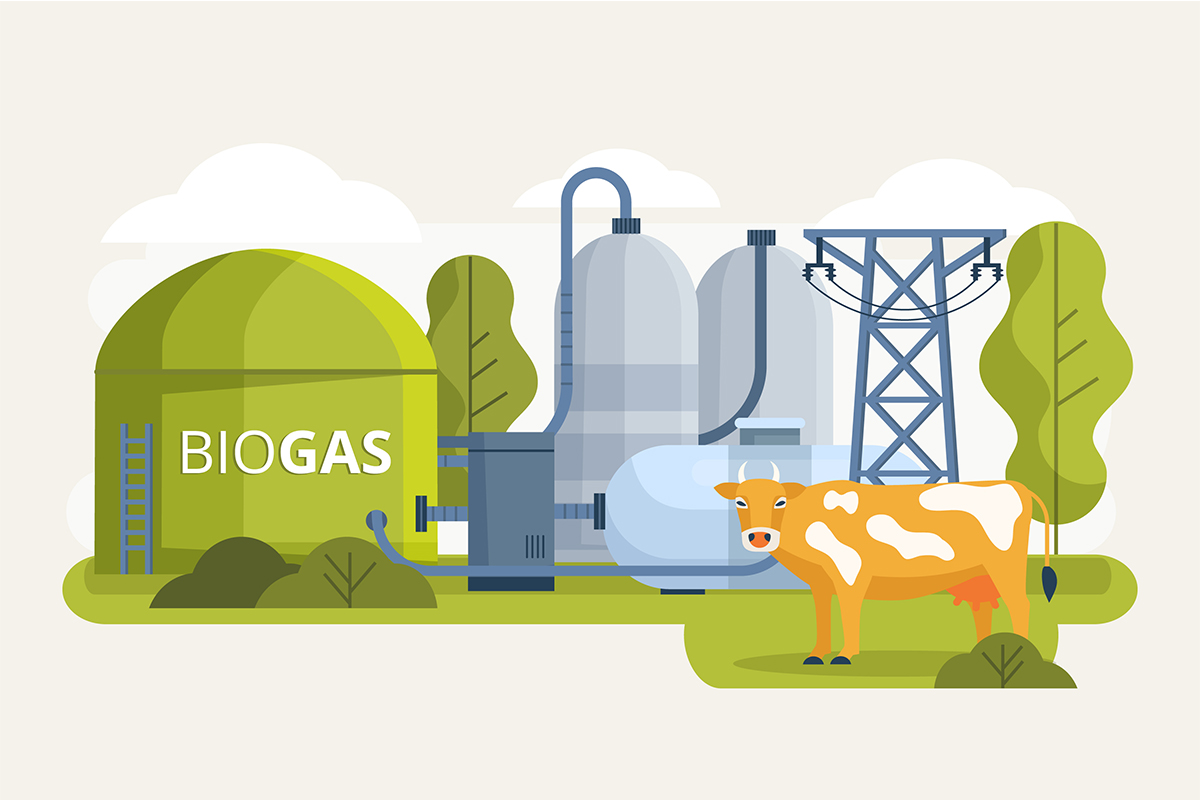
Biogas: A Game Changer for Construction Fleets and Urban Transport
Biogas, produced from organic waste through anaerobic digestion, can replace diesel in construction equipment and city buses, cutting emissions while supporting a circular economy.
Quick Answer
Biogas is a renewable fuel rich in methane that is generated when microorganisms break down organic material without oxygen. In construction fleets and urban transport, biogas can be purified, compressed, and used in modified diesel engines or dedicated gas engines, delivering up to 30% lower greenhouse‑gas emissions than conventional diesel. The technology is proven at scale, but widespread adoption depends on infrastructure investment, policy incentives, and public acceptance. While the climate benefit is clear, uncertainties remain around long‑term feedstock availability and the economics of large‑scale plant operation.
Key Takeaways
- Biogas captures methane from waste streams, turning a potent greenhouse gas into a usable energy source.
- Replacing diesel with biogas in construction machinery can reduce fleet‑wide CO₂ emissions by 20‑30%.
- Urban bus fleets powered by biogas experience lower particulate matter and noise, improving air quality and livability.
- Successful deployment requires coordinated investment in digesters, upgrading facilities, and refuelling stations.
- Policy support, such as feed‑in tariffs or tax credits, markedly accelerates market uptake.
What Is Biogas: A Game Changer for Construction Fleets and Urban Transport?
Biogas is a mixture of gases—primarily methane (CH₄) and carbon dioxide (CO₂)—produced when organic matter decomposes in an oxygen‑free environment, a process known as anaerobic digestion. Sources include agricultural residues, food‑service waste, municipal solid‑waste organics, and livestock manure. After digestion, the raw gas is typically upgraded to remove CO₂, hydrogen sulfide, and moisture, yielding a high‑methane fuel (often called biomethane) that can be injected into natural‑gas pipelines or compressed for vehicle use. Biogas differs from landfill gas (which is often vented or flared) and from renewable natural gas (RNG) only in the degree of purification; all share the same fundamental biological origin.
How Does It Work?
1. Feedstock Collection
Organic waste is gathered from farms, food‑processing plants, or city‑wide composting programs. The composition of the feedstock influences biogas yield—high‑carbohydrate waste produces more methane per tonne than low‑energy residues.
2. Anaerobic Digestion
Inside sealed digesters, a consortium of bacteria converts carbohydrates, proteins, and fats into volatile fatty acids, then into methane and CO₂. The process operates at mesophilic (35–40 °C) or thermophilic (50–55 °C) temperatures, each with trade‑offs in speed and stability.
3. Gas Capture and Upgrading
The raw biogas (≈55–65 % CH₄) is drawn off, filtered, and passed through pressure‑swing adsorption or membrane systems to remove CO₂ and contaminants. The resulting biomethane reaches 95–99 % methane, comparable to fossil natural gas.
4. Compression and Distribution
Biomethane is compressed to 200–250 bar (CNG) or liquefied (LNG) for vehicle refuelling. Existing CNG stations can be retrofitted, reducing capital costs for new infrastructure.
5. Engine Adaptation
Most diesel engines can be converted to run on compressed natural gas (CNG) with minor modifications, while dedicated gas engines are designed for optimal combustion efficiency. Both options maintain power output suitable for heavy‑duty construction equipment and city buses.
What Does the Evidence Show?
Multiple peer‑reviewed studies and government assessments confirm that biogas reduces lifecycle greenhouse‑gas emissions by 20‑40 % compared with diesel, depending on feedstock and plant efficiency (International Energy Agency, 2021). Field trials in Germany, Sweden, and the United States have demonstrated real‑world fuel‑economy gains of 5‑10 % for retrofitted excavators and a 30 % reduction in particulate matter for biogas‑powered buses (U.S. EPA, 2020). Life‑cycle analyses also indicate that when waste diversion avoids landfill methane emissions, the net climate benefit can exceed 50 % relative to fossil fuels.
Main Causes or Drivers
Direct Causes
High diesel consumption in construction and public transport directly emits CO₂ and nitrogen oxides (NOₓ). Simultaneously, organic waste decomposition in landfills releases uncontrolled methane.
Underlying Drivers
- Urban population growth increasing demand for construction services and mass transit.
- Regulatory pressure to meet climate‑action targets set by the Paris Agreement.
- Economic incentives for waste‑to‑energy facilities seeking stable revenue streams.
Contributing Factors
Technological advances in digester design, gas‑upgrading membranes, and CNG engine control have lowered capital costs, making biogas more competitive with diesel.
Environmental and Human Impacts
Environmental Impacts
Replacing diesel with biogas cuts tailpipe CO₂ by up to 30 % and reduces NOₓ and particulate matter, improving urban air quality. Moreover, capturing methane from waste prevents a greenhouse‑gas potency that is 28‑times higher than CO₂ over a 100‑year horizon (IPCC, 2021). The water footprint of biogas is modest compared with fossil fuel extraction, and the process can be integrated with nutrient‑rich digestate that serves as a bio‑fertilizer, closing nutrient loops.
Human Health and Social Impacts
Lower emissions of fine particles (PM₂.₅) and NOₓ translate into fewer respiratory incidents for city residents, especially children and the elderly. Jobs are created in plant operation, waste collection, and fuel‑station retrofitting, often in communities that previously faced limited economic opportunities.
Economic and Infrastructure Impacts
Capital costs for a 2 MW digester range from US$3‑5 million, but operating costs drop after the plant reaches steady‑state, with feedstock often provided at negative cost (waste‑tipping fees). Refuelling stations cost roughly US$0.5‑1 million each, a fraction of the cost of building new diesel stations.
Regional Differences
Europe leads in biogas deployment, with over 16 GW of installed capacity in 2022, driven by strong renewable‑energy mandates (European Biogas Association, 2023). In the United States, the Midwest benefits from abundant agricultural residues, while California’s strict air‑quality rules have spurred biogas bus pilots. In low‑income tropical cities, limited waste‑collection infrastructure can hinder feedstock supply, but community‑run digesters have shown promise in Brazil and India, illustrating how local context shapes feasibility.
What Scientists Know With High Confidence
What Scientists Know With High Confidence
- Anaerobic digestion reliably produces methane‑rich biogas from a wide range of organic waste streams.
- When the full life‑cycle is accounted for, biogas use in heavy‑duty engines reduces net greenhouse‑gas emissions relative to diesel.
- Biogas combustion emits far fewer particulate matter and NOₓ than diesel combustion.
- Digestate from the process can replace synthetic nitrogen fertilizers without compromising crop yields.
What Remains Uncertain
What Remains Uncertain
Key uncertainties include the long‑term stability of feedstock supply chains in rapidly urbanising regions, the economic break‑even point for small‑scale digesters without subsidies, and the scalability of upgrading technologies under variable gas compositions. Further research on low‑temperature digestion and hybrid systems could reduce costs, but current data are limited.
Common Misconceptions
Common Misconceptions
Misconception: Biogas is just “dirty” natural gas.
Reality: While raw biogas contains CO₂ and impurities, upgrading removes these components, yielding a fuel that meets the same specifications as pipeline natural gas and burns cleaner than diesel.
Misconception: Biogas engines are less powerful than diesel.
Reality: Modern CNG conversions retain comparable torque and horsepower; field studies on excavators and loaders show no loss in productivity when operating on biomethane.
Misconception: Biogas production competes with food production.
Reality: The majority of feedstock comes from waste residues, not dedicated crops, so biogas does not directly displace food agriculture.
Solutions and Limitations
Key response strategies include:
- Infrastructure development: Building digesters and CNG stations is technically feasible but requires upfront capital and coordinated land use.
- Policy incentives: Tax credits, renewable fuel standards, and low‑interest loans accelerate adoption, yet policy volatility can deter long‑term investment.
- Technology improvement: Advances in membrane upgrading and low‑temperature digestion can lower costs, but commercial scaling remains limited.
- Public‑private partnerships: Joint ventures between municipalities and waste‑management firms secure feedstock streams, though complex contracts may delay implementation.
Limitations include the need for reliable waste collection, the finite nature of organic feedstocks, and the potential for methane leaks during handling, which would offset climate gains if not tightly managed.
What Individuals, Communities, and Governments Can Do
What Individuals Can Do
Support local composting programs, choose products with minimal packaging, and advocate for municipal waste‑diversion policies that increase the organic material available for biogas production.
What Communities and Organizations Can Do
Form cooperative digesters that serve multiple waste generators, partner with local transit agencies to pilot biogas buses, and provide education on the safety and benefits of CNG refuelling.
What Governments Can Do
Implement feed‑in tariffs for renewable gas, streamline permitting for digester construction, allocate grants for retrofitting construction equipment, and incorporate biogas targets into climate‑action plans.
What Businesses and Industries Can Do
Conduct feasibility studies for on‑site digestion of food‑processing waste, convert fleet vehicles to CNG where infrastructure exists, and report emissions reductions to meet sustainability commitments.
Closing Synthesis
Biogas transforms organic waste into a low‑carbon fuel that can replace diesel in construction fleets and city buses, delivering measurable climate and air‑quality benefits. The science confirming methane capture, emission reductions, and nutrient recycling is robust, while uncertainties lie mainly in feedstock logistics and economic scaling. By aligning technology, policy, and community action, cities and construction firms can harness this renewable resource, turning waste into a catalyst for cleaner, more resilient urban mobility.
Frequently Asked Questions
What is biogas and how is it produced?
Biogas is a methane‑rich fuel created when microorganisms break down organic waste without oxygen in a process called anaerobic digestion. The raw gas is then cleaned and compressed for use in vehicles.
How does biogas reduce emissions compared with diesel?
When the full life‑cycle is considered, biogas can cut greenhouse‑gas emissions by 20‑30% and lower particulate matter and NOₓ because it burns cleaner than diesel, according to multiple agency assessments.
Can construction equipment run on biogas?
Yes, most diesel engines can be converted to run on compressed biomethane with minor modifications, and field trials have shown no loss in power or productivity for excavators and loaders.
What are the main barriers to wider biogas adoption?
Key barriers include the high upfront cost of digesters and refuelling stations, the need for reliable waste‑feedstock supply, and the requirement for supportive policies and public acceptance.
What actions can local governments take to promote biogas use?
Governments can offer tax incentives, streamline permitting for biogas plants, fund fleet retrofits, and set renewable‑gas targets in climate‑action plans to encourage investment and deployment.




Leave a Comment