
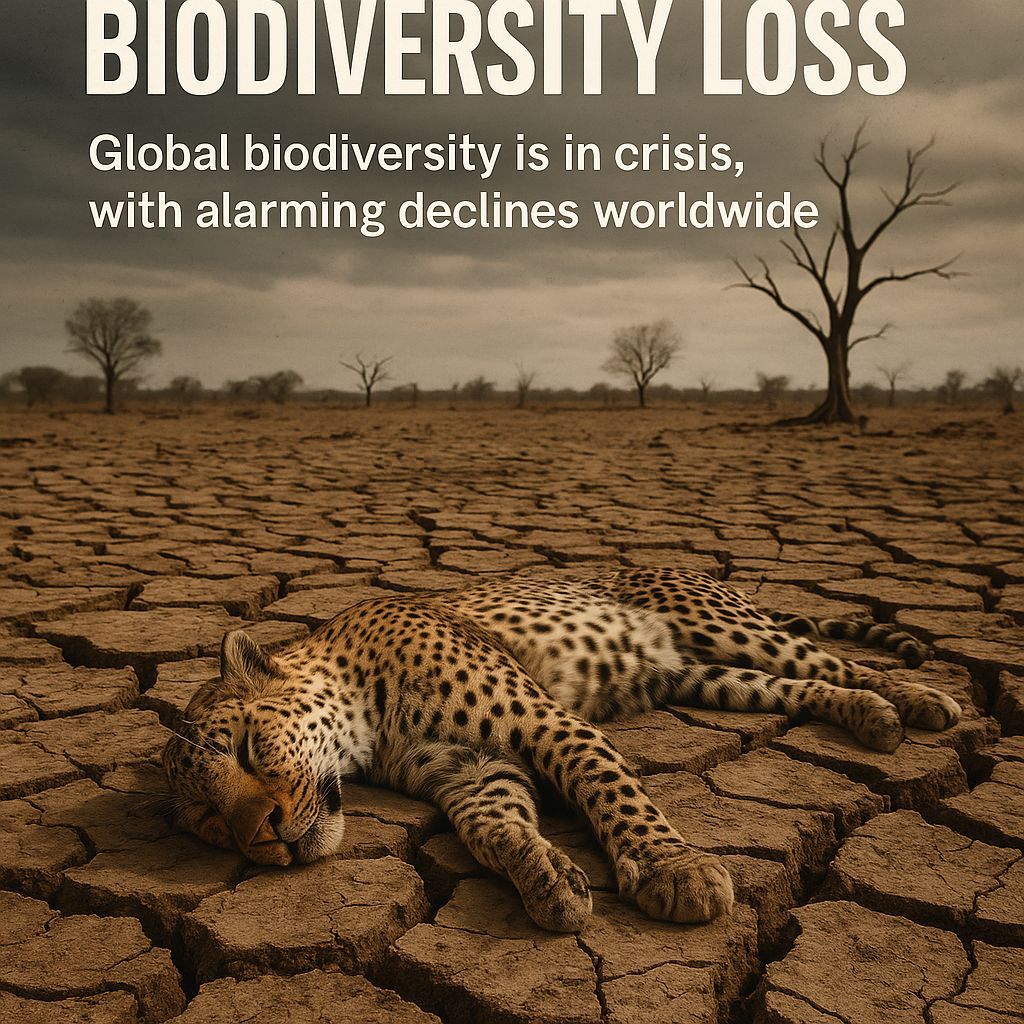
Biodiversity loss is quantified by a suite of striking statistics—such as a 68% decline in wildlife populations since 1970 and the loss of 13 million hectares of forest each year—that reveal a global crisis affecting ecosystems and human well‑being.
Quick Answer
Biodiversity loss refers to the reduction in variety of life—species, genetic traits, and ecosystems—measured through indicators like species‑extinction risk, population trends, and habitat conversion. The main mechanisms are habitat destruction, overexploitation, pollution, invasive species, and climate change, which together accelerate declines observed in long‑term monitoring programs. The most robust scientific conclusion is that global wildlife abundance has fallen by roughly 68% since the early 1970s (Living Planet Report, WWF, 2022) and that about one million species face heightened extinction risk (IPBES, 2019). The implication is reduced ecosystem services, heightened food‑security risks, and lower resilience to environmental change, although exact future trajectories depend on policy and mitigation actions.
Key Takeaways
- Wildlife abundance declined by an average of 68% worldwide between 1970 and 2016 (WWF, 2022).
- Approximately one million species are projected to become extinct by 2100 if current trends continue (IPBES, 2019).
- Freshwater species face extinction rates more than five times higher than terrestrial species (IUCN, 2021).
- Forests are lost at a rate of 13 million hectares per year, equivalent to 48 football fields every minute (FAO, 2020).
- Pollinator populations have dropped up to 90% in some regions, threatening crop yields and wild plant reproduction (BEE Research Consortium, 2020).
What Is Biodiversity Loss by the Numbers: The Most Alarming Statistics?
Biodiversity loss by the numbers aggregates quantitative indicators that track the status of species, habitats, and ecosystem functions. It includes measures such as species‑extinction risk (e.g., IUCN Red List categories), population‑abundance trends, rates of habitat conversion, and ecosystem‑service valuation. While the term overlaps with “biodiversity decline,” the numerical focus provides a concrete basis for policy, monitoring, and communication.
How Does It Work?
Step 1: Habitat Alteration
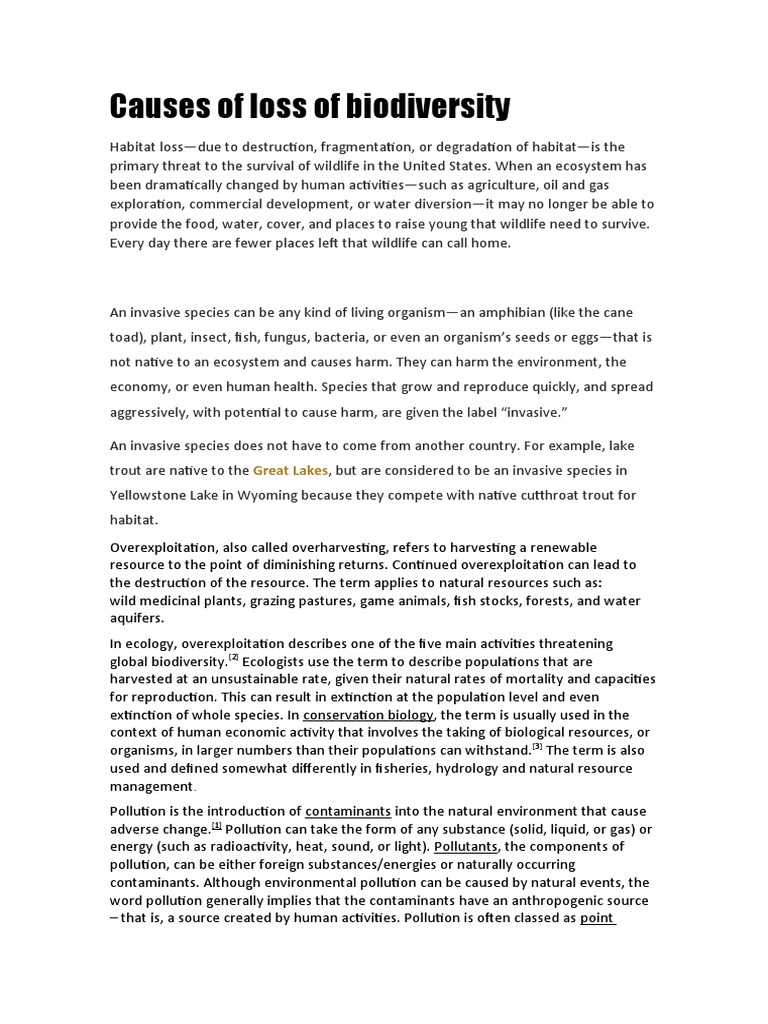
Land‑use change—primarily deforestation, agricultural expansion, and urbanization—removes the physical space species need to survive. Satellite‑derived forest‑cover loss data show a net loss of 13 million hectares per year from 2000 to 2020 (FAO, 2020).
Step 2: Direct Exploitation
Overharvesting of fish, timber, and wildlife reduces population sizes faster than natural reproduction can replenish them. Global fish catch data indicate that 34% of marine stocks are overfished (FAO, 2022).
Step 3: Pollution and Chemical Stressors
Runoff of nutrients, plastics, and toxic substances degrades water quality and soil health, leading to mortality and reduced reproductive success across taxa.
Step 4: Invasive Species and Biotic Homogenization
Non‑native species outcompete, prey upon, or bring diseases to native organisms, accelerating declines especially on islands and isolated ecosystems.
Step 5: Climate Change
Rising temperatures and altered precipitation shift species’ climatic niches. Modeling by the Intergovernmental Panel on Climate Change (IPCC, 2021) suggests that about 50% of species could experience range reductions greater than 30% by 2070 under high‑emission scenarios.
What Does the Evidence Show?
Multiple independent lines of evidence converge on a consistent picture of rapid biodiversity loss. The Living Planet Index, based on >20,000 vertebrate population time series, records a 68% average decline in abundance from 1970 to 2016 (WWF, 2022). The IUCN Red List shows that 28% of assessed species are threatened with extinction, a proportion that has risen steadily over the past two decades (IUCN, 2021). Freshwater assessments reveal extinction rates exceeding 5 times those of terrestrial taxa, driven by damming, eutrophication, and climate‑induced hydrological change (IUCN, 2021). Long‑term monitoring of pollinators in Europe and North America documents declines of up to 90% for certain bee species over the last 30 years (BEE Research Consortium, 2020). Together, these data sets demonstrate that biodiversity loss is both widespread and accelerating.
Main Causes or Drivers
Direct Causes
- Habitat destruction: Deforestation, wetland drainage, and conversion of natural lands to agriculture.
- Overexploitation: Unsustainable fisheries, logging, and wildlife trade.
- Pollution: Nutrient loading, plastic debris, heavy metals, and pesticide use.
- Invasive species: Introduction of non‑native predators, competitors, and pathogens.
- Climate change: Temperature rise, altered precipitation, and ocean acidification.
Underlying Drivers
- Population growth and rising consumption demand more land and resources.
- Economic incentives that prioritize short‑term yields over long‑term sustainability.
- Weak governance and insufficient enforcement of environmental regulations.
- Global trade networks that move species, commodities, and pollutants across borders.
Environmental and Human Impacts
Environmental Impacts
Loss of species weakens food webs, reduces pollination services, and diminishes carbon‑sequestration capacity of forests and soils. Declining coral reefs, for example, have lost 50% of their live cover since the 1980s (UNEP, 2020), compromising coastal protection and fishery productivity.
Human Health and Social Impacts
Reduced biodiversity can increase the emergence of zoonotic diseases by altering host‑pathogen dynamics (WHO, 2021). Declines in pollinators threaten up to 35% of global crop production that depends on animal pollination (FAO, 2020). Indigenous and rural communities that rely on wild foods and medicines experience cultural loss and food‑security challenges when local species disappear.
Economic and Infrastructure Impacts
The World Bank estimates that ecosystem‑service losses linked to biodiversity decline amount to roughly US$ 6 trillion per year, representing about 5% of global GDP (World Bank, 2021). Infrastructure built on unstable ecosystems—such as flood‑prone wetlands—faces higher maintenance costs and greater disaster risk.
Regional Differences
Temperate regions generally exhibit slower rates of forest loss than tropical hotspots, yet they still experience significant declines in insect abundance. In the Amazon basin, deforestation averaged 7,900 km² per year between 2000 and 2018 (FAO, 2020), whereas in Southeast Asia, mangrove loss reached 1.2 million ha over the same period (UNEP, 2020). Freshwater biodiversity decline is most acute in the Indo‑Pacific, where dam construction has fragmented riverine habitats.
What Scientists Know With High Confidence
- Global wildlife abundance has declined by roughly two‑thirds since the early 1970s (WWF, 2022).
- Habitat loss is the primary driver of species extinctions worldwide (IPBES, 2019).
- Climate change is already shifting species’ geographic ranges, with about 50% projected to move poleward or upward in elevation (IPCC, 2021).
- Pollinator declines directly threaten food production and biodiversity that depends on pollination (FAO, 2020).
What Remains Uncertain
Key uncertainties involve the exact timing and magnitude of extinction cascades, the resilience thresholds of complex ecosystems, and the synergistic effects of multiple stressors acting together. Data gaps are especially large for invertebrates, deep‑sea organisms, and microbes, limiting precise global estimates. Improved long‑term monitoring and standardized metrics are needed to reduce these uncertainties.
Common Misconceptions
Misconception: Biodiversity loss only affects exotic or remote species.
Reality: Declines are documented in common, locally important species—including pollinators, freshwater fish, and forest birds—that directly support human livelihoods.
Misconception: A single protected area can stop biodiversity loss.
Reality: While protected areas are essential, they cover less than 15% of terrestrial land and often lack adequate management; broader landscape‑level policies are required.
Misconception: Climate change is the sole cause of species declines.
Reality: Climate change interacts with habitat loss, overexploitation, and pollution; addressing one driver alone cannot halt the overall trend.
Solutions and Limitations
Effective responses combine prevention, restoration, and adaptive management. Key strategies include:
- Habitat protection and restoration: Expanding well‑managed protected areas and restoring degraded ecosystems can halt further loss, but requires sustained funding and local community buy‑in.
- Sustainable resource use: Implementing science‑based catch limits and forest certification reduces overexploitation; however, enforcement gaps persist in many regions.
- Pollution control: Reducing nutrient runoff and plastic waste improves water quality, yet requires coordinated policy across agricultural, industrial, and consumer sectors.
- Climate mitigation and adaptation: Limiting warming to 1.5 °C reduces future range shifts, but adaptation measures (e.g., assisted migration) carry ecological risks.
- Invasive species management: Early detection and rapid response can prevent establishment, but eradication is costly and often only feasible for small infestations.
What Individuals, Communities, and Governments Can Do
What Individuals Can Do
- Choose sustainably sourced food and timber products (e.g., MSC‑certified seafood, FSC‑certified wood).
- Reduce pesticide use in gardens and support native‑plant landscaping to aid pollinators.
- Participate in citizen‑science monitoring programs that contribute data on local species.
What Communities and Organizations Can Do
- Develop and enforce local land‑use plans that preserve critical habitats.
- Support community‑led restoration projects, such as riparian buffer planting.
- Facilitate education campaigns that link biodiversity health to human well‑being.
What Governments Can Do
- Set and fund ambitious national biodiversity targets aligned with the Convention on Biological Diversity’s post‑2020 framework.
- Strengthen legal mechanisms to curb illegal wildlife trade and enforce sustainable harvest limits.
- Integrate biodiversity considerations into climate‑policy, agriculture, and infrastructure planning.
Closing Synthesis
Biodiversity loss, quantified by stark statistics such as a 68% drop in wildlife abundance and the loss of millions of hectares of forest each year, is a globally pervasive problem driven by habitat destruction, overexploitation, pollution, invasive species, and climate change. High‑confidence evidence confirms rapid declines across taxa, while uncertainties remain around ecosystem thresholds and the full scope of invertebrate losses. Addressing the crisis requires a portfolio of evidence‑based actions—from protected‑area expansion to sustainable consumption—implemented at individual, community, and governmental levels. Though challenges persist, coordinated effort can halt and even reverse many of the most alarming trends, preserving the ecological foundations essential for human prosperity.
Frequently Asked Questions
What does the 68% decline in wildlife populations represent?
The 68% figure comes from the Living Planet Index, which tracks trends in more than 20,000 vertebrate populations worldwide and shows an average drop in abundance between 1970 and 2016.
Why are freshwater species at higher risk than terrestrial species?
Freshwater habitats face intense pressures from damming, pollution, and water extraction, leading to extinction rates over five times higher than those on land, according to the IUCN Red List assessments.
How does habitat loss directly cause species extinction?
When forests, wetlands, or other natural areas are cleared, species lose the food, shelter, and breeding sites they need, reducing population sizes until they can no longer sustain viable numbers.
What role do pollinators play in global food production?
Pollinators such as bees and butterflies enable the reproduction of about 35% of the world’s crops; declines of up to 90% in some regions threaten yields and nutritional diversity.
What are realistic actions governments can take to curb biodiversity loss?
Governments can set and fund national biodiversity targets, enforce sustainable harvest limits, combat illegal wildlife trade, and embed biodiversity safeguards into climate, agriculture, and infrastructure policies.




Leave a Comment