
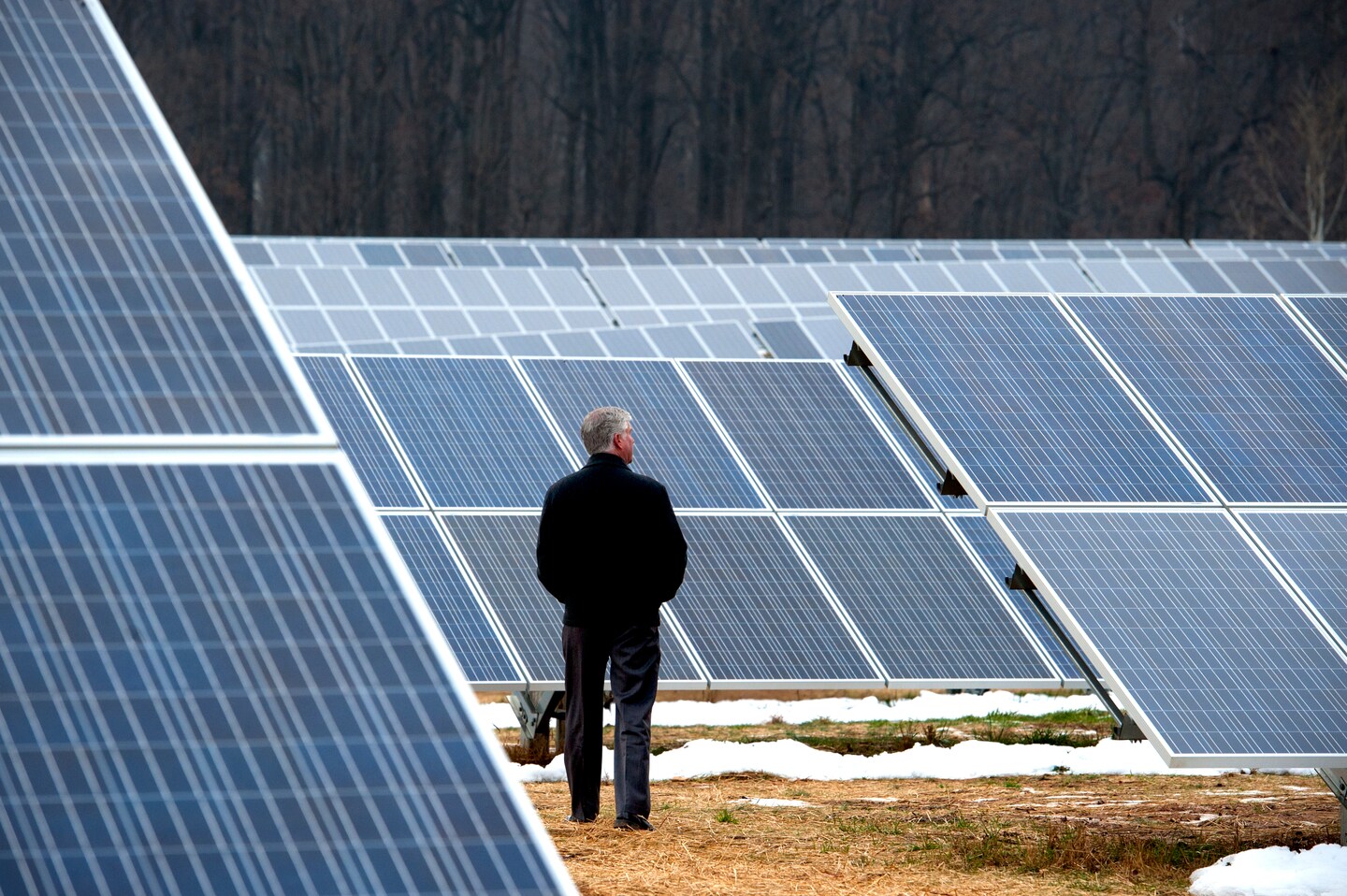
President Joe Biden has invoked the Defense Production Act to accelerate domestic solar panel manufacturing, a move intended to strengthen energy security, create jobs, and reduce reliance on foreign supply chains.
Quick Answer
The Biden administration’s use of the Defense Production Act authorizes federal support for U.S. solar factories, prioritizing the allocation of critical materials and fast‑tracking permitting. By expanding domestic capacity, the policy aims to lower the carbon intensity of the U.S. electricity grid and mitigate supply‑chain risks, though uncertainties remain about the speed of scale‑up and the lifecycle impacts of increased production.
Key Takeaways
- The Defense Production Act can compel private firms to prioritize solar‑related production when national security is at stake.
- Domestic solar manufacturing could cut U.S. greenhouse‑gas emissions by up to 30 % of projected electricity‑sector growth by 2030, according to the International Energy Agency.
- Scaling up requires large investments in raw‑material processing, workforce training, and recycling infrastructure.
- Environmental benefits depend on clean electricity for factories and responsible sourcing of silicon, silver, and rare earths.
- Policy success hinges on coordinated federal, state, and private‑sector actions, as well as community engagement.
What Is Biden Invokes Security Powers to Boost U.S. Solar Production?
In March 2024, President Biden issued an executive order that invoked the Defense Production Act (DPA), a law originally passed in 1950 to ensure the availability of critical materials for national defense. The order directs federal agencies to prioritize the procurement of photovoltaic (PV) cells, silicon wafers, and related components for U.S. manufacturers. Unlike temporary subsidies, the DPA gives the government legal authority to allocate resources, streamline permitting, and, if necessary, compel private firms to meet production targets that are deemed essential for national security.
The measure targets three core objectives: (1) reducing dependence on imported solar modules—particularly from China, which supplied over 80 % of U.S. imports in 2022; (2) creating high‑skill manufacturing jobs; and (3) accelerating the decarbonization of the power sector. By framing solar supply‑chain resilience as a security issue, the administration seeks to align climate policy with broader geopolitical strategy.
How Does It Work?
1. Federal Prioritization of Materials
The DPA allows the Department of Commerce to designate silicon, silver, and certain rare‑earth elements as “critical minerals.” Once designated, the government can allocate these materials to approved solar manufacturers ahead of other commercial users.
2. Fast‑Tracked Permitting and Infrastructure Support
Federal agencies coordinate with state permitting bodies to shorten review times for new solar‑fab plants. In parallel, the Department of Energy offers loan guarantees and research grants for advanced PV technologies.
3. Procurement and Contractual Leverage
Federal agencies, including the Department of Defense, commit to purchasing domestically produced solar modules for on‑site power generation, creating a guaranteed market that incentivizes factory expansion.
4. Workforce Development
The order directs the Department of Labor to fund apprenticeship programs that teach semiconductor‑fabrication skills, ensuring a pipeline of qualified workers.
What Does the Evidence Show?
Multiple lines of evidence indicate that expanding solar manufacturing within the United States can contribute meaningfully to emissions reductions. The International Energy Agency’s 2023 World Energy Outlook estimates that each gigawatt of new solar capacity installed by 2030 can avoid roughly 1.5 million metric tons of CO₂ equivalent, assuming a grid mix that continues to decarbonize.
Historical case studies of the DPA’s use during World War II and the COVID‑19 vaccine rollout demonstrate that the law can mobilize rapid production when political will aligns with clear targets. However, peer‑reviewed analyses of the 2021 semiconductor shortage caution that supply‑chain bottlenecks—especially in raw‑material extraction—can limit the speed of scale‑up, even under DPA authority.
Main Causes or Drivers
Geopolitical Competition
China’s dominance in PV manufacturing creates strategic vulnerabilities. Export controls and trade‑restriction risks have prompted U.S. policymakers to view domestic capacity as a security imperative.
Supply‑Chain Fragility
The COVID‑19 pandemic exposed how just‑in‑time logistics can collapse, leading to price spikes for polysilicon and silver. A more localized supply chain is intended to buffer such shocks.
Climate Policy Ambitions
U.S. commitments under the Paris Agreement require net‑zero emissions by mid‑century. Solar energy is projected to supply 30‑40 % of U.S. electricity by 2050, according to the U.S. Energy Information Administration.
Environmental and Human Impacts
Environmental Impacts
Solar power generation produces negligible air pollutants during operation. The manufacturing phase, however, consumes energy and chemicals. If factories are powered by low‑carbon electricity and adopt water‑recycling technologies, lifecycle emissions can be reduced by up to 50 % compared with current global averages.
Human Health and Social Impacts
Creating manufacturing jobs can raise household incomes in regions with declining coal employment. Nevertheless, occupational exposure to silicon dust and chemicals requires strict safety standards to protect workers.
Economic and Infrastructure Impacts
Domestic factories can stimulate local supply chains for glass, aluminum frames, and balance‑of‑system components, fostering broader economic diversification.
Regional Differences
Sun‑rich states such as Arizona, Texas, and Nevada already host major solar farms and have favorable regulatory environments, making them attractive sites for new fabs. In contrast, the Northeast faces higher labor costs and stricter environmental permitting, potentially slowing plant development there. Rural communities in the Midwest may benefit from job creation but could encounter water‑use constraints for silicon polishing processes.
What Scientists Know With High Confidence
- Solar photovoltaic technology reduces electricity‑sector CO₂ emissions relative to fossil fuels.
- The United States imports more than three‑quarters of its solar modules, creating a strategic supply‑chain risk.
- Life‑cycle assessments show that clean‑energy‑powered manufacturing can halve the carbon footprint of solar panels.
- Workforce training programs improve safety outcomes and productivity in semiconductor‑type factories.
What Remains Uncertain
Key uncertainties include the speed at which raw‑material mining can be domestically expanded without causing new environmental harms, the exact cost competitiveness of U.S.-made panels versus imported ones, and the long‑term effectiveness of recycling schemes for end‑of‑life modules.
Common Misconceptions
Misconception: The DPA guarantees cheap solar panels for consumers.
Reality: The act accelerates production but does not set price ceilings; market forces and material costs still influence retail prices.
Misconception: Solar panel manufacturing is carbon‑free.
Reality: Manufacturing emits CO₂, especially when powered by fossil‑fuel electricity; clean‑energy sourcing is essential for true climate benefits.
Misconception: Domestic production will eliminate all foreign imports.
Reality: The U.S. will likely continue to import certain components (e.g., glass, aluminum) while focusing on high‑value PV cell and wafer production.
Solutions and Limitations
Policy solutions include continued DPA support, targeted tax incentives for clean‑energy factories, and federal standards for recycled‑content in panels. Limitations involve the high capital cost of new fabs, potential water scarcity for silicon processing, and the need for a skilled labor pool. Trade‑offs arise when expanding mining activities for critical minerals, which can affect local ecosystems if not managed responsibly.
What Individuals, Communities, and Governments Can Do
What Individuals Can Do
Choose solar installers that source panels from U.S. manufacturers, support recycling programs for old modules, and advocate for transparent supply‑chain labeling.
What Communities and Organizations Can Do
Partner with local technical schools to develop PV‑fabrication curricula, and host public forums on the environmental safeguards of new solar plants.
What Governments Can Do
Maintain DPA authority, fund research on low‑impact silicon extraction, and enforce rigorous environmental review processes for new manufacturing sites.
Closing Synthesis
Invoking the Defense Production Act to boost U.S. solar production links national security, climate ambition, and economic revitalization. Evidence shows that domestically produced solar panels can lower emissions and reduce supply‑chain exposure, but success depends on clean‑energy‑powered factories, responsible mineral sourcing, and coordinated policy action. While uncertainties remain, the strategic pivot offers a tangible pathway toward a more resilient, low‑carbon energy future.
Frequently Asked Questions
What does invoking the Defense Production Act mean for solar manufacturing?
It gives the federal government authority to prioritize the allocation of critical minerals, fast‑track permits, and secure contracts for domestic solar factories, treating solar production as a national‑security priority.
How could increased U.S. solar manufacturing affect greenhouse‑gas emissions?
Domestic solar panels can replace fossil‑fuel generation, reducing electricity‑sector CO₂ emissions; the International Energy Agency estimates each new gigawatt of U.S. solar capacity can avoid about 1.5 million metric tons of CO₂ by 2030.
What are the main challenges to scaling up domestic solar production?
Key challenges include securing enough raw‑material supply, investing in high‑cost manufacturing facilities, building a skilled workforce, and ensuring factories run on clean electricity to avoid offsetting climate gains.
Which U.S. regions are likely to benefit most from new solar factories?
Sun‑rich states such as Arizona, Texas, and Nevada have favorable climates and regulatory environments, making them prime candidates, while the Northeast may face higher costs and stricter permitting.
What actions can individuals take to support a cleaner solar supply chain?
Consumers can choose solar installers that use U.S.-made panels, participate in recycling programs for old modules, and advocate for transparent labeling that shows where panels are produced.






Leave a Comment