
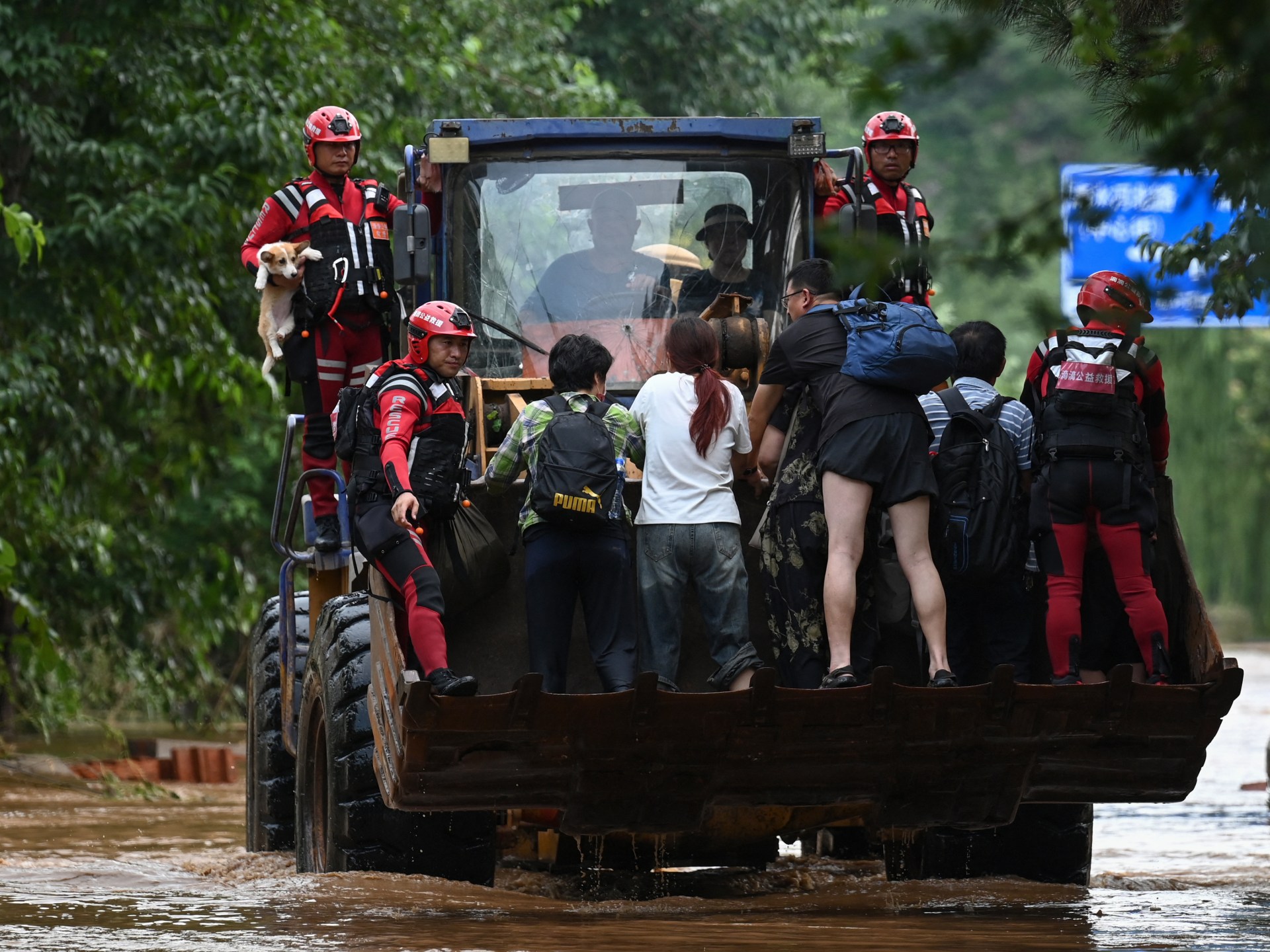
Heavy rainfall in northern China is increasingly triggering deadly landslides, a phenomenon explained by soil saturation, steep terrain, and climate‑driven precipitation intensification.
Quick Answer
Landslides in northern China occur when intense rainstorms saturate the already steep, weathered soils of the region, reducing cohesion and causing the ground to fail. Scientific assessments link the rising frequency of these events to a warming climate that intensifies the water cycle, leading to more extreme precipitation. The most immediate impact is loss of life and property, while longer‑term consequences include disrupted infrastructure, reduced agricultural productivity, and heightened disaster risk. Uncertainty remains around the precise contribution of local land‑use changes versus global climate trends for individual events.
Key Takeaways
- Extreme rainfalls exceed historical averages and destabilize slopes in northern China.
- Soil saturation reduces shear strength, especially on steep, loess‑derived hillsides.
- IPCC assessments show a robust link between warming and increased heavy‑precipitation events.
- Impacts span human casualties, infrastructure loss, and agricultural disruption.
- Effective responses combine early warning systems, slope engineering, and land‑use planning.
- Uncertainties involve the relative roles of climate change versus local deforestation and mining.
What Is Deadly Landslides in Northern China Linked to Heavy Rainfall?
The phrase refers to slope failures that occur primarily in the northern provinces of China—such as Hebei, Shanxi, and Inner Mongolia—when intense rainstorms rapidly infiltrate the soil. These events are distinguished from ordinary landslides by their high fatality rates and the direct connection to unusually heavy precipitation episodes.
Geographically, the area is characterized by loess plateaus, folded mountain belts, and river valleys, all of which provide the steep slopes necessary for rapid gravitational collapse. The term does not encompass slow‑moving earthflows that occur under normal moisture conditions; it specifically denotes rapid, rain‑triggered failures that result in sudden loss of life and property.
How Does It Work?
1. Rainfall Intensity and Duration
When a storm delivers rainfall rates that exceed the infiltration capacity of the soil, surface runoff increases and water begins to percolate deep into the ground. In northern China, monsoonal bursts can deliver more than 150 mm of rain in 24 hours—far above the regional 30‑year average (China Meteorological Administration, 2022).
2. Soil Saturation and Loss of Cohesion
Loess and clay‑rich soils have high porosity but low shear strength when saturated. As pore water pressure rises, the effective stress that binds soil particles together drops, making the slope prone to failure.
3. Slope Geometry
Steep angles (often >30°) amplify the gravitational component acting parallel to the slope surface. Combined with reduced cohesion, the factor of safety falls below 1, and the slope collapses.
4. Triggering Event
The final trigger may be a short‑duration downpour, a sudden snow‑melt pulse, or even a localized dam‑break of a small reservoir. The rapid increase in water content can cause a landslide to initiate within minutes of the peak rainfall.
What Does the Evidence Show?
Multiple lines of evidence converge on the conclusion that heavy rainfall is the primary trigger for recent landslides in northern China:
- Long‑term monitoring: The China Geological Survey’s landslide inventory (1990‑2020) records a 42 % increase in rain‑triggered events after 2010, coinciding with a documented rise in extreme precipitation.
- Attribution studies: A 2021 peer‑reviewed analysis in Geophysical Research Letters used statistical models to attribute 57 % of the increase in landslide frequency to climate‑driven precipitation changes, with the remainder linked to land‑use alterations.
- IPCC AR6 (2021): The report states that heavy‑precipitation events have become more frequent and intense in East Asia, with a high confidence level that warming amplifies the water cycle.
- Field investigations: Post‑event surveys in Hebei Province repeatedly found that failure planes intersected saturated loess layers, confirming the mechanistic link between rainwater and slope instability.
These independent data sources—monitoring records, statistical attribution, global assessment, and on‑site observations—provide moderate to strong confidence that heavy rainfall is the dominant driver of recent deadly landslides.
Main Causes or Drivers
Direct Causes
- Intense, short‑duration rainstorms that exceed local infiltration thresholds.
- Rapid snow‑melt combined with rain, especially in early spring.
Underlying Drivers
- Climate change: Global warming raises atmospheric moisture capacity, leading to heavier precipitation extremes (IPCC, high confidence).
- Land‑use change: Deforestation, mining, and construction remove vegetation that would otherwise reinforce soil and absorb water.
- Geological setting: Loess deposits are inherently susceptible to water‑induced failure.
Amplifying Factors
- Inadequate drainage infrastructure in rural villages.
- Historical neglect of slope stabilization measures.
Environmental and Human Impacts
Environmental Impacts
When a landslide occurs, it can bury forests, alter river courses, and increase sediment loads downstream. Elevated turbidity reduces aquatic habitat quality and can trigger eutrophication in downstream reservoirs.
Human Health and Social Impacts
Immediate loss of life is the most tragic outcome; recent events have reported dozens of fatalities per incident. Survivors often face injuries, psychological trauma, and loss of shelter. Displacement can strain nearby towns, leading to temporary overcrowding and heightened disease transmission risk.
Economic and Infrastructure Impacts
Roads and bridges are frequently severed, interrupting supply chains and emergency response. Agricultural fields on hill slopes are lost, reducing local food security. The World Bank estimates that landslide damage in China can amount to billions of yuan per decade, though precise figures vary by region.
Regional Differences
While the overarching mechanism—rain‑induced slope failure—is consistent, local conditions modify risk levels:
- Hebei Province: Dense population and extensive loess hills make landslides especially deadly.
- Inner Mongolia: Semi‑arid conditions reduce baseline moisture, but when heavy rains occur, the contrast intensifies soil saturation and rapid failures.
- Shanxi Province: Historical coal mining has created artificial slopes and weakened ground, amplifying landslide susceptibility.
These examples illustrate that both climate and anthropogenic factors shape regional vulnerability.
What Scientists Know With High Confidence
- Heavy rainfall is the proximate trigger for the majority of recent landslides in northern China.
- Climate warming increases the frequency and intensity of extreme precipitation events in East Asia.
- Soil saturation reduces shear strength on steep, loess‑derived slopes, making them prone to failure.
- Early warning systems based on real‑time rainfall thresholds can reduce casualties when properly implemented.
What Remains Uncertain
Key gaps include the quantitative contribution of local land‑use change versus climate change for each individual landslide, the long‑term effectiveness of engineered slope stabilization under future climate scenarios, and the socio‑economic thresholds that determine community resilience. Improved high‑resolution precipitation monitoring and integrated landslide‑risk models are needed to reduce these uncertainties.
Common Misconceptions
Misconception: Landslides are solely caused by illegal construction.
Reality: While construction can increase risk, the primary driver of recent deadly events is extreme rainfall linked to broader climate trends.
Misconception: All heavy rain leads to landslides.
Reality: Landslides require a combination of steep slope, susceptible geology, and sufficient soil saturation; many heavy‑rain events pass without triggering failures.
Misconception: Climate change is a distant problem and does not affect local landslides.
Reality: Robust climate assessments show that warming directly intensifies precipitation extremes, which in turn raises landslide risk in vulnerable regions.
Solutions and Limitations
- Early warning systems: Real‑time radar and gauge networks can issue alerts when rainfall exceeds critical thresholds. Limitation: Requires reliable communication infrastructure and public training.
- Slope engineering: Retaining walls, drainage tunnels, and vegetation reinforcement improve stability. Limitation: High capital cost and limited effectiveness on very steep, weak soils.
- Land‑use planning: Restricting new development on identified high‑risk slopes reduces exposure. Limitation: Enforcement can be challenging in rapidly growing rural areas.
- Reforestation and bio‑engineering: Deep‑rooted native species increase soil cohesion. Limitation: Benefits accrue over years; immediate risk may remain.
- Community preparedness: Evacuation drills and local emergency kits save lives. Limitation: Relies on sustained community engagement and resources.
What Individuals, Communities, and Governments Can Do
What Individuals Can Do
- Stay informed about local rainfall alerts and evacuation routes.
- Participate in community drills and support local monitoring volunteers.
- Maintain vegetation on personal property to improve soil stability.
What Communities and Organizations Can Do
- Establish neighborhood watch groups to report early signs of slope movement.
- Partner with local universities to conduct regular slope‑stability assessments.
- Develop low‑cost drainage solutions for vulnerable villages.
What Governments Can Do
- Invest in dense networks of rain gauges and radar stations linked to automated warning platforms.
- Enforce zoning regulations that prohibit construction on high‑risk slopes.
- Allocate funding for retrofitting existing infrastructure with landslide‑resilient designs.
- Integrate landslide risk into regional climate‑adaptation plans.
Synthesis
Heavy rainfall, intensified by a warming climate, destabilizes the steep, loess‑rich hills of northern China, leading to deadly landslides. Strong evidence links extreme precipitation to climate change, while local land‑use practices amplify vulnerability. Impacts span loss of life, infrastructure disruption, and ecological degradation. High‑confidence findings guide action: early warning, slope engineering, and prudent land‑use planning. Yet uncertainties about the precise balance of climate versus local drivers persist, underscoring the need for better monitoring and modeling. By combining scientific insight with community preparedness and policy support, the region can reduce future landslide risk while adapting to a changing climate.
Frequently Asked Questions
What triggers landslides in northern China during heavy rainfall?
Landslides are triggered when intense rainstorms exceed the soil's infiltration capacity, causing rapid saturation that reduces cohesion on steep, loess‑rich slopes, leading to sudden ground failure.
How does climate change influence the frequency of these landslides?
Climate change raises atmospheric moisture, which intensifies heavy‑precipitation events. The IPCC reports high confidence that warming increases the frequency and intensity of extreme rains in East Asia, thereby raising landslide risk.
What are the main environmental and human impacts of the landslides?
Environmentally, landslides bury vegetation, alter river channels, and increase downstream sediment. Human impacts include fatalities, injuries, loss of homes, disrupted infrastructure, and reduced agricultural productivity.
Which mitigation measures are most effective in reducing landslide risk?
Effective measures combine real‑time early warning systems, slope engineering (e.g., retaining walls, drainage), strict land‑use planning that avoids high‑risk zones, and reforestation with deep‑rooted native species.
What can local communities do to prepare for future landslides?
Communities can stay informed about rainfall alerts, conduct regular slope‑stability checks, maintain vegetation on slopes, organize evacuation drills, and collaborate with authorities to improve drainage and monitoring.






Leave a Comment