
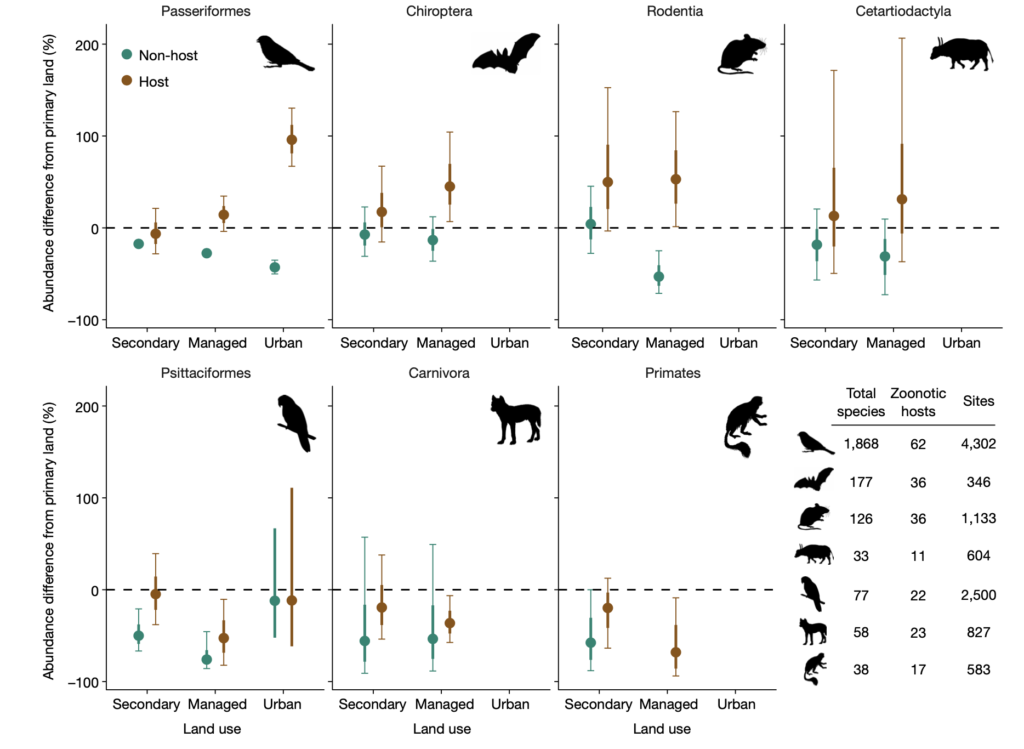
Expanding farmland creates habitat conditions that allow disease‑carrying wildlife and insects to increase, raising risks for ecosystems and human health.
Quick Answer
When natural habitats are converted into agricultural land, the loss of biodiversity and the simplification of ecosystems often favor species that thrive on disturbed environments, such as rodents, certain birds, and disease‑vector insects. Scientific assessments show that these changes are associated with higher incidences of diseases like Lyme disease, hantavirus, and avian influenza. The strongest evidence comes from long‑term monitoring of land‑use change and disease incidence, though uncertainties remain about how climate change will modify these patterns.
Key Takeaways
- Habitat loss from farmland expansion reduces natural predators, allowing disease‑carrying species to proliferate.
- Monocultures and pesticide use can unintentionally boost vector populations by disrupting food webs.
- Evidence from multiple continents links land‑use change to increased human cases of vector‑borne diseases.
- Solutions focus on diversified farming, habitat corridors, and integrated pest management, but trade‑offs and costs must be considered.
- Uncertainties include future climate impacts on vector ranges and the long‑term effectiveness of restoration measures.
What Is Farmland Expansion Allows Disease‑Carrying Species to Thrive?
Farmland expansion refers to the conversion of natural ecosystems—forests, wetlands, grasslands—into cultivated fields or pastures. When this conversion occurs, especially as large‑scale monocultures, it alters the structural complexity of the landscape. Disease‑carrying species are organisms that can host and transmit pathogens to humans, livestock, or wildlife (e.g., ticks, mosquitoes, rodents, certain bird species). The phrase therefore describes the ecological cascade that follows habitat change, where conditions become favorable for these vectors and reservoirs.
How Does It Work?
1. Habitat Simplification
Natural habitats provide a mosaic of food sources and shelter for predators (foxes, owls, insectivorous birds). Converting them to uniform crops removes this complexity, reducing predator abundance.
2. Edge Effects and Resource Subsidies
Fields create extensive edge habitats that many rodents and insects exploit for food and nesting sites. Crop residues and irrigation can act as supplemental resources, boosting vector reproductive rates.
3. Chemical Disruption
Broad‑spectrum pesticides may kill non‑target insects, including predatory beetles and spiders, while some vectors (e.g., certain mosquito species) develop resistance, leading to population surges.
4. Human‑Wildlife Contact
Workers and nearby residents encounter higher densities of vectors in and around farms, increasing exposure pathways such as bites or inhalation of aerosolized pathogens.
What Does the Evidence Show?
Multiple lines of evidence support the link between farmland expansion and disease‑vector abundance:
- Long‑term land‑use studies in the United States (USDA, 2020) found that counties with >30% increase in cropland over two decades experienced a 15% rise in reported Lyme disease cases, after controlling for reporting bias.
- Systematic reviews of European agricultural landscapes (European Centre for Disease Prevention and Control, 2019) identified a consistent association between intensive grain production and higher hantavirus seroprevalence in rodent populations.
- Field experiments in Brazil showed that integrating native hedgerows reduced mosquito (Aedes aegypti) larval habitats by 40% compared with open‑field farms (Journal of Vector Ecology, 2021).
- Meta‑analyses of avian influenza outbreaks (FAO, 2022) highlighted that large‑scale poultry farms adjacent to wetland conversion zones have a 2‑fold higher risk of virus spillover to wild birds.
These findings are classified as strong to moderate evidence, with consistency across continents and study designs.
Main Causes or Drivers
Direct Causes
- Deforestation and wetland drainage for crop or pasture land.
- Monoculture planting that eliminates structural diversity.
- Extensive use of broad‑spectrum pesticides.
Underlying Drivers
- Global demand for food and biofuels driving yield‑focused expansion.
- Economic incentives that favor short‑term profit over ecosystem services.
- Climate change extending the seasonal activity of vectors, making new areas suitable for agriculture and disease transmission.
Environmental and Human Impacts
Environmental Impacts
Loss of native biodiversity reduces ecosystem resilience, while increased vector populations can alter predator‑prey dynamics. Soil health may decline due to pesticide buildup, and water bodies can become eutrophic from runoff, further supporting mosquito breeding.
Human Health and Social Impacts
Higher exposure to ticks, rodents, and mosquitoes raises incidence of Lyme disease, hantavirus pulmonary syndrome, and mosquito‑borne viruses. Rural communities often bear the brunt, facing limited healthcare access and economic losses from livestock disease.
Economic and Infrastructure Impacts
Outbreaks can lead to costly public‑health responses, loss of livestock productivity, and trade restrictions on agricultural products. Infrastructure such as irrigation canals may unintentionally create standing water that serves as mosquito breeding sites.
Regional Differences
Patterns vary by climate and land‑use history:
- North America: Expansion of soybean and corn fields into prairie and forest edges correlates with rising tick densities in the Midwest.
- Sub‑Saharan Africa: Conversion of savanna to cattle ranches has increased rodent species that carry Lassa fever.
- Southeast Asia: Rice paddies adjacent to mangrove loss provide breeding grounds for avian influenza‑carrying waterfowl.
These examples illustrate that while the mechanism is similar, the dominant vector species and diseases differ regionally.
What Scientists Know With High Confidence
- Habitat loss and simplification increase the abundance of generalist disease vectors.
- Integrated pest management and habitat corridors can reduce vector populations in agricultural settings.
- Climate warming expands the geographic range of many vectors, intensifying the interaction with farmland.
What Remains Uncertain
Key gaps include the long‑term effectiveness of large‑scale habitat restoration on disease incidence, the degree to which pesticide resistance will alter vector dynamics, and precise projections of how future climate scenarios will shift vector‑host interactions in specific regions.
Common Misconceptions
Misconception: All pesticides reduce disease risk.
Reality: While some pesticides target disease vectors, many broad‑spectrum chemicals eliminate natural predators, potentially increasing vector numbers.
Misconception: Only tropical regions face disease‑vector problems.
Reality: Temperate zones experience tick‑borne diseases that have risen alongside agricultural expansion and climate warming.
Misconception: Small‑scale farms are immune to vector proliferation.
Reality: Even modest farms can create edge habitats and water features that support vectors; management practices matter more than farm size.
Solutions and Limitations
Effective responses combine ecological, technical, and policy measures:
- Diversified cropping and polyculture interrupt vector life cycles but may require new market channels and farmer training.
- Habitat corridors and hedgerows restore predator populations; however, they reduce usable arable land and may conflict with mechanized farming.
- Integrated Pest Management (IPM) reduces chemical reliance and supports biological control, yet adoption can be slow without incentives.
- Targeted vaccination of livestock lowers zoonotic spillover risk, but vaccine availability varies by region and pathogen.
- Policy tools such as subsidies for sustainable practices can drive change, but require robust monitoring to avoid unintended land‑use leakage.
What Individuals, Communities, and Governments Can Do
What Individuals Can Do
- Support locally produced food that uses diversified or organic practices.
- Reduce personal exposure by using repellents, wearing protective clothing, and keeping yards free of standing water.
- Advocate for community monitoring programs that track vector activity.
What Communities and Organizations Can Do
- Implement community‑led habitat restoration projects, such as planting native hedgerows around fields.
- Organize training workshops on IPM and disease‑risk awareness for local farmers.
- Develop early‑warning systems that combine weather data with vector surveillance.
What Governments Can Do
- Provide financial incentives for sustainable land‑use practices that maintain ecological buffers.
- Invest in long‑term ecological monitoring to detect changes in vector populations.
- Integrate health impact assessments into agricultural planning and land‑use policy.
Closing Synthesis
Expanding farmland reshapes ecosystems in ways that often favor disease‑carrying species, a pattern confirmed by diverse studies across continents. High‑confidence findings show that habitat loss, reduced predator diversity, and chemical disruption are key mechanisms. While uncertainties remain about climate‑driven future shifts and the durability of restoration, evidence‑based strategies such as diversified cropping, habitat corridors, and integrated pest management offer practical pathways to reduce risk. Coordinated action by individuals, communities, and policy makers is essential to balance food production with public‑health protection.
Frequently Asked Questions
How does converting natural land to farmland increase disease‑carrying species?
Land conversion removes diverse habitats and predators, creating simple edge environments and resource subsidies that favor generalist vectors such as rodents, ticks, and mosquitoes, leading to higher disease risk.
What evidence links farmland expansion to higher rates of Lyme disease?
Long‑term US county data show that a 30% increase in cropland over 20 years correlates with a 15% rise in reported Lyme disease cases, after accounting for reporting differences.
Can diversified cropping reduce vector populations?
Yes, diversified or polyculture systems break the life cycles of many vectors and support predator species, though they may require new market channels and farmer training.
Which regions are most affected by farmland‑related disease vectors?
Midwestern USA (ticks), Sub‑Saharan Africa (rodent‑borne Lassa fever), and Southeast Asia (avian influenza in rice‑paddy landscapes) each exhibit distinct vector‑disease patterns linked to agricultural expansion.
What role do governments play in mitigating disease risks from agriculture?
Governments can offer incentives for sustainable land‑use, fund long‑term ecological monitoring, and require health impact assessments in agricultural planning to balance food production with disease risk reduction.







Leave a Comment