The world’s demand for sand now exceeds the planet’s natural ability to replenish it, creating a hidden crisis that threatens ecosystems, infrastructure, and climate resilience.
Quick Answer
Sand is a granular mineral formed by the weathering of rocks and the erosion of river‑ and coastal deposits. Human activities—especially construction, glass production, and hydraulic fracturing—extract sand at an estimated 50 billion tonnes per year globally (UNEP 2019), far faster than natural processes can replace it. This imbalance leads to riverbank collapse, coastal erosion, loss of habitat, and rising costs for concrete and asphalt. While some regions still have abundant deposits, the overall trend points toward increasing scarcity, and the exact timeline for critical depletion remains uncertain.
Key Takeaways
- Sand is the second‑most‑consumed raw material after fresh water.
- Global extraction exceeds natural replenishment, causing measurable ecological damage.
- Impacts include riverine habitat loss, accelerated coastal erosion, and higher construction costs.
- Recycling aggregates and manufactured sand can offset demand but face technical and market limits.
- Strong governance and transparent supply chains are essential to prevent illegal mining.
What Is “Are We Running Out of Sand? The Hidden Earth Crisis?”
The phrase refers to a situation where commercially viable sand deposits become so depleted that extraction costs rise sharply, ecosystems are degraded, and alternative materials are needed. The term covers two main categories:
- Industrial sand – high‑purity, well‑graded sand used for concrete, asphalt, glass, and silicon chips.
- River‑bank and coastal sand – sand harvested from inland waterways and shorelines for construction purposes.
Beach sand that is abundant but poorly sorted or contaminated is usually unsuitable for engineering, so the crisis focuses on sand that meets specific grain‑size and purity requirements. Understanding this issue matters because sand underpins modern infrastructure, protects coastlines from storm surge, and supports diverse freshwater and marine habitats.

How Does It Work?
1. The Natural Sand Cycle
Rocks break down through physical weathering (freeze‑thaw, wind, water) and chemical weathering (acid rain, dissolution). The resulting particles are transported by rivers to deltas and coasts, where they accumulate as sandbanks. Over geological timescales, new sand is generated at rates of only a few centimeters per year in most basins.
2. Human Extraction
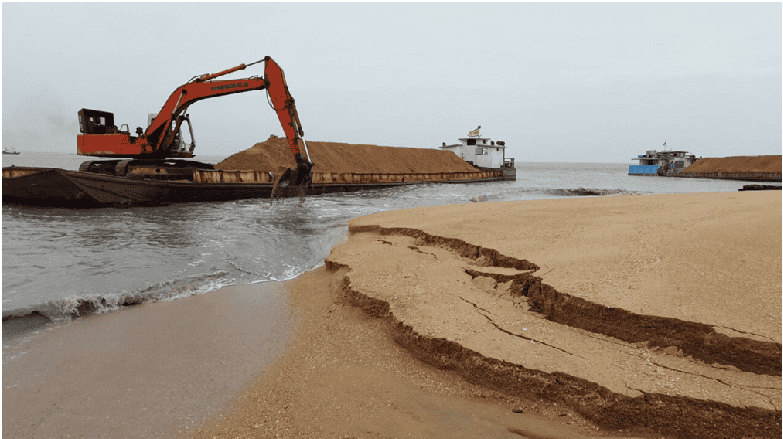
Construction projects demand sand with narrow grain‑size distributions. Extraction methods include dredging riverbeds, pumping sand from offshore sites, and excavating inland quarries. Removing the top layer of sediment exposes underlying soils, alters flow regimes, and can deepen river channels.
3. Feedback Loops
When sand is removed, river channels may deepen and meander, increasing flood risk. Coastal sand loss reduces natural barriers, amplifying shoreline erosion during storms. Damaged infrastructure then creates fresh demand for more sand, creating a self‑reinforcing cycle.
What Does the Evidence Show?
Long‑term monitoring by the United Nations Environment Programme indicates that annual sand extraction rose from roughly 10 billion tonnes in the 1990s to about 50 billion tonnes in 2019. Field studies in the Mekong, Ganges, and Amazon basins document riverbank collapse and reduced fish spawning grounds directly linked to sand mining. Coastal case studies in Southeast Asia and the Caribbean report shoreline retreat rates of 0.5–2 m per year where intensive dredging occurs (UNEP 2020). A systematic review of 27 peer‑reviewed papers (2015‑2022) concludes that sand mining is a leading driver of freshwater habitat fragmentation, with moderate to strong evidence across multiple continents.
Main Causes or Drivers
Direct Causes
- Rapid urbanization and construction booms in China, India, Brazil, and other fast‑growing economies.
- Infrastructure projects such as highways, ports, and dams that require large sand volumes.
- Industrial processes like glass making and hydraulic fracturing that consume high‑purity sand.
Underlying Drivers
- Population growth and rising per‑capita floor‑space demand.
- Economic policies that prioritize low‑cost construction materials.
- Weak governance, limited enforcement of mining permits, and corruption that enable illegal extraction.
Environmental and Human Impacts
Environmental Impacts
Removing sand destabilizes riverbanks, leading to increased erosion, altered sediment transport, and loss of spawning grounds for fish. Coastal sand extraction accelerates shoreline erosion, reduces natural flood buffers, and can trigger saltwater intrusion into freshwater aquifers.
Human Health and Social Impacts
Communities downstream of intensive mining often experience higher turbidity, reduced water quality, and greater flood risk, compromising drinking‑water supplies and agricultural productivity. In several regions, illegal sand mining is linked to violence, organized crime, and corruption, undermining social stability.
Economic and Infrastructure Impacts
As high‑quality sand becomes scarce, prices for concrete and asphalt rise, inflating housing costs and delaying public‑works projects. Developing nations that rely heavily on construction‑driven growth may see slower GDP expansion if sand supply constraints persist.
Regional Differences
In South‑East Asia, river sand is the primary construction source, and illegal extraction is widespread due to lax regulation. North America and Europe rely largely on inland quarries, but demand for manufactured sand (M‑sand) is growing as natural river sand faces environmental restrictions. African nations such as Kenya experience both coastal erosion from tourism‑driven sand removal and inland quarry depletion, illustrating how local geology and governance shape the crisis.
What Scientists Know With High Confidence
- Global sand extraction exceeds natural replenishment rates.
- Unregulated sand mining causes measurable riverbank and coastal erosion.
- Sand scarcity drives up construction material costs, affecting housing affordability.
- Recycling of construction and demolition waste can supply up to 30 % of aggregate demand in some regions (UNEP 2021).
What Remains Uncertain
The precise timeline for when specific sand basins will become economically unviable is unclear because clandestine mining is poorly documented, and future construction demand depends on policy choices, urbanization rates, and the adoption of alternative materials. Regional data gaps—especially in low‑income countries—limit the ability to predict local depletion thresholds.
Common Misconceptions
Misconception: Sand is an infinite resource.
Reality: While sand appears abundant, the grain‑size and purity required for engineering are limited, and current extraction rates outpace natural formation.
Misconception: Only beach sand is affected.
Reality: Inland river sand and quarry sand are heavily mined; many ecosystems depend on these sediments for habitat structure.
Misconception: Recycling sand eliminates the problem.
Reality: Recycling can offset part of the demand, but current technology, collection rates, and quality control limit its contribution to global needs.
Solutions and Limitations
Regulation and Enforcement
Stricter permitting, real‑time monitoring, and penalties for illegal mining can curb extraction, but effective implementation requires political will, adequate funding, and cross‑border cooperation.
Manufactured Sand (M‑sand)
Crushing rock into graded sand reduces pressure on riverbeds. However, production can increase energy use, generate dust, and may not meet all quality specifications for certain high‑strength concrete.
Construction‑Waste Recycling
Crushing demolition debris into aggregates lowers demand for virgin sand. Challenges include ensuring consistent particle size, removing contaminants, and achieving market acceptance.
Alternative Materials
Incorporating fly ash, slag, or recycled plastic fibers into concrete reduces sand need, but long‑term durability, regulatory approval, and scale‑up remain under study.
Habitat Restoration
Re‑vegetating riverbanks and replenishing coastal dunes can partially restore lost functions, yet restoration is costly, time‑intensive, and may not fully reverse historic degradation.
What Individuals, Communities, and Governments Can Do
What Individuals Can Do
Choose builders who certify the use of recycled aggregates, support local policies that ban unlicensed sand mining, and reduce personal consumption of high‑sand products such as single‑use glass.
What Communities and Organizations Can Do
Implement community‑based riverbank monitoring, partner with NGOs to demand transparent sand‑supply chains, and promote low‑sand design principles in local building codes.
What Governments Can Do
Adopt national sand‑resource management plans, enforce strict licensing, invest in research for alternative building materials, and fund restoration projects for degraded river and coastal habitats.
Closing Synthesis
Sand scarcity illustrates how a seemingly limitless natural material can become constrained when extraction outpaces planetary renewal. Robust evidence shows ecological damage, rising construction costs, and social challenges, while uncertainties remain about the exact timing of critical depletion. Sustainable sourcing, material innovation, and strong governance together offer the most credible path to balance development needs with the preservation of the Earth’s sandy foundations.
Frequently Asked Questions
What defines sand scarcity and why is it a concern?
Sand scarcity refers to the situation where the rate of sand extraction exceeds the natural rate at which sand is formed, making commercially viable deposits increasingly expensive and environmentally damaging. It matters because sand is essential for concrete, asphalt, glass, and coastal protection, so shortages affect infrastructure, ecosystems, and economies.
How much sand is extracted globally each year?
According to the United Nations Environment Programme, global sand extraction was about 50 billion tonnes in 2019, up from roughly 10 billion tonnes in the 1990s. This extraction rate far outpaces the natural replenishment of sand in most river basins and coastal zones.
What are the main environmental impacts of sand mining?
Sand mining destabilizes riverbanks, leading to increased erosion, loss of fish spawning habitats, and altered sediment transport. Coastal sand removal accelerates shoreline retreat, reduces natural flood buffers, and can cause saltwater intrusion into freshwater aquifers, threatening biodiversity and human water supplies.
Which solutions can reduce pressure on natural sand resources?
Solutions include stricter regulation and enforcement of mining permits, using manufactured sand produced by crushing rock, recycling construction and demolition waste into aggregates, incorporating alternative binders such as fly ash or slag into concrete, and restoring degraded riverbanks and dunes. Each approach has technical, economic, or environmental trade‑offs.
What actions can ordinary citizens take to help address sand scarcity?
Individuals can choose builders that use certified recycled aggregates, support policies that ban illegal sand mining, reduce consumption of products that require high‑purity sand (e.g., single‑use glass), and participate in community monitoring programs that report unlawful extraction.





Leave a Comment