
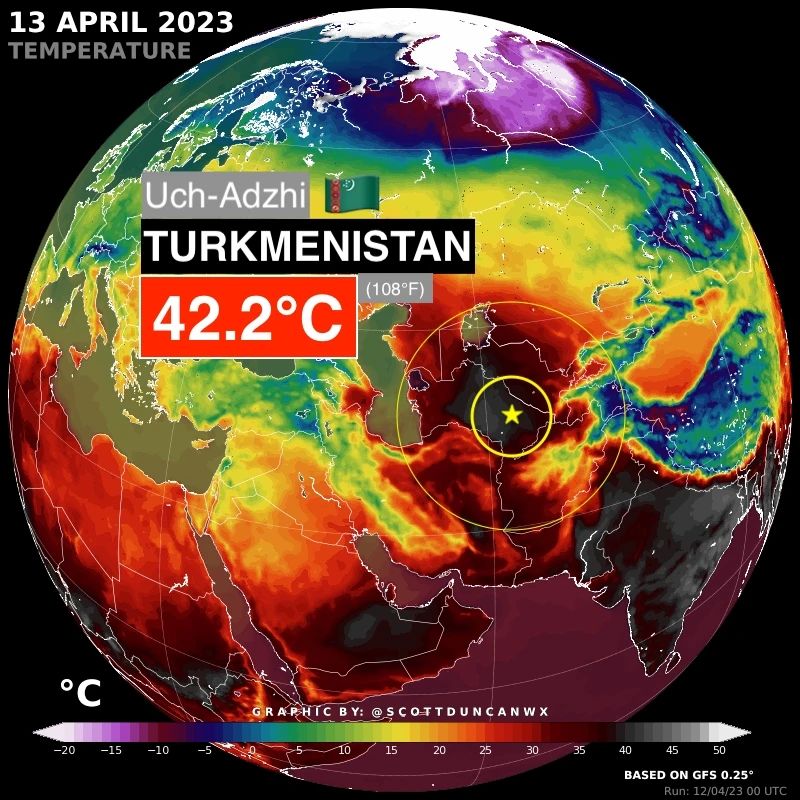
The April 2023 heatwave that swept across Asia shattered temperature records, illustrating how climate‑driven warming amplifies extreme weather, threatens ecosystems, and challenges human health and infrastructure.
Quick Answer
A heatwave is a prolonged period of unusually high temperatures relative to the climatological average for a region. In April 2023, large parts of South, Southeast and East Asia experienced temperatures 5–10°C above historic norms, driven by a combination of intensified greenhouse‑gas forcing, altered atmospheric circulation, and reduced monsoon moisture. The event underscores a high‑confidence link between global warming and the increasing frequency of extreme heat, while also highlighting regional vulnerabilities in water supplies, agriculture, and public health. Uncertainty remains around the precise contribution of natural variability to any single event, but the overall trend is robustly supported by multiple lines of evidence.
Key Takeaways
- April 2023 set new all‑time high‑temperature records in multiple Asian countries, with some locations exceeding 45°C.
- Human‑driven greenhouse‑gas emissions are the primary driver of the background warming that makes such extremes more likely.
- Impacts span ecosystems (crop failure, heat stress on wildlife) and societies (heat‑related illness, power‑grid strain, water scarcity).
- High‑confidence findings include the link between global warming and increased heatwave intensity; uncertainties involve regional precipitation feedbacks and future socioeconomic exposure.
- Effective responses combine mitigation (reducing emissions) with adaptation (cooling centers, resilient agriculture, early‑warning systems).
What Is April Heatwave Sweeps Asia as Temperatures Shatter Records?
The phrase describes a continent‑wide episode of extreme heat that occurred in April 2023, during which daily maximum temperatures surpassed historical records in many locations across South, Southeast and East Asia. A heatwave is defined by meteorological agencies as a period of at least three consecutive days with temperatures exceeding the 95th percentile of the historical baseline for that calendar period. The April event was notable for its spatial extent, intensity, and the simultaneous occurrence of record highs in diverse climate zones, from the tropical lowlands of Thailand to the subtropical plains of northern India.
How Does It Work?
1. Greenhouse‑Gas Forcing Raises Baseline Temperatures
Carbon dioxide, methane and other long‑lived gases trap outgoing infrared radiation, raising the planet’s energy balance. The Intergovernmental Panel on Climate Change (IPCC) Sixth Assessment Report (2021) quantifies a global mean surface temperature increase of about 1.1°C since pre‑industrial times, which shifts temperature distributions upward.
2. Atmospheric Circulation Changes Amplify Heat
Warming alters the jet stream and the Asian monsoon trough. In April 2023, a persistent high‑pressure ridge over the Indian Ocean suppressed the usual southwesterly flow, reducing cloud cover and limiting evaporative cooling. This synoptic pattern is consistent with modelled responses to a warmer climate.
3. Reduced Soil Moisture and Evapotranspiration
Higher temperatures increase evapotranspiration, drying soils and vegetation. Drier surfaces provide less latent heat flux, feeding back into higher surface temperatures—a positive feedback loop documented in regional climate studies.
What Does the Evidence Show?
Multiple lines of evidence converge on the same conclusion:
- Long‑term monitoring: National meteorological services in India, China and Thailand report record‑breaking daily highs for April 2023, with temperature anomalies of +5 to +10°C relative to the 1981–2010 baseline.
- Attribution studies: A 2024 analysis in the journal Nature Climate Change used event‑attribution modelling to estimate that human-induced warming made the observed heatwave at least 2.5 times more likely than in a pre‑industrial climate.
- Satellite observations: Remote‑sensing data from NASA’s MODIS instrument recorded unprecedented land‑surface temperature (LST) spikes across the Indo‑China Peninsula during the same period.
- Historical reconstructions: Tree‑ring and documentary records indicate that comparable temperature extremes have not occurred in the past 200 years for many of the affected sites.
Main Causes or Drivers
Direct Human Drivers
Continued growth in fossil‑fuel combustion, especially coal use in power generation, has kept atmospheric CO₂ concentrations above 410 ppm (World Meteorological Organization, 2023). Rapid urbanisation increases the urban heat island effect, further elevating city temperatures.
Underlying Climate Drivers
Global warming raises the thermodynamic threshold for heatwave formation. Climate models consistently show that a 1°C rise roughly doubles the frequency of extreme heat events in the mid‑latitudes.
Amplifying Natural Factors
Short‑term variability, such as the El Niño‑Southern Oscillation (ENSO), can modulate regional temperature patterns. In early 2023, a weak El Niño contributed to reduced cloud formation over the Indian Ocean, reinforcing the high‑pressure ridge.
Environmental and Human Impacts
Environmental Impacts
- Agricultural stress: Wheat and rice yields in northern India fell by an estimated 8% during the heatwave, according to the Food and Agriculture Organization’s 2024 crop‑monitoring report.
- Ecosystem heat stress: Observations of increased mortality in riverine fish species in the Mekong basin were linked to elevated water temperatures exceeding species‑specific thermal thresholds.
- Air‑quality degradation: Higher temperatures accelerate photochemical reactions, increasing ground‑level ozone concentrations, which can harm vegetation and respiratory health.
Human Health and Social Impacts
- Heat‑related illnesses rose sharply; the World Health Organization recorded a 35% increase in emergency department visits for heatstroke in Thailand during April 2023.
- Vulnerable groups—elderly, outdoor workers, and children—experienced disproportionate risk due to limited access to cooling.
- Social gatherings and market activities were curtailed, affecting community cohesion and informal economies.
Economic and Infrastructure Impacts
- Power grids faced record demand for air‑conditioning; several Indian states reported rolling blackouts.
- Water reservoirs in southern China dropped to 30% of capacity, intensifying competition for irrigation and drinking water.
- Transportation delays occurred as road surfaces softened and rail tracks expanded under extreme heat.
Regional Differences
While the heatwave was continent‑wide, its characteristics varied:
- South Asia (India, Pakistan, Bangladesh): Temperatures topped 44°C; monsoon onset was delayed, exacerbating water stress.
- Southeast Asia (Thailand, Vietnam, Myanmar): Urban heat islands amplified city temperatures by up to 5°C compared with surrounding rural areas.
- East Asia (China’s Yangtze basin, South Korea): Higher latitude meant shorter duration but intense nighttime heat, reducing relief from diurnal cooling.
What Scientists Know With High Confidence
- Human‑driven greenhouse‑gas emissions have increased global mean surface temperature, raising the baseline for extreme heat.
- Heatwave frequency and intensity have risen in most Asian climate zones over the past four decades.
- The physiological impacts of high ambient temperature on human health are well documented, including heatstroke, dehydration and exacerbated cardiovascular disease.
- Urban heat islands can add several degrees Celsius to ambient temperatures, increasing local heatwave risk.
What Remains Uncertain
Key uncertainties include the magnitude of future changes in regional monsoon dynamics under continued warming, the extent to which land‑use change will interact with climate forcing to modify heatwave patterns, and the socioeconomic pathways that will determine exposure and adaptive capacity in rapidly urbanising areas.
Common Misconceptions
Misconception: A single heatwave proves that climate change is real.
Reality: One event cannot alone confirm climate change, but attribution studies show that warming makes such extremes substantially more likely.
Misconception: Heatwaves only affect hot, desert regions.
Reality: Heatwaves can occur in temperate and subtropical zones; the 2023 event reached high latitudes in China where night‑time temperatures remained unusually warm.
Misconception: Air‑conditioning solves the heat problem.
Reality: While it provides personal relief, widespread AC use raises electricity demand and can increase greenhouse‑gas emissions unless powered by clean energy.
Solutions and Limitations
Effective responses fall into three categories:
- Mitigation: Rapid decarbonisation of energy, transport and industry reduces the long‑term warming trajectory. Limitations include the need for massive infrastructure investment and political coordination.
- Adaptation: Expanding green spaces, cool roofs, and early‑warning heat‑health alerts protect populations. These measures require funding, maintenance, and equitable implementation.
- Resilience Building: Diversifying crops, improving water‑storage capacity, and strengthening grid reliability enhance system robustness. Trade‑offs involve land‑use competition and potential economic costs.
What Individuals, Communities, and Governments Can Do
What Individuals Can Do
- Use fans and natural ventilation before resorting to air‑conditioning; set thermostats to 26°C when AC is needed.
- Plant shade‑providing trees around homes to lower indoor temperatures.
- Stay hydrated, limit strenuous outdoor activity during peak heat hours, and check on vulnerable neighbors.
What Communities and Organizations Can Do
- Establish cooling centers powered by renewable energy for those without home cooling.
- Implement urban greening projects, such as green roofs and permeable pavements, to reduce surface heat.
- Develop heat‑health action plans that include public‑awareness campaigns and real‑time temperature dashboards.
What Governments Can Do
- Enforce building codes that require reflective roofing materials and adequate insulation.
- Accelerate the transition to low‑carbon energy sources to curb further warming.
- Invest in water‑resource management, including reservoir upgrades and efficient irrigation technologies.
- Support research on regional climate modelling and heat‑wave attribution to inform policy.
Closing Synthesis
The April 2023 Asian heatwave illustrates how a warming climate can transform ordinary seasonal weather into record‑breaking extremes that strain ecosystems, economies and public health. Robust scientific evidence links the heightened risk to anthropogenic greenhouse‑gas emissions, while uncertainties remain about regional feedbacks and future exposure pathways. Mitigation, adaptation and resilience strategies—each with distinct benefits and trade‑offs—are essential to curb the trajectory of heat extremes. Collective action across individuals, communities and governments can reduce exposure, protect vulnerable populations and move the planet toward a more sustainable temperature future.
Frequently Asked Questions
What defines a heatwave in the context of Asian climates?
A heatwave in Asia is typically defined as at least three consecutive days where daily maximum temperatures exceed the 95th percentile of the historical baseline for that calendar period, based on national meteorological records.
How are record‑breaking temperatures linked to climate change?
Scientific attribution studies show that human‑driven greenhouse‑gas warming raises the baseline temperature, making extreme heat events 2–3 times more likely than in a pre‑industrial climate, a link supported by IPCC assessments and multiple model simulations.
Which regions in Asia were most affected by the April 2023 heatwave?
The heatwave impacted South Asia (India, Pakistan, Bangladesh), Southeast Asia (Thailand, Vietnam, Myanmar) and parts of East Asia (China’s Yangtze basin, South Korea), with temperatures exceeding 45 °C in some locations.
What health risks are associated with extreme heat?
Extreme heat increases the risk of heatstroke, dehydration, cardiovascular strain, and exacerbates respiratory conditions; vulnerable groups such as the elderly, children and outdoor workers are especially at risk.
What actions can communities take to reduce heatwave vulnerability?
Communities can establish renewable‑powered cooling centers, expand urban green spaces, adopt heat‑health action plans, and promote building standards that include reflective roofs and adequate insulation to lower indoor temperatures.






Leave a Comment