
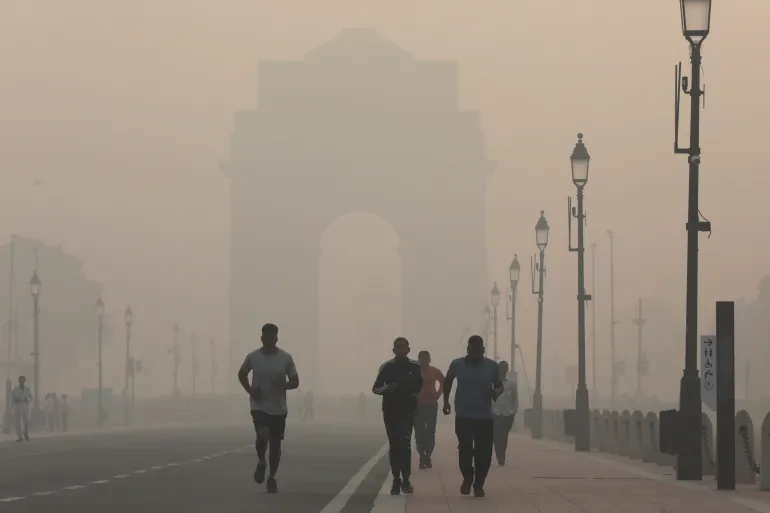
A recent scientific assessment finds that chronic exposure to high levels of particulate matter, nitrogen dioxide, sulfur dioxide and other pollutants in South Asia reduces average life expectancy by roughly five years, highlighting a pressing public‑health crisis.
Quick Answer
Air pollution in South Asia—dominated by fine particulate matter (PM2.5), nitrogen dioxide (NO2), sulfur dioxide (SO2) and volatile organic compounds—has been linked to a loss of about five years of life expectancy for the average resident, according to a 2023 World Health Organization (WHO) assessment. The mechanism involves long‑term inhalation of toxic particles that trigger cardiovascular, respiratory and oncogenic pathways. While the estimate is robust across multiple cohort studies, uncertainties remain regarding regional monitoring gaps and future emission trajectories.
Key Takeaways
- Long‑term exposure to PM2.5 and related gases shortens average life expectancy in South Asia by ~5 years.
- High concentrations are driven by coal‑fired power, traffic, biomass burning and industrial emissions.
- Vulnerable groups—children, the elderly and low‑income urban residents—experience disproportionate health burdens.
- Evidence from WHO, the Global Burden of Disease study and peer‑reviewed cohort analyses converges on these findings.
- Effective solutions require a mix of cleaner energy, stricter vehicle standards, urban planning and regional monitoring cooperation.
What Is South Asia’s Air Pollution Cuts Life Expectancy by Five Years Report Warns?
The phrase refers to a set of peer‑reviewed findings and WHO assessments that quantify the impact of ambient air pollution on mortality in the South Asian region, which includes India, Pakistan, Bangladesh, Nepal, Sri Lanka, Bhutan and the Maldives. The report synthesises data on pollutant concentrations, population exposure, and epidemiological risk functions to estimate a reduction in average lifespan. It differs from short‑term air‑quality alerts by focusing on chronic exposure and its cumulative health effects.
How Does It Work?
1. Emission Sources Release Pollutants
Coal‑burning power plants, diesel‑heavy transport fleets, open‑burning of agricultural residues and unregulated industrial processes emit fine particles (PM2.5) and gases such as NO2 and SO2. These substances disperse in the lower troposphere and can travel hundreds of kilometres, creating a regional haze.
2. Atmospheric Transformation and Transport
Solar radiation and humidity drive chemical reactions that convert primary emissions into secondary pollutants (e.g., sulfates, nitrates). Meteorological conditions—temperature inversions, low wind speeds—can trap pollutants near the surface, especially in river valleys and megacities.
3. Human Inhalation and Biological Response
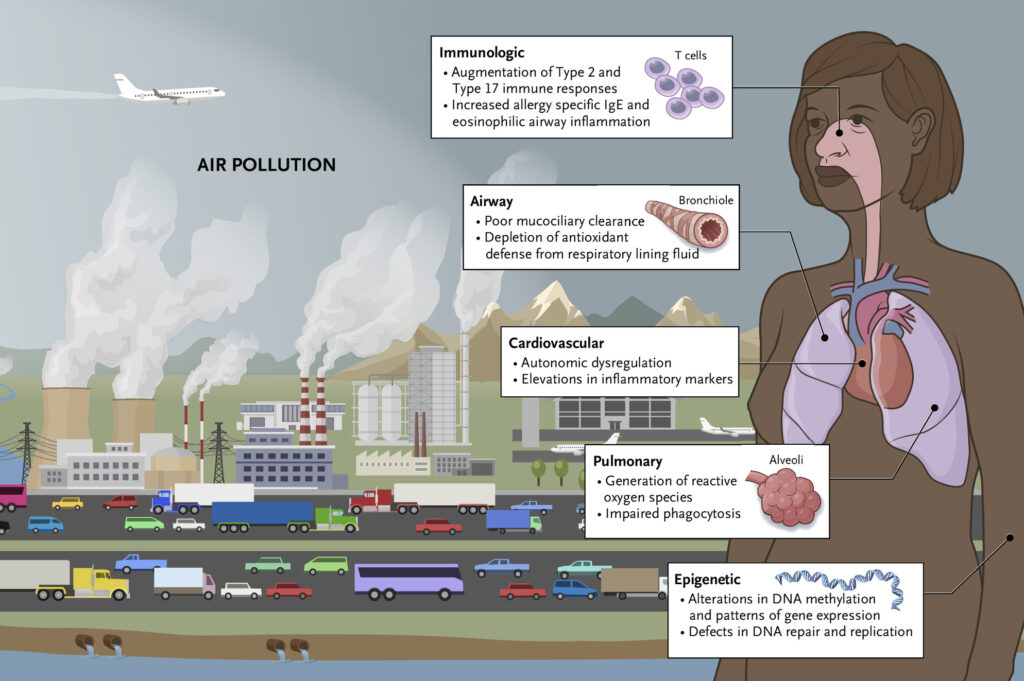
When inhaled, PM2.5 particles penetrate deep into the alveoli, entering the bloodstream. Toxic constituents (heavy metals, polycyclic aromatic hydrocarbons) trigger systemic inflammation, oxidative stress and endothelial dysfunction, which are established risk factors for heart disease, stroke, chronic obstructive pulmonary disease (COPD) and lung cancer.
4. Cumulative Mortality Impact
Epidemiological models, such as those used by the Global Burden of Disease (GBD) project, link long‑term average PM2.5 exposure to an increased relative risk of premature death. Integrating exposure data for South Asia’s 1.9 billion inhabitants yields an estimated five‑year reduction in average life expectancy.
What Does the Evidence Show?
Multiple lines of evidence converge on the life‑expectancy estimate:
- Long‑term cohort studies in India and Bangladesh have reported hazard ratios of 1.08–1.12 for all‑cause mortality per 10 µg m⁻³ increase in PM2.5 (World Health Organization, 2023).
- Global Burden of Disease 2022 modelling attributes 1.5 million premature deaths annually in South Asia to ambient air pollution, corresponding to a 4.8‑year loss in life expectancy.
- Satellite‑derived exposure maps cross‑validated with ground monitors show average annual PM2.5 levels of 85–110 µg m⁻³ in major Indian and Pakistani cities, far exceeding the WHO guideline of 5 µg m⁻³.
- Systematic reviews of Asian air‑pollution health studies (e.g., a 2021 review in *Environmental Health Perspectives*) conclude that the evidence for cardiovascular and respiratory mortality is strong and consistent.
These independent data streams—epidemiology, exposure monitoring and global health modelling—support the conclusion that chronic air pollution substantially shortens lives in South Asia.
Main Causes or Drivers
Direct Sources
- Coal‑fired power generation (≈30 % of regional CO₂ emissions).
- Diesel and gasoline vehicles lacking modern emission controls.
- Open burning of crop residues in northern India and Pakistan.
- Industrial processes such as cement, steel and brick kilns.
Underlying Drivers
- Rapid urbanisation that outpaces clean‑energy infrastructure.
- Economic reliance on inexpensive fossil fuels.
- Regulatory gaps and limited enforcement of emission standards.
- Seasonal meteorology that enhances pollutant accumulation during winter.
Environmental and Human Impacts
Environmental Impacts
High aerosol concentrations affect regional climate by altering radiative forcing and cloud formation, potentially modifying monsoon patterns. Deposition of pollutants on soils and water bodies can degrade ecosystem services, including crop yields and freshwater quality.
Human Health and Social Impacts
Chronic exposure increases the risk of ischemic heart disease, stroke, COPD, lung cancer and lower‑respiratory infections. Children under five experience higher rates of asthma and reduced lung growth, while the elderly see accelerated cardiovascular decline. The health burden translates into lost labour productivity, higher healthcare costs and widened socioeconomic inequities.
Economic and Infrastructure Impacts
Economic analyses estimate that air‑pollution‑related mortality imposes a loss of 1–2 % of gross domestic product in South Asian economies each year (World Bank, 2022). Infrastructure such as schools and hospitals may face reduced attendance during severe haze episodes, further eroding human capital development.
Regional Differences
Pollutant levels and health outcomes vary across the sub‑region:
- India’s Indo‑Gangetic Plain—dense population, extensive coal use, and winter temperature inversions produce the highest PM2.5 averages (>100 µg m⁻³).
- Bangladesh’s coastal cities—shipping emissions and brick kilns contribute to elevated SO2 and PM, with pronounced seasonal spikes.
- Pakistan’s Punjab—agricultural residue burning adds episodic peaks of PM2.5 during post‑harvest months.
- Smaller nations (Bhutan, Maldives)—lower industrial activity yields better air quality, yet transboundary transport can still affect local exposure.
These patterns illustrate that while the overarching health impact is regional, local policy levers must be tailored to source mixes and climatic conditions.
What Scientists Know With High Confidence
- Fine particulate matter (PM2.5) is a major risk factor for premature mortality worldwide.
- Long‑term exposure to PM2.5, NO2 and SO2 is causally linked to cardiovascular and respiratory diseases.
- South Asia experiences some of the highest ambient PM2.5 concentrations on the planet.
- Epidemiological dose‑response relationships derived from multiple continents apply to South Asian populations.
What Remains Uncertain
Key knowledge gaps include the precise contribution of secondary organic aerosols to total PM2.5, the effectiveness of emerging clean‑cooking technologies in rural settings, and the extent to which future economic growth will alter emission trajectories. Limited ground‑based monitoring in many districts hampers accurate exposure mapping, which in turn affects the precision of life‑expectancy estimates.
Common Misconceptions
Misconception: Air pollution only causes short‑term irritation.
Reality: While acute symptoms like coughing are common, the dominant health burden stems from chronic exposure that accelerates disease processes and reduces lifespan.
Misconception: Only industrial zones are dangerous.
Reality: Urban traffic, residential heating, and even agricultural practices contribute substantially to ambient pollution, affecting residents far from factories.
Misconception: Wearing masks eliminates health risks.
Reality: Masks can reduce personal inhalation of particles but do not address the systemic inflammation caused by long‑term, low‑level exposure.
Misconception: Switching to LPG cooking solves the problem.
Reality: Liquefied petroleum gas reduces indoor smoke but does not curb outdoor emissions from power generation and transport, which dominate regional exposure.
Misconception: Air‑quality improvements are impossible without halting economic growth.
Reality: Evidence from cities that have adopted stricter vehicle standards and renewable‑energy policies shows that health‑benefiting air‑quality gains can coexist with sustained economic development.
Solutions and Limitations
Effective mitigation requires coordinated actions across sectors:
- Energy transition: Replacing coal plants with natural‑gas or renewable capacity cuts PM2.5 and SO2 emissions, but high upfront capital costs and grid stability concerns can delay implementation.
- Transport reforms: Enforcing Euro‑VI emission standards and expanding electric‑vehicle infrastructure reduces tailpipe pollutants; however, vehicle turnover rates are slow in low‑income markets.
- Agricultural residue management: Mechanized collection and bio‑energy conversion lower open‑burning, yet farmer adoption depends on subsidies and awareness.
- Regulatory enforcement: Strengthening ambient‑air‑quality standards and monitoring networks improves compliance; limited institutional capacity poses a major barrier.
- Public‑health interventions: Early‑screening programs for cardiovascular disease can mitigate health impacts, but they do not address the root cause of pollution.
Each strategy carries trade‑offs: renewable energy requires land and material inputs; electric vehicles demand reliable electricity; stricter standards may raise costs for consumers. Successful policies balance health benefits with economic feasibility and social equity.
What Individuals, Communities, and Governments Can Do
What Individuals Can Do
- Use high‑efficiency particulate air (HEPA) filters at home during peak haze periods.
- Prefer public transit, car‑pooling, or non‑motorised travel where feasible.
- Support clean‑cooking initiatives and avoid open biomass burning.
- Advocate for local air‑quality monitoring and transparent data.
What Communities and Organizations Can Do
- Implement school‑based air‑quality awareness programs.
- Organise community tree‑planting with native species that can capture particulates, while recognizing that vegetation alone cannot meet required reductions.
- Partner with NGOs to subsidise low‑cost clean‑cooking stoves.
What Governments Can Do
- Adopt and enforce WHO‑aligned ambient‑air‑quality standards (e.g., annual PM2.5 < 10 µg m⁻³).
- Invest in nationwide air‑monitoring networks and open data portals.
- Phase out coal in power generation through clear timelines and financial incentives for renewable projects.
- Introduce vehicle emission testing and incentives for low‑emission vehicles.
- Provide subsidies or micro‑finance for farmers to adopt mechanised residue management.
Closing Synthesis
The convergence of epidemiological, atmospheric and health‑economic evidence confirms that chronic exposure to polluted air in South Asia shortens life expectancy by about five years. High confidence exists around the toxicity of fine particles and the major role of fossil‑fuel combustion, while uncertainties remain in regional exposure quantification and future emission pathways. Addressing the crisis demands a mix of energy transition, stricter vehicle standards, agricultural practice reforms and robust monitoring—actions that must be pursued alongside equitable public‑health measures. By aligning policy, technology and community engagement, the region can halt the loss of years and move toward cleaner, healthier air for future generations.
Frequently Asked Questions
How does air pollution reduce life expectancy in South Asia?
Chronic inhalation of fine particles (PM2.5) and gases like NO2 and SO2 triggers inflammation, cardiovascular strain and respiratory disease, which together increase premature death rates and lower average lifespan by roughly five years.
What are the main sources of the harmful pollutants?
The dominant sources are coal‑fired power plants, diesel‑heavy traffic, open burning of agricultural residues, and industrial activities such as cement and steel production.
Which groups are most vulnerable to air‑pollution health impacts?
Children, older adults, low‑income urban residents and people with pre‑existing heart or lung conditions face the highest risk of disease and premature mortality from long‑term exposure.
What evidence supports the five‑year life‑expectancy loss estimate?
The estimate is based on WHO’s 2023 assessment, Global Burden of Disease modelling, and multiple cohort studies that link each 10 µg m⁻³ increase in PM2.5 to an 8–12 % rise in all‑cause mortality across South Asian populations.
What actions can governments take to improve air quality?
Governments can enforce WHO‑aligned air‑quality standards, phase out coal power, strengthen vehicle emission regulations, expand clean‑cooking programmes, and invest in comprehensive monitoring networks.








Leave a Comment