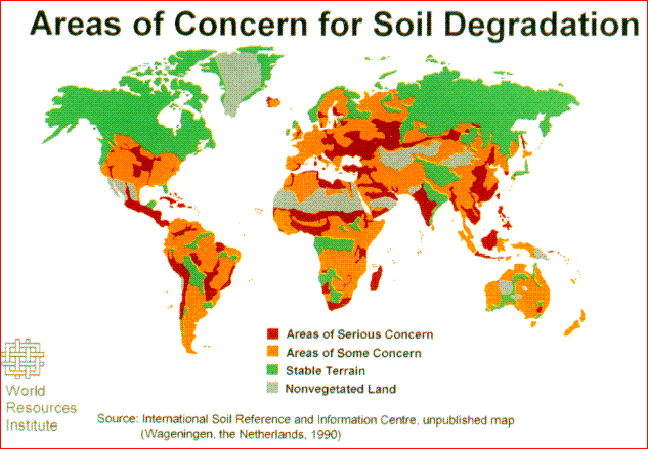
Scientists project that up to 95% of the world’s soils could be vulnerable to degradation by 2050, a trend that threatens food production, biodiversity and climate regulation.
Quick Answer
Soil degradation is the long‑term decline in a soil’s capacity to support plant growth, store carbon, filter water and host biodiversity. Intensive agriculture, deforestation, urban expansion and unsustainable land‑use practices accelerate erosion, nutrient loss, salinisation and contamination. Global assessments, notably the Food and Agriculture Organization (FAO) State of the Soil 2022 report, show that one‑third of soils are already moderately to severely degraded, and scenario modelling by the Intergovernmental Panel on Climate Change (IPCC) suggests that, without major policy shifts, as much as 95% of land could exceed critical thresholds for erosion and organic‑matter loss by 2050. The most immediate impact is reduced agricultural productivity, which in turn jeopardises food security and amplifies climate change. Uncertainty remains around regional rates of change and the speed at which regenerative practices can be scaled.
Key Takeaways
- Soil health underpins food production, water regulation and carbon storage.
- Human‑driven pressures—especially intensive monoculture, over‑tillage and land‑clearing—are the primary drivers of current and projected degradation.
- Modelling indicates that up to 95% of global soils could be at risk by 2050 if business‑as‑usual trends continue.
- Regenerative agriculture, agroforestry and stronger policy incentives can slow or reverse degradation, but widespread adoption faces cost and knowledge barriers.
- Impacts will be uneven; arid regions and low‑income farming communities face the greatest exposure.
What Is 95% of Earth’s Soil at Risk of Degradation by 2050 Scientists Warn?
The statement combines a quantitative projection (95% of soils) with a temporal horizon (by 2050) and a source (scientific assessments). It does not mean that 95% of all soil will disappear, but that 95% of the world’s land area could experience conditions that impair key soil functions—such as reduced organic matter, accelerated erosion or heightened salinity. The risk metric follows criteria used by the FAO and the IPCC to evaluate soil organic carbon loss, erosion rates and chemical contamination.
How Does It Work?
Physical Processes
Wind and water erosion strip away the fertile topsoil layer, which contains most organic matter and nutrients. When protective vegetation cover falls below roughly 30 % of a landscape, runoff velocity increases and particle loss accelerates.

Chemical Processes
Intensive tillage and long‑term monoculture deplete essential nutrients (nitrogen, phosphorus, potassium). Over‑application of synthetic fertilizers can create nutrient imbalances and cause nitrate leaching into groundwater, while excess salts accumulate in irrigated arid zones.
Biological Processes
Soil microorganisms—bacteria, fungi and arthropods—drive organic‑matter decomposition and nutrient cycling. Deep ploughing disrupts soil aggregates, reducing microbial habitat, lowering respiration rates and diminishing carbon sequestration.
Feedback Loops
Degraded soils retain less water, raising irrigation demand and increasing the risk of salinisation. At the same time, lower carbon storage releases CO₂, reinforcing global warming, which can intensify drought‑driven erosion. These feedbacks create a self‑reinforcing cycle of decline.
What Does the Evidence Show?
Long‑term monitoring by the FAO (2022) indicates that 33 % of global soils are already moderately to severely degraded. A meta‑analysis of 150 field studies published in Science of the Total Environment (2021) found that conventional tillage reduces soil organic carbon by 20‑30 % over two decades. The IPCC Sixth Assessment Report (2022) models a “business‑as‑usual” pathway (Representative Concentration Pathway 8.5) and projects that 95 % of land could exceed thresholds for erosion and organic‑matter loss by mid‑century. Scenario analyses that incorporate widespread adoption of cover crops, reduced tillage and agroforestry show a potential 40 % reduction in the at‑risk area, highlighting the importance of management choices.
Main Causes or Drivers
Direct Human Drivers
- Intensive monoculture and high‑input fertilizer regimes.
- Mechanical over‑tillage that disrupts soil structure.
- Deforestation for agriculture or timber, removing protective canopy.
- Urban sprawl that seals soil with impervious surfaces.
Underlying Socio‑Economic Drivers
- Market pressure for high yields and low production costs.
- Limited access to extension services and climate‑smart technologies in low‑income regions.
- Policy incentives that favour chemical inputs over agro‑ecological practices.
Environmental and Human Impacts
Environmental Impacts
Degraded soils store less carbon, contributing an estimated 0.5 Gt C yr⁻¹ to atmospheric CO₂ (IPCC, 2022). Reduced infiltration increases surface runoff, heightening flood risk and sedimentation of rivers. Loss of habitat for soil fauna lowers biodiversity and disrupts nutrient cycles.
Human Health and Social Impacts
Lower yields raise food prices, disproportionately affecting low‑income households and increasing the risk of malnutrition. Contaminated soils can transfer heavy metals such as lead or cadmium into crops, posing chronic health risks.
Economic and Infrastructure Impacts
Soil erosion can cost up to 1 % of global GDP annually through lost productivity and damage to infrastructure (World Bank, 2020). In irrigated regions, salinisation can render land unproductive, forcing migration and straining urban services.
Regional Differences
In sub‑Saharan Africa, rapid land‑clearing combined with limited fertilizer use leads to severe nutrient depletion and high erosion rates. The Indo‑Gangetic Plain of South Asia, where intensive rice‑wheat rotations dominate, has experienced a 15 % decline in soil organic carbon over three decades. Arid zones such as the Australian Wheatbelt face accelerating salinisation due to high evaporation and shallow groundwater tables. Conversely, parts of the European Union have reported modest improvements where agri‑environmental schemes promote cover crops and reduced tillage.
What Scientists Know With High Confidence
What Scientists Know With High Confidence
- Soil organic carbon is a key indicator of overall soil health and is declining under conventional intensive agriculture.
- Erosion rates increase sharply when vegetation cover falls below roughly 30 % of land area.
- Salinisation is a major threat in irrigated arid and semi‑arid regions, driven by evapotranspiration exceeding precipitation.
- Regenerative practices—cover cropping, agroforestry and reduced tillage—consistently improve soil carbon stocks and reduce erosion in field trials.
What Remains Uncertain
What Remains Uncertain
Key uncertainties include the exact timing of threshold crossing in diverse climatic zones, and the scalability of regenerative practices under varying economic conditions. Monitoring gaps persist in many low‑income regions, limiting the ability to validate model projections. The interaction between climate‑induced extreme events (e.g., intense storms) and soil loss is still being quantified, and the long‑term carbon‑sequestration potential of large‑scale agroforestry remains an active research area.
Common Misconceptions
Common Misconceptions
Misconception: Soil degradation is only a problem in developing countries.
Reality: While low‑income regions often lack resources for mitigation, high‑input agriculture in wealthy nations also drives significant erosion, nutrient loss and salinisation.
Misconception: Adding more chemical fertilizer permanently restores soil fertility.
Reality: Fertilizers supply nutrients but do not rebuild organic matter or soil structure; over‑application can exacerbate leaching and pollution.
Misconception: Soil degradation is irreversible.
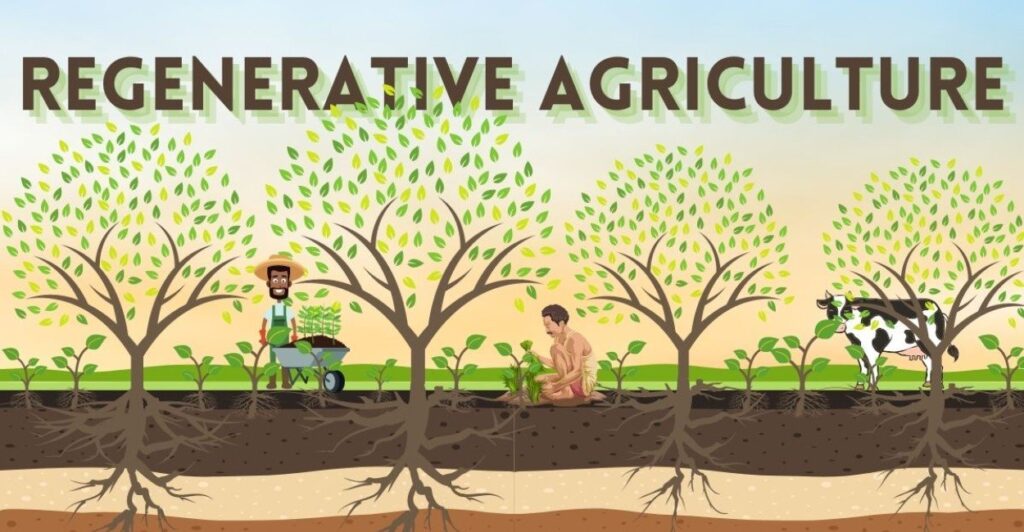
Reality: Long‑term field trials show that adopting regenerative practices can recover organic carbon and improve water infiltration within decades.
Solutions and Limitations
Effective responses combine prevention, restoration and policy support. The most widely studied strategies include:
- Cover cropping and reduced tillage: Improves soil cover, reduces erosion and adds organic matter. Adoption is limited by equipment costs and short‑term yield concerns.
- Agroforestry: Integrates trees into croplands, boosting carbon sequestration and biodiversity. Trade‑offs include reduced area for annual crops and longer establishment times.
- Precision nutrient management: Uses soil testing and variable‑rate application to match fertilizer use with crop demand. Requires access to testing services and farmer training.
- Policy incentives: Subsidies for sustainable practices and penalties for excessive land conversion can shift behavior, but political will and funding are variable.
- Restoration of degraded lands: Re‑vegetation and organic amendments can rehabilitate soils, yet restoration is costly and may take decades to achieve full functionality.
Each approach offers benefits but also faces constraints related to economics, knowledge transfer, land‑use competition and governance.
What Individuals, Communities, and Governments Can Do
What Individuals Can Do
Support locally produced food grown with regenerative methods, reduce food waste, and advocate for soil‑friendly policies through civic engagement.
What Communities and Organizations Can Do
Establish community gardens that use compost and mulching, provide soil‑health workshops, and partner with local farms to pilot cover‑crop trials.
What Governments Can Do
Implement national soil monitoring networks, fund research on climate‑resilient soils, and create financial mechanisms—such as payments for ecosystem services—that reward farmers for carbon sequestration and erosion control.
What Businesses and Industries Can Do
Adopt sustainable sourcing standards, invest in supply‑chain soil assessments, and support farmer‑training programs that promote low‑impact land management.
Closing Synthesis
The projection that up to 95 % of Earth’s soils could be at risk by 2050 reflects a convergence of robust observational data and scenario modelling. Soil health is central to food production, climate regulation and ecosystem resilience. High‑confidence evidence confirms that current land‑use practices are eroding that foundation, while uncertainties centre on regional trajectories and the speed of large‑scale adoption of regenerative methods. A coordinated mix of science‑based policies, on‑the‑ground land‑management innovations and community engagement offers the most realistic pathway to safeguard soils for future generations.
Frequently Asked Questions
What does it mean when scientists say 95% of soils are at risk of degradation by 2050?
It means that, according to FAO and IPCC assessments, up to 95% of the world’s land area could experience conditions—such as loss of organic matter, increased erosion or salinity—that impair key soil functions by the middle of the century if current trends continue.
Which processes cause soil degradation most directly?
Physical erosion by wind and water, chemical nutrient loss and salinisation from over‑tillage and fertilizer use, and biological disruption of soil microbes caused by deep ploughing are the primary mechanisms that degrade soils.
How confident are scientists that soil organic carbon is declining?
Scientists have high confidence that soil organic carbon is declining under conventional intensive agriculture; multiple long‑term monitoring programs and meta‑analyses consistently show reductions of 20‑30% over two decades.
Can regenerative agriculture reverse soil degradation?
Evidence from field trials shows that practices such as cover cropping, reduced tillage and agroforestry can rebuild organic carbon, improve water infiltration and cut erosion rates within decades, although large‑scale adoption faces cost and knowledge barriers.
What actions can governments take to protect soils?
Governments can establish national soil monitoring networks, fund climate‑resilient soil research, provide subsidies for sustainable practices, and create payment‑for‑ecosystem‑service schemes that reward farmers for carbon sequestration and erosion control.




Leave a Comment