
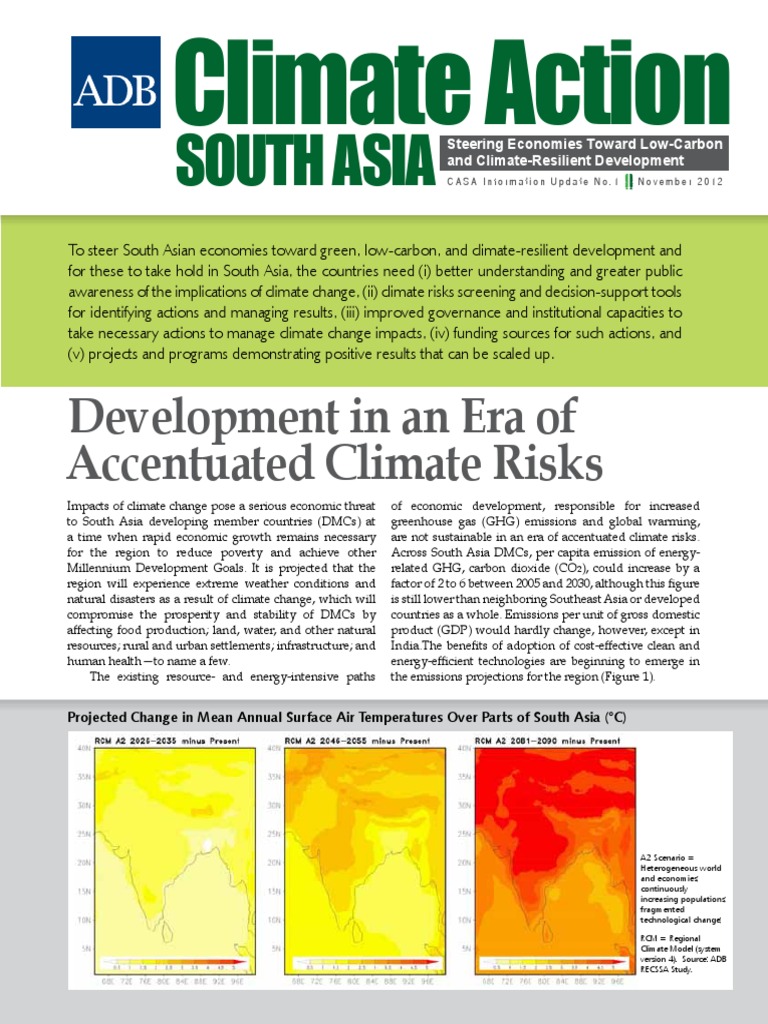
Three emerging climate technologies—solar microgrids, precision agriculture powered by AI and IoT, and green‑building systems—are accelerating climate action across Asia by reducing emissions, enhancing resilience, and creating new socioeconomic opportunities.
Quick Answer
Asia’s climate‑technology landscape is being reshaped by (1) decentralized solar microgrids that deliver clean electricity to off‑grid communities, (2) AI‑driven precision agriculture that optimises water, fertilizer and pesticide use, and (3) green‑building technologies that cut energy demand and urban heat. These solutions lower greenhouse‑gas emissions, improve food security, and mitigate urban pollution. Evidence from the International Energy Agency, the Food and Agriculture Organization, and the World Green Building Council shows measurable benefits, though uncertainties remain around long‑term cost recovery and scalability in diverse regulatory settings.
Key Takeaways
- Solar microgrids in rural India and Bangladesh now serve over 10 million households, reducing reliance on diesel generators.
- Precision agriculture in China, Japan and India can cut irrigation water use by 20‑30 % while maintaining yields.
- Green‑building certifications in Singapore and South Korea lower operational energy by up to 40 % compared with conventional structures.
- Policy incentives, falling technology costs, and climate‑risk exposure are the primary drivers of adoption.
- Key uncertainties include financing models for large‑scale rollout and the lifecycle emissions of some high‑tech components.
What Is 3 Climate Technology Developments in Asia Accelerating Climate Action?
The phrase refers to three inter‑related technological pathways that are gaining traction across Asian countries: (1) solar‑based microgrid and off‑grid power systems, (2) AI‑enabled precision agriculture, and (3) energy‑efficient green‑building designs. Each development addresses a distinct sector—energy, food, and built environment—yet all share the goal of lowering carbon intensity while improving socioeconomic outcomes. Unlike broad “renewable energy” or “smart farming” labels, these three pathways are defined by concrete hardware (solar panels, IoT sensors, high‑performance glazing) and data‑driven software that can be quantified and replicated.
How Does It Work?
Solar Microgrids
Solar microgrids combine photovoltaic panels, battery storage, and a local distribution network that operates independently of the national grid. Sunlight is converted to electricity, stored, and dispatched to households, schools or small businesses. Advanced controllers balance supply and demand in real time, while mobile payment platforms enable pay‑as‑you‑go tariffs. Because the system is localized, transmission losses are minimal and communities gain energy autonomy.
Precision Agriculture
Precision agriculture integrates satellite or drone imagery, ground‑level soil moisture sensors, and machine‑learning algorithms. Data streams are processed to generate field‑level recommendations for irrigation timing, fertilizer dosage, and pest management. Farmers receive these insights on smartphones or local dashboards, allowing them to apply inputs only where needed. The feedback loop—sensor → algorithm → action → new sensor reading—optimises resource use across the growing season.
Green‑Building Technologies
Green‑building systems combine passive design (orientation, shading, natural ventilation) with active technologies such as high‑efficiency HVAC, LED lighting, and smart building management systems. Materials with low embodied carbon, such as cross‑laminated timber or recycled steel, replace conventional concrete. Vertical gardens and rooftop greening provide insulation, reduce the urban heat‑island effect, and support biodiversity.
What Does the Evidence Show?
According to the International Energy Agency, solar PV capacity in Asia reached roughly 250 GW in 2022, with microgrid projects accounting for an estimated 5 % of that total and delivering electricity to over 10 million people in remote areas. A 2021 systematic review by the Food and Agriculture Organization found that AI‑driven irrigation in China reduced water use by 22 % without compromising yields, while field trials in India showed a 15 % reduction in nitrogen fertilizer use using sensor‑guided applications. The World Green Building Council reported that certified green buildings in Singapore and South Korea consume on average 30‑40 % less operational energy than comparable conventional buildings, contributing to measurable declines in city‑wide CO₂ emissions.
Main Causes or Drivers
Policy Incentives
Feed‑in tariffs, renewable‑energy certificates, and carbon‑pricing schemes have lowered the financial barrier for solar microgrids. National agriculture ministries in China and India have launched subsidy programmes for IoT sensors and data platforms, accelerating precision‑farming adoption.
Cost Declines
The levelized cost of solar electricity fell by about 65 % between 2010 and 2020 (IEA), making off‑grid solutions economically viable. Sensor and communication hardware costs have similarly dropped, enabling widespread deployment in farming contexts.
Climate‑Risk Exposure
Increasing frequency of droughts in South Asia and heatwaves in East Asia have highlighted the vulnerability of traditional energy and agricultural systems, creating demand for resilient technologies.
Environmental and Human Impacts
Environmental Impacts
- Solar microgrids displace diesel generators, cutting local air pollutants such as PM₂.₅ and sulfur dioxide.
- Precision agriculture reduces runoff of excess fertilizers, lowering eutrophication risk in downstream water bodies.
- Green buildings lower energy‑related CO₂ emissions and mitigate the urban heat‑island effect, improving city‑wide air quality.
Human Health and Social Impacts
- Cleaner electricity improves respiratory health for households previously reliant on kerosene or diesel.
- More efficient water use enhances water security for farming communities facing erratic rainfall.
- Energy‑efficient buildings reduce indoor temperature extremes, decreasing heat‑related illnesses.
Economic and Infrastructure Impacts
- Microgrid projects create local jobs in installation, maintenance, and finance.
- Precision farming tools open new markets for ag‑tech startups and increase farmer incomes through input savings.
- Green‑building retrofits stimulate demand for sustainable construction materials and skilled labor.
Regional Differences
South Asia’s rural electrification gap has driven large‑scale solar microgrid pilots in India’s states of Rajasthan and Karnataka, where sunlight is abundant and grid extension is costly. East Asia’s high‑tech manufacturing base has enabled rapid scaling of precision‑agriculture platforms in China’s Yangtze River Delta, where data‑rich environments support AI model training. Southeast Asian megacities such as Singapore and Jakarta have adopted green‑building mandates to address severe air‑quality challenges and limited land for expansion, emphasizing vertical greening and high‑performance façades.
What Scientists Know With High Confidence
- Solar photovoltaics generate electricity with negligible direct CO₂ emissions compared with fossil fuels (IPCC, 2021).
- Excess nitrogen from conventional fertilizer use is a leading cause of freshwater eutrophication in Asian river basins (FAO, 2020).
- Buildings account for roughly 30 % of energy consumption and CO₂ emissions in many Asian cities; improving envelope efficiency yields immediate emission reductions (World Green Building Council, 2020).
What Remains Uncertain
Key uncertainties include the long‑term financial sustainability of microgrid business models in low‑income contexts, the scalability of AI algorithms across heterogeneous smallholder farms, and the embodied carbon of high‑performance building materials when supply chains are not fully decarbonised. Monitoring the full lifecycle emissions of these technologies will require coordinated data collection across energy, agriculture and construction sectors.
Common Misconceptions
Misconception: Solar microgrids are only for wealthy communities.
Reality: Pilot projects in Bangladesh and Nepal demonstrate that pay‑as‑you‑go models can serve low‑income households, with costs offset by savings on diesel fuel and improved health outcomes.
Misconception: Precision agriculture eliminates the need for farmers.
Reality: Technology provides decision‑support tools, but human judgment remains essential for interpreting local conditions and managing crops.
Misconception: Green buildings are always more expensive to construct.
Reality: While upfront material costs can be higher, life‑cycle analyses show that operational savings often offset the initial premium within 5‑10 years, especially when government incentives are present.
Solutions and Limitations
Each technology offers a pathway for mitigation and adaptation, yet none is a silver bullet. Solar microgrids reduce emissions but depend on reliable battery supply chains and effective local governance. Precision agriculture cuts water and fertilizer use but requires data connectivity and farmer training, which may be lacking in remote regions. Green‑building standards lower operational energy but can shift emissions to material production if low‑carbon materials are not sourced responsibly. Integrated policy frameworks that address financing, capacity building, and supply‑chain sustainability are essential to realise the full potential.
What Individuals, Communities, and Governments Can Do
What Individuals Can Do
Support local renewable projects through community investment platforms, adopt water‑saving practices recommended by precision‑ag platforms, and choose housing or office spaces that hold green‑building certifications.
What Communities and Organizations Can Do
Form cooperatives to pool resources for microgrid installation, partner with ag‑tech providers for field trials, and incorporate green roofs or vertical gardens in neighborhood planning.
What Governments Can Do
Implement tiered subsidies for solar storage, fund extension services that train farmers on sensor use, and mandate energy‑performance standards for new construction while providing tax incentives for retrofits.
Synthesis of Climate Technology Progress in Asia
Solar microgrids, precision agriculture, and green‑building systems together illustrate how technology can simultaneously cut emissions, bolster resilience, and generate socioeconomic benefits across diverse Asian contexts. High‑confidence evidence confirms their environmental upside, while remaining uncertainties highlight the need for supportive policies, financing innovation, and robust monitoring. By aligning incentives, building local capacity, and ensuring equitable access, Asia can continue to accelerate climate action and set a replicable model for other regions.
Frequently Asked Questions
What are solar microgrids and how do they differ from traditional power grids?
Solar microgrids are localized energy networks that combine photovoltaic panels, battery storage, and a small distribution system. Unlike national grids, they operate independently, delivering clean electricity directly to nearby homes and businesses and often use pay‑as‑you‑go tariffs.
How does precision agriculture use AI to improve water use in Asian farms?
AI processes data from satellite images, drones, and ground sensors to predict soil moisture and crop water needs. Farmers receive site‑specific irrigation schedules on smartphones, allowing them to apply water only where required, which can cut irrigation use by 20‑30 % while maintaining yields.
What are the main environmental benefits of green‑building technologies in Asian cities?
Green‑building designs lower operational energy by 30‑40 %, reduce CO₂ emissions, and mitigate the urban heat‑island effect through better insulation and rooftop greening. They also cut indoor air pollutants and decrease demand for fossil‑fuel‑based electricity.
Which Asian countries are leading the deployment of these climate technologies?
India and Bangladesh are pioneering solar microgrids for rural electrification, China and Japan dominate AI‑driven precision agriculture, and Singapore, South Korea and Japan are at the forefront of green‑building certification and retrofitting.
What actions can local communities take to support the adoption of these technologies?
Communities can form cooperatives to finance microgrid installations, partner with ag‑tech firms to pilot sensor‑based farming, and incorporate green roofs or vertical gardens in neighborhood plans, thereby creating demand and sharing benefits locally.








Leave a Comment