
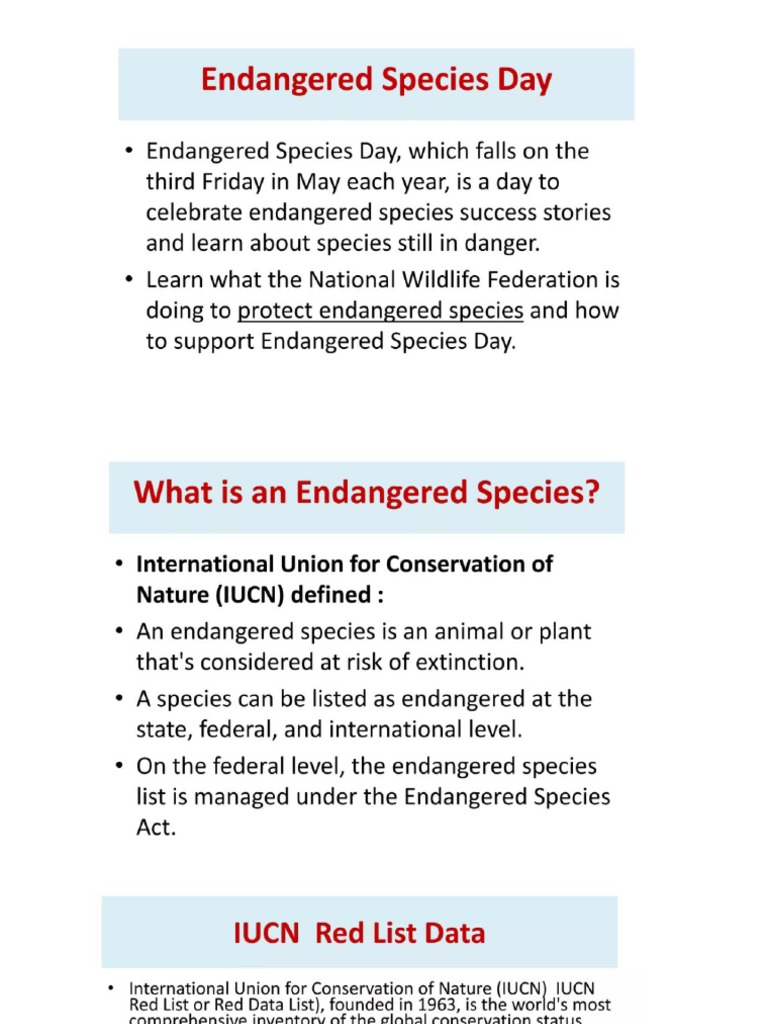
The Endangered Species List is a scientifically vetted roster of plants and animals at risk of extinction, created through a rigorous assessment, public review, and legal protection process.
Quick Answer
The Endangered Species List catalogs species that are classified as “endangered” (facing imminent extinction) or “threatened” (likely to become endangered) based on criteria such as population size, rate of decline, and habitat threats; the list is compiled by agencies like the U.S. Fish and Wildlife Service under the Endangered Species Act and by the International Union for Conservation of Nature (IUCN) through a transparent, data‑driven evaluation, and it triggers legal protections and recovery actions. While the process is robust, it can be limited by data gaps and political influences.
Key Takeaways
- Endangered and threatened designations are based on quantitative criteria that assess extinction risk.
- The U.S. Endangered Species Act (ESA) and the IUCN Red List are the two primary frameworks for listing.
- Listing follows a multi‑step workflow: nomination, scientific assessment, proposed rule, public comment, and final decision.
- Legal protection after listing includes habitat conservation, restrictions on harm, and recovery planning.
- Data limitations, funding constraints, and stakeholder opposition can delay or complicate listings.
What Is the Endangered Species List and How Is It Created?
The Endangered Species List is a formal inventory of species that have been judged to be at high risk of extinction across all or a significant portion of their range. In the United States, the list is maintained under the Endangered Species Act (ESA) of 1973; internationally, the IUCN Red List provides comparable categories (e.g., Critically Endangered, Endangered, Vulnerable). The list is not a static catalog; species can be added, re‑classified, or delisted as new data emerge.
How Does It Work?
The creation of a listing follows a structured, evidence‑based pathway that can be broken into six major steps.
- Nomination. A species may be nominated by scientists, NGOs, government agencies, or any citizen who can supply credible evidence of decline.
- Data Compilation. Agencies gather the best available information—population surveys, trend analyses, genetic studies, and habitat assessments—often drawing from peer‑reviewed literature and long‑term monitoring programs.
- Scientific Assessment. Using criteria set out in the ESA (or IUCN criteria), experts evaluate:
- Current population size and structure.
- Rate of decline over the past ten years or three generations.
- Geographic range and fragmentation.
- Severity of threats such as habitat loss, climate change, invasive species, or overexploitation.
- Proposed Rule Publication. If the assessment meets threshold criteria, a proposed rule is published in the Federal Register (or an IUCN assessment is released), outlining the scientific rationale.
- Public Comment Period. Stakeholders—including industry groups, indigenous peoples, and the general public—have 60 days (U.S.) to submit comments, data, or concerns. Agencies must consider these inputs before finalizing the rule.
- Final Decision and Implementation. After reviewing comments, the agency issues a final rule, which activates legal protections such as critical habitat designation, prohibitions on “take,” and the development of a recovery plan.
What Does the Evidence Show?
Multiple lines of evidence confirm that systematic listing reduces extinction risk when followed by effective recovery actions. Long‑term monitoring by the U.S. Fish and Wildlife Service shows that species such as the bald eagle (Haliaeetus leucocephalus) recovered from near‑extinction after ESA protection, leading to delisting in 2007. A 2020 systematic review of ESA outcomes (published in *Conservation Biology*) found that 78 % of listed mammals and birds showed measurable population gains after at least a decade of protection. Internationally, the IUCN Red List analysis (2022) indicates that species with targeted conservation programs are less likely to move to a higher‑risk category than comparable unprotected species.
Main Causes or Drivers
Direct Causes
- Habitat destruction from agriculture, urban development, and mining.
- Overharvesting for food, medicine, or the pet trade.
- Introduced predators, competitors, or diseases.
- Pollution, including plastic debris, heavy metals, and endocrine‑disrupting chemicals.
Underlying Drivers
- Economic incentives that prioritize short‑term resource extraction.
- Weak enforcement of existing environmental regulations.
- Climate change amplifying habitat loss and altering species’ phenology.
- Global trade networks that facilitate illegal wildlife trafficking.
Environmental and Human Impacts
Environmental Impacts
Loss of keystone or umbrella species can cascade through ecosystems, reducing pollination services, altering nutrient cycles, and decreasing resilience to climate extremes. For example, the decline of pollinating insects threatens crop yields, while the removal of apex predators can lead to trophic imbalances that affect water quality.
Human Health and Social Impacts
Reduced biodiversity can increase the emergence of zoonotic diseases, as ecosystem dilution effects weaken. Communities that rely on wildlife for food, cultural practices, or ecotourism may face economic hardship when species disappear.
Economic and Infrastructure Impacts
Conservation measures linked to listed species often protect watersheds that supply drinking water, thereby averting costly water‑treatment infrastructure. Conversely, delayed listings can lead to habitat loss that later requires expensive restoration.
Regional Differences
Listing processes and outcomes vary worldwide. In North America, the ESA provides legally binding protections and substantial funding for recovery plans. In many tropical regions, limited scientific capacity and funding result in fewer species being formally assessed, even though biodiversity loss rates are higher. For instance, a 2021 IUCN assessment highlighted that only 12 % of the world’s amphibian species have been evaluated, leaving many at‑risk populations undocumented.
What Scientists Know With High Confidence
- Species with small, fragmented populations are more vulnerable to stochastic events.
- Legal protection under the ESA has historically led to population recoveries for many birds and mammals.
- Habitat loss is the primary driver of species endangerment globally, as documented by the Convention on Biological Diversity (2020).
- Public participation improves the transparency and social acceptance of listing decisions.
What Remains Uncertain
Key gaps include the true global abundance of many invertebrates and deep‑sea organisms, which limits accurate risk assessments. Climate‑change projections for species’ future ranges often rely on models with differing assumptions, creating a range of possible outcomes. Additionally, the effectiveness of recovery plans can be hard to isolate from broader land‑use trends, making it challenging to attribute success solely to listing.
Common Misconceptions
Misconception: Listing a species guarantees its recovery.
Reality: Listing triggers protection measures, but recovery also depends on adequate funding, habitat restoration, and mitigation of ongoing threats.
Misconception: Only charismatic megafauna appear on the list.
Reality: The ESA and IUCN Red List include plants, insects, fungi, and less‑known vertebrates; over 1,200 plant species are currently listed in the United States.
Misconception: Once a species is delisted, it no longer needs protection.
Reality: Delisting occurs when a species meets recovery criteria, but continued monitoring is essential to prevent relapse.
Solutions and Limitations
Effective responses combine legal protection, habitat management, and community engagement.
- Habitat Conservation. Designating critical habitat can safeguard essential ecosystems, yet land‑acquisition costs and competing development interests often limit scale.
- Recovery Planning. Species‑specific recovery plans set measurable goals, but implementation may be delayed by funding shortfalls.
- Invasive Species Control. Eradication programs protect native species, but complete removal is rarely feasible on large landscapes.
- Climate Adaptation. Assisted migration and climate‑resilient corridors can buffer climate impacts, though ecological outcomes remain uncertain.
What Individuals, Communities, and Governments Can Do
What Individuals Can Do
Support reputable conservation NGOs, reduce consumption of products linked to habitat loss (e.g., palm oil, unsustainably sourced timber), and participate in citizen‑science monitoring programs that supply data for assessments.
What Communities and Organizations Can Do
Develop local stewardship projects, restore native vegetation, and collaborate with landowners to create buffer zones that benefit listed species.
What Governments Can Do
Allocate sufficient resources for scientific research, enforce anti‑poaching laws, streamline the public‑comment process, and integrate biodiversity considerations into land‑use planning.
Closing Synthesis
The Endangered Species List translates scientific risk assessments into legal mechanisms that can halt or reverse biodiversity loss. While the process is grounded in robust data and public participation, uncertainties in species’ population trends and climate impacts persist. Continued investment in monitoring, habitat protection, and inclusive policymaking will strengthen the list’s ability to safeguard Earth’s living heritage for future generations.
Frequently Asked Questions
What criteria are used to determine if a species is listed as endangered or threatened?
A species is listed based on quantitative criteria such as current population size, rate of decline over the past 10 years or three generations, geographic range, and the severity of threats like habitat loss, overexploitation, or disease. Agencies compare these metrics against thresholds defined in the Endangered Species Act or IUCN Red List categories.
How does the U.S. Endangered Species Act listing process differ from the IUCN Red List assessment?
The U.S. ESA creates legally binding protections within the United States after a formal rulemaking process that includes public comment, while the IUCN Red List provides a global, non‑regulatory assessment of extinction risk. ESA listings trigger specific recovery actions and habitat safeguards; IUCN categories guide international conservation priorities but do not themselves enforce protection.
Can a species be removed from the Endangered Species List, and if so, how?
Yes, a species can be delisted when it meets recovery criteria established in its recovery plan, such as stable or increasing populations and reduced threats. The responsible agency conducts a status review, publishes a proposed delisting rule, allows public comment, and then issues a final rule that removes the species from the list.
What role does public comment play in the species‑listing process?
Public comment offers an opportunity for stakeholders to submit new data, local knowledge, or concerns about proposed listings. Agencies must consider these inputs before issuing a final rule, which helps ensure transparency, improves data quality, and can influence the scope of protections applied to the species.
How can individuals contribute to the protection of listed endangered species?
Individuals can support conservation NGOs, avoid products linked to habitat destruction, participate in citizen‑science monitoring projects, and engage in local habitat restoration efforts. These actions supply valuable data, reduce pressures on ecosystems, and build broader support for protective policies.










Leave a Comment