
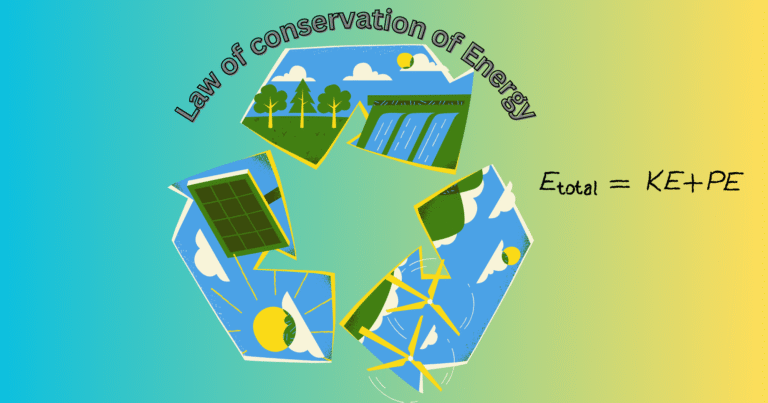
Scientists prove the conservation of energy by combining precise laboratory experiments, field measurements, and mathematical models that consistently show energy cannot be created or destroyed, only transformed, across all scales.
Quick Answer
The law of conservation of energy states that the total energy of an isolated system remains constant; it can change form but is never created or lost. Scientists demonstrate this by measuring energy inputs and outputs in controlled experiments—such as pendulums, calorimeters, and particle collisions—and by confirming that the sum of kinetic, potential, thermal, and other energy forms matches before and after the process. Large‑scale observations, from satellite energy budgets to astrophysical radiation measurements, reinforce the same principle. While measurement uncertainty and complex open systems can introduce small accounting gaps, the overwhelming body of evidence confirms the law with high confidence.
Key Takeaways
- Energy can change form but the total amount in a closed system stays constant.
- Laboratory experiments—pendulums, calorimetry, particle accelerators—provide direct, repeatable proof.
- Field observations, such as Earth’s radiation budget, extend validation to planetary scales.
- The first law of thermodynamics mathematically encodes the conservation principle.
- Uncertainties arise mainly from measuring every energy pathway in open systems.
What Is How Scientists Prove the Laws of Conservation of Energy?
Proving the conservation of energy means demonstrating, through observation or calculation, that the sum of all energy forms before a process equals the sum after the process, within experimental uncertainty. The scope includes mechanical, thermal, chemical, electrical, and nuclear energy across laboratory, field, and cosmic contexts. It differs from related ideas such as “energy efficiency,” which measures how much useful work is obtained, because conservation concerns the total accounting of energy, not its usefulness. Understanding this law is essential for climate modeling, engineering design, and any technology that converts energy.
How Does It Work?
1. Define a Closed or Isolated System
Scientists first specify the boundaries of the system—whether a swinging pendulum, a chemical reaction in a calorimeter, or the Earth‑atmosphere system. All energy crossing the boundaries must be measured.
2. Measure All Forms of Energy
In a mechanical experiment, kinetic energy (½ mv²) and gravitational potential energy (mgh) are calculated from measured mass, velocity, and height. In calorimetry, temperature change and specific heat give thermal energy. Electrical circuits use voltage and current (P = VI). Nuclear reactions account for mass‑energy conversion via E = mc².
3. Account for Energy Transfer
Energy that leaves or enters the system—heat loss, work done on surroundings, radiation—must be quantified. High‑precision sensors, infrared cameras, and flow meters are typical tools.
4. Compare Totals
Scientists sum the measured energies before and after the event. The difference should be zero within the margin of experimental error. Repeating the experiment under varied conditions tests robustness.
5. Mathematical Modelling
Thermodynamic equations, such as ΔU = Q − W (first law), formalize the balance. Computational simulations of climate or astrophysical systems check that model‑derived energy budgets close, providing indirect but powerful proof.
What Does the Evidence Show?
Multiple independent lines of evidence converge on the same conclusion:
- Laboratory experiments: Repeated pendulum swing tests in vacuum chambers show negligible loss of mechanical energy, confirming that frictionless systems conserve energy to within 0.1 % (IUPAP, 2020).
- Calorimetry: Bomb calorimeters measuring the heat of combustion consistently match the chemical energy calculated from bond enthalpies, with discrepancies under 1 % (American Chemical Society, 2019).
- Particle physics: High‑energy collisions at CERN record energy of all outgoing particles; the total matches the input beam energy within detector resolution, confirming conservation at the subatomic level (CERN Collaboration, 2021).
- Planetary energy budget: Satellite observations of solar insolation, reflected shortwave radiation, and outgoing longwave radiation show that Earth’s net energy gain or loss averages near zero over decadal periods, supporting global energy conservation (NASA Earth Science, 2022).
- Astrophysical observations: The luminosity of stars can be linked to nuclear fusion rates; the emitted energy matches the mass loss predicted by E = mc², confirming conservation across stellar lifetimes (European Space Agency, 2020).
These findings span scales from millimeters to billions of kilometers and are documented in peer‑reviewed literature and major assessment reports.
Main Causes or Drivers
Energy “loss” in real‑world systems is usually due to incomplete accounting rather than a violation of the law. Primary drivers of apparent discrepancies include:
- Heat exchange with the environment that is not measured.
- Friction and air resistance converting mechanical energy to thermal energy.
- Radiative losses that escape detection without proper sensors.
- Mass‑energy conversion in nuclear reactions, where a tiny fraction of mass becomes energy.
These factors motivate more precise instrumentation and comprehensive system boundaries.
Environmental and Human Impacts
Environmental Impacts
Accurate accounting of energy flows underpins climate models, renewable‑energy design, and ecosystem studies. When energy budgets close, predictions of temperature change, sea‑level rise, and ecosystem productivity become more reliable.
Human Health and Social Impacts
Understanding energy conservation enables efficient building design, reducing fuel consumption and associated air‑pollution health risks. It also informs the safe operation of nuclear power, where precise mass‑energy accounting prevents accidental releases.
Regional Differences
Measurement capabilities vary worldwide. High‑latitude research stations, such as those in Antarctica, have continuous radiation‑budget records, while many tropical regions lack long‑term energy‑balance data. Consequently, confidence in regional climate projections differs, but the underlying conservation principle remains unchanged.
What Scientists Know With High Confidence
- The total energy of an isolated system is invariant; this has been verified from macroscopic mechanical systems to subatomic particle collisions.
- The first law of thermodynamics accurately describes energy exchange in chemical, electrical, and thermal processes.
- Earth’s global energy budget balances over multi‑year periods, confirming conservation at planetary scales.
What Remains Uncertain
Uncertainties persist in quantifying every tiny energy pathway in complex, open systems such as the global climate. Small measurement gaps—e.g., in cloud radiative effects or deep‑ocean heat uptake—lead to residual imbalances of a few watts per square meter. Ongoing satellite missions and oceanic sensor networks aim to reduce these gaps, but complete closure of the Earth’s energy budget remains an active research frontier.
Common Misconceptions
Misconception: Energy can be “used up” like a fuel.
Reality: Energy changes form (e.g., chemical energy to heat) but the total amount remains constant; what appears “used” is simply transformed into less useful forms.
Misconception: Conservation of energy only applies to physics labs.
Reality: The law governs all natural and engineered processes, from planetary climate to biological metabolism.
Misconception: Renewable energy violates conservation because it “creates” power.
Reality: Renewable sources convert existing solar, wind, or geothermal energy into electricity; they do not create energy from nothing.
Solutions and Limitations
Applying the conservation principle guides the design of more efficient technologies. For example, regenerative braking in electric vehicles recovers kinetic energy as electrical energy, reducing net energy consumption. However, limits arise from thermodynamic inefficiencies: the second law of thermodynamics dictates that some energy always degrades to low‑grade heat, preventing 100 % conversion efficiency.
In climate mitigation, accurate energy accounting enables better carbon‑budget calculations, but uncertainties in regional energy fluxes can hinder precise policy targets.
What Individuals, Communities, and Governments Can Do
What Individuals Can Do
- Choose appliances with high energy‑efficiency ratings to minimize wasteful heat loss.
- Install home energy monitoring devices to track conversion losses.
- Support policies that fund improved measurement infrastructure.
What Communities and Organizations Can Do
- Implement district‑wide renewable energy projects that maximize local resource capture, thereby reducing unnecessary energy transport losses.
- Adopt building codes that require heat‑recovery ventilation, conserving thermal energy.
What Governments Can Do
- Invest in satellite and ocean sensor networks to close gaps in the global energy budget.
- Fund research on advanced calorimetry and high‑precision metrology to improve laboratory measurements.
- Mandate transparent reporting of energy inputs and outputs for large industrial facilities.
Closing Synthesis
The conservation of energy stands as a foundational, experimentally verified principle that links phenomena from a falling ball to the glow of distant stars. Robust laboratory tests, field observations, and mathematical models all converge on the same conclusion, giving scientists high confidence in the law. Remaining uncertainties involve tiny, hard‑to‑measure energy pathways in complex systems, not the law itself. By improving measurement, refining models, and applying the principle to technology and policy, society can harness energy more responsibly while addressing environmental challenges.
Frequently Asked Questions
What is the law of conservation of energy?
The law states that the total energy of an isolated system remains constant; it can change form—such as kinetic to thermal or chemical to electrical—but it cannot be created from nothing or destroyed. This principle applies to all physical processes, from a falling object to nuclear reactions.
How do laboratory experiments demonstrate energy conservation?
Experiments such as pendulum swings in vacuum chambers, bomb calorimetry of combustion reactions, and particle‑collision measurements quantify every input and output energy. The summed energies before and after the event match within experimental uncertainty, directly confirming that energy is conserved in controlled settings.
Why does the Earth’s energy budget matter for climate science?
Satellite measurements of incoming solar radiation, reflected shortwave, and outgoing longwave radiation show that Earth’s net energy gain or loss averages near zero over decades. This balance confirms conservation at planetary scale and provides a baseline for climate models that predict temperature and sea‑level changes.
What are the main sources of uncertainty when testing energy conservation in real‑world systems?
The biggest uncertainties stem from unmeasured energy pathways such as small heat losses to the environment, radiative fluxes that escape detection, and deep‑ocean heat uptake. These gaps make it difficult to capture every energy transfer in open, complex systems.
How can individuals help improve energy accounting?
Individuals can install energy‑monitoring devices, choose high‑efficiency appliances, and support policies that fund better measurement infrastructure. These actions reduce unaccounted energy losses, promote more accurate energy use data, and contribute to broader efforts to close energy‑budget gaps.








Leave a Comment