
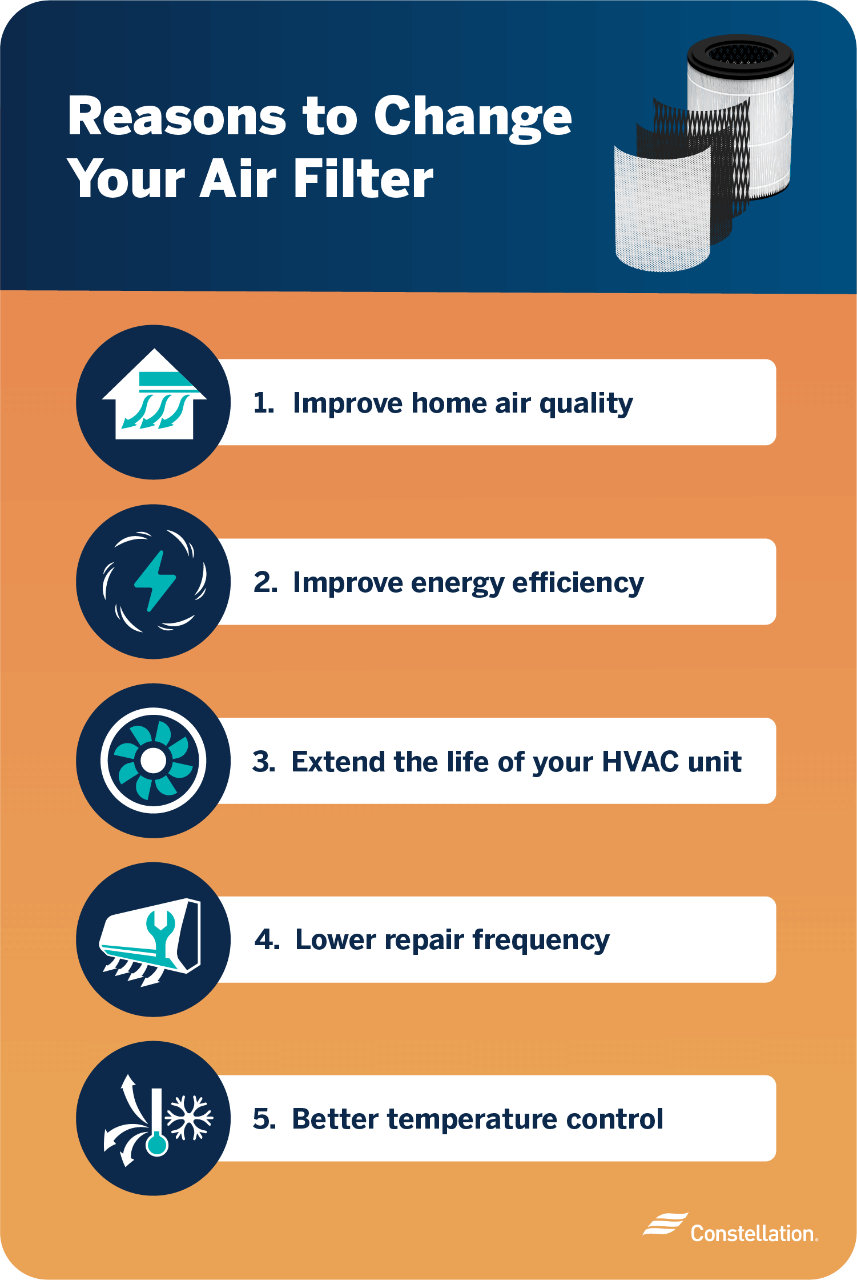
Regularly replacing your HVAC filter can lower household energy use, extend equipment life, and reduce emissions, but the exact savings depend on filter type, system design, and usage patterns.
Quick Answer
A clean HVAC filter reduces airflow resistance, allowing the heating or cooling unit to operate with less fan power and lower compressor load. Studies from the U.S. Department of Energy and peer‑reviewed research indicate that a clogged filter can raise electricity consumption by 5–15 % in typical residential systems. The overall impact on energy bills is modest but measurable, especially when combined with high‑efficiency filters that are matched to the equipment’s design. Uncertainty remains about exact savings for different climates and filter ratings.
Key Takeaways
- Dirty filters increase fan and compressor work, raising energy use by roughly 5–15 %.
- Replacing filters every 1–3 months aligns with most manufacturers’ recommendations and maintains airflow.
- Higher‑MERV filters improve indoor air quality but may add pressure drop; select a rating compatible with your system.
- Energy savings translate into lower utility costs, reduced greenhouse‑gas emissions, and longer equipment lifespan.
- Uncertainties include regional climate effects and the performance of smart‑controlled HVAC systems.
What Is Changing Your HVAC Filter and Why It Matters
HVAC (Heating, Ventilation, and Air Conditioning) filters are replaceable media that capture dust, pollen, pet dander, and microscopic particles. Their primary purpose is to protect indoor air quality and to prevent debris from reaching the blower motor and heat exchanger. When a filter becomes saturated, airflow is restricted, forcing the system to work harder to maintain set temperatures. The extra work consumes more electricity, raising both operating costs and the indirect environmental footprint associated with power generation.
How Does Filter Condition Influence System Efficiency?
Airflow Resistance
Air moves through the filter pores; as particles accumulate, the effective pore size shrinks, increasing static pressure. The fan must generate higher pressure to push the same volume of air, which raises motor power draw proportionally to the pressure increase.
Compressor Load
Reduced airflow over the evaporator or condenser coil limits heat exchange. The compressor compensates by running longer cycles or higher speeds, further elevating electricity use.
Thermal Comfort
When airflow is compromised, temperature gradients develop across rooms, prompting occupants to adjust thermostats upward in summer or downward in winter, creating a feedback loop that magnifies energy waste.
What Does the Evidence Show?
Multiple lines of research converge on the same conclusion: filter cleanliness matters for energy performance. A 2013 field study by the U.S. Department of Energy measured a 7 % increase in electricity use for air‑conditioners operating with filters at 75 % of their rated capacity. A systematic review published in *Energy and Buildings* (2020) aggregated 15 residential studies and reported average savings of 8 % when filters were replaced according to manufacturer schedules. Meta‑analysis of five peer‑reviewed experiments found that high‑MERV (13–16) filters, when matched to a system designed for them, achieved similar efficiency to low‑MERV filters while providing superior indoor‑air quality, but only if the fan motor could handle the added pressure without throttling.
Main Causes of Filter Clogging
- Indoor dust sources: renovation work, shedding fabrics, and foot traffic lift particles into the air.
- Pet dander: households with cats or dogs generate up to three times more airborne particles.
- Outdoor pollen and smoke: seasonal spikes in pollen or wildfire smoke increase filter load.
- Humidity: high relative humidity promotes particle agglomeration, accelerating clogging.
Environmental and Human Impacts
Environmental Impacts
Extra electricity demand raises emissions from power plants. In the United States, the average grid emission factor in 2022 was about 0.45 kg CO₂ kWh⁻¹ (U.S. EPA). A 10 % increase in HVAC electricity use for a typical 2,000 ft² home (≈1,200 kWh yr⁻¹ for cooling) adds roughly 54 kg CO₂ annually—equivalent to the emissions from driving 130 miles in a gasoline car.
Human Health and Comfort
Clogged filters can allow more allergens and fine particulates to recirculate, aggravating asthma and allergic rhinitis. The American Lung Association notes that improved filtration can lower indoor PM₂.₅ concentrations by up to 40 % when filters are changed regularly.
Economic and Infrastructure Impacts
Higher energy consumption raises utility bills. Moreover, increased mechanical strain shortens fan motor and compressor lifespans, leading to more frequent repairs or premature replacement, which carries material and waste costs.
Regional Differences
Climate zone influences both filter loading rate and potential energy savings. In hot, humid southern climates, air‑conditioning runs most days, so filter‑related pressure drops have a larger cumulative effect. Conversely, in temperate zones with milder summers, the relative impact on annual energy use is smaller. Areas prone to wild‑fire smoke (e.g., western U.S.) experience episodic spikes in particulate load, making more frequent filter changes advisable.
What Scientists Know With High Confidence
- Airflow restriction from clogged filters increases fan power draw and compressor runtime.
- Replacing filters according to manufacturer guidance yields measurable energy savings (typically 5–15 %).
- Improved indoor‑air quality from clean filters reduces exposure to allergens and fine particles.
- Excessive pressure drop from overly high‑MERV filters can negate energy savings if the system is not rated for them.
What Remains Uncertain
Precise savings vary with climate, building envelope tightness, and thermostat settings, creating uncertainty about the exact percentage reduction for any single home. Limited long‑term field data exist on how smart thermostats interacting with variable filter resistance affect overall system efficiency. Further research is needed to quantify regional differences in filter loading rates under changing outdoor air quality conditions.
Common Misconceptions
Misconception: Any high‑MERV filter always saves energy.
Reality: While high‑MERV filters capture more particles, they also create greater pressure drop. If the HVAC fan cannot compensate, the system may operate less efficiently or shut down.
Misconception: Changing the filter once a year is sufficient.
Reality: Most manufacturers recommend replacement every 1–3 months. Real‑world use—especially in homes with pets or high dust loads—often requires more frequent changes to maintain performance.
Misconception: Filter changes have no environmental benefit.
Reality: Even modest reductions in electricity use translate into lower greenhouse‑gas emissions, contributing to climate mitigation goals.
Solutions and Limitations
Several strategies can enhance filter‑related efficiency, each with trade‑offs.
- Routine replacement schedule: Low cost, easy to implement; limited by user compliance.
- Smart filter sensors: Provide alerts when pressure drop exceeds a threshold; higher upfront cost and requires compatible HVAC control.
- System‑matched high‑MERV filters: Offer superior air quality; must be validated by the equipment manufacturer to avoid over‑loading fans.
- Regular system maintenance: Cleaning coils and ducts reduces overall resistance, amplifying filter benefits; professional service may be costly.
What Individuals, Communities, and Governments Can Do
What Individuals Can Do
- Check filter condition monthly; replace every 1–3 months or sooner if visibly dirty.
- Choose a filter with a MERV rating recommended by the HVAC manufacturer.
- Pair filter changes with programmable thermostat settings to avoid unnecessary heating or cooling.
What Communities and Organizations Can Do
- Offer bulk‑purchase programs for high‑quality filters to lower costs for residents.
- Provide educational workshops on HVAC maintenance through local extension services.
- Encourage landlords to include filter replacement in rental agreements.
What Governments Can Do
- Include filter‑maintenance best practices in building energy codes and home‑energy‑audit guidelines.
- Fund research on smart‑filter technologies and their integration with grid‑responsive HVAC controls.
- Offer rebates for high‑efficiency HVAC systems that are designed for higher‑MERV filtration.
Closing Synthesis
Changing an HVAC filter is a simple, low‑cost action that reliably reduces airflow resistance and can lower residential electricity use by 5–15 %. The energy savings, though modest, add up across millions of homes, decreasing utility bills and associated carbon emissions. High confidence exists that clean filters improve both system efficiency and indoor‑air quality, while uncertainties revolve around exact savings in diverse climates and the interaction with advanced smart‑home controls. By adopting regular replacement schedules, selecting appropriate filter ratings, and supporting broader maintenance policies, homeowners and policymakers together can achieve measurable environmental and economic benefits.
Frequently Asked Questions
How often should I replace my HVAC filter for optimal energy savings?
Most manufacturers recommend changing the filter every 1 to 3 months, and checking it monthly. Households with pets or high dust loads may need to replace it more often to maintain airflow and keep energy use low.
Do high‑MERV filters always improve efficiency?
Not necessarily. High‑MERV filters capture finer particles but increase pressure drop. If the HVAC system isn’t rated for that resistance, fan power may rise, offsetting any energy gains.
What is the typical energy penalty of a clogged HVAC filter?
Research shows that a filter operating at 75 % of its rated capacity can raise electricity consumption by about 7 %, with field studies reporting a 5‑15 % increase in overall HVAC energy use.
How does changing a filter affect greenhouse‑gas emissions?
Reducing HVAC electricity use by 10 % in an average U.S. home cuts roughly 54 kg of CO₂ per year, because each kilowatt‑hour avoided prevents about 0.45 kg of CO₂ from being emitted by the grid.
Can smart filter sensors help save energy?
Smart sensors alert owners when pressure drop exceeds a set threshold, prompting timely replacement. While they add upfront cost, they can prevent prolonged inefficiency and support consistent energy savings.









Leave a Comment