
The greenhouse effect is a natural atmospheric process that keeps Earth warm, but human activities have amplified it, creating a mixed natural‑and‑anthropogenic phenomenon.
Quick Answer
The greenhouse effect is fundamentally a natural mechanism in which gases such as carbon dioxide, methane, and water vapor trap infrared radiation, maintaining a climate suitable for life. Since the Industrial Revolution, large‑scale emissions from fossil‑fuel combustion, deforestation, and agriculture have added significant amounts of these gases, strengthening the effect and driving global warming. Scientists are highly confident that this human‑driven enhancement is the primary cause of the observed temperature rise, though natural variations still play a role in short‑term fluctuations.
Key Takeaways
- The greenhouse effect is a natural process essential for a habitable planet.
- Human activities have increased atmospheric greenhouse gas concentrations by roughly 50 % since 1750.
- Enhanced greenhouse warming is the dominant driver of the warming observed since the mid‑20th century.
- Natural factors such as volcanic eruptions and solar variability still influence climate but cannot explain recent trends.
- Mitigation requires reducing emissions, protecting carbon sinks, and scaling low‑carbon technologies.
What Is Is the Greenhouse Effect Natural Man‑Made or Both??
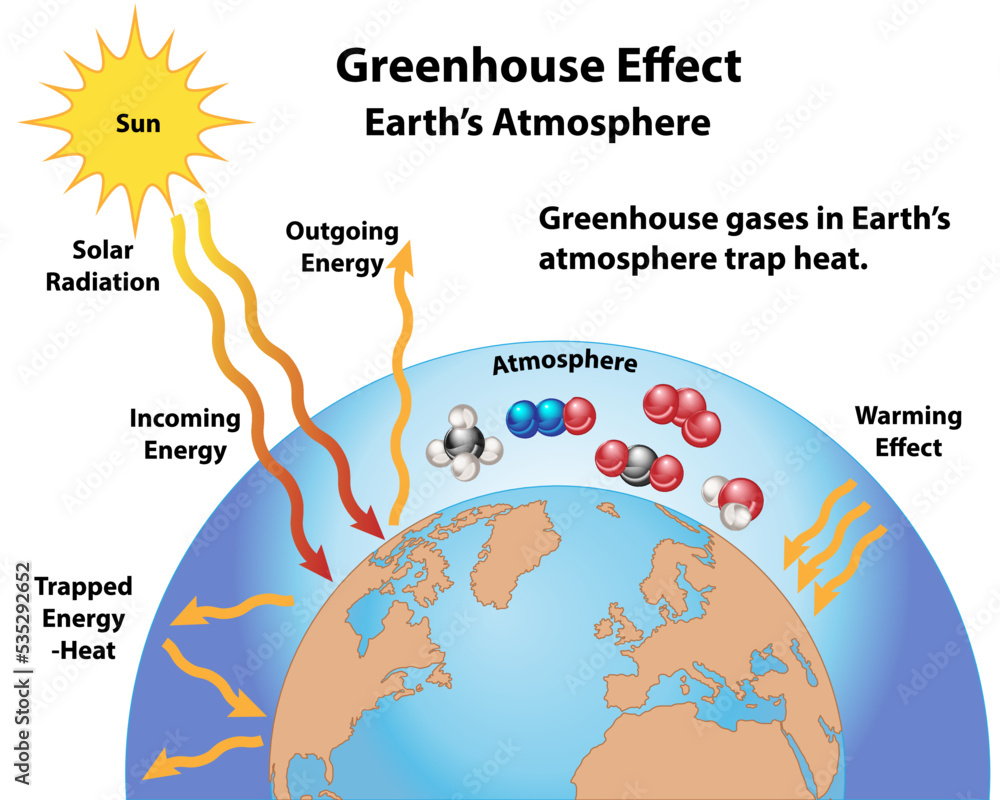
The term “greenhouse effect” describes the physical process by which certain atmospheric gases absorb and re‑emit infrared radiation, trapping heat near the Earth’s surface. This process is distinct from the “greenhouse” used in horticulture, although the analogy is useful for explanation. The effect operates continuously, regardless of human presence, and is the reason average surface temperatures are about 15 °C rather than the -18 °C expected from a planet without an atmosphere.
Because the same physical laws apply today as they did millions of years ago, the greenhouse effect is fundamentally natural. However, the concentration of greenhouse gases (GHGs) has changed dramatically due to anthropogenic activities, making the current state a blend of natural background and human‑induced enhancement.
How Does It Work?
1. Solar Radiation Reaches the Surface
Sunlight, primarily short‑wave radiation, passes through the atmosphere and warms land, oceans, and ice. About 30 % of this energy is reflected back to space, while the rest is absorbed.
2. Earth Emits Infrared Radiation
The warmed surface emits long‑wave infrared radiation upward. Gases such as CO₂, CH₄, N₂O, and water vapor have molecular bonds that vibrate at infrared frequencies, allowing them to absorb this radiation.
3. Re‑Emission and Heat Retention
After absorption, the gases re‑emit radiation in all directions. A portion returns to the surface, adding to the heat budget and raising surface temperature. This feedback loop creates a “blanket” effect.
4. Balance and Feedbacks
In a stable climate, the outgoing infrared radiation balances incoming solar energy. Changes in GHG concentrations shift this balance, leading to warming or cooling. Water vapor acts as a strong feedback: warmer air holds more moisture, which amplifies the greenhouse effect.
What Does the Evidence Show?
Multiple lines of evidence converge on the conclusion that the modern enhancement of the greenhouse effect is human‑driven:
- Direct atmospheric measurements from the Mauna Loa Observatory show CO₂ concentrations rising from ~315 ppm in 1958 to over 420 ppm in 2023 (NOAA, 2024).
- Ice‑core records reveal that pre‑industrial CO₂ levels varied between 180–300 ppm over the past 800,000 years, far below today’s values (IPCC AR6, 2021).
- Attribution studies using climate models consistently attribute > 95 % of the warming since 1950 to anthropogenic GHGs (IPCC, 2021).
- Energy‑balance analyses show that the radiative forcing from increased CO₂ alone is about +1.68 W·m⁻², matching observed temperature rise (NASA GISS, 2022).
Natural factors such as volcanic aerosols and solar variability have been quantified and are insufficient to explain the magnitude of recent warming.
Main Causes or Drivers
Natural Drivers
- Solar irradiance cycles (≈0.1 % variation over the 11‑year cycle).
- Volcanic eruptions inject sulfur dioxide, forming stratospheric aerosols that temporarily reflect sunlight and cause short‑term cooling.
- Orbital variations (Milankovitch cycles) affect long‑term climate over tens of thousands of years.
Human Drivers
- Combustion of coal, oil, and natural gas releases CO₂ and other gases.
- Agricultural practices emit methane (enteric fermentation, rice paddies) and nitrous oxide (fertilizer use).
- Land‑use change, especially deforestation, reduces carbon uptake and releases stored carbon.
- Industrial processes (e.g., cement production) add CO₂ and fluorinated gases.
Environmental and Human Impacts
Environmental Impacts
- Temperature rise: Global mean surface temperature has increased by about 1.1 °C since pre‑industrial times (IPCC AR6, 2021).
- Melting ice: Arctic sea‑ice extent declined by ~13 % per decade since 1979; Greenland ice loss contributes ~0.8 mm per year to sea‑level rise.
- Ocean acidification: Absorption of excess CO₂ lowers ocean pH by ~0.1 units since the industrial era, affecting calcifying organisms.
- Extreme weather: Increases in heat‑wave frequency and intensity are consistent with model projections of a warmer climate.
Human Health and Social Impacts
- Heat‑related mortality rises as extreme temperatures become more common, especially in vulnerable urban populations.
- Air‑quality degradation from ground‑level ozone and particulate matter worsens with higher temperatures.
- Food security is threatened by shifting growing zones, reduced yields in heat‑stressed regions, and increased pest pressure.
- Coastal communities face heightened flood risk from sea‑level rise, leading to potential displacement.
Regional Differences
Climate response varies with geography:
- Arctic and sub‑Arctic: Experience warming up to three times the global average, accelerating permafrost thaw.
- Tropical regions: Show pronounced changes in precipitation patterns, with some areas becoming drier and others wetter.
- Small island states: Face disproportionate sea‑level rise impacts, threatening habitability.
- Mid‑latitude continents: Observe increased heat‑wave days and altered snowfall patterns.
What Scientists Know With High Confidence
- Greenhouse gases trap infrared radiation, creating a natural warming effect.
- Atmospheric concentrations of CO₂, CH₄, and N₂O have risen sharply since the mid‑18th century.
- The majority of observed global warming since the mid‑20th century is caused by human‑generated GHG emissions.
- Continued emissions will lead to further warming, sea‑level rise, and ecosystem changes.
What Remains Uncertain
Key uncertainties include the magnitude of climate sensitivity (the temperature response to a doubling of CO₂), the rate of carbon uptake by oceans and terrestrial ecosystems under future conditions, and the precise regional patterns of extreme events. Improved observations and model development are needed to narrow these ranges.
Common Misconceptions
Misconception: The greenhouse effect is entirely man‑made.
Reality: The basic greenhouse effect is a natural physical process; human activities only amplify it by increasing GHG concentrations.
Misconception: Volcanic eruptions are the main cause of recent warming.
Reality: Large eruptions inject cooling aerosols, which temporarily offset warming; they do not explain the long‑term upward temperature trend.
Misconception: Reducing emissions will instantly reverse climate change.
Reality: Climate system inertia means temperature and sea‑level responses lag emissions reductions; mitigation slows future change but does not erase past warming.
Solutions and Limitations
Effective responses combine mitigation (reducing GHG sources) and adaptation (preparing for unavoidable impacts). Major strategies include:
- Renewable energy transition: Solar, wind, and geothermal reduce reliance on fossil fuels. Limitations involve intermittency, storage needs, and upfront costs.
- Energy efficiency: Improving building insulation and industrial processes cuts demand; savings can be modest without supportive policies.
- Carbon pricing: Taxes or cap‑and‑trade create economic incentives; effectiveness depends on price level and coverage.
- Reforestation and forest protection: Enhances carbon sinks but requires land‑use trade‑offs and long‑term management.
- Low‑carbon agriculture: Practices such as reduced tillage and precision fertilization lower emissions; adoption varies by region and market access.
All solutions involve trade‑offs—financial, social, or ecological—and must be tailored to local contexts.
What Individuals, Communities, and Governments Can Do
What Individuals Can Do
- Choose low‑carbon transportation (public transit, cycling, electric vehicles) where feasible.
- Improve home energy efficiency (insulation, LED lighting, smart thermostats).
- Support policies and companies that prioritize renewable energy.
- Reduce food waste and shift diet toward lower‑carbon options such as plant‑based proteins.
What Communities and Organizations Can Do
- Develop local renewable projects (community solar, wind cooperatives).
- Implement green‑infrastructure (urban trees, permeable surfaces) to mitigate heat islands.
- Adopt climate‑smart land‑use planning that preserves wetlands and forests.
What Governments Can Do
- Set ambitious, legally binding GHG reduction targets aligned with the Paris Agreement.
- Invest in research, development, and deployment of clean energy technologies.
- Provide subsidies or incentives for energy efficiency retrofits and electric vehicle adoption.
- Enhance climate monitoring networks to improve data quality and early‑warning systems.
Closing Synthesis
The greenhouse effect is a natural, life‑supporting process that has been intensified by human emissions of carbon dioxide, methane, nitrous oxide, and other gases. Robust evidence from atmospheric observations, ice cores, and climate‑model attribution confirms that this enhancement is the primary driver of the warming observed since the mid‑20th century. While natural factors still modulate climate on short timescales, they cannot account for the long‑term trend.
Understanding the high‑confidence findings helps focus mitigation efforts on reducing emissions and protecting carbon sinks, while ongoing research aims to resolve uncertainties in climate sensitivity and regional impacts. Solutions exist, but each carries trade‑offs that require careful planning, equitable implementation, and coordinated action across individuals, communities, and governments. By aligning actions with the best available science, society can steer the planet toward a more stable climate future.
Frequently Asked Questions
What is the greenhouse effect and why is it important?
The greenhouse effect is the natural process by which gases like carbon dioxide and methane trap infrared radiation, keeping Earth’s surface warmer than it would be without an atmosphere. It is essential for maintaining temperatures that support liquid water and life.
How do human activities enhance the greenhouse effect?
Human activities such as burning fossil fuels, deforestation, and industrial agriculture release large amounts of CO₂, methane, and nitrous oxide. These additional gases increase the atmosphere’s heat‑trapping capacity, amplifying the natural greenhouse effect and leading to global warming.
What evidence shows that recent warming is mainly caused by humans?
Direct measurements show atmospheric CO₂ rising from about 315 ppm in 1958 to over 420 ppm today. Ice‑core records indicate pre‑industrial levels were never this high. Climate‑model attribution studies consistently assign more than 95 % of warming since 1950 to human greenhouse‑gas emissions.
Which regions are most affected by the enhanced greenhouse effect?
The Arctic is warming up to three times faster than the global average, leading to rapid ice loss. Tropical regions experience changing rainfall patterns, while low‑lying island nations face heightened sea‑level rise risks. Mid‑latitude continents see more frequent heat waves.
What actions can individuals take to help reduce the enhanced greenhouse effect?
Individuals can lower their carbon footprint by using public transit or electric vehicles, improving home energy efficiency, reducing food waste, and choosing plant‑based meals. Supporting clean‑energy policies and companies also amplifies collective impact.






Leave a Comment