
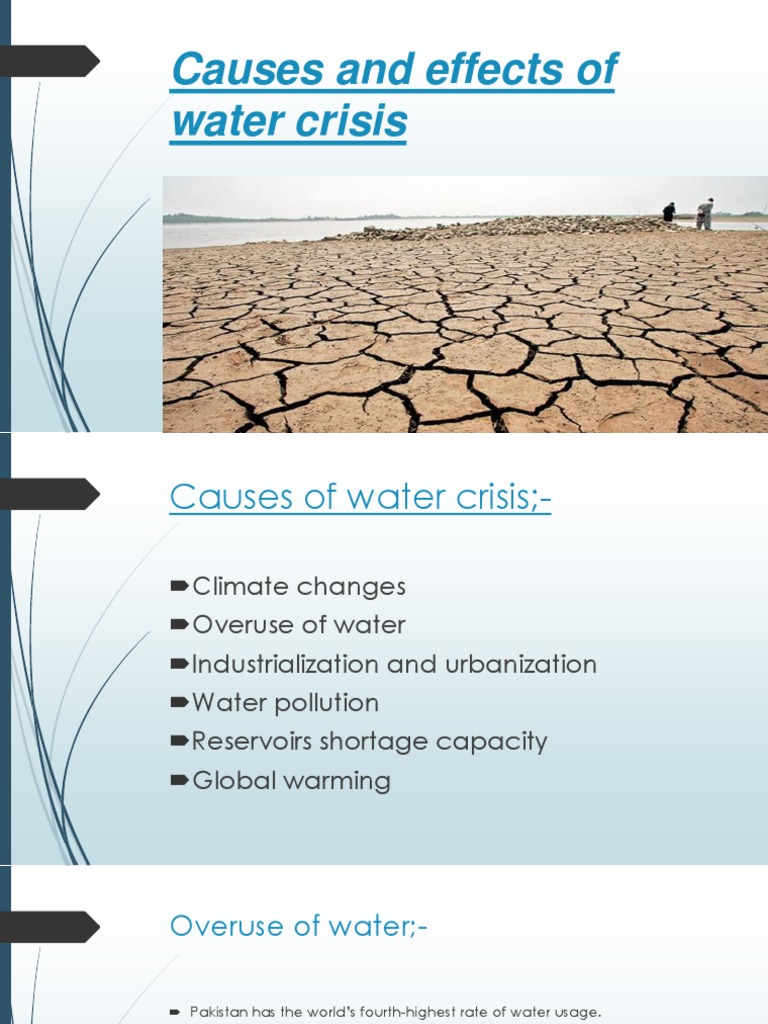
Water scarcity intensifies as a warming climate reshapes precipitation, amplifies drought, and strains human demand, threatening ecosystems, health, and economies worldwide.
Quick Answer
Water shortages arise when the balance between freshwater supply and demand is disrupted by climate‑driven changes in precipitation and evaporation, by rising human withdrawals for agriculture, industry, and cities, and by degradation of water quality. Strong evidence from the Intergovernmental Panel on Climate Change (IPCC, 2021) links higher temperatures to more frequent and severe droughts, while the Food and Agriculture Organization (FAO) reports that agriculture accounts for about 70 % of global freshwater withdrawals (FAO, 2020). The most consequential impact is reduced access to safe drinking water, which in turn harms public health, food security, and economic productivity, though the exact severity varies by region and adaptive capacity.
Key Takeaways
- Climate change alters the hydrological cycle, increasing the frequency of droughts and extreme rainfall events.
- Agriculture, urban growth, and industrial use together consume roughly three‑quarters of all freshwater withdrawals.
- Water quality degradation from pollution reduces the usable portion of existing supplies.
- Impacts are uneven: low‑income regions and arid zones face the greatest stress.
- Evidence‑based solutions—such as efficient irrigation, rainwater harvesting, and integrated water governance—can reduce scarcity but require coordinated action.
What Is Causes and Effects of Water Shortages in a Warming World?
Water scarcity refers to the situation where the demand for freshwater exceeds the available quantity or quality, or when its use threatens the sustainability of ecosystems. In a warming world, the term encompasses both physical shortages (reduced river flow, depleted aquifers) and quality shortages (contamination that makes water unsafe). The concept differs from temporary drought because it includes long‑term trends, socio‑economic pressures, and governance failures that together shape water security.
How Does It Work?
Climate‑Driven Hydrological Changes
Rising global temperatures increase evaporation rates and shift atmospheric circulation. The IPCC (2021) reports that many mid‑latitude and tropical regions now experience a “dry‑gets‑drier, wet‑gets‑wetter” pattern, leading to prolonged low‑flow periods in rivers and reduced recharge of groundwater. Snow‑melt timing also changes, advancing peak runoff and leaving less water for the dry season.
Urban and Agricultural Demand
Urban populations grew by 2.5 % per year between 2000 and 2020, according to United Nations data, raising per‑capita water use in many cities. Simultaneously, agriculture remains the dominant water user; the FAO (2020) estimates 70 % of freshwater withdrawals support irrigation. Inefficient practices such as flood irrigation waste up to 50 % of applied water.
Pollution and Degradation
Industrial effluents, agricultural runoff, and untreated sewage introduce nutrients, heavy metals, and pathogens into rivers and lakes. The World Health Organization (WHO) notes that in 2022, 2.2 billion people lacked safely managed drinking‑water services, a figure that reflects both quantity and quality deficits.
Governance and Inequality
Legal and institutional frameworks often prioritize large‑scale users (e.g., hydroelectric dams, export‑oriented farms) over smallholder farmers and Indigenous communities. This unequal allocation can exacerbate scarcity even where physical water is relatively abundant.
What Does the Evidence Show?
Multiple lines of evidence converge on a clear picture of growing water stress:
- Long‑term monitoring by NOAA shows a 15 % decline in average river discharge across the western United States between 1970 and 2020.
- Satellite‑based gravimetric data from NASA’s GRACE mission reveal that groundwater storage in major Asian aquifers fell by 30 % from 2003 to 2019.
- Systematic reviews of field experiments (e.g., a 2021 meta‑analysis in Water Resources Research) confirm that drip irrigation can cut water use by 30–50 % while maintaining yields.
- Assessment reports from the United Nations Environment Programme (UNEP, 2022) link rising temperatures to increased water‑related conflicts in over 20 regions.
These observations are consistent across continents, indicating that both climate and human demand are reinforcing each other.
Main Causes or Drivers
Direct Climate Drivers
Higher air temperatures, altered precipitation patterns, and earlier snowmelt directly reduce freshwater availability.
Human Water Use
Intensive irrigation, expanding urban infrastructure, and industrial cooling demand large water volumes.
Land‑Use Change
Deforestation and soil sealing reduce natural infiltration, limiting aquifer recharge.
Pollution
Contaminants render existing water unsuitable for drinking or irrigation, effectively shrinking the usable supply.
Governance Gaps
Weak regulation, lack of transboundary cooperation, and inequitable allocation exacerbate physical scarcity.
Environmental and Human Impacts
Environmental Impacts
Reduced river flow shrinks wetlands, threatening species that rely on flood‑plain habitats. The IUCN reports that over 40 % of freshwater‑dependent species are classified as threatened, a trend linked to habitat loss from water extraction.
Human Health and Social Impacts
Limited access to clean water increases the risk of water‑borne diseases such as cholera and diarrheal illness, which the WHO attributes to 485 000 deaths annually. Water scarcity also heightens competition, potentially leading to migration and conflict.
Economic and Infrastructure Impacts
The World Bank estimates that water stress could cost global economies up to 6 % of GDP by 2050 if no adaptive measures are taken, primarily through reduced agricultural productivity and increased treatment costs.
Regional Differences
In the Middle East and North Africa, arid climates combined with rapid urban growth have produced some of the highest per‑capita water withdrawals. In contrast, parts of northern Europe experience excess precipitation but still face water‑quality challenges due to agricultural runoff. Sub‑Saharan Africa often contends with both low supply and limited infrastructure, making even modest droughts severe.
What Scientists Know With High Confidence
What Scientists Know With High Confidence
- Global warming is increasing the frequency and intensity of droughts in many regions (IPCC, 2021).
- Agriculture accounts for roughly 70 % of freshwater withdrawals worldwide (FAO, 2020).
- Groundwater depletion is measurable and accelerating in major river basins (NASA GRACE, 2020‑2022).
- Poor water quality directly reduces the amount of water that can be safely used (WHO, 2022).
What Remains Uncertain
What Remains Uncertain
Key uncertainties include the exact timing of threshold crossings for major river basins, the future trajectory of water‑related conflicts, and the effectiveness of large‑scale water‑recycling technologies under varying climatic conditions. Improved monitoring networks and high‑resolution climate‑hydrology models are needed to narrow these gaps.
Common Misconceptions
Common Misconceptions
Misconception: Water scarcity is only a problem in deserts.
Reality: Even water‑rich regions can experience scarcity when demand outpaces supply or when pollution renders water unusable.
Misconception: Droughts are caused solely by lack of rain.
Reality: Drought results from a combination of reduced precipitation, higher evaporation, and increased water withdrawals.
Misconception: Individual water‑saving actions can solve the crisis.
Reality: Personal conservation helps, but systemic changes in agriculture, industry, and governance are required to address the scale of scarcity.
Solutions and Limitations
Effective responses fall into several categories:
- Efficient Irrigation: Drip and precision irrigation reduce water use by up to 50 % (meta‑analysis, 2021), but high upfront costs limit adoption in low‑income farms.
- Rainwater Harvesting: Capturing runoff can supplement supplies, yet storage capacity and seasonal variability constrain reliability.
- Wastewater Recycling: Treated effluent can meet agricultural needs, but energy use and public acceptance are challenges.
- Integrated Water Resources Management (IWRM): Coordinated planning improves allocation, but requires strong institutions and cross‑border cooperation.
- Pollution Control: Reducing nutrient runoff improves water quality, yet enforcement can be weak in rapidly developing economies.
What Individuals, Communities, and Governments Can Do
What Individuals Can Do
Install water‑efficient fixtures, fix leaks promptly, and choose low‑water‑footprint foods such as legumes over water‑intensive meat.
What Communities and Organizations Can Do
Develop local rainwater capture systems, promote community‑scale grey‑water reuse, and conduct water‑audit workshops for schools and businesses.
What Governments Can Do
Adopt IWRM policies, subsidize drip‑irrigation technologies for smallholders, enforce stricter effluent standards, and invest in real‑time water‑monitoring networks.
What Businesses and Industries Can Do
Implement water‑risk assessments, set science‑based water‑use reduction targets, and recycle process water where feasible.
Synthesis of Key Points
Water shortages in a warming world stem from climate‑driven hydrological shifts, expanding human demand, and deteriorating water quality. Robust evidence confirms that agriculture dominates withdrawals, that droughts are becoming more common, and that groundwater is being depleted at alarming rates. Impacts range from ecosystem degradation to heightened health risks, with the most severe burdens falling on low‑income and arid regions. While uncertainties remain around precise future thresholds, the scientific consensus supports a portfolio of solutions—efficient irrigation, rainwater harvesting, wastewater reuse, and integrated governance—each with its own trade‑offs. Coordinated action across individuals, communities, industry, and governments offers the most realistic pathway to safeguard freshwater for future generations.
Frequently Asked Questions
What defines water scarcity in the context of a warming climate?
Water scarcity occurs when the demand for freshwater exceeds the available quantity or quality, and climate‑induced changes such as reduced precipitation and higher evaporation intensify this imbalance.
How does agriculture contribute to global water shortages?
Agriculture accounts for about 70 % of global freshwater withdrawals, and inefficient irrigation methods can waste up to half of the water applied, making it the largest direct human driver of scarcity.
What are the most significant health risks linked to water shortages?
Limited access to clean water increases exposure to water‑borne diseases like cholera and diarrheal illness, which together cause roughly 485 000 deaths each year according to the World Health Organization.
Which regions are expected to face the greatest water stress in the future?
Arid and semi‑arid regions such as the Middle East, North Africa, and parts of South Asia are projected to experience the highest water stress due to combined climate drying and rapid population growth.
What practical steps can communities take to reduce water scarcity?
Communities can install rainwater harvesting systems, promote grey‑water reuse for landscaping, and organize water‑audit workshops to identify and fix leaks, thereby lowering overall demand.





Leave a Comment