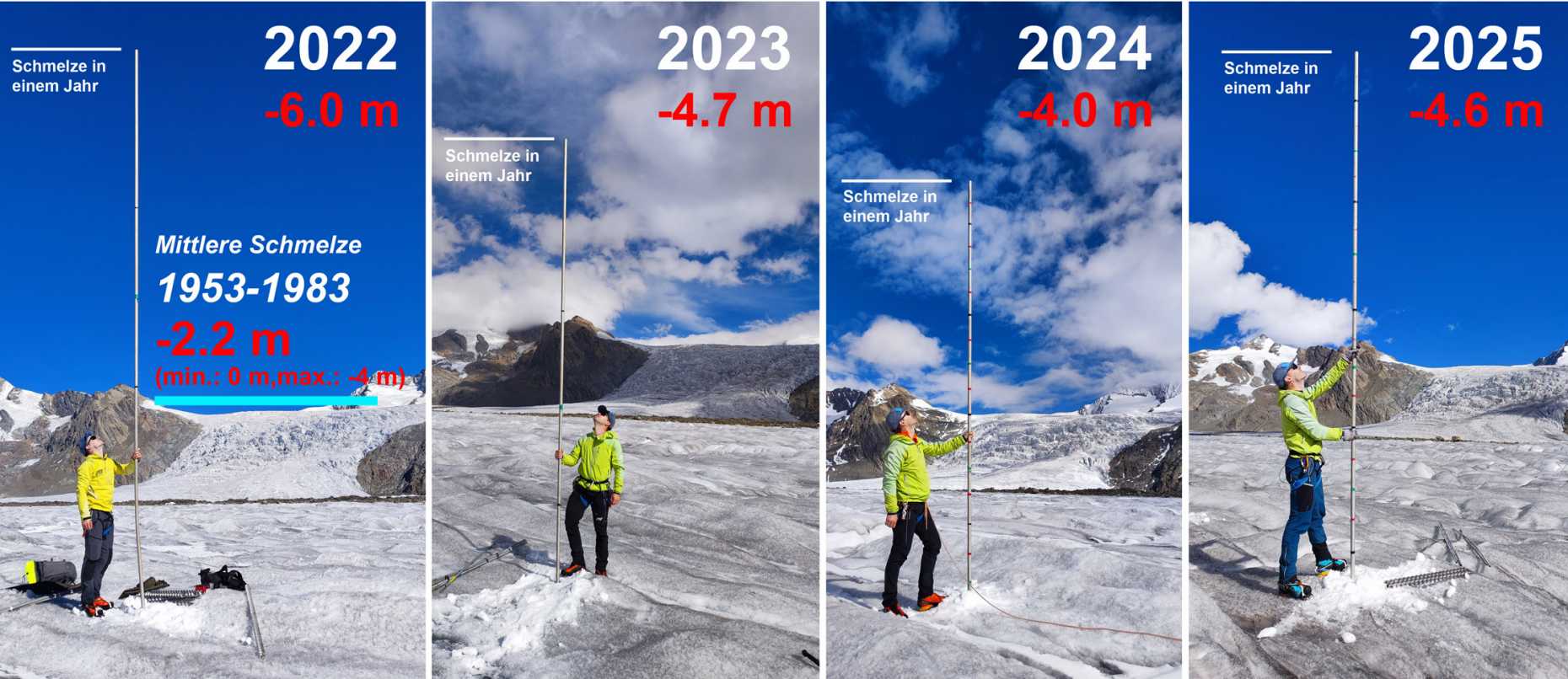
The allure of Swiss glaciers has captivated humanity for centuries, serving as majestic symbols of nature’s wonder and irreplaceable indicators of climate change. However, recent observations reveal that these colossal ice masses, once impervious and enduring, have continued to melt at an alarming rate in 2025. This phenomenon raises a myriad of questions, compelling us to delve deeper into the intricate tapestry of environmental, climatic, and anthropogenic factors contributing to this ongoing crisis.
First, it is essential to discern the basic premise: glaciers are dynamic entities, constantly in flux. Their existence is a result of a delicate balance between accumulation, primarily through snowfall, and ablation, predominantly due to melting and sublimation. Over recent decades, an increasing discrepancy in this balance has emerged. In the Swiss Alps, warmer temperatures, particularly during crucial summer months, have outpaced the rate at which glaciers can replenish themselves with new snowfall. This thermal imbalance, exacerbated by climate change, serves as the primary driver of glacial retreat.
In 2025, the alpine region has experienced unprecedented temperature hikes, a startling trend that aligns with global patterns of increasing warmth. The average annual temperature in Switzerland has crept upwards, drawing conditions akin to those usually found in lower elevation climates. This chronic elevation in temperature crafts an environment where glaciers inevitably succumb to accelerated melting. The phenomenon of ‘glacier thinning’ is reported with increasing frequency, as practitioners in glaciology document a consistent decline in glacier mass.
Moreover, the phenomenon of albedo plays a significant role in this ongoing saga of ice retreat. Albedo refers to the reflectiveness of a surface, and it is well known that ice and snow have high albedo, reflecting a significant portion of the sun’s rays back into the atmosphere. However, as glaciers melt, they expose darker surfaces beneath, which absorb more sunlight and consequently, further accelerate melting. This feedback loop epitomizes a self-perpetuating cycle of destruction, hastening the demise of these ancient ice formations.
Furthermore, while temperature rises are immediate and evident, the glacial melt in Switzerland cannot solely be attributed to natural phenomena. Human activity plays a crucial role in altering climatic conditions. The burning of fossil fuels, deforestation, and industrial activities release copious amounts of greenhouse gases into the atmosphere. These emissions coalesce to create a blanket effect, trapping heat and thus, inducing further warming. The stark reality is that Switzerland, despite its reputation as an environmentally conscious nation, is not immune to the ramifications of global industrialization.
In addition to greenhouse gas emissions, land use changes exacerbated by tourism and urbanization also contribute to glacier decline. Expanding settlements and recreational infrastructures encroach upon pristine mountainous territories, altering local ecosystems and thermal dynamics. For instance, the construction of ski resorts has necessitated the alteration of natural landscapes, which can disrupt traditional weather patterns and exacerbate local warming trends. The interplay of human encroachment into these delicate environments raises ethical questions about sustainability and the balance of nature.
Another often-overlooked aspect of the melting glaciers is the impact of mineral deposits and pollution. As glaciers recede, they release ancient pollutants trapped within their ice, including heavy metals and microplastics. These materials not only pose risks to local ecosystems but also to the myriad of communities that depend on these water sources for sustenance. The melting glaciers of Switzerland, crucial for river systems like the Rhône and Aare, represent a double-edged sword: they yield water—an essential resource—while simultaneously releasing harmful substances.
While much of the narrative surrounding glacier decline has leaned heavily toward lamentation and despair, this moment also presents an opportunity for reflection and action. As the glaciers diminish, they compel humanity to confront uncomfortable truths about environmental stewardship and responsibility. They are not simply icy giants but rather, sentinels that embody the delicate balance of our planet’s climate system. The fate of Swiss glaciers can serve as a clarion call, urging individuals, societies, and policymakers toward proactive engagement in climate mitigation initiatives.
Engaging communities in climate education, promoting sustainable tourism practices, and encouraging renewable energy investments are pathways toward addressing this crisis. As awareness grows, it fosters a collective responsibility to forge symbiotic relationships with the environment. Every small act counts, whether it’s reducing carbon footprints or advocating for climate policies that prioritize ecological preservation.
Ultimately, the melting of Swiss glaciers in 2025 is more than a compelling narrative of loss; it embodies a critical intersection of environmental science, human activity, and future potential. The glaciers, while undeniably retreating, can galvanize collective movements aimed at systemic change. Until a concerted effort is undertaken to address the root causes of climate change, we will continue to witness the irreversible transformation of these majestic ice formations, a loss that echoes a broader global concern about our changing world.




Leave a Comment