
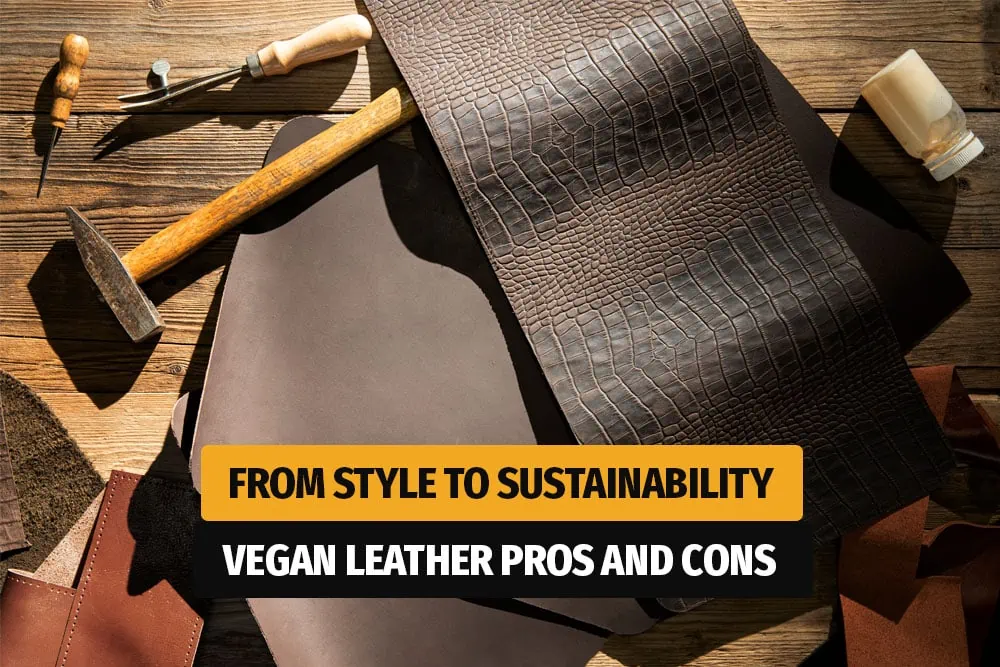
Vegan leather offers a cruelty‑free alternative to animal hides, but its environmental footprint depends on material choice, production methods, and end‑of‑life pathways, making its sustainability a nuanced trade‑off.
Quick Answer
Vegan leather is a term for non‑animal‑based leather‑like materials, most commonly made from synthetic polymers such as polyurethane (PU) or polyvinyl chloride (PVC) and increasingly from bio‑based sources like pineapple leaves, mushroom mycelium, or cork. The manufacturing process eliminates livestock‑related methane emissions and water use, yet many synthetic variants rely on fossil‑fuel‑derived chemicals that emit greenhouse gases and can release toxic substances. Overall, the sustainability of vegan leather is mixed: bio‑based options tend to have lower climate impact, while conventional PU/PVC products may generate comparable or higher emissions than traditional leather when full life‑cycle impacts are considered. Uncertainty remains around long‑term durability and end‑of‑life treatment.
Key Takeaways
- Vegan leather eliminates direct animal exploitation and can reduce water use relative to cattle leather.
- Synthetic PU and PVC leathers are derived from petrochemicals, contributing to greenhouse‑gas emissions and potential toxic releases.
- Bio‑based alternatives (e.g., pineapple, mushroom, cork) show promising lower carbon footprints but are not yet produced at scale.
- Durability and end‑of‑life options (recycling, biodegradability) critically influence overall environmental performance.
- Consumer choices matter, but systemic shifts in material sourcing, manufacturing standards, and waste management are essential for true sustainability.
What Is Vegan Leather Under the Microscope: Sustainability Pros and Cons?
Vegan leather refers to any leather‑like material that does not contain animal skin. It encompasses a spectrum of products, from fully synthetic polymers (PU, PVC) to emerging bio‑based composites derived from agricultural waste (pineapple leaves, called Piñatex), fungal mycelium, or cork. The term is distinct from “vegan fashion” (which merely excludes animal products) because it specifically addresses the material’s functional and aesthetic properties that mimic traditional leather. Understanding its environmental relevance requires looking at the entire life cycle: raw material extraction, manufacturing, use, and disposal.
How Does It Work?
1. Raw Material Production
Synthetic vegan leathers start with petrochemical feedstocks. Polyurethane is created by reacting polyols with isocyanates, while PVC involves polymerising vinyl chloride monomers. Bio‑based leathers begin with plant fibers (e.g., pineapple leaf fibers) or fungal mycelium cultivated on agricultural residues. These feedstocks determine the carbon intensity of the material.
2. Fabrication Process
Manufacturers typically coat a textile backing (often polyester or cotton) with a polymer layer, then emboss the surface to achieve a grain pattern. For PU, a solvent‑based or water‑based coating is applied and cured with heat. PVC processing often requires plasticisers such as phthalates, which can leach into the environment. Bio‑based leathers may be bonded using biodegradable adhesives and undergo less energy‑intensive curing.
3. Finishing and Dyeing
Colorants and protective finishes are added to improve durability and aesthetic appeal. Conventional synthetic leathers often use solvent‑based dyes that emit volatile organic compounds (VOCs). Some bio‑based products use water‑based, low‑impact dyes, reducing air‑quality emissions.
4. Use Phase
Durability influences how often the product is replaced. Traditional leather can last decades with proper care, while many PU/PVC leathers show wear after a few years, potentially increasing waste generation.
5. End‑of‑Life Management
PU and PVC are generally non‑recyclable and end up in landfills or incinerators, where they may release dioxins and other pollutants. Some emerging bio‑based leathers are designed to biodegrade under industrial composting conditions, but commercial composting infrastructure is limited.
What Does the Evidence Show?
Life‑cycle assessments (LCAs) conducted by the European Commission’s Joint Research Centre (2021) indicate that PU‑based vegan leather can emit 5–10 kg CO₂‑equivalent per square metre, comparable to or higher than cattle leather when the latter is sourced from low‑intensity systems. However, a systematic review of bio‑based alternatives published in the Journal of Cleaner Production (2023) found that pineapple‑leaf leather generated 2.5 kg CO₂‑eq m⁻², roughly 40 % lower than conventional PU. Water‑use studies from the Food and Agriculture Organization (FAO, 2022) show that producing 1 m² of cattle leather requires up to 20 000 L of water, whereas synthetic vegan leathers typically need less than 5 000 L, and bio‑based options can be under 2 000 L when using agricultural residues. Toxicity assessments highlight that PVC production releases chlorine‑based pollutants, and phthalate plasticisers have been linked to endocrine disruption in laboratory studies (U.S. EPA, 2020). Overall, the strongest evidence suggests that material source (synthetic vs. bio‑based) drives the majority of climate and toxicity outcomes.
Main Causes or Drivers
Direct Causes
- Reliance on fossil‑derived polymers for most mainstream vegan leather.
- Use of toxic additives (plasticisers, solvents) in manufacturing.
Underlying Drivers
- Consumer demand for cruelty‑free fashion combined with cost pressures that favour inexpensive synthetic polymers.
- Limited availability of large‑scale bio‑based feedstocks and processing infrastructure.
Contributing Factors
- Regulatory gaps regarding chemical disclosures in textile supply chains.
- Marketing practices that conflate “vegan” with “sustainable,” leading to green‑washing.
Environmental and Human Impacts
Environmental Impacts
Climate: Production of PU and PVC releases CO₂, nitrous oxide, and, in the case of PVC, chlorine‑containing compounds. Bio‑based leathers can sequester carbon in the original plant material, offsetting some emissions. Water: Synthetic leathers require less irrigation water than cattle but still involve water‑intensive chemical processing. Pollution: PVC manufacturing emits dioxins, and PU processes can release VOCs that affect air quality. Waste: Non‑recyclable synthetic leathers contribute to landfill mass; their slow degradation can persist for centuries.
Human Health and Social Impacts
Workers in petrochemical plants may be exposed to hazardous substances such as vinyl chloride, a known carcinogen (International Labour Organization, 2021). Communities near PVC production sites have reported higher incidences of respiratory issues due to airborne pollutants. Conversely, bio‑based production can create agricultural value‑added markets for smallholder farmers, supporting rural livelihoods when supply chains are fair‑trade certified.
Regional Differences
In Europe, stringent REACH regulations limit certain phthalates, prompting manufacturers to shift toward water‑based PU formulations. In contrast, many Asian manufacturers still rely heavily on PVC due to lower production costs, resulting in higher regional emissions. North America has seen a rise in boutique firms using pineapple‑leaf fibers sourced from the Philippines, illustrating how global supply chains can redistribute environmental burdens.
What Scientists Know With High Confidence
- Livestock production is a major source of methane and water consumption; eliminating animal hides removes these specific emissions.
- Petrochemical‑based vegan leathers generate greenhouse‑gas emissions comparable to or higher than low‑intensity cattle leather when full life‑cycle impacts are accounted for.
- Bio‑based feedstocks can lower carbon and water footprints, but scalability and end‑of‑life pathways remain limited.
- PVC production involves toxic chlorine‑based by‑products that pose health risks to workers and nearby communities.
What Remains Uncertain
Key knowledge gaps include long‑term durability of emerging bio‑based leathers, the real-world biodegradation rates under varied disposal conditions, and the scalability of sustainable feedstock supply without inducing land‑use change. Additionally, comprehensive, comparable LCAs that cover the entire global supply chain for each material type are still scarce, limiting precise cross‑material comparisons.
Common Misconceptions
Misconception: All vegan leather is automatically environmentally friendly.
Reality: Many vegan leathers are made from fossil‑based polymers that can have similar or higher climate impacts than traditional leather, especially when end‑of‑life disposal is considered.
Misconception: Vegan leather never harms animals.
Reality: While it avoids animal skin, synthetic production can affect wildlife through chemical pollution and microplastic release during wear and washing.
Misconception: Bio‑based vegan leathers are fully biodegradable.
Reality: Biodegradability depends on the specific polymer blend and disposal environment; many products still contain synthetic binders that hinder complete breakdown.
Solutions and Limitations
To improve sustainability, the industry can pursue several strategies:
- Material Innovation: Invest in scalable bio‑based polymers (e.g., mycelium, agricultural waste) that reduce reliance on fossil feedstocks. Limitation: Current production volumes are low and may compete with food crops if not managed responsibly.
- Cleaner Production: Adopt water‑based PU formulations and phase out PVC. Limitation: Transition costs and existing equipment retrofits can be substantial.
- Extended Product Life: Design for repairability and offer take‑back programs. Limitation: Consumer willingness to maintain products varies, and logistics for collection can be complex.
- End‑of‑Life Management: Develop recycling streams for PU through chemical depolymerisation and promote industrial composting for certified biodegradable leathers. Limitation: Recycling infrastructure is limited, and composting facilities may not accept mixed‑material textiles.
What Individuals, Communities, and Governments Can Do
What Individuals Can Do
- Check product labels for material composition; prioritize certified bio‑based or recycled PU over PVC.
- Extend the lifespan of leather‑like items through proper cleaning, storage, and repair.
- Support brands that disclose full life‑cycle data and have transparent supply chains.
What Communities and Organizations Can Do
- Establish local collection points for used vegan leather products to enable recycling or safe disposal.
- Partner with universities or NGOs to pilot circular‑economy projects focused on textile upcycling.
What Governments Can Do
- Implement stricter chemical regulations for PVC and hazardous plasticisers under existing REACH or TSCA frameworks.
- Provide subsidies or tax incentives for manufacturers that adopt low‑carbon, bio‑based feedstocks.
- Fund independent LCAs and standardise reporting protocols to reduce green‑washing.
Synthesis
Vegan leather illustrates the trade‑offs inherent in many “green” alternatives: it removes direct animal exploitation and can cut water use, yet synthetic variants may offset those gains through fossil‑fuel emissions and toxic by‑products. Bio‑based innovations hold promise for lower carbon footprints, but their environmental advantage hinges on scalable production, responsible sourcing, and effective end‑of‑life pathways. High‑confidence science confirms the climate and health risks of PVC, while uncertainties remain around durability and biodegradability of newer materials. Meaningful progress will require coordinated action across material research, manufacturing standards, waste‑management infrastructure, and transparent consumer information.
Frequently Asked Questions
What is vegan leather and how does it differ from traditional leather?
Vegan leather is any leather‑like material made without animal skin, typically using synthetic polymers (PU, PVC) or bio‑based fibers such as pineapple leaves, mushroom mycelium, or cork. Traditional leather is derived from animal hides and involves livestock‑related farming and tanning processes.
Does vegan leather have a lower carbon footprint than animal leather?
The carbon footprint varies by material. Bio‑based vegan leathers can emit about 40 % less CO₂ per square metre than conventional PU, while PVC and many PU products often have similar or higher emissions than low‑intensity cattle leather when full life‑cycle impacts are included.
Are all synthetic vegan leathers harmful to the environment?
Synthetic leathers made from PVC release chlorine‑based pollutants and use toxic plasticisers, posing health and ecological risks. PU can emit volatile organic compounds, but water‑based formulations reduce some impacts. Not all synthetic options are equally harmful, but they generally have higher fossil‑fuel footprints than bio‑based alternatives.
What are the main challenges with disposing of vegan leather?
Most PU and PVC leathers are non‑recyclable and persist in landfills for decades, potentially releasing dioxins when incinerated. Some bio‑based leathers are designed to biodegrade under industrial composting, but commercial composting facilities are limited, and mixed‑material products may not break down fully.
How can consumers make more sustainable choices when buying vegan leather products?
Consumers should look for clear material disclosures, favor products made from certified bio‑based or recycled PU, avoid PVC, extend product life through proper care and repair, and support brands that provide transparent life‑cycle data and take‑back programs.






Leave a Comment