
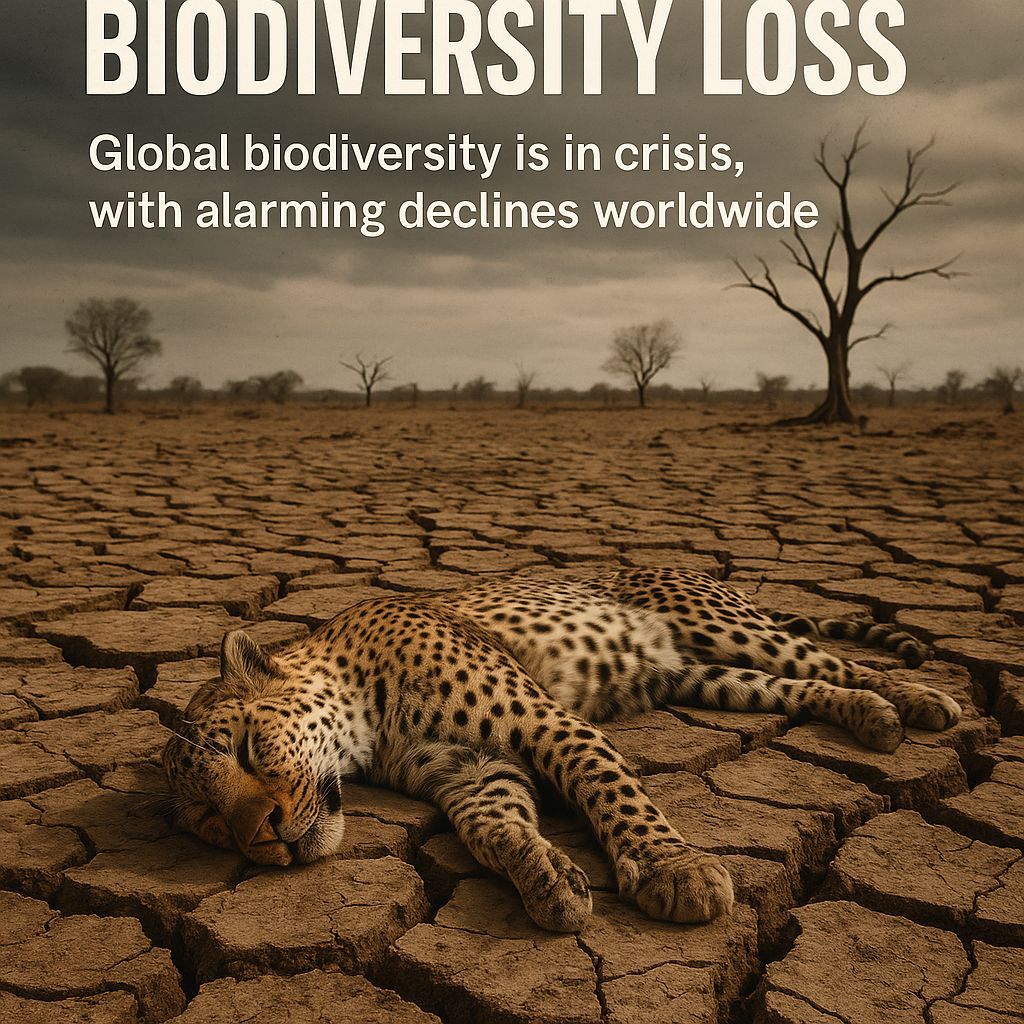
Global biodiversity is under severe pressure from five interlinked threats—habitat loss, climate change, overexploitation, pollution, and invasive species—each driven by human activity and each eroding the ecosystems that support life on Earth.
Quick Answer
Biodiversity faces five major, well‑documented threats: conversion of natural lands, warming and shifting climates, unsustainable harvesting of organisms, widespread chemical and plastic pollution, and the spread of non‑native invasive species. These drivers reduce species numbers, disrupt ecosystem services, and increase extinction risk. Scientific assessments (e.g., IPBES 2019) show that up to one‑third of species are already threatened, and the cumulative impact is expected to grow unless decisive mitigation and restoration actions are taken. Uncertainty remains around exact future rates, especially under different climate and policy scenarios.
Key Takeaways
- Habitat loss and fragmentation are the leading cause of species declines worldwide.
- Climate change alters temperature and precipitation patterns, forcing range shifts and causing mismatches in ecological interactions.
- Overexploitation of fish, timber, and wildlife pushes many populations toward collapse.
- Pollution—from plastics to heavy metals—bioaccumulates and harms both terrestrial and marine life.
- Invasive species outcompete natives, reshaping ecosystems and reducing native biodiversity.
- Effective solutions combine protection, sustainable use, pollution control, and coordinated global policies.
What Is The Five Biggest Threats to Global Biodiversity?
The phrase refers to the five primary drivers identified by major assessment reports such as the Intergovernmental Science‑Policy Platform on Biodiversity and Ecosystem Services (IPBES) Global Assessment (2019). These drivers are distinct but interact synergistically, amplifying overall risk. They differ from generic terms like “environmental degradation” by pinpointing the mechanisms that most directly cause species loss and ecosystem impairment.
How Does It Work?
1. Habitat Loss and Fragmentation
When forests, wetlands, or grasslands are cleared for agriculture, urban development, or infrastructure, the physical space that species need disappears. Fragmentation isolates populations, limiting gene flow and making them more vulnerable to stochastic events.
2. Climate Change
Rising greenhouse‑gas concentrations raise global temperatures and alter precipitation. Species must either adapt in place, shift to suitable climates, or face local extinction. Changing phenology (e.g., earlier flowering) can desynchronize predator‑prey or pollinator‑plant relationships.
3. Overexploitation
Intensive fishing, logging, and wildlife trade remove individuals faster than populations can replenish. This reduces reproductive output and can erase keystone species that hold ecosystems together.
4. Pollution
Chemicals (pesticides, heavy metals) and plastics enter soils, rivers, and oceans. They can be toxic, cause endocrine disruption, or physically block feeding and reproduction. Pollutants also travel through food webs, accumulating in top predators.
5. Invasive Species
Non‑native organisms introduced intentionally or accidentally often lack natural predators. They compete for resources, alter habitat structure, and can introduce novel diseases, leading to native species declines.
What Does the Evidence Show?
Long‑term monitoring by the IUCN Red List indicates that approximately 28% of assessed species face a high risk of extinction. The IPBES 2019 report synthesised over 15,000 studies and concluded that habitat loss accounts for roughly 70% of observed declines, while climate change contributed to 30% of documented range shifts. Systematic reviews of marine fisheries (e.g., Worm et al., 2009) show that 90% of fish stocks are fully exploited or overfished. A 2020 UNEP assessment of plastic pollution found that 8 million metric tons of plastic enter oceans each year, with measurable impacts on marine fauna. Invasive species are responsible for an estimated $1.4 trillion in economic losses annually, according to the Convention on Biological Diversity.
Main Causes or Drivers
- Direct causes: Land‑use conversion, greenhouse‑gas emissions, illegal hunting, discharge of waste, and intentional species introductions.
- Underlying drivers: Population growth, economic demand for commodities, lack of effective governance, and global trade networks.
- Amplifying factors: Climate extremes, weakened regulatory frameworks, and insufficient funding for conservation.
Environmental and Human Impacts
Environmental Impacts
Loss of pollinators reduces crop yields; altered water cycles increase flood risk; coral bleaching eliminates habitats for countless marine species; and reduced genetic diversity limits ecosystem resilience.
Human Health and Social Impacts
Contaminated fish and crops expose people to toxins, increasing risks of neurological disorders and cancers. Declining fisheries threaten food security for over 3 billion people who rely on marine protein. Indigenous communities dependent on specific ecosystems lose cultural practices tied to those habitats.
Economic and Infrastructure Impacts
Reduced ecosystem services—such as water purification, carbon sequestration, and soil fertility—translate into higher costs for agriculture, water treatment, and disaster mitigation.
Regional Differences
In the Amazon, deforestation rates of ~10,000 km² per year (2022 data from Brazil’s space agency) drive rapid habitat loss, whereas in the Arctic, climate‑induced permafrost thaw is the dominant biodiversity stressor. Island nations in the Pacific face disproportionate invasive‑species pressures, while small‑scale fisheries in Southeast Asia experience acute overexploitation.
What Scientists Know With High Confidence
- Habitat loss is the primary driver of global species declines.
- Climate change is altering species distributions and phenology worldwide.
- Overexploitation has pushed many marine and terrestrial populations beyond sustainable limits.
- Pollutants, especially plastics and persistent organic chemicals, accumulate through food webs and harm wildlife.
- Invasive species are a leading cause of native species extinctions on islands.
What Remains Uncertain
Key uncertainties include the precise rate at which climate‑induced range shifts will translate into extinctions, the long‑term ecological effects of microplastic ingestion, and the effectiveness of large‑scale restoration under future climate scenarios. Data gaps are especially pronounced in tropical understudied regions and for invertebrate taxa.
Common Misconceptions
Misconception: “Biodiversity loss is only a problem for remote rainforests.”
Reality: Biodiversity underpins services used daily in cities—clean air, pollination of urban gardens, and water regulation.
Misconception: “Climate change alone will cause mass extinctions.”
Reality: Climate change interacts with habitat loss and other stressors; it is a synergistic driver rather than a solitary cause.
Misconception: “All invasive species are harmful.”
Reality: A few introduced species become invasive, but most introductions fail to establish; management should focus on high‑risk pathways.
Solutions and Limitations
Conservation strategies include protected‑area expansion, ecosystem‑based management, sustainable harvesting standards, pollution‑reduction regulations, and biosecurity measures. Limitations arise from funding shortfalls, enforcement challenges, potential trade‑offs (e.g., land‑sparring between agriculture and reserves), and uncertainties about how restored habitats will function under changing climates.
What Individuals, Communities, and Governments Can Do
What Individuals Can Do
Choose sustainably sourced seafood, reduce single‑use plastics, support certified forestry products, and engage in citizen‑science monitoring programs.
What Communities and Organizations Can Do
Implement local habitat restoration, adopt integrated pest‑management to reduce pesticide runoff, and develop community‑led marine protected areas.
What Governments Can Do
Enforce land‑use planning that prioritises ecosystem connectivity, adopt ambitious climate‑mitigation targets, strengthen wildlife‑trade enforcement, and fund long‑term biodiversity monitoring.
Closing Synthesis
The five biggest threats—habitat loss, climate change, overexploitation, pollution, and invasive species—are interlinked drivers eroding the planet’s biological wealth. High‑confidence evidence shows they are already causing widespread declines, while uncertainties remain around future trajectories under different policy pathways. Effective responses require coordinated protection, sustainable resource use, pollution control, and strict biosecurity, coupled with equitable policies that consider vulnerable peoples. By addressing the root causes at multiple scales, society can halt and reverse biodiversity loss, preserving the ecosystem services essential for human wellbeing.
Frequently Asked Questions
What are the five biggest threats to global biodiversity?
The five biggest threats are habitat loss and fragmentation, climate change, overexploitation of species, pollution (including plastics and chemicals), and invasive non‑native species that outcompete native organisms.
How does climate change affect biodiversity?
Climate change alters temperature and precipitation patterns, forcing species to shift their ranges, change life‑cycle timing, and sometimes face local extinction when they cannot adapt quickly enough.
Why is habitat loss considered the leading cause of species decline?
Habitat loss removes the physical space species need to live and reproduce; fragmentation isolates populations, reducing genetic diversity and increasing extinction risk, a pattern confirmed by the IPBES 2019 assessment.
What role does pollution play in biodiversity loss?
Pollution introduces toxic chemicals and plastics into ecosystems, causing physiological harm, reproductive failure, and bioaccumulation that can affect entire food webs, including top predators.
What actions can governments take to protect biodiversity?
Governments can enforce land‑use planning that preserves habitat connectivity, set stringent climate‑mitigation targets, strengthen wildlife‑trade regulations, fund restoration projects, and improve biodiversity monitoring networks.







Leave a Comment