
{
“title”: “How Water Vapour Strengthens the Greenhouse Effect – An Evergreen Explanation”,
“content”: “
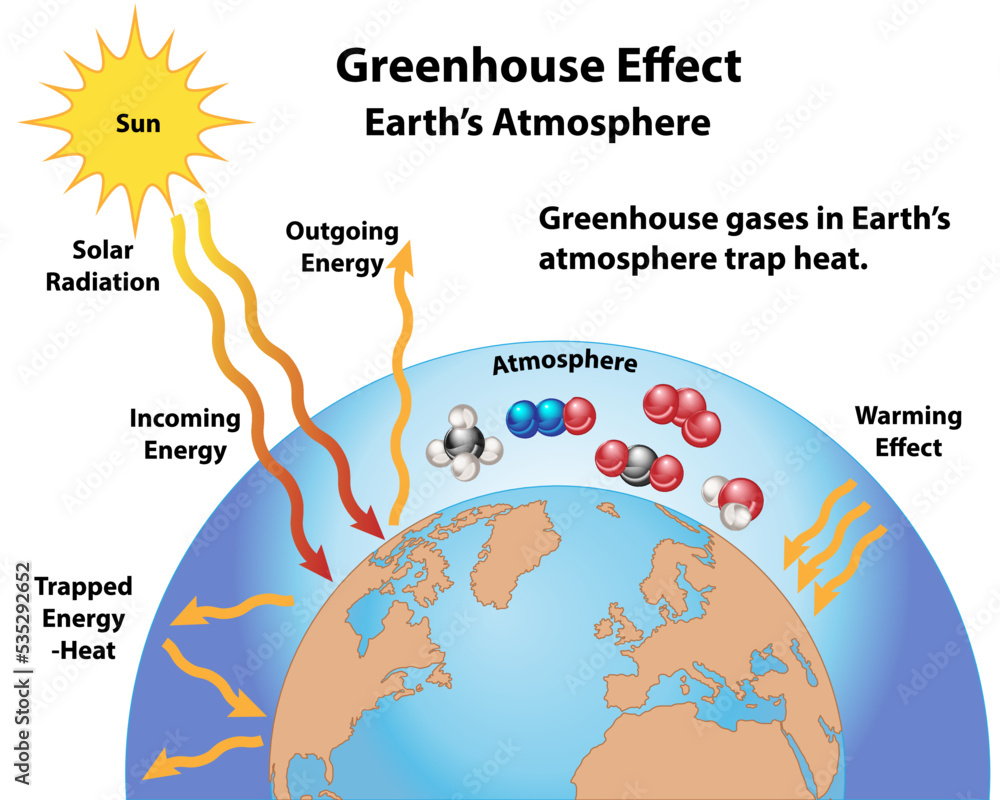
Water vapour strengthens the greenhouse effect by absorbing infrared radiation and creating a positive feedback loop that amplifies warming from other gases.
\n
Quick Answer
\n
Water vapour is a greenhouse gas that absorbs outgoing infrared radiation from Earth’s surface. When other gases such as carbon dioxide raise global temperatures, the atmosphere can hold more water vapour; the added vapour then traps additional heat, reinforcing the initial warming. This feedback is supported by long‑term satellite observations and climate‑model intercomparison studies, which show that water vapour accounts for roughly half of the total greenhouse effect. While the basic mechanism is well‑understood, uncertainties remain about how cloud formation will modulate the net warming.
\n
\n
Key Takeaways
\n
- \n
- Water vapour is the most abundant greenhouse gas and amplifies warming initiated by CO₂, methane and other gases.
- Warmer air can hold more moisture; a 1 °C temperature rise can increase atmospheric water vapour by about 7 % (Clausius‑Clapeyron relation).
- Water‑vapour feedback is a positive feedback loop, responsible for roughly 40‑50 % of the Earth’s total greenhouse effect.
- Clouds can either cool or warm the planet, making the net impact of water vapour complex and a major source of model uncertainty.
- Mitigation of CO₂ emissions indirectly limits future water‑vapour amplification, while adaptation must address changing precipitation and extreme‑weather patterns.
\n
\n
\n
\n
\n
\n
\n
What Is How Water Vapour Strengthens the Greenhouse Effect?
\n
In climate science, the phrase refers to the process by which atmospheric water vapour absorbs infrared (IR) radiation emitted by Earth and thereby enhances the overall greenhouse effect. Unlike carbon dioxide or methane, water vapour is not emitted directly in large quantities by human activities; instead, its concentration responds to temperature changes driven by other greenhouse gases. This makes it a feedback rather than a forcing agent, but its sheer abundance (about 0.25 % of the atmosphere by volume) means its impact on radiative balance is large.
\n
How Does It Work?
\n
1. Infrared Absorption by Water Molecules
\n
Water molecules have rotational and vibrational modes that resonate with wavelengths between 4 µm and 15 µm, the same range in which Earth radiates most of its heat. When IR photons encounter water vapour, the molecules absorb the energy and re‑emit it in random directions, sending part of the energy back toward the surface.
\n
2. Temperature‑Driven Moisture Increase
\n
The Clausius‑Clapeyron equation describes how saturated water‑vapour pressure rises ~7 % for each 1 °C increase in temperature. As CO₂‑driven warming raises surface and lower‑troposphere temperatures, the atmosphere’s capacity to hold water rises, leading to higher absolute concentrations of water vapour.
\n
3. Positive Feedback Loop
\n
Higher water‑vapour concentrations trap additional IR radiation, causing further warming. This self‑reinforcing cycle is called a positive feedback. Climate‑model ensembles (e.g., CMIP6) consistently show that water‑vapour feedback contributes about 0.5 °C of warming for every 1 °C of CO₂‑induced warming.
\n
4. Interaction with Clouds
\n
Water vapour is the raw material for cloud formation. Clouds can reflect incoming solar radiation (albedo effect) and also trap IR radiation (greenhouse effect). Low, thick clouds tend to cool, whereas high, thin cirrus clouds tend to warm. The net cloud response to increased water vapour remains a leading source of uncertainty in climate projections.
\n
What Does the Evidence Show?
\n
Multiple lines of evidence converge on the role of water vapour as a strong amplifier of warming:
\n
- \n
- Satellite observations from the Atmospheric Infrared Sounder (AIRS) and the Microwave Limb Sounder (MLS) show a robust increase in tropical upper‑tropospheric water vapour correlated with surface warming since the 1980s (IPCC AR6, 2021).
- Surface radiosonde records spanning more than six decades confirm the Clausius‑Clapeyron‑predicted rise in specific humidity.
- Climate‑model intercomparison projects (CMIP6) consistently reproduce a water‑vapour feedback magnitude of 0.4–0.6 °C per degree of CO₂ warming, aligning with observational constraints.
- Attribution studies indicate that without water‑vapour feedback, the observed warming since pre‑industrial times would be roughly half as large.
\n
\n
\n
\n
\n
Main Causes or Drivers
\n
Direct Drivers
\n
- \n
- Elevated surface temperatures caused primarily by anthropogenic CO₂, methane, nitrous oxide and other long‑lived gases.
- Increased evaporation from oceans, lakes and soils as temperatures rise.
\n
\n
\n
Amplifying Factors
\n
- \n
- Changes in atmospheric circulation that transport moist air to higher latitudes.
- Land‑use change that modifies surface albedo and evapotranspiration rates, subtly influencing regional humidity.
\n
\n
\n
Environmental and Human Impacts
\n
Environmental Impacts
\n
- \n
- Enhanced greenhouse forcing accelerates global mean temperature rise, contributing to sea‑level rise and melting of glaciers.
- Shifts in precipitation patterns: more intense rainfall in the tropics and mid‑latitudes, and increased drought risk in subtropics.
- Altered cloud regimes affect solar radiation balance, influencing regional climate stability.
\n
\n
\n
\n
Human Health and Social Impacts
\n
- \n
- Higher humidity can exacerbate heat‑stress, increasing mortality risk during heatwaves, especially for vulnerable populations.
- Changes in water‑cycle intensity raise flood risk in coastal and river‑basin communities, threatening infrastructure and livelihoods.
- Agricultural productivity can decline in regions where moisture becomes erratic, affecting food security.
\n
\n
\n
\n
Regional Differences
\n
Because the capacity of air to hold moisture depends on temperature, the water‑vapour feedback is strongest in warm, humid regions such as the tropical Pacific and Indian Ocean basins. In contrast, high‑latitude areas experience smaller absolute increases in water vapour, though the relative radiative impact can still be significant because the baseline humidity is low. Mountainous regions may see enhanced orographic precipitation, while arid zones could experience intensified drying due to altered circulation patterns.
\n
What Scientists Know With High Confidence
\n
- \n
- Water vapour is the most abundant natural greenhouse gas and absorbs infrared radiation across a broad spectral range.
- Warmer air holds more water vapour; the Clausius‑Clapeyron relation quantifies this increase.
- Observations and models agree that water‑vapour feedback roughly doubles the warming effect of CO₂ alone.
- Human‑induced warming of the climate system is the primary driver of recent increases in atmospheric water vapour.
\n
\n
\n
\n
\n
\n
What Remains Uncertain
\n
The biggest uncertainties involve how water vapour alters cloud properties and distribution. Cloud‑microphysical processes, such as the formation of ice crystals in cirrus clouds, are difficult to observe globally and are represented differently across climate models. This leads to a spread of ±0.2 °C in projected warming attributable to cloud‑water‑vapour interactions. Improved satellite retrievals and high‑resolution modeling are needed to narrow this gap.
\n
\n
Common Misconceptions
\n
Misconception: Water vapour is a man‑made pollutant like CO₂.
\n
Reality: The majority of atmospheric water vapour comes from natural evaporation and transpiration. Human activities influence it indirectly by warming the climate, which then increases evaporation.
\n
Misconception: Reducing CO₂ emissions won’t affect water‑vapour levels.
\n
Reality: Lowering CO₂ limits the temperature rise that drives additional water‑vapour, thereby reducing the feedback magnitude.
\n
Misconception: More water vapour always means more clouds and thus cooling.
\n
Reality: While water vapour is a cloud precursor, the net radiative effect of clouds depends on altitude, thickness and particle size; high cirrus clouds often warm the surface.
\n
\n
Solutions and Limitations
\n
Because water vapour is a feedback, the primary lever for control is mitigation of long‑lived greenhouse gases:
\n
- \n
- CO₂ mitigation – Rapid decarbonisation reduces the temperature driver, limiting future water‑vapour amplification. The limitation is that existing CO₂ will persist for centuries, so some warming—and associated water‑vapour increase—is inevitable.
- Enhanced observational networks – Expanding satellite and radiosonde coverage improves detection of water‑vapour trends and cloud responses, informing better model parameterisations. However, observational upgrades require sustained funding.
- Adaptive water‑resource management – Adjusting irrigation practices, flood‑plain zoning and storm‑water infrastructure can reduce vulnerability to altered precipitation. These measures do not curb the greenhouse effect but mitigate its impacts.
\n
\n
\n
\n
What Individuals, Communities, and Governments Can Do
\n
What Individuals Can Do
\n
- \n
- Support policies that accelerate CO₂ reduction, such as renewable‑energy incentives and carbon‑pricing mechanisms.
- Adopt water‑efficient appliances and landscaping to reduce local evaporative demand, easing pressure on water resources during heatwaves.
\n
\n
\n
What Communities and Organizations Can Do
\n
- \n
- Invest in green infrastructure (e.g., urban trees, permeable surfaces) that moderates local temperature and humidity.
- Develop early‑warning systems for heat‑related health risks that account for high humidity conditions.
\n
\n
\n
What Governments Can Do
\n
- \n
- Implement ambitious net‑zero targets for CO₂ and other long‑lived gases, which directly curb the temperature driver of water‑vapour feedback.
- Fund climate‑research programmes focused on cloud microphysics and water‑vapour monitoring.
- Incorporate climate‑resilient design standards in building codes to withstand intensified precipitation and heat‑humidity events.
\n
\n
\n
\n
Synthesis of Key Points
\n
Water vapour acts as a potent amplifier of the greenhouse effect because it absorbs infrared radiation and its concentration rises with temperature. Observations from satellites and surface stations, together with climate‑model analyses, give high confidence that this feedback roughly doubles the warming caused by CO₂ alone. The main uncertainty lies in how clouds formed from extra vapour will either offset or enhance warming. Mitigating CO₂ emissions remains the most effective way to limit future water‑vapour‑driven warming, while adaptation measures can reduce the societal risks of more intense heat and precipitation.
“,
“excerpt”: “Water vapour, the most abundant greenhouse gas, amplifies warming through a powerful feedback loop, influencing climate, weather, and ecosystems worldwide.”,
“tags: [“water vapour”,”greenhouse effect”,”climate feedback”,”atmospheric science”,”global warming”],
“faq”: [
{
“question”: “How does water vapour amplify the greenhouse effect?”,
“answer”: “Water vapour absorbs infrared radiation emitted by Earth and, when temperatures rise, the atmosphere can hold more vapour, which then traps additional heat, creating a positive feedback loop.”
},
{
“question”: “Why is water vapour considered a feedback rather than a direct forcing?”,
“answer”: “Because most atmospheric water vapour comes from natural evaporation, its concentration changes in response to temperature shifts driven by other greenhouse gases, rather than being emitted directly by human activities.”
},
{
“question”: “What evidence supports the role of water vapour in climate warming?”,
“answer”: “Satellite measurements, long‑term radiosonde data, and climate‑model intercomparison projects all show that water‑vapour concentrations increase with temperature and that this feedback accounts for roughly half of the total greenhouse effect.”
},
{
“question”: “How do clouds affect the net impact of water vapour on climate?”,
“answer”: “Clouds can both reflect sunlight (cooling) and trap infrared radiation (warming). High thin cirrus clouds tend to warm, while low thick clouds tend to cool, making the overall cloud response a major source of uncertainty.”
},
{
“question”: “What actions can reduce future water‑vapour‑driven warming?”,
“answer”: “Reducing CO₂ emissions limits the temperature rise that drives extra water vapour, while expanding observation networks and improving climate‑model representations of clouds help manage uncertainty.”
}
]
}





Leave a Comment