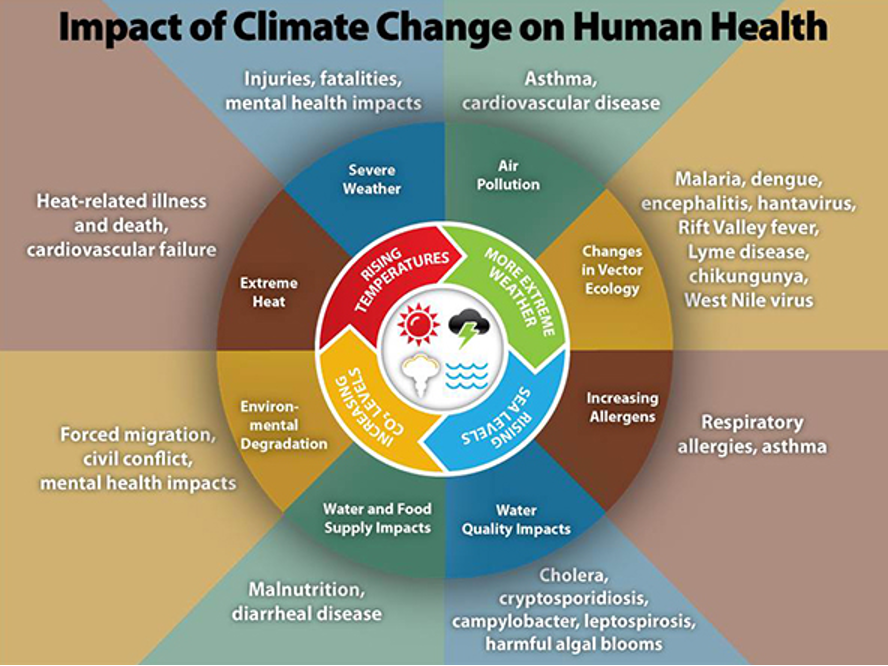
As the planet continues to warm, the pervasive specter of climate change looms ever larger, commandeering not just environmental discussions but also the realm of public health. The intricate tapestry of life on Earth is interwoven with complex systems, ecosystems, and human communities, all of which are now experiencing the ramifications of climate change in profound and often alarming ways. The nexus between climate change and health is both intricate and multifaceted; it merits careful examination. Below, we delve into several critical components illustrating how climate change is already impacting public health.
Firstly, consider heatwaves. The increase in average global temperatures translates to more frequent and severe heat events. These spells of extreme heat are not merely uncomfortable; they pose serious health risks. Vulnerable populations, including the elderly, children, and those with preexisting conditions, are particularly susceptible to heat-related illnesses. Heat exhaustion, heatstroke, and exacerbation of chronic cardiovascular and respiratory diseases beckon as climate-induced peril. As urban areas become ‘heat islands,’ the urgency for effective public health strategies to mitigate these risks becomes unmistakable.
Next, turn your attention to the burgeoning incidence of vector-borne diseases. Mosquitoes and ticks, those seemingly innocuous creatures, thrive amidst warmer temperatures, extending their habitats and enabling the spread of diseases like Lyme disease, Zika virus, and dengue fever. As climate change alters the geographical distribution of these vectors, previously unaffected regions now become susceptible, challenging health systems unprepared for this sudden onslaught. Consider the implications: an alarming reconfiguration of disease prevalence, a potential public health crisis that necessitates an urgent recalibration of preventive measures.
Furthermore, examine the direct impact of air quality on health. As temperatures rise, so too does the prevalence of ground-level ozone, a potent respiratory irritant. Asthma, a condition afflicting millions worldwide, finds fertile ground in the toxic air emanating from increased ozone levels, exacerbated by the emissions from vehicles and industry. Children, the elderly, and individuals with preexisting respiratory conditions are particularly susceptible to these effects, rendering the need for stringent air quality regulations ever more pressing. Rising levels of particulate matter from wildfires and industrial activity further exacerbate the situation, necessitating a re-evaluation of air quality standards to protect vulnerable populations.
Moreover, the repercussions of climate change extend into the water supply, where changing precipitation patterns and increased evaporation exacerbate water scarcity issues. Contaminated water sources augment the risk of waterborne diseases, which flourish amid stagnant water conditions. Outbreaks of illnesses such as cholera and giardiasis present grave threats, especially in regions ill-equipped to handle such health crises. As climate change disrupts the delicate balance of water availability, the resulting public health threats illuminate the need for comprehensive management strategies to ensure safe drinking water access.
(From a broader perspective, mental health warrants attention in this discourse. Climate change induces a spectrum of psychological stressors, including anxiety, depression, and trauma related to natural disasters. Individuals grappling with the reality of a warming planet may experience eco-anxiety, a growing phenomenon whereby concern for the environmental future fuels mental distress. Additionally, communities affected by climate-induced displacement—often referred to as “climate refugees”—face unique psychological challenges, underscoring the need for holistic approaches to mental health in the context of climate adaptation strategies.
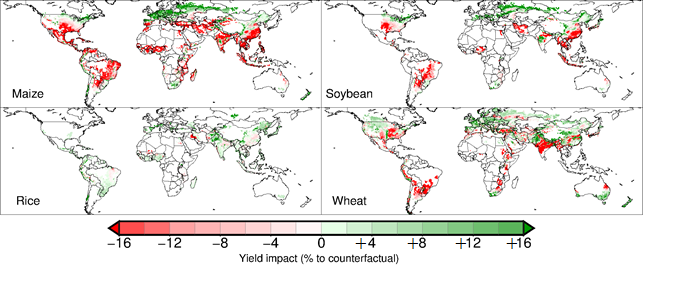
A critical area that cannot be overlooked is food security. Climate change wreaks havoc on agricultural systems, leading to diminished crop yields and exacerbated food scarcity. Changes in average temperatures and unpredictable weather patterns affect growing seasons and food production, leading to malnutrition and related health complications. Moreover, the increased frequency of extreme weather events—floods, droughts, hurricanes—poses a substantial risk to food systems, perpetuating a cycle of insecurity that leaves vulnerable populations at even greater risk.
Transitioning to the repercussions on socioeconomic disparities illustrates another layer of the public health crisis. Marginalized populations, often bearing the brunt of climate change’s direct impacts, face compounding challenges tied to inadequate access to healthcare. Low-income communities, often located in areas with higher pollution and fewer healthcare resources, are less resilient to health threats posed by climate change. As the fabric of social determinants of health becomes increasingly frayed, the intersection of climate change and health inequities raises critical concerns for policymakers and health professionals.
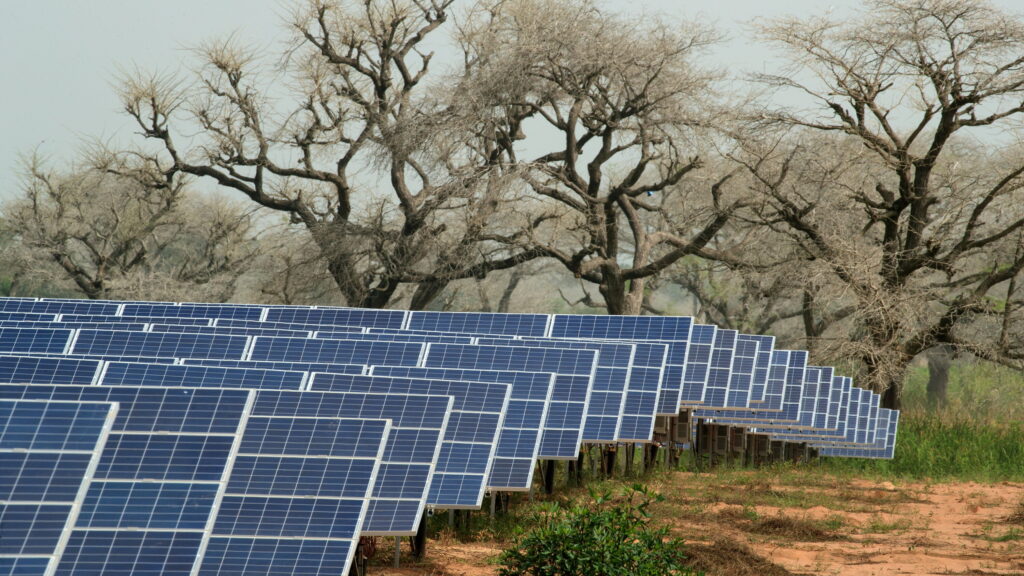
Innovation and adaptation emerge as crucial responses in this landscape. Building resilient health systems that address the intertwined challenges of climate change and public health requires collective action. This includes investing in preventive measures, enhancing healthcare infrastructure, and prioritizing research to understand climate-health links better. Furthermore, promoting sustainable practices, such as transitioning to renewable energy sources and advocating for policies that mitigate climate change, becomes intrinsic to safeguarding public health for future generations.
In summation, the interplay between climate change and public health is a clarion call to action. Each thread of this narrative underlines an urgent reality: climate change is not a distant specter, nor a problem relegated solely to environmental discourse—it has immediate, tangible, and often devastating implications for human health. By fostering a collective mindset shift and pursuing innovative solutions, society can transcend the challenges posed by this global crisis, paving the way for healthier futures in a warming world. Through understanding and action, there lies potential for restoring health and well-being in the face of climate adversity.






Leave a Comment