
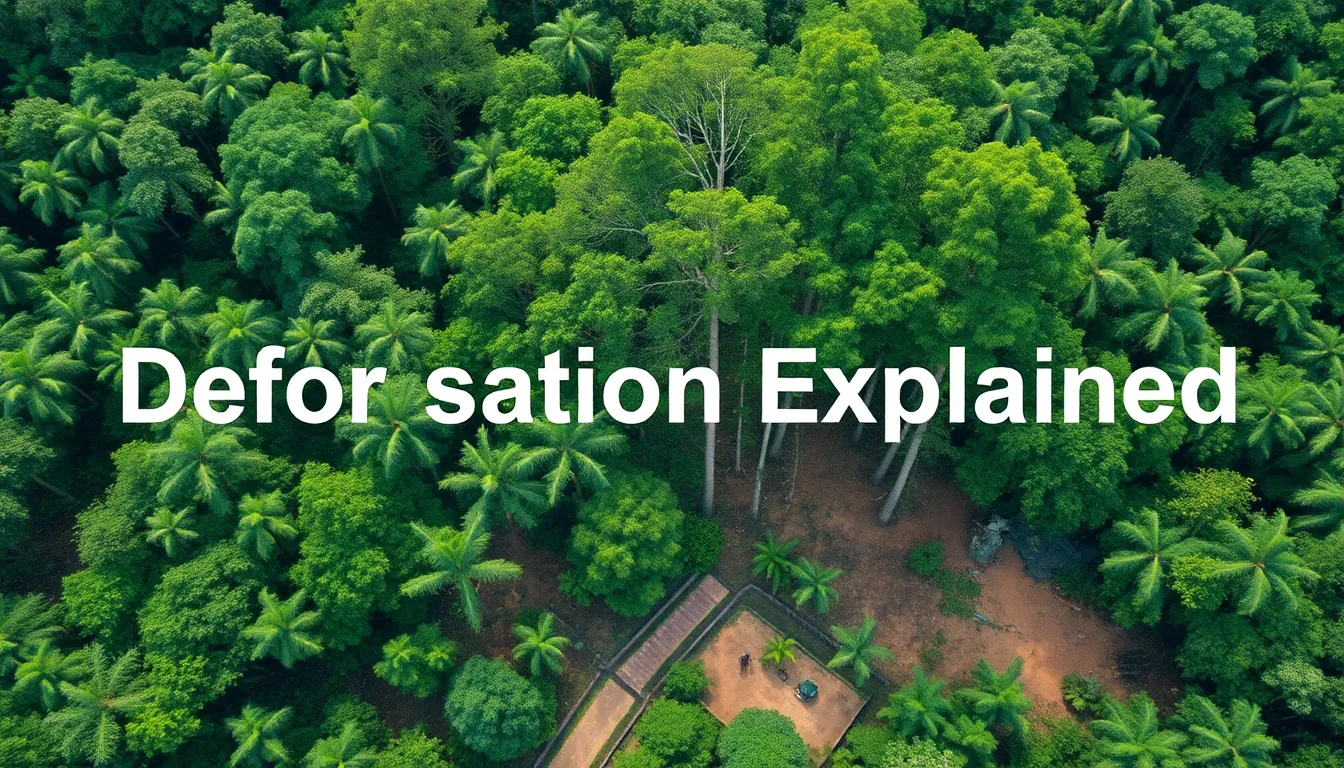
What Is Deforestation?
Deforestation is the permanent removal of forest cover for non‑forest uses, including agriculture, urban development, mining, and infrastructure. It differs from temporary forest loss caused by natural disturbances (e.g., fire or storms) that can regrow over time. When trees are cut and the land is converted, the ecosystem services forests provide—carbon storage, water regulation, habitat provision—are lost or severely weakened.
Why Deforestation Matters
Forests act as the planet’s lungs, sequestering carbon dioxide, stabilizing soils, and sustaining freshwater cycles. Their loss accelerates species extinction, fragments habitats, and drives invasive species into new territories. Moreover, deforestation contributes roughly 10–15% of global greenhouse‑gas emissions, making it a critical lever for climate mitigation.
Historical Context and Global Trends
Human societies have cleared forests for millennia, but the scale exploded after the Industrial Revolution. Satellite monitoring now shows that the Amazon, Congo Basin, and Southeast Asian rainforests are the hotspots of recent loss. While some regions (e.g., parts of Europe and North America) have seen forest recovery through reforestation, global net forest area continues to shrink, with an estimated 4.7 million hectares lost each year.
Key Drivers of Deforestation
Several interrelated forces push forest cover toward conversion. Understanding each driver helps target solutions.
1. Agricultural Expansion
Commercial crops (soy, palm oil, cacao) and livestock grazing account for the majority of forest conversion. Smallholder farms also clear land for subsistence agriculture, often driven by population growth and market access.
2. Logging (Legal and Illegal)
Timber extraction supplies construction material and paper products. Illegal logging bypasses regulations, leading to unplanned road networks that open remote forests to further exploitation.
3. Infrastructure Development
Roads, dams, and urban expansion fragment habitats and provide corridors for settlers and extractive industries.
4. Mining and Energy Projects
Open‑pit mining, coal extraction, and oil pipelines clear large swaths of forest and generate associated pollution.
5. Policy and Governance Gaps
Weak land tenure, corruption, and limited enforcement allow rapid forest loss despite existing protection laws.
Environmental Impacts of Deforestation
When trees disappear, the consequences cascade through the planet’s life support systems.
- Carbon Release: Trees store carbon; cutting them releases CO₂, intensifying climate change.
- Soil Degradation: Without root systems, soils erode, lose fertility, and can become degraded land unsuitable for agriculture.
- Water Cycle Disruption: Forests regulate runoff and maintain stream flow. Deforestation leads to altered precipitation patterns and increased flood risk.
- Loss of Biodiversity: Forests host 80% of terrestrial species. Habitat loss drives species extinction and reduces genetic diversity.
- Freshwater Ecosystem Decline: Sedimentation and nutrient runoff from cleared land harm rivers and lakes, affecting fish populations and water quality.
Social and Economic Impacts
Deforestation affects human communities both positively and negatively.
- Livelihoods: Agriculture and timber provide income for millions, especially in developing nations.
- Health Risks: Air quality worsens, and loss of forest‑based medicinal plants reduces access to traditional remedies.
- Indigenous Rights: Many Indigenous peoples depend on forest lands for cultural identity and survival; deforestation often violates their land rights.
Linking Deforestation to Biodiversity Loss
Forest removal fragments habitats, making it harder for species to migrate, find mates, or access food. This amplifies the risk of habitat loss and creates edge effects that favor invasive species, further destabilizing native communities.
Connections to Invasive Species
Disturbed forest soils and open canopies provide ideal conditions for non‑native plants and animals. Invasive species often outcompete native flora, altering fire regimes and nutrient cycles, which can accelerate further forest decline.
Implications for Soil, Land and Freshwater Ecosystems
Deforestation’s impact on soil health is profound. Tree roots bind soil, and leaf litter adds organic matter. When forests vanish, soils become compacted, less permeable, and prone to landslides. Runoff carries sediments into rivers, degrading freshwater ecosystems and threatening aquatic biodiversity.
Mitigation Strategies and Ecosystem Restoration
Addressing deforestation requires a mix of protection, sustainable use, and restoration.
- Protected Areas: Designating national parks and reserves helps safeguard critical habitats.
- Agroforestry: Integrating trees into farms maintains carbon storage while supporting livelihoods.
- Reforestation and Afforestation: Planting native species restores ecosystem functions, as highlighted in the Ecosystem Restoration category.
- Supply‑Chain Transparency: Certification schemes (e.g., FSC, RSPO) encourage companies to source timber and palm oil responsibly.
- Policy Instruments: Carbon pricing, REDD+ (Reducing Emissions from Deforestation and Forest Degradation), and stronger land‑tenure rights create economic incentives to keep forests standing.
Policy Responses and International Agreements
Global frameworks such as the United Nations Framework Convention on Climate Change (UNFCCC) and the Convention on Biological Diversity (CBD) recognize forest protection as essential. Nations submit Nationally Determined Contributions (NDCs) that often include targets for halting deforestation. However, implementation gaps remain, especially where enforcement capacity is low.
Future Outlook and Emerging Trends
Technological advances—satellite monitoring, AI‑driven land‑use mapping, and blockchain for traceability—are improving detection and accountability. At the same time, climate‑induced disturbances (e.g., droughts, wildfires) may increase forest vulnerability, underscoring the need for resilient restoration approaches.
Related Topics for Deeper Exploration
Readers interested in expanding their knowledge can explore the following areas, each linked to a dedicated category on 24earth.org:
- Ecosystems: How forests interact with other biomes.
- Wildlife Conservation: Strategies to protect species dependent on forest habitats.
- Invasive Species: Impacts of non‑native organisms on forest health.
Conclusion
Deforestation Explained: Drivers, Impacts and Global Trends reveals a complex web of economic, social, and ecological forces. While forest loss continues to threaten climate stability, biodiversity, and human well‑being, coordinated action—spanning policy, market incentives, and on‑the‑ground restoration—offers a pathway to reverse the trend. By understanding the drivers and their cascading impacts, individuals, businesses, and governments can make informed choices that protect the planet’s remaining forest heritage.
Frequently Asked Questions
What are the main drivers behind modern deforestation?
The primary drivers include agricultural expansion (especially soy, palm oil, and livestock), legal and illegal logging, infrastructure development such as roads and dams, mining and energy projects, and gaps in policy or land‑tenure enforcement.
How does deforestation contribute to climate change?
Forests store large amounts of carbon in their biomass and soils. When trees are cut or burned, this carbon is released as CO₂, accounting for roughly 10–15% of global greenhouse‑gas emissions and intensifying climate warming.
What are the most significant impacts of deforestation on biodiversity?
Deforestation fragments habitats, leading to species loss, reduced genetic diversity, and increased vulnerability to invasive species. About 80% of terrestrial species depend on forest ecosystems, so forest loss is a major driver of species extinction.
Can reforestation fully replace the ecological functions of original forests?
Reforestation helps restore carbon storage, soil stability, and water regulation, but mature, primary forests have complex structures and species assemblages that take centuries to develop. Restoration is valuable but does not instantly replicate all original functions.
What policies or international agreements aim to curb deforestation?
Key initiatives include the UNFCCC’s Nationally Determined Contributions, the Convention on Biological Diversity, REDD+ programs, and national protected‑area networks. These frameworks encourage emission reductions, biodiversity protection, and sustainable land‑use practices.





Leave a Comment