
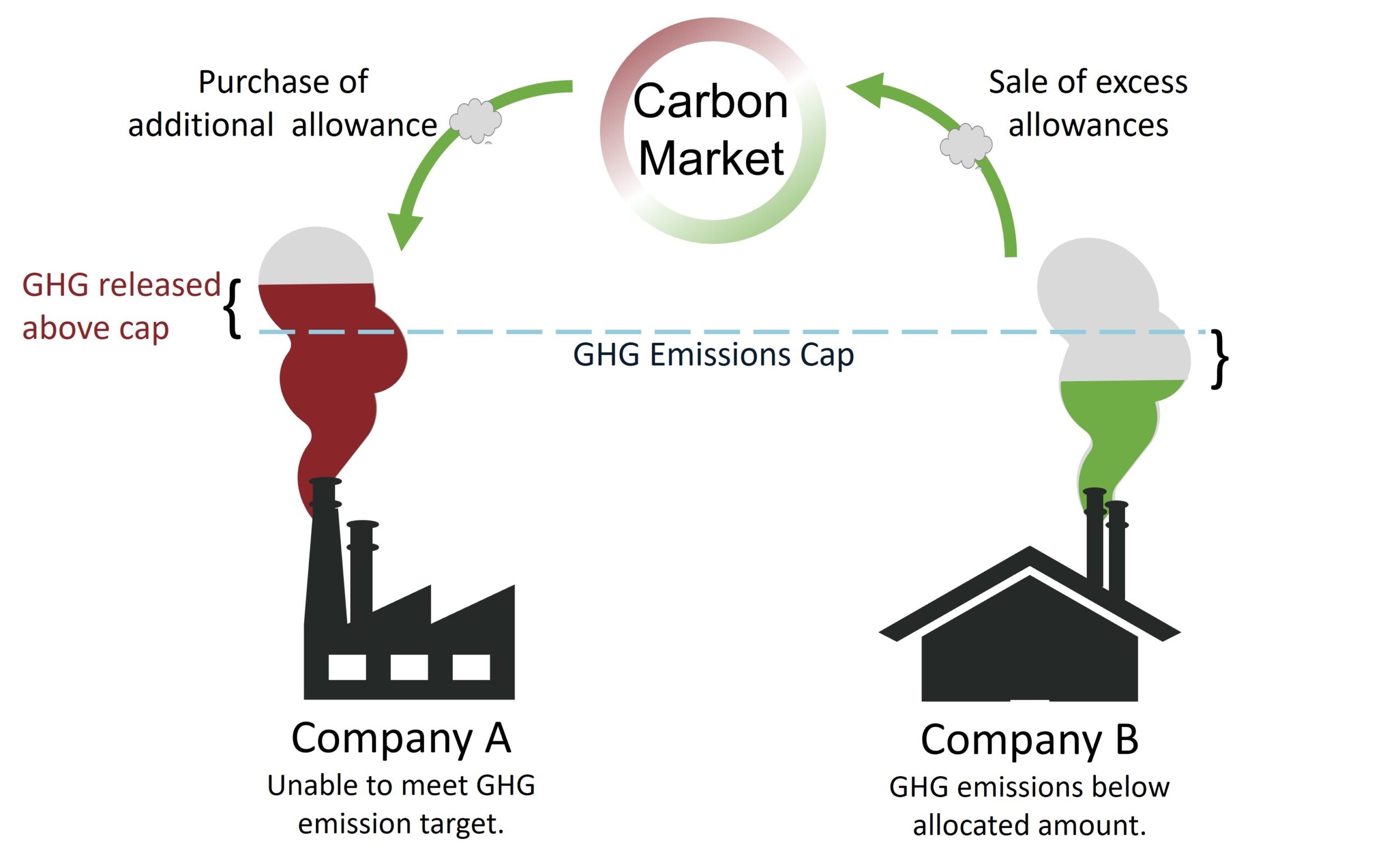
Carbon trading schemes discussed at COP27 showcase both genuine market reforms and the risk of greenwashing, highlighting the need for transparent, equitable mechanisms to achieve real emissions reductions.
Quick Answer
Carbon trading—also called cap‑and‑trade—allows governments or companies to buy and sell emission allowances within an overall cap. At COP27, parties pledged tighter caps, improved verification, and greater revenue sharing for developing nations. Scientific assessments agree that well‑designed carbon markets can lower CO₂ emissions, but the evidence also shows that weak oversight, inflated credit prices, and uneven participation can turn the system into a loophole for continued pollution. The most important implication is that progress depends on robust accounting, independent auditing, and equitable distribution of climate finance, while uncertainty remains around the long‑term integrity of credits.
Key Takeaways
- Cap‑and‑trade creates a price signal for carbon, encouraging low‑carbon investments when properly regulated.
- COP27 produced commitments to strengthen verification, expand the Article 6 rulebook, and allocate more finance to vulnerable nations.
- Evidence of emissions reductions from carbon markets is mixed; success hinges on credit quality and avoidance of double counting.
- Greenwashing risks arise when credits are over‑priced, poorly monitored, or used to delay structural decarbonisation.
- Equitable design—transparent revenue sharing and inclusive governance— improves both environmental outcomes and climate justice.
What Is Carbon Trading Schemes at COP27: Progress or Greenwashing??
Carbon trading schemes are policy tools that set an overall limit (or cap) on greenhouse‑gas emissions and allocate or auction tradable permits to emitters. Participants that reduce emissions below their allowance can sell excess permits, while those that exceed their allocation must purchase additional credits. The term “greenwashing” refers to the practice of portraying an activity as environmentally beneficial when it delivers little or no real climate mitigation. At COP27, the debate centred on whether the newly agreed rules for international carbon markets represent genuine progress toward deeper cuts, or merely a re‑branding of business‑as‑usual emissions.
How Does It Work?
Step‑by‑Step Process
- Set the Cap: National governments or regional bodies define an absolute emissions ceiling for covered sectors, often aligned with nationally determined contributions (NDCs).
- Allocate Allowances: Permits are distributed either for free (based on historical baselines) or through auction.
- Trade on a Market: Companies buy or sell permits on regulated exchanges or through bilateral agreements.
- Compliance: At the end of each compliance period, each entity must surrender enough permits to cover its verified emissions.
- Verification: Independent auditors confirm emission reports, and registries track the lifecycle of each credit to prevent double counting.
Key Institutional Elements
- Article 6 of the Paris Agreement: Provides the framework for internationally transferred mitigation outcomes (ITMOs) and the Sustainable Development Mechanism (SDM).
- Carbon Registry: A digital ledger—sometimes blockchain‑based—that records issuance, transfer, and retirement of credits.
- Compliance Enforcement: Penalties for non‑surrendered allowances encourage adherence.
What Does the Evidence Show?
Systematic reviews of the European Union Emissions Trading System (EU ETS) indicate that a tighter cap from 2013‑2020 contributed to an average 13 % reduction in CO₂ emissions from power generation (European Commission, 2022). However, a 2021 meta‑analysis of multiple national schemes found that credit quality varied widely, with up to 30 % of offsets lacking additionality—meaning the emission reductions would have occurred without the market incentive (UNEP‑FI, 2021). The Intergovernmental Panel on Climate Change (IPCC) Sixth Assessment Report (2021) states that carbon pricing can be an effective mitigation tool when combined with robust monitoring, reporting, and verification (MRV) systems.
Main Causes or Drivers
Direct Causes
- Fossil‑fuel‑intensive energy production and industrial processes that emit CO₂.
Underlying Drivers
- Economic incentives that favour low‑cost emissions reductions over systemic decarbonisation.
- Political pressure to demonstrate climate action without immediate structural change.
- Financial needs of developing countries for climate‑adaptation funding.
Environmental and Human Impacts
Environmental Impacts
When high‑quality credits represent genuine emission cuts, carbon markets can lower atmospheric CO₂ concentrations, contributing to the temperature‑limiting goal of 1.5 °C. Conversely, low‑integrity credits may delay the retirement of coal plants, prolonging air‑quality harms such as particulate matter exposure.
Human Health and Social Impacts
Reduced coal use, a common outcome of credible carbon markets, is associated with fewer respiratory illnesses (World Health Organization, 2020). Yet, if revenues from credit sales are not channeled to affected communities, the distributional benefits remain limited, exacerbating climate inequities.
Regional Differences
In Europe, the EU ETS operates under a stringent cap and centralized registry, resulting in relatively transparent price signals. In contrast, many African and Asian countries rely on voluntary offset projects with limited oversight, leading to greater uncertainty about additionality. The COP27 negotiations highlighted the need for a common rulebook to harmonise standards across these divergent contexts.
What Scientists Know With High Confidence
- Atmospheric CO₂ concentrations must be limited to below 450 ppm to keep warming under 2 °C (IPCC, 2021).
- Carbon pricing mechanisms, when coupled with strong MRV, can drive measurable emissions reductions (IPCC, 2021).
- Air‑quality benefits accompany the phase‑down of coal‑derived electricity.
What Remains Uncertain
Key uncertainties include the long‑term durability of offset projects, the risk of double counting across national registries, and the extent to which carbon‑market revenues will reach the most vulnerable populations. Ongoing pilot studies of blockchain‑based registries aim to improve traceability, but their scalability and environmental footprint remain under investigation.
Common Misconceptions
Misconception: Buying credits lets a company emit forever.
Reality: Credits are limited in quantity and must be surrendered each compliance period; without real reductions, the total cap still declines over time.
Misconception: All carbon offsets are equal.
Reality: Offsets differ in additionality, permanence, and verification rigor; low‑quality offsets can undermine overall climate goals.
Misconception: Carbon markets replace the need for renewable energy.
Reality: Markets are a cost‑effective bridge, but deep decarbonisation of the energy system remains essential for meeting the Paris targets.
Solutions and Limitations
Effective responses combine market mechanisms with complementary policies:
- Strengthen MRV: Independent audits and transparent registries reduce fraud but require investment in capacity building.
- Price Floors: Setting a minimum carbon price curbs low‑price volatility, yet may face political resistance.
- Revenue Recycling: Directing proceeds to renewable‑energy projects or climate‑vulnerable communities improves equity, but governance structures must prevent misallocation.
- Technology Integration: Blockchain can enhance traceability, yet its energy consumption must be managed.
- Complementary Regulation: Standards for energy efficiency, renewable mandates, and phase‑out schedules ensure that markets do not replace direct emissions controls.
What Individuals, Communities, and Governments Can Do
What Individuals Can Do
- Support companies that disclose scope‑1,‑2,‑3 emissions and use verified offsets.
- Advocate for local climate‑justice initiatives that demand transparent use of carbon‑market revenues.
What Communities and Organizations Can Do
- Participate in regional stakeholder forums established under the Article 6 rulebook to influence credit design.
- Develop community‑based monitoring programs that verify on‑the‑ground emission reductions.
What Governments Can Do
- Adopt the finalized Article 6 guidelines, including strict double‑counting safeguards.
- Set ambitious, declining caps aligned with NDC pathways.
- Allocate a defined share of carbon‑market proceeds to adaptation projects in least‑developed countries.
Closing Synthesis
Carbon trading schemes discussed at COP27 illustrate both the promise of market‑based mitigation and the danger of superficial compliance. Robust caps, transparent verification, and equitable revenue sharing can turn the mechanism into a genuine climate tool. Yet, without these safeguards, the system risks becoming a veneer of action—greenwashing that delays the deeper structural changes required to keep global warming below critical thresholds. Continued scientific monitoring, inclusive governance, and complementary policies are essential to ensure that carbon markets deliver real, lasting emissions cuts.
Frequently Asked Questions
What is a carbon trading scheme?
A carbon trading scheme, also known as cap‑and‑trade, sets a total limit on greenhouse‑gas emissions and distributes tradable permits; entities that emit less can sell excess permits, while those that exceed must buy additional ones.
How did COP27 aim to improve carbon markets?
COP27 resulted in pledges to tighten emissions caps, adopt the final Article 6 rulebook with stronger verification, and ensure that a larger share of market revenues supports climate‑vulnerable developing countries.
What are the main risks of greenwashing in carbon markets?
Greenwashing risks arise when credits are low‑quality, over‑priced, or lack independent verification, allowing companies to claim climate action while continuing high‑carbon activities without real emission cuts.
Which evidence shows carbon markets can reduce emissions?
Studies of the EU Emissions Trading System show a 13 % drop in power‑sector CO₂ emissions after tightening the cap, and the IPCC notes that carbon pricing, combined with robust monitoring, can drive measurable reductions.
What actions can governments take to ensure carbon trading leads to real cuts?
Governments can adopt the finalized Article 6 guidelines, set declining caps aligned with NDCs, enforce strong MRV systems, prevent double counting, and earmark a clear portion of market proceeds for renewable‑energy and adaptation projects in vulnerable communities.











Leave a Comment