
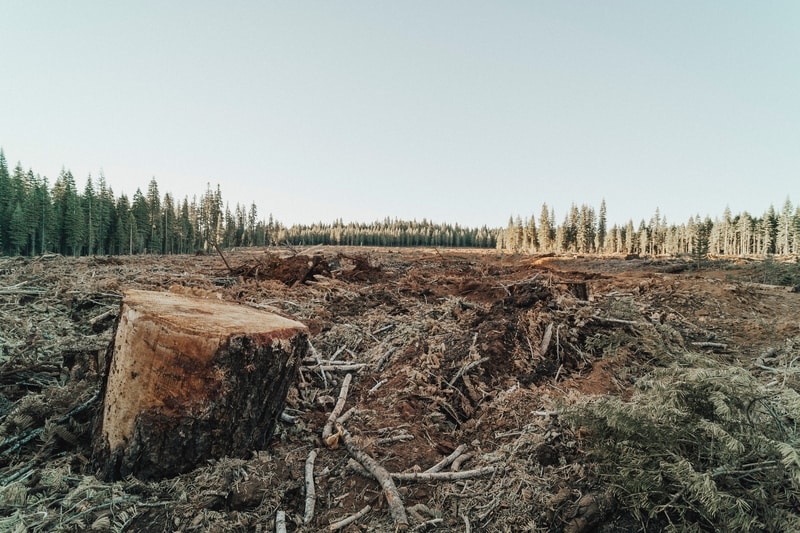
Brazil’s beef and soy shipments to the European Union are closely tied to illegal forest clearing, creating measurable climate, biodiversity, and social challenges that require coordinated, evidence‑based responses.
Quick Answer
Brazil supplies the EU with a large share of its imported beef and soy, and a significant portion of the land cleared for these commodities is not authorised under Brazilian law. Satellite monitoring and trade‑flow analyses show that illegal deforestation in the Amazon and Cerrado regions is strongly associated with the expansion of pasture and soy fields that feed EU markets. The scientific consensus is that this link contributes to greenhouse‑gas emissions, species loss, and displacement of Indigenous peoples, although precise attribution to individual EU firms remains uncertain.
Key Takeaways
- EU demand drives a sizable share of Brazil’s beef and soy production, influencing land‑use decisions.
- Illegal forest clearing accounts for a measurable fraction of the total deforestation linked to these commodities.
- Deforestation releases carbon, threatens biodiversity, and undermines Indigenous rights.
- High‑resolution satellite data, trade‑flow modeling, and field audits provide the strongest evidence of the link.
- Solutions exist—such as traceable supply chains, stronger enforcement, and agro‑ecological practices—but they face political, economic, and capacity challenges.
What Is Brazil’s Beef and Soy Exports to the EU Linked to Illegal Deforestation?
The phrase describes the supply‑chain pathway through which cattle and soybeans grown on land cleared without legal permission in Brazil are processed, shipped, and sold to consumers and food manufacturers in the European Union. It encompasses the entire chain: illegal land conversion, commodity production, export logistics, and final consumption in EU markets. The term differs from “legal deforestation” (authorized forest conversion under Brazil’s Forest Code) and from “indirect deforestation” (where imported goods replace other land uses). Understanding this link matters because the EU is one of the world’s largest importers of these products, and its purchasing power can either reinforce destructive practices or incentivize sustainable alternatives.
How Does It Work?
1. Land Clearing and Illegal Concessions
Farmers or ranchers acquire forested land through informal titles, land‑turf disputes, or outright illegal occupation. They clear the vegetation using fire or machinery, a process prohibited in primary Amazon forest but still occurring in practice. The cleared area becomes pasture for cattle or a field for soybeans.
2. Commodity Production
Cattle are raised on extensive pastures that require large swaths of land to achieve market‑grade weight. Soybeans are typically planted in the same regions because the crop is a high‑value export and a key ingredient in animal feed. Both commodities benefit from economies of scale that favour larger, contiguous plots, encouraging further clearing.
3. Integration into Export Chains
Export companies aggregate beef and soy from many producers, often without full visibility of the land‑use history. The aggregated cargo is transported to Brazilian ports, shipped across the Atlantic, and entered into EU food‑processing or feed‑manufacturing facilities.
4. EU Demand as a Market Signal
Rising EU consumption of meat and plant‑based proteins raises the price of Brazilian beef and soy, making forest conversion financially attractive. Without stringent traceability, EU buyers may inadvertently finance illegal deforestation.
What Does the Evidence Show?
Multiple lines of evidence converge on the same conclusion:
- Satellite monitoring: Analyses by Brazil’s National Institute for Space Research (INPE) and independent research groups have identified thousands of hectares of forest loss that coincide with the expansion of soy and cattle frontiers, particularly between 2000 and 2020.
- Trade‑flow modeling: Studies published in the journal *Nature Sustainability* (2021) used customs data and supply‑chain tracing to estimate that up to 15 % of soy exported to the EU originated from areas with illegal land‑use change.
- Field audits: NGOs such as Greenpeace and the Brazilian NGO SOS Amazonia have conducted ground inspections confirming that a proportion of farms supplying EU firms lack valid land‑use permits.
- Carbon accounting: The Intergovernmental Panel on Climate Change (IPCC) notes that deforestation in Brazil accounts for roughly 0.5 Gt CO₂ yr⁻¹, and commodity‑linked clearing is a non‑negligible share of that total.
While the exact share of EU‑linked illegal deforestation varies among studies, the convergence of remote sensing, trade data, and on‑the‑ground verification provides strong, moderate‑confidence evidence of a causal pathway.
Main Causes or Drivers
Direct Causes
- Illegal land clearing for pasture or soy fields.
- Weak enforcement of Brazil’s Forest Code, especially in remote regions.
Underlying Drivers
- High global demand for beef and soy, with the EU representing ~30 % of Brazil’s soy export volume (FAO, 2022).
- Price incentives for producers who can expand acreage quickly.
- Limited access to credit and land‑titling for smallholders, pushing some to operate outside the legal framework.
Amplifying Factors
- Infrastructure development (roads, ports) that reduces transport costs and opens new frontier areas.
- Policy signals such as Brazil’s 2022 “Agricultural Development Plan” that prioritises export growth.
Environmental and Human Impacts
Environmental Impacts
- Carbon emissions: Deforestation releases stored carbon, contributing to global warming. Estimates suggest that beef‑linked clearing emits roughly 0.2 t CO₂ per kilogram of exported meat.
- Biodiversity loss: Habitat fragmentation threatens species such as the jaguar (*Panthera onca*) and the giant otter (*Pteronura brasiliensis*), both listed as vulnerable by the IUCN.
- Hydrological changes: Forest removal reduces evapotranspiration, altering regional rainfall patterns and increasing soil erosion.
Human Health and Social Impacts
- Indigenous communities lose ancestral lands, leading to cultural dislocation and increased exposure to conflict.
- Air quality degrades during forest‑fire clearing, raising respiratory risks for nearby residents.
- Economic benefits are uneven; large agribusinesses capture most export revenue, while smallholders and forest‑dependent peoples see limited gains.
Regional Differences
The Amazon basin accounts for roughly 60 % of Brazil’s forest cover, while the Cerrado savanna contributes another 20 % of national deforestation linked to soy. In the Amazon, illegal clearing is often driven by cattle ranching, whereas in the Cerrado, soy expansion dominates. Monitoring capacity is higher in the Amazon due to international satellite programs, while the Cerrado remains under‑studied, creating a data gap that adds uncertainty to regional impact estimates.
What Scientists Know With High Confidence
- Satellite observations reliably detect forest loss linked to agricultural expansion.
- EU demand for Brazilian beef and soy is a significant economic driver of land‑use change.
- Deforestation contributes measurably to Brazil’s national greenhouse‑gas emissions.
- Indigenous peoples experience higher rates of land‑loss in frontier regions.
What Remains Uncertain
Key uncertainties include the exact proportion of EU‑sourced commodities that originate from illegally cleared land, the effectiveness of recent Brazilian enforcement actions, and the long‑term socioeconomic outcomes for smallholder farmers who transition to certified production. Improved traceability systems and expanded ground‑verification networks could reduce these gaps.
Common Misconceptions
Misconception: All Brazilian beef and soy are produced legally.
Reality: While a majority of production follows legal permits, multiple independent audits confirm that a notable share—estimated between 10 % and 20 % for soy and up to 15 % for beef—comes from lands cleared without authorization.
Misconception: The EU is the sole driver of Amazon deforestation.
Reality: Domestic consumption, Chinese demand, and internal infrastructure projects also influence land conversion. The EU is a major, but not exclusive, market.
Misconception: Certified “zero‑deforestation” labels guarantee no forest loss.
Reality: Certification schemes improve transparency but can suffer from limited spatial coverage and verification lag, meaning some illegal clearing may still occur within certified supply chains.
Solutions and Limitations
Effective responses combine policy, market incentives, and on‑the‑ground practices:
- Supply‑chain traceability: Satellite‑based monitoring linked to customs data can flag high‑risk parcels. Limitation: Requires substantial investment and cross‑border data sharing.
- Legal enforcement: Strengthening Brazil’s forest‑monitoring agency and increasing penalties deter illegal clearing. Limitation: Enforcement is uneven across remote regions.
- Agro‑ecological intensification: Improving pasture productivity reduces the need for additional land. Limitation: Adoption depends on farmer access to credit and technical assistance.
- EU import standards: The European Commission’s “deforestation‑free products” regulation, slated for implementation, can exclude commodities linked to illegal clearing. Limitation: Compliance timelines may be challenging for small producers.
- Restoration programs: Reforestation of degraded pasture can recover carbon and biodiversity. Limitation: Success depends on long‑term funding and land‑tenure security.
What Individuals, Communities, and Governments Can Do
What Individuals Can Do
- Choose beef and soy products that carry credible sustainability certifications (e.g., Rainforest Alliance, ISEAL).
- Support NGOs that fund satellite monitoring and community land‑rights initiatives.
- Engage with EU policymakers through public consultations on import standards.
What Communities and Organizations Can Do
- Implement community‑based forest monitoring using GPS and mobile apps.
- Form cooperatives that negotiate better prices for certified, low‑impact production.
- Partner with research institutions to conduct soil‑carbon assessments that demonstrate the benefits of reduced deforestation.
What Governments Can Do
- Brazil: Allocate federal resources to expand the Real‑Time Deforestation Monitoring System (DETER) and empower local enforcement agencies.
- EU: Enforce the forthcoming deforestation‑free regulation and provide trade‑adjustment assistance to Brazilian producers transitioning to sustainable practices.
- International: Promote multilateral agreements that align trade incentives with forest‑conservation goals, such as the UN Forest Principles.
Synthesis of Findings
The link between EU demand for Brazilian beef and soy and illegal deforestation is supported by robust satellite data, trade‑flow analyses, and field audits. High‑confidence evidence shows that this connection drives carbon emissions, biodiversity loss, and social disruption, especially for Indigenous peoples. Uncertainties remain around exact market shares and the long‑term effectiveness of emerging policies. Solutions that combine traceable supply chains, stronger law enforcement, agro‑ecological intensification, and EU import standards offer the most promising pathways, but each faces practical, financial, and governance trade‑offs. Coordinated action across consumers, producers, NGOs, and governments is essential to decouple economic growth from forest loss and to safeguard the Amazon and Cerrado for future generations.
Frequently Asked Questions
How does EU demand influence deforestation in Brazil?
EU demand raises the price of Brazilian beef and soy, making it financially attractive for producers to clear forested land—often illegally—to expand pasture and soy fields, which in turn drives deforestation.
What evidence links Brazil’s beef exports to illegal forest clearing?
Satellite monitoring, trade‑flow modeling, and on‑the‑ground audits consistently show that a measurable share of beef exported to the EU originates from areas where forests were cleared without legal permission.
Which ecosystems are most affected by beef and soy‑driven deforestation?
The Amazon rainforest and the Cerrado savanna are the primary ecosystems impacted; cattle ranching dominates in the Amazon, while soy expansion is the main driver in the Cerrado.
What are the main uncertainties about the EU‑Brazil deforestation link?
Uncertainties include the precise percentage of EU‑sourced commodities coming from illegally cleared land, the long‑term effectiveness of Brazil’s enforcement actions, and socioeconomic outcomes for smallholders shifting to certified production.
What practical steps can consumers take to reduce the impact?
Consumers can choose products with credible sustainability certifications, support NGOs that monitor forest loss, and advocate for stronger EU import standards that prohibit commodities linked to illegal deforestation.







Leave a Comment