
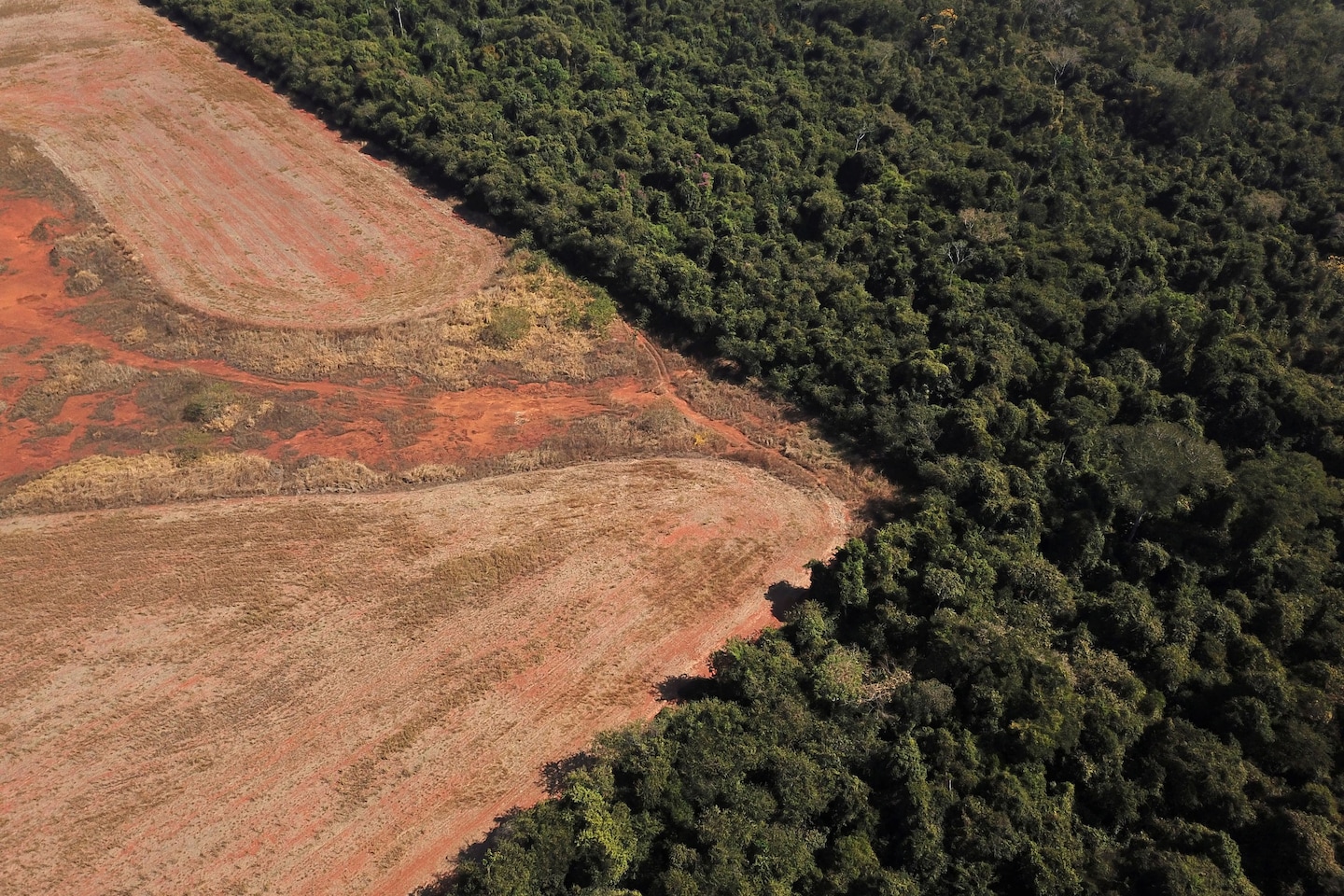
Brazil has asked the European Union to reconsider its anti‑deforestation law, arguing that the certification requirements could create trade barriers for Brazilian agricultural products and complicate efforts to protect the Amazon.
Quick Answer
The EU’s anti‑deforestation regulation, adopted in 2023, requires all commodities sold in the bloc to be proven free of forest‑clearing after a set cut‑off date. Brazil contends that the rule, while aimed at protecting the Amazon, may restrict market access for soy, beef, coffee and timber, jeopardising the livelihoods of millions of small‑scale farmers. Scientific evidence confirms that commodity‑driven deforestation is a major driver of Amazon loss, yet the effectiveness of import‑based bans depends on robust traceability and equitable support for producers. Consequently, the dispute highlights a tension between global environmental goals and trade‑related economic realities, with uncertainty around how the EU will implement compliance mechanisms.
Key Takeaways
- The EU law targets deforestation linked to imported commodities such as soy, beef, coffee and timber.
- Brazil argues the rule could act as a de‑facto trade barrier, affecting export revenues and farmer incomes.
- Deforestation remains a leading cause of Amazon carbon emissions and biodiversity loss, as shown by multiple IPCC and FAO assessments.
- Effective implementation will require reliable traceability systems, capacity‑building for producers, and safeguards for smallholders.
- Collaboration rather than unilateral regulation is seen by many scientists as the most durable path to forest preservation.
What Is Brazil Urges EU to Rethink Anti‑Deforestation Law Over Trade Concerns?
The phrase refers to Brazil’s formal diplomatic request, made in 2023, for the European Union to review the practical implications of its new anti‑deforestation regulation on Brazilian exports. The law, officially titled the “EU Deforestation‑Free Products Regulation,” obliges importers to verify that products sold in the EU have not caused forest loss after 31 December 2020. The request is not a rejection of environmental protection but a call for adjustments that consider Brazil’s economic dependence on agriculture, land‑use history, and the capacity of its supply chains to meet stringent documentation standards.
How Does It Work?
1. EU Regulatory Mechanism
- The European Commission defines a list of high‑risk commodities (e.g., soy, beef, palm oil, coffee, cocoa, timber).
- Importers must conduct “due diligence” to trace the commodity back to its point of origin and demonstrate compliance with the deforestation‑free criterion.
- National authorities in EU member states verify documentation and may impose penalties for non‑compliance.
2. Brazil’s Export Chain
- Brazilian producers sell commodities to international traders, who then supply EU importers.
- Traceability relies on satellite monitoring, land‑registry data, and certification schemes such as the Brazilian Forest Code compliance system.
- Smallholders often lack digital tools or legal certainty, making it difficult to produce the required evidence.
3. Potential Trade Impact
If an exporter cannot prove compliance, the EU may reject the shipment or levy fines, effectively limiting market access. This creates a financial incentive to adopt forest‑friendly practices, but also risks excluding producers who cannot meet documentation demands.
What Does the Evidence Show?
Multiple lines of evidence link commodity expansion to Amazon deforestation. The Intergovernmental Panel on Climate Change (IPCC) 2021 report notes that agricultural expansion accounts for roughly 70 % of recent forest loss in the basin. A 2020 systematic review in *Nature Sustainability* found that soy and cattle are the two most significant drivers of land‑use change in Brazil. Satellite‑based monitoring by Brazil’s National Institute for Space Research (INPE) consistently shows higher deforestation rates in municipalities with intensive soy or cattle production.
Conversely, studies on trade‑related environmental policies indicate mixed outcomes. Research published in *Science Advances* (2022) suggests that import‑based bans can reduce deforestation when traceability is high and when they are paired with financial support for producers. However, a 2021 World Bank analysis warned that without safeguards, such policies may shift deforestation to non‑regulated regions, a phenomenon known as “leakage.”
Main Causes or Drivers
Direct Causes
- Expansion of soy cultivation for animal feed and biofuels.
- Growth of pasture land for beef cattle.
- Timber extraction for domestic and export markets.
Underlying Drivers
- Global demand for protein‑rich feeds and meat, largely driven by European and Asian consumption.
- Economic incentives for land conversion, including higher short‑term profits compared with forest preservation.
- Weak enforcement of Brazil’s Forest Code, especially in frontier regions.
Amplifying Factors
- Climate variability that makes agriculture more profitable during dry periods.
- Infrastructure development (roads, ports) that lowers transport costs for agricultural commodities.
- Land tenure insecurity, which discourages long‑term sustainable management.
Environmental and Human Impacts
Environmental Impacts
Deforestation in the Amazon reduces carbon storage, contributing to global warming. The IPCC estimates that forest loss in the basin releases roughly 0.5 gigatonnes of CO₂ each year. Habitat fragmentation threatens biodiversity; the IUCN lists more than 2,200 species as endangered, many of which rely on intact forest corridors.
Human Health and Social Impacts
Indigenous peoples and rural communities depend on forest resources for food, medicine and cultural practices. Land conversion can erode these livelihoods, increase food insecurity, and exacerbate social conflict over land rights. Air quality may decline due to biomass burning, raising respiratory risks for nearby populations.
Economic and Infrastructure Impacts
Aviation and road networks built to support agricultural expansion can further open remote areas to logging and mining. While export revenues from soy and beef generate billions of dollars annually, the loss of ecosystem services—such as water regulation and pollination—carries long‑term economic costs that are difficult to quantify.
Regional Differences
Deforestation pressures vary across Brazil’s regions. The Southern Amazon (states like Mato Grosso and Pará) sees the highest soy expansion, whereas the Cerrado savanna experiences rapid pasture growth. In contrast, the Atlantic Forest, a coastal biome, faces fragmentation from urban development rather than large‑scale commodity agriculture. These patterns mean that EU policy effects will not be uniform; regions with stronger traceability infrastructure may adapt more readily than frontier areas.
What Scientists Know With High Confidence
- Commodity‑driven expansion, especially soy and cattle, is the primary driver of recent Amazon deforestation (IPCC, 2021).
- Forests act as a major carbon sink; their loss accelerates atmospheric CO₂ concentrations (IPCC, 2021).
- Effective traceability systems, when combined with financial incentives, can reduce deforestation linked to exports (Science Advances, 2022).
What Remains Uncertain
Key uncertainties include the speed at which EU authorities will operationalise verification procedures, the extent to which smallholder farmers can adopt digital traceability tools, and the potential for “leakage” of deforestation to non‑regulated commodities or regions. Further research is needed on the socioeconomic outcomes of certification schemes and on how trade adjustments might influence illegal land‑clearing.
Common Misconceptions
Misconception: The EU law will instantly stop all Amazon deforestation.
Reality: The regulation targets only commodities sold in the EU and cannot directly control domestic land‑use decisions; its impact depends on enforcement, traceability and complementary policies.
Misconception: Brazil opposes any forest protection.
Reality: Brazilian officials acknowledge the importance of the Amazon for climate regulation but seek a balanced approach that protects livelihoods while meeting environmental goals.
Misconception: Trade bans are the only way to protect forests.
Reality: A combination of domestic law enforcement, sustainable land‑use planning, and market‑based incentives is generally more effective than unilateral bans.
Solutions and Limitations
Several strategies can address the twin goals of forest conservation and trade fairness:
- Improved Traceability: Satellite‑based monitoring combined with blockchain can verify origin, but high implementation costs limit uptake among small producers.
- Financial Incentives: Payments for ecosystem services (e.g., Brazil’s Amazon Fund) encourage preservation, yet funding is often volatile and may not match market prices.
- Capacity‑Building Programs: Technical assistance for smallholders improves compliance, but scaling such programs requires sustained political commitment.
- International Collaboration: Bilateral agreements that align EU import standards with Brazilian land‑use policies can reduce trade friction, though negotiating such accords can be lengthy.
- Regulatory Strengthening: Enhancing enforcement of Brazil’s Forest Code curbs illegal clearing, yet corruption and limited monitoring capacity remain challenges.
What Individuals, Communities, and Governments Can Do
What Individuals Can Do
Consumers can prioritize certified products (e.g., Rainforest Alliance, Fairtrade) and support companies that disclose supply‑chain origins. Advocacy for transparent labeling helps create market pressure for sustainable sourcing.
What Communities and Organizations Can Do
Local NGOs can facilitate farmer cooperatives that share the costs of traceability technology and negotiate better terms with exporters. Community‑led monitoring can complement satellite data, providing ground‑truth verification.
What Governments Can Do
Brazil can streamline land‑registry processes, invest in digital mapping tools, and expand subsidy programs for deforestation‑free agriculture. The EU can offer transition assistance, such as reduced tariffs for compliant producers, and develop joint verification platforms.
What Businesses and Industries Can Do
Importers should adopt robust due‑diligence protocols early, collaborate with Brazilian suppliers on data collection, and incorporate deforestation risk assessments into procurement policies.
Synthesis
The EU’s anti‑deforestation law reflects a growing global effort to curb commodity‑linked forest loss, a driver confirmed by multiple scientific assessments. Brazil’s request for reconsideration underscores the practical challenges of aligning trade rules with on‑the‑ground realities, especially for small‑scale producers in the Amazon basin. High‑confidence evidence shows that deforestation contributes significantly to carbon emissions and biodiversity decline, while traceability and financial incentives can mitigate these impacts when properly designed. Uncertainties remain around implementation speed, equity for vulnerable farmers, and the risk of shifting deforestation elsewhere. A collaborative approach that blends rigorous monitoring, capacity building, and fair trade mechanisms offers the most promising path toward preserving the Amazon while sustaining Brazil’s agricultural economy.
Frequently Asked Questions
What does the EU's anti-deforestation law require from importers?
The law obliges importers to prove that commodities sold in the EU have not caused forest clearing after 31 December 2020. This involves a due‑diligence traceability process and documentation that can be verified by national authorities.
How might the EU regulation affect Brazilian farmers and exporters?
If exporters cannot demonstrate deforestation‑free status, the EU may reject shipments or impose fines, limiting market access. This could reduce income for small‑scale soy, beef, coffee and timber producers who lack the resources to meet strict documentation standards.
What scientific evidence links commodity production to Amazon deforestation?
The IPCC 2021 report attributes about 70 % of recent Amazon forest loss to agricultural expansion. A systematic review in *Nature Sustainability* identifies soy and cattle as the primary drivers, and satellite monitoring by INPE shows higher deforestation in areas with intensive soy or cattle production.
What are the main uncertainties about implementing the EU anti-deforestation rule?
Key uncertainties include how quickly EU authorities will operationalise verification, whether smallholder farmers can adopt digital traceability tools, and the risk that deforestation may shift to non‑regulated commodities or regions—a phenomenon known as leakage.
What actions can governments take to balance forest protection with trade interests?
Governments can streamline land‑registry systems, invest in digital mapping, expand subsidy programs for deforestation‑free agriculture, and negotiate bilateral agreements that align import standards with domestic land‑use policies, while providing transition assistance to compliant producers.







Leave a Comment