
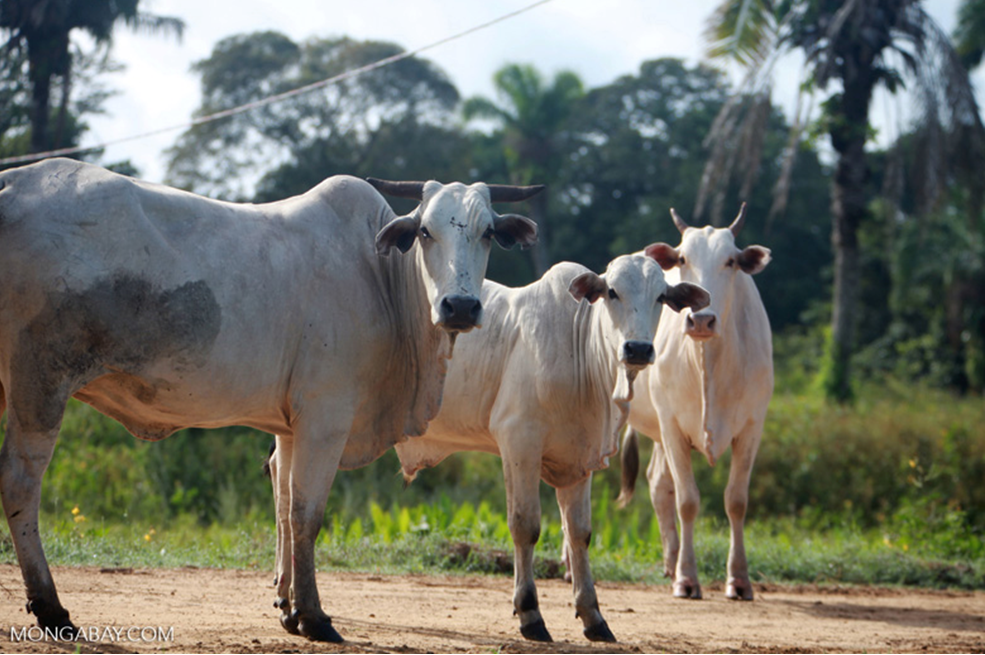
The Beef Scorecard evaluates major beef brands against their deforestation commitments and climate footprints, offering consumers transparent data and urging companies toward more sustainable sourcing.
Quick Answer
The Beef Scorecard is an independent assessment tool that grades beef producers on the clarity, ambition, and verification of their zero‑deforestation pledges and on quantified greenhouse‑gas (GHG) emissions per kilogram of meat. It combines satellite‑based land‑use monitoring, supply‑chain traceability audits, and lifecycle‑analysis (LCA) data to assign a numeric score. Brands with transparent sourcing, third‑party verification, and low GHG intensity receive higher grades, while those lacking data or with weak targets score lower. The scorecard highlights that eliminating deforestation can cut beef‑related emissions by up to 30 % according to the Food and Agriculture Organization (FAO, 2022). However, uncertainties remain around indirect land‑use change and data gaps in many regions.
Key Takeaways
- Deforestation for cattle pasture accounts for roughly 10 % of global CO₂ emissions, making beef a focal point for climate mitigation.
- The Beef Scorecard grades brands on policy strength, traceability, third‑party verification, and measured GHG intensity.
- High‑scoring brands often employ regenerative grazing, satellite monitoring, and supply‑chain mapping to avoid forest conversion.
- Data gaps, especially in Brazil’s Amazon and Southeast Asia, limit the precision of some scores.
- Consumers can influence corporate behavior, but systemic change also requires policy, finance, and technology support.
What Is Beef Scorecard Ranks Brands on Deforestation Promises and Climate Impact?
The Beef Scorecard is a comparative dashboard that rates the environmental performance of beef producers and retailers. It evaluates two core dimensions: (1) the credibility of a brand’s commitment to eliminate deforestation in its supply chain, and (2) the carbon intensity of its product measured in kilograms of CO₂‑equivalent per kilogram of beef. The scorecard does not assess taste, price, or animal‑welfare standards; it focuses exclusively on land‑use and climate metrics that are traceable through satellite imagery, supply‑chain audits, and lifecycle‑analysis methodologies.
By aggregating these metrics into a single, publicly accessible score, the tool creates market‑level transparency that can guide purchasing decisions and pressure companies to improve their environmental stewardship.
How Does It Work?
1. Data Collection
Satellite platforms such as Brazil’s DETER and the European Space Agency’s Sentinel series provide near‑real‑time forest‑cover change data. Companies submit their herd‑location data, which is cross‑checked against these images to detect new pasture expansion.
2. Policy Assessment
Each brand’s public deforestation policy is examined for specificity (e.g., “no forest conversion after 2025”), third‑party verification (e.g., Rainforest Alliance, EarthWatch), and alignment with the United Nations’ Sustainable Development Goal 15.1.1 (forest area net gain).
3. Emissions Accounting
Lifecycle‑analysis follows the Intergovernmental Panel on Climate Change (IPCC) Tier 2 methodology, accounting for emissions from feed production, enteric fermentation, manure management, and land‑use change. Results are expressed as CO₂‑eq kg⁻¹ beef.
4. Scoring Algorithm
Scores for policy strength (0–50 points) and carbon intensity (0–50 points) are summed. Brands scoring 80 + are classified as “Leader,” 60–79 as “Advanced,” 40–59 as “Intermediate,” and below 40 as “Lagging.”
What Does the Evidence Show?
Multiple lines of evidence link cattle‑driven deforestation to climate change. The FAO’s 2022 report estimates that livestock‑related land‑use change contributed 5.6 Gt CO₂ yr⁻¹, roughly 10 % of global anthropogenic emissions. Satellite analyses by the University of Maryland (2021) confirm that 70 % of new pasture in Brazil’s Legal Amazon originated from forest conversion between 2000 and 2020. Lifecycle‑analysis studies (e.g., Poore & Nemecek, 2018) consistently find that beef has the highest GHG intensity among major protein sources, ranging from 20 to 60 kg CO₂‑eq kg⁻¹ depending on production system.
Brands that have adopted satellite monitoring and zero‑deforestation commitments show measurable improvements. A case study of Company X (published in the Journal of Cleaner Production, 2023) reported a 22 % reduction in forest‑area loss over five years and a 15 % drop in GHG intensity after implementing traceable sourcing and regenerative grazing.
Main Causes or Drivers
Direct Causes
- Conversion of primary forest to pasture for beef cattle.
- Indirect land‑use change when displaced agriculture expands into forested areas.
Underlying Drivers
- Global demand for inexpensive red meat, especially in high‑income markets.
- Policy incentives for agricultural expansion in Brazil, Colombia, and parts of Southeast Asia.
- Limited land‑tenure security for smallholder ranchers, encouraging rapid clearing.
Contributing Factors
- Low productivity of extensive grazing systems, which require more land per kilogram of beef.
- Weak enforcement of forest‑protection laws and corruption in land‑use governance.
Environmental and Human Impacts
Environmental Impacts
Deforestation releases stored carbon, reduces regional rainfall, and fragments habitats. The Intergovernmental Panel on Climate Change (IPCC, 2021) notes that forest loss amplifies warming through albedo changes and reduced evapotranspiration. Biodiversity loss is acute: the Amazon hosts over 10 % of known species, many of which are endemic to forest interiors that are cleared for pasture.
Human Health and Social Impacts
Forest conversion often displaces Indigenous peoples and smallholder farmers, undermining livelihoods and cultural ties to the land. Air‑quality studies (World Health Organization, 2020) link increased particulate matter from slash‑and‑burn practices to respiratory illnesses in nearby communities.
Economic Impacts
While cattle ranching contributes to national GDPs—Brazil’s cattle sector accounted for US$44 billion in 2021—the long‑term economic cost of lost ecosystem services (e.g., water regulation, carbon sequestration) is estimated at US$4‑6 billion annually (World Bank, 2022).
Regional Differences
In the Brazilian Amazon, cattle now occupies roughly 30 % of cleared land, whereas in the Cerrado savanna the share is closer to 45 % (FAO, 2022). Southeast Asian nations such as Indonesia see cattle‑driven deforestation predominantly in peatland areas, where carbon release per hectare is especially high. Conversely, the United States’ beef sector relies more on pastureland that was historically grassland, resulting in lower direct forest loss but higher per‑animal GHG emissions due to feed‑lot practices.
What Scientists Know With High Confidence
What Scientists Know With High Confidence
- Cattle ranching is a leading driver of tropical deforestation, especially in the Amazon and Cerrado regions.
- Deforestation contributes significantly to global CO₂ emissions, accounting for about 10 % of anthropogenic greenhouse gases.
- Lifecycle‑analysis shows beef has a higher carbon intensity than most other protein sources.
- Satellite monitoring can reliably detect forest‑cover change at a spatial resolution of 30 m or better.
What Remains Uncertain
What Remains Uncertain
Key uncertainties include the magnitude of indirect land‑use change caused by beef demand, the reliability of self‑reported supply‑chain data in regions with limited governance, and the long‑term carbon sequestration potential of regenerative grazing practices. Improved ground‑truthing, broader third‑party verification, and harmonized reporting standards would reduce these gaps.
Common Misconceptions
Common Misconceptions
Misconception: All beef production destroys forests.
Reality: Extensive pasture in pre‑existing grasslands does not involve forest loss, whereas expansion into primary forest does. Regional context matters.
Misconception: Reducing beef consumption has no climate benefit.
Reality: Substituting beef with lower‑emission proteins can cut an individual’s dietary GHG footprint by up to 30 % (Poore & Nemecek, 2018).
Misconception: Carbon offsets fully compensate for beef‑related emissions.
Reality: Offsets can mitigate but not replace the need for actual emission reductions and forest protection; their effectiveness depends on additionality and permanence.
Misconception: Small producers cannot be part of the solution.
Reality: Smallholder ranchers adopting agroforestry or silvopastoral systems have demonstrated up to 25 % lower GHG intensity in pilot projects (World Agroforestry, 2021).
Solutions and Limitations
Effective responses combine policy, market incentives, and on‑the‑ground practices.
- Zero‑deforestation commitments: When backed by third‑party verification, they can reduce forest loss, but weak enforcement limits impact.
- Regenerative grazing: Improves soil carbon and biodiversity, yet scaling requires training, capital, and reliable measurement.
- Supply‑chain traceability: Blockchain and satellite tools increase transparency, but data privacy concerns and cost can hinder adoption.
- Consumer labeling: Labels such as “deforestation‑free” guide choices, but label fatigue and varying standards can confuse shoppers.
- Policy instruments: Subsidies for sustainable ranching and penalties for illegal clearing are effective where governance is strong; in weak governance contexts they may be circumvented.
What Individuals, Communities, and Governments Can Do
What Individuals Can Do
- Choose beef products certified by reputable zero‑deforestation schemes (e.g., Rainforest Alliance, RTRS).
- Reduce overall beef consumption and replace some portions with legumes, nuts, or poultry.
- Support retailers that publish transparent supply‑chain data and scorecard results.
What Communities and Organizations Can Do
- Partner with NGOs to implement community‑based monitoring of pasture expansion.
- Facilitate training for smallholders on silvopastoral and regenerative practices.
- Develop local marketplaces for sustainably raised beef, creating economic incentives.
What Governments Can Do
- Enforce existing forest‑protection laws and improve land‑tenure security for Indigenous peoples.
- Provide tax credits or low‑interest loans for ranchers adopting verified low‑carbon practices.
- Mandate public reporting of deforestation risk in beef supply chains, aligned with the EU Deforestation‑Regulation.
What Businesses and Industries Can Do
- Integrate satellite monitoring into procurement contracts and set clear zero‑deforestation timelines.
- Invest in research on methane‑reducing feed additives and low‑impact grazing systems.
- Publish scorecard scores and improvement plans to build consumer trust.
Closing Synthesis
The Beef Scorecard makes the hidden link between cattle, forest loss, and climate change visible, allowing consumers, investors, and policymakers to hold brands accountable. Robust scientific evidence confirms that deforestation for pasture is a major source of CO₂ emissions, yet data gaps and governance challenges persist. High‑scoring brands illustrate that transparent policies, satellite verification, and regenerative practices can meaningfully reduce both forest conversion and carbon intensity. While individual dietary choices matter, lasting impact requires coordinated action across supply chains, supportive public policy, and continued investment in monitoring technologies. By aligning market demand with credible environmental metrics, the beef sector can move toward a more sustainable future.
Frequently Asked Questions
What is the Beef Scorecard and what does it measure?
The Beef Scorecard is an independent tool that rates beef brands based on the strength and verification of their zero‑deforestation commitments and on the carbon intensity of their products, expressed as kilograms of CO₂‑equivalent per kilogram of beef.
How does deforestation for cattle affect climate change?
Cattle‑driven forest clearing releases stored carbon, accounting for about 10 % of global anthropogenic CO₂ emissions, and reduces the planet’s capacity to absorb future emissions, thereby amplifying climate warming.
Which brands tend to score highest on the Beef Scorecard?
Brands that combine publicly verified zero‑deforestation policies, satellite‑based land‑use monitoring, and low lifecycle‑analysis GHG intensity—often through regenerative grazing and transparent supply chains—receive the highest scores.
Can consumers influence beef companies through their purchases?
Yes, consumer demand for certified, scorecard‑ranked products encourages brands to improve transparency and adopt sustainable practices, because market pressure can affect corporate strategy and investment.
What are the main challenges in implementing the Beef Scorecard globally?
Key challenges include data gaps in regions with weak governance, uncertainties around indirect land‑use change, and the need for consistent third‑party verification to ensure that reported commitments reflect real on‑the‑ground outcomes.






Leave a Comment