
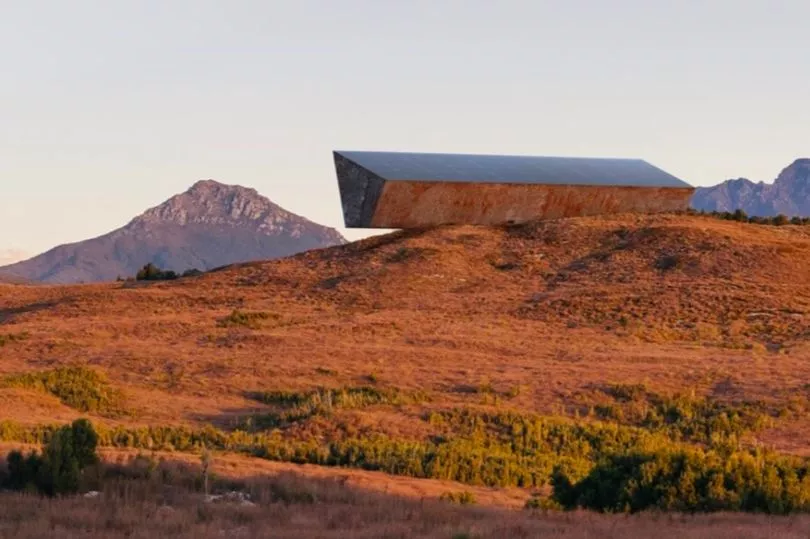
Australia plans to construct an ‘Earth’s Black Box’ in Tasmania to permanently record governmental, corporate, and community climate‑related decisions, creating an immutable audit trail for future generations.
Quick Answer
The Earth’s Black Box is a large, hardened data repository that will continuously capture policies, emissions data, corporate reports, and grassroots actions related to climate change. Designed like an aviation flight recorder, it stores information in multiple redundant formats to survive decades of environmental stress. Scientists expect the archive to provide a clear, evidence‑based record of how humanity responded to climate challenges, though uncertainties remain about long‑term data accessibility and governance.
Key Takeaways
- The Black Box will store a wide range of climate‑related decisions, from legislation to community initiatives.
- Its design mirrors aviation flight recorders, emphasizing durability and redundancy.
- By preserving an immutable record, the project aims to improve accountability and inform future climate research.
- Key challenges include data selection criteria, governance, and ensuring long‑term accessibility.
- Stakeholders—from governments to citizens—can contribute data and demand transparency.
What Is Australia to Build ‘Earth’s Black Box’ to Record Climate Change Decisions?
The Earth’s Black Box is a purpose‑built, climate‑data archive slated for construction in Tasmania. It will function as a physical vault that continuously ingests digital records of climate‑related decisions: legislation, emissions inventories, corporate sustainability reports, court rulings, and documentation of grassroots activism. Unlike conventional databases that can be altered or lost, the Black Box uses tamper‑evident storage, multiple physical media (solid‑state drives, archival film, and quartz‑glass storage), and underground placement to ensure durability for centuries. The initiative differs from typical climate monitoring stations because it does not measure atmospheric variables; instead, it records the human choices that drive those variables.
How Does It Work?
Data Capture and Ingestion
- Source Identification: Government agencies, international bodies, NGOs, and accredited corporations submit policy documents, emissions inventories, and compliance reports.
- Standardisation: Submissions are converted to a common metadata schema to enable searchable, comparable records.
- Automated Upload: Secure APIs feed the standardized files into the vault in near real‑time.
Physical Storage Architecture
The vault consists of three layers:
- Primary Layer: Redundant solid‑state drives housed in climate‑controlled chambers.
- Secondary Layer: Archival glass‑etched plates that encode data optically, resistant to electromagnetic pulses.
- Tertiary Layer: Acid‑free paper microfilm stored in a sealed, fire‑proof compartment for ultra‑long‑term preservation.
Each layer is duplicated in two geographically separated chambers within the Tasmanian rock formation, providing resilience against natural disasters.
Access and Verification
Authorized researchers can request extracts via a transparent governance board. All retrieval actions are logged on an immutable ledger, ensuring that any alteration attempts are detectable. Public summaries will be released annually to maintain societal relevance.
What Does the Evidence Show?
Long‑term climate governance studies, such as the Intergovernmental Panel on Climate Change (IPCC) assessments, highlight a persistent “policy‑action gap” where scientific consensus outpaces political implementation. Historical analyses of the Kyoto Protocol and the Paris Agreement reveal that without robust documentation, accountability mechanisms weaken over time. Archival research on the U.S. Clean Air Act shows that detailed record‑keeping facilitated legal enforcement and policy refinement. These precedents suggest that a dedicated, tamper‑proof archive could strengthen future climate governance by providing clear evidence of past decisions and their outcomes.
Main Causes or Drivers
Direct Causes
The primary driver for the Black Box is the documented disconnect between climate science and policy action. This gap is reinforced by fragmented data sources, inconsistent reporting standards, and limited public access to decision‑making records.
Underlying Drivers
- Political inertia driven by short‑term electoral cycles.
- Corporate greenwashing that obscures true emissions footprints.
- Information overload that makes it difficult for citizens to track accountability.
Environmental and Human Impacts
Environmental Impacts
While the Black Box itself does not emit greenhouse gases, its existence could indirectly influence emissions trajectories. By exposing gaps between pledged targets and actual outcomes, it may motivate stricter compliance, potentially reducing future carbon dioxide equivalents (CO₂e) emissions. Conversely, if the archive is underutilised, the anticipated environmental benefit would be limited.
Human Health and Social Impacts
Transparent documentation can empower communities to demand healthier air quality standards, reducing exposure‑related illnesses such as asthma. Moreover, the archive can serve educational purposes, fostering climate literacy and supporting equitable policy discussions, especially for Indigenous groups whose traditional knowledge is often omitted from formal records.
Economic and Infrastructure Impacts
Businesses may face higher scrutiny, prompting investment in cleaner technologies and supply‑chain transparency. Infrastructure planning could benefit from historical policy analyses, helping avoid costly retrofits of projects built under outdated climate assumptions.
Regional Differences
Australia’s federal system results in varied climate policies across states. Tasmania’s cooler climate and lower emissions per capita contrast with the high‑growth coal regions of Queensland and New South Wales. The Black Box will capture these regional disparities, enabling comparative studies that can inform tailored mitigation strategies. Internationally, similar archives—such as the European Climate Data Store—demonstrate how regional data integration improves cross‑border policy coordination.
What Scientists Know With High Confidence
- Human activities are the dominant cause of observed global warming since the mid‑20th century (IPCC AR6, 2021).
- Policy gaps significantly hinder the achievement of net‑zero emissions targets (UNFCCC, 2022).
- Transparent, long‑term records improve regulatory compliance and public trust (World Bank, 2020).
- Digital archiving technologies can preserve data for centuries when stored in redundant, protected formats (National Archives of Australia, 2023).
What Remains Uncertain
Key uncertainties include: which governance model will best balance openness with privacy; how future technological changes may affect data readability; and the extent to which the archive will actually influence policy behavior. Ongoing research into secure yet accessible data frameworks and stakeholder engagement will be essential to reduce these gaps.
Common Misconceptions
Misconception: The Black Box will solve climate change.
Reality: It is a documentation tool, not a mitigation technology. Its value lies in accountability, not direct emission reductions.
Misconception: Only governments need to contribute data.
Reality: Corporate reports, NGO analyses, and community‑generated records are essential for a comprehensive archive.
Misconception: Once built, the archive will never need updates.
Reality: Data standards evolve; periodic reviews and migrations to newer storage media will be required.
Solutions and Limitations
Effective climate governance combines several pillars:
- Prevention: Strong emission‑reduction policies reduce the need for later remediation.
- Mitigation: Renewable energy adoption, energy efficiency, and carbon pricing directly lower CO₂e.
- Adaptation: Infrastructure upgrades and ecosystem restoration increase resilience.
The Black Box supports these solutions by supplying evidence that can guide policy refinement. However, limitations exist: data overload may hinder analysis, governance disputes could restrict access, and the cost of maintaining ultra‑secure storage is substantial.
What Individuals, Communities, and Governments Can Do
What Individuals Can Do
- Support organizations that advocate for transparent climate reporting.
- Maintain personal records of local climate actions and share them with the archive when possible.
- Engage in public consultations to demand inclusion of community data.
What Communities and Organizations Can Do
- Standardise local climate‑action documentation using the metadata schema recommended by the project.
- Partner with universities to curate oral histories that capture Indigenous knowledge.
- Host workshops that teach residents how to submit data securely.
What Governments Can Do
- Mandate that all climate‑related policy documents be submitted to the Black Box in a timely manner.
- Fund independent audits of the archive’s governance board to ensure impartiality.
- Integrate archived data into future climate‑scenario modelling.
Synthesis
The Earth’s Black Box in Tasmania represents a pioneering effort to lock in the story of humanity’s climate choices. By recording policies, corporate disclosures, and grassroots actions in a tamper‑proof vault, it creates a durable audit trail that can sharpen accountability and inform future science. While high‑confidence evidence confirms the urgency of climate action and the power of transparent records, uncertainties about governance, long‑term accessibility, and behavioral impact remain. Nonetheless, the project offers a concrete pathway for governments, businesses, and citizens to contribute to a more accountable climate future.
Frequently Asked Questions
What is the Earth’s Black Box project in Australia?
The Earth’s Black Box is a hardened data vault being built in Tasmania that continuously stores government policies, corporate climate reports, and community activism records to create an immutable climate‑action archive.
How will the Black Box record climate decisions?
It ingests digital submissions through secure APIs, standardises them into a common metadata format, and stores the information on redundant solid‑state drives, glass‑etched plates, and microfilm housed in underground chambers.
Why is documenting climate decisions important?
Transparent documentation bridges the gap between scientific consensus and policy action, enabling accountability, informing future research, and helping citizens and regulators assess whether emissions targets are being met.
What challenges does the project face?
Key challenges include deciding which data to include, establishing a governance model that balances openness with privacy, ensuring long‑term readability of stored media, and covering the high costs of secure, redundant storage.
How can individuals support climate accountability?
Individuals can back organisations that push for transparent reporting, keep personal records of local climate actions, and participate in public consultations that demand inclusion of community data in the Black Box.






Leave a Comment