
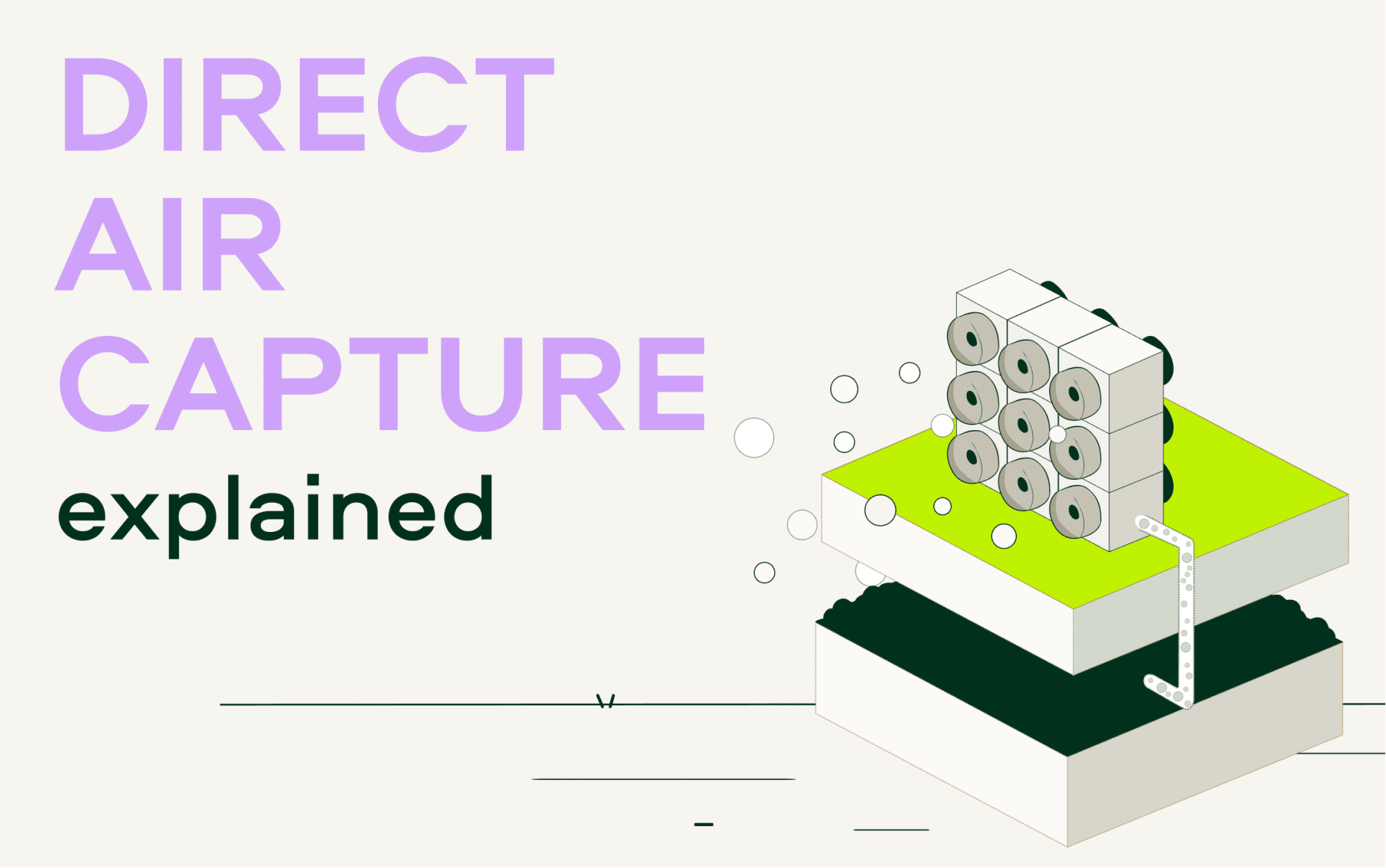
Direct Air Capture (DAC) is a technology that extracts carbon dioxide from ambient air using chemical sorbents, offering a potential tool for climate mitigation while facing energy, cost, and scalability challenges.
Quick Answer
Direct Air Capture (DAC) removes CO₂ by passing large volumes of air over sorbent materials that chemically bind the gas; the sorbent is then regenerated with heat or pressure to release a concentrated CO₂ stream. Scientific assessments, such as the IPCC 2023 report, conclude that DAC can technically capture atmospheric CO₂, but its net climate benefit depends on low‑carbon energy sources and economic viability. The most significant implication is that DAC could complement emissions reductions, yet uncertainty remains around large‑scale deployment costs and energy use.
Key Takeaways
- DAC captures CO₂ directly from the atmosphere using solid or liquid sorbents.
- Low‑carbon heat or electricity is required to release and compress the captured CO₂.
- Current commercial plants operate at a cost of $100‑$600 per tonne of CO₂, far above the $50‑$100 range needed for large‑scale climate goals.
- When powered by renewable energy, DAC can achieve net‑negative emissions, but the overall impact is limited by energy availability and land use.
- Policy support, carbon pricing, and technological learning are essential for scaling DAC responsibly.
What Is Air Capture Technology Explained: Can It Really Remove CO₂ From the Atmosphere??
Direct Air Capture (DAC) refers to engineered systems that pull carbon dioxide (CO₂) out of ambient air, concentrate it, and store or reuse it. Unlike point‑source capture, which intercepts emissions at power plants or factories, DAC treats the atmosphere as a diffuse source, making it location‑flexible but energy‑intensive. Two main sub‑types dominate the field: solid‑sorbent filters (often based on amine‑functionalised materials) and liquid‑sorbent scrubbers (using alkaline solutions such as potassium hydroxide). Both aim to achieve high selectivity for CO₂ while allowing the sorbent to be regenerated for repeated cycles.
How Does It Work?
The DAC process can be broken into four sequential steps:
- Air intake: Large fans draw ambient air through a contactor where sorbent material is exposed.
- CO₂ binding: Chemical reactions between CO₂ molecules and the sorbent create a stable bond; for solid amines this is a reversible carbamate formation, while liquid alkali solutions convert CO₂ into carbonate.
- Sorbent regeneration: Heat (often 80‑120 °C for solid sorbents) or low‑pressure steam strips CO₂ from the material, producing a purified gas stream.
- CO₂ utilization or storage: The captured CO₂ can be injected into deep geological formations, mineralised, or used as a feedstock for synthetic fuels, building materials, or enhanced oil recovery.
Energy demand is the dominant operational cost. The International Energy Agency (IEA) estimates that 1.5–2.0 MWh of electricity and 2–3 GJ of low‑grade heat are needed per tonne of CO₂ captured. Consequently, the carbon intensity of the energy source directly determines whether DAC yields net‑negative emissions.
What Does the Evidence Show?
Multiple lines of evidence support the technical feasibility of DAC. Field pilots operated by companies such as Climeworks (Switzerland) and Carbon Engineering (Canada) have demonstrated continuous operation for several years, achieving capture rates of 0.5–1.0 t CO₂ day⁻¹ per plant. Laboratory studies confirm sorbent lifetimes of 3–5 years with regeneration efficiencies above 90 % (National Renewable Energy Laboratory, 2022). The IPCC 2023 assessment report classifies DAC as a “mature emerging technology” with moderate confidence that it can contribute to meeting the Paris Agreement temperature targets if paired with clean energy. However, the same report highlights limited large‑scale data, leading to high uncertainty around cost trajectories and land‑use implications.
Main Causes or Drivers
Climate‑driven demand
Escalating atmospheric CO₂ concentrations—reaching 421 ppm in 2023 (NOAA)—drive interest in negative‑emission technologies to offset historic emissions.
Policy and economic incentives
Carbon pricing mechanisms, such as the EU Emissions Trading System, create a market signal that can make DAC financially attractive when the price of CO₂ exceeds the capture cost.
Technological advances
Improved sorbent chemistry, modular plant designs, and integration with renewable heat sources reduce energy penalties and capital expenses.
Environmental and Human Impacts
Environmental Impacts
- Carbon removal potential: When powered by zero‑carbon electricity, DAC can achieve net‑negative emissions, helping to lower atmospheric CO₂ levels.
- Land and water use: Large‑scale plants may require several hectares per megatonne of CO₂ captured for equipment spacing and heat exchangers; water consumption varies with sorbent type but can be managed through closed‑loop systems.
- Resource extraction: Production of amine‑based sorbents involves petrochemical feedstocks, introducing upstream emissions unless sourced sustainably.
Human Health and Social Impacts
- Direct health impacts are minimal because DAC sites operate in controlled industrial settings.
- Job creation potential: each 1 Mt CO₂ yr⁻¹ plant can generate 50–100 skilled jobs during construction and operation, benefitting local economies.
- Equity considerations: If DAC subsidies divert resources from renewable energy or energy efficiency in low‑income regions, social benefits may be uneven.
Regional Differences
Geography influences both the feasibility and the environmental footprint of DAC. In arid regions, abundant solar energy reduces electricity costs but water scarcity may limit liquid‑sorbent options. Coastal locations benefit from seawater heat sources for regeneration but must address corrosion. Europe’s dense industrial base facilitates CO₂ transport to offshore storage, while the United States has extensive basalt formations suitable for mineralisation. These variations mean that a one‑size‑fits‑all deployment strategy is unrealistic.
What Scientists Know With High Confidence
- DAC can chemically bind CO₂ from ambient air and release it in a concentrated form.
- Energy intensity is the primary determinant of net climate benefit.
- When powered by low‑carbon energy, DAC yields net‑negative emissions.
- Current commercial costs exceed $100 per tonne of CO₂, indicating a need for cost reductions before large‑scale climate impact.
What Remains Uncertain
Key uncertainties include the future trajectory of capture costs, the scalability of low‑carbon heat supply, long‑term sorbent durability, and the environmental trade‑offs of land and water use at gigatonne scales. Limited real‑world data on megatonne‑scale plants makes it difficult to predict performance under diverse climatic conditions.
Common Misconceptions
Misconception: DAC can replace all emissions reductions.
Reality: DAC is a complement, not a substitute; emissions from energy, industry, and transport must still be curtailed to meet climate targets.
Misconception: DAC uses no energy.
Reality: Energy is essential for air movement and sorbent regeneration; the carbon intensity of that energy determines net removal.
Misconception: Captured CO₂ is automatically stored safely.
Reality: Secure geological storage requires rigorous site selection, monitoring, and regulatory oversight to avoid leakage.
Solutions and Limitations
DAC fits within a broader portfolio of negative‑emission strategies. It can be combined with renewable electricity, waste heat from industrial processes, or geothermal energy to lower its carbon footprint. Limitations include high capital costs, substantial energy demand, and the need for extensive CO₂ transport infrastructure. Trade‑offs involve land use for plant footprints and potential competition with other low‑carbon technologies for renewable resources.
What Individuals, Communities, and Governments Can Do
What Individuals Can Do
- Support policies that price carbon emissions, creating market incentives for DAC and other clean technologies.
- Advocate for transparent reporting of DAC projects, ensuring that claimed net‑negative impacts are verified.
What Communities and Organizations Can Do
- Partner with local universities or research institutes to host pilot DAC units and generate site‑specific data.
- Integrate DAC with community renewable energy projects to supply the required low‑carbon heat and electricity.
What Governments Can Do
- Develop clear regulatory frameworks for CO₂ storage, including long‑term monitoring and liability provisions.
- Fund research into low‑cost sorbents and renewable heat integration, reducing the economic barrier to scale.
- Incorporate DAC into nationally determined contributions (NDCs) only as a supplemental measure, not a primary mitigation pathway.
Closing Synthesis
Direct Air Capture is a scientifically proven method for extracting CO₂ from the atmosphere, but its climate impact hinges on the availability of low‑carbon energy and cost reductions. High‑confidence findings confirm its technical feasibility, while uncertainties around large‑scale economics and resource use remain. DAC should be pursued as part of a diversified mitigation strategy, complemented by aggressive emissions reductions, renewable energy expansion, and robust policy support.
Frequently Asked Questions
What is Direct Air Capture and how does it differ from point‑source carbon capture?
Direct Air Capture (DAC) is a technology that removes CO₂ directly from ambient air using chemical sorbents, whereas point‑source capture intercepts emissions at their source, such as power plants. DAC treats the atmosphere as a diffuse source, making it location‑flexible but more energy‑intensive.
How does DAC actually remove CO₂ from the air?
Air is drawn through a contactor where sorbent materials chemically bind CO₂. The sorbent is then regenerated with heat or low‑pressure steam, releasing a concentrated CO₂ stream that can be stored underground or used industrially.
What are the main energy requirements for operating a DAC plant?
Typical DAC plants need 1.5–2.0 MWh of electricity and 2–3 GJ of low‑grade heat per tonne of CO₂ captured. The carbon intensity of that energy determines whether the process results in net‑negative emissions.
Can DAC be scaled up to meet global climate goals?
DAC can contribute to climate goals, but current costs ($100‑$600 per tonne) and energy demands limit large‑scale deployment. Significant cost reductions, abundant clean energy, and supportive policies are required for DAC to operate at gigatonne scales.
What is a common misconception about DAC and why is it misleading?
A frequent myth is that DAC can replace all emissions reductions. In reality, DAC is a complementary tool; reducing emissions at the source remains essential, and DAC alone cannot achieve the deep cuts needed for the Paris Agreement.








Leave a Comment