
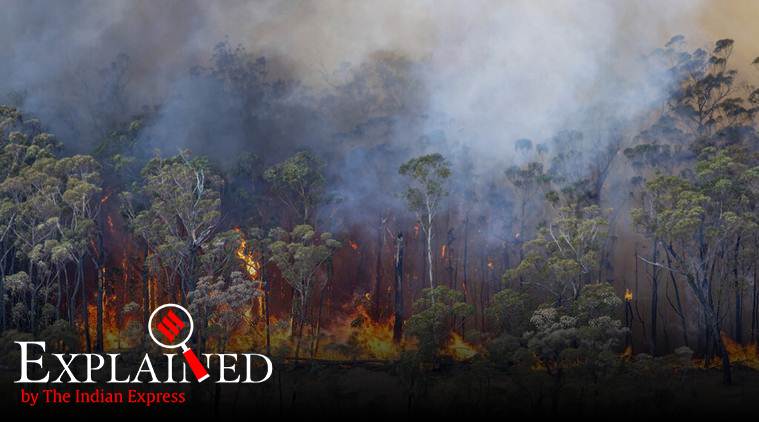
Australia’s wildfires—often called bushfires—are climate‑driven fires that spread across native vegetation, releasing massive carbon, threatening biodiversity, human health, and the economy, and highlighting the urgent need for mitigation and adaptation.
Quick Answer
Australia’s wildfires, commonly referred to as bushfires, are uncontrolled fires that ignite in eucalypt forests, heathlands, and grasslands, spreading faster than suppression resources can contain them. Rising temperatures, prolonged droughts, and stronger winds linked to a warming climate increase the frequency of fire‑weather days, while human activities add ignition sources. The most significant impact is the release of hundreds of millions of tonnes of carbon, creating a feedback loop that accelerates climate change, alongside severe biodiversity loss and health risks. While the overall trend is clear, exact future fire behaviour under different emission pathways remains uncertain.
Key Takeaways
- Fire seasons now extend up to seven months in many regions due to higher temperatures and reduced rainfall.
- Major bushfire events have emitted up to 800 million tonnes of CO₂, roughly 2 % of global annual emissions.
- Both ecosystems (e.g., koalas, eucalypt forests) and human communities suffer health, economic, and cultural losses.
- Indigenous “cool‑season” burning and targeted fuel‑reduction can lower fire risk when properly supported.
- Effective response requires simultaneous greenhouse‑gas mitigation and adaptation through resilient infrastructure.
What Is Australia Wildfires and Bushfires: A Climate Emergency Explained?
In Australian usage, “wildfire” and “bushfire” describe any uncontrolled fire that spreads through natural vegetation faster than local suppression can contain it. The term covers fires in eucalypt forests, shrublands, savanna grasslands, and coastal heath, regardless of ignition source. It excludes prescribed or “cool‑season” burns, which are deliberately set under controlled conditions to reduce fuel loads. Understanding these fires matters because they influence carbon cycles, water quality, biodiversity, and the safety of millions of Australians.
How Does It Work?
Physical and Chemical Drivers
- Fuel accumulation. Decades of fire suppression and changes in vegetation have increased the amount of dry biomass that can ignite.
- Temperature rise. The Australian Bureau of Meteorology reports a mean national temperature increase of about 1.4 °C since 1910, accelerating fuel drying.
- Drought and moisture deficit. Standardised Precipitation‑Evapotranspiration Index data show more frequent severe droughts, especially in southern and eastern states.
- Wind. Strong, persistent winds—often linked to shifting pressure systems—push flames across landscapes and can create spot fires kilometres ahead of the main front.
Ecological Interactions
Many eucalypt species are fire‑adapted, possessing thick bark and serotinous seed pods that open after heat. However, extreme fire intensity can exceed these adaptations, causing adult tree mortality and reducing seed banks. Invasive grasses such as Chloris gayana can form a “grass‑fire” cycle, spreading fire rapidly across savanna–grassland interfaces.
Human Contributions
Urban expansion into the wildland‑urban interface raises ignition risk and property exposure. Land‑clearing, agricultural burning, and occasional arson add to the number of ignitions each season. Power‑line faults, discarded cigarettes, and campfires are common sources of human‑caused fires.
What Does the Evidence Show?
Long‑term monitoring by the Australian Forest Fire Information System indicates that the average annual burnt area has risen from roughly 1 million hectares in the 1970s to over 2 million hectares in the 2010s. Attribution studies published in *Nature Climate Change* (2021) estimate a 30 % increase in fire‑weather days across southern Australia since 1970, linked to higher temperatures and lower humidity. The Intergovernmental Panel on Climate Change (IPCC, 2022) classifies bushfire‑related risks for the continent as “very high” under high‑emission scenarios. Satellite‑derived carbon emissions from the 2019‑2020 “Black Summer” season totalled about 800 million tonnes of CO₂, comparable to 2 % of global annual emissions that year (Australian Government, 2021).
Main Causes or Drivers
Direct Causes
- Lightning strikes (natural ignition).
- Human‑caused ignitions: power‑line faults, discarded cigarettes, campfires, and deliberate arson.
Underlying Drivers
- Rising average temperatures and reduced rainfall due to climate change.
- Extended fire season, now lasting up to seven months in some regions.
- Fuel build‑up from historic suppression and changes in vegetation composition.
- Land‑use change: agriculture, mining, and suburban development in fire‑prone areas.
Environmental and Human Impacts
Environmental Impacts
Fire releases stored carbon; the 2019‑2020 season emitted an estimated 800 million tonnes of CO₂, feeding a climate feedback loop. Habitat loss affected more than 3 million hectares of critical biodiversity, pushing species such as the koala (*Phascolarctos cinereus*) closer to extinction in several states. Intense burns increase soil erosion and sediment loads in rivers, degrading water quality and aquatic habitats.
Human Health and Social Impacts
Fine particulate matter (PM₂.₅) from bushfire smoke frequently exceeded 150 µg m⁻³ in major cities during the 2019‑2020 season, a level associated with increased respiratory hospital admissions (Medical Journal of Australia, 2022). Over 10 000 residents were displaced, and community surveys report long‑term mental‑health stress, including anxiety and post‑traumatic stress disorder.
Economic and Infrastructure Impacts
Direct property damage in the 2019‑2020 fires surpassed AU$4.5 billion, while indirect costs—including lost tourism, agricultural losses, and power outages—are estimated to exceed AU$10 billion (Productivity Commission, 2021). The widespread loss of electricity highlighted the vulnerability of critical infrastructure to fire‑induced disruptions.
Regional Differences
Fire behaviour varies across Australia’s climate zones. In the temperate southeast, dense eucalypt forests generate high‑intensity crown fires, whereas the arid interior experiences ground fires that spread quickly across spinifex grasslands. Coastal regions such as New South Wales’ Illawarra face compound risks from wind‑driven fires and sea‑level rise, which can limit evacuation routes. Indigenous‑managed lands in the Kimberley have shown lower fire frequency and severity when traditional “cool‑season” burning cycles are applied, illustrating the importance of local cultural practices.
What Scientists Know With High Confidence
- National average temperatures have risen by about 1.4 °C since the early 20th century (Bureau of Meteorology, 2023).
- Fire‑weather days—periods of high temperature, low humidity, and strong winds—have increased in frequency and duration (IPCC, 2022).
- Human‑caused ignitions account for roughly 70 % of recorded bushfires (National Bushfire Management Policy, 2020).
- Large‑scale fires release substantial carbon, creating a feedback loop that amplifies warming (Australian Government, 2021).
What Remains Uncertain
Key uncertainties include the precise magnitude of future fire‑season length under different greenhouse‑gas pathways, the scalability and effectiveness of large‑scale Indigenous fire‑management programs when combined with modern suppression tactics, and the socioeconomic thresholds at which communities can adapt without severe displacement. Limited long‑term monitoring of post‑fire ecosystem recovery and gaps in high‑resolution fuel‑load data also hinder precise modelling of future fire behaviour.
Common Misconceptions
Misconception: “Bushfires are a natural, unchanged part of the Australian landscape.”
Reality: While fire is an ecological process, the recent frequency, intensity, and scale of fires exceed historical baselines, largely because of climate change and human land‑use.
Misconception: “Only remote, uninhabited areas burn.”
Reality: Expansion of the wildland‑urban interface means many fires now threaten homes, infrastructure, and densely populated regions.
Misconception: “Planting trees will quickly offset fire emissions.”
Reality: Tree planting sequesters carbon over decades; it does not counteract the immediate atmospheric impact of large fire emissions and can be vulnerable to future fires.
Solutions and Limitations
Effective responses combine mitigation (reducing greenhouse‑gas emissions) with adaptation (building fire‑resilient communities). Major strategies include:
- Fuel‑management burns. Controlled burns reduce fuel loads but require precise timing to avoid excessive smoke and must be scaled to regional climate conditions.
- Indigenous fire stewardship. Traditional “cool‑season” burning creates mosaic landscapes that hinder large fires; widespread implementation needs supportive policy, funding, and integration with modern suppression.
- Land‑use planning. Restricting development in high‑risk zones lowers exposure, yet housing demand and economic pressures create political challenges.
- Renewable energy transition. Cutting emissions slows temperature rise, but the transition is a long‑term process requiring substantial investment.
- Building codes and retrofits. Fire‑resistant materials reduce loss, though retrofitting existing stock can be costly for many owners.
Each approach carries trade‑offs: fuel‑management burns may affect air quality; Indigenous programs require respectful partnership and adequate resources; land‑use restrictions can limit economic growth; and infrastructure upgrades demand significant capital.
What Individuals, Communities, and Governments Can Do
What Individuals Can Do
Maintain a defensible space of at least 30 metres around homes, use fire‑resistant roofing and cladding, and keep emergency kits ready. Volunteer with local fire‑management groups or support Indigenous fire‑care initiatives.
What Communities and Organizations Can Do
Develop community fire‑breaks, conduct regular bushfire preparedness drills, and partner with Indigenous groups to integrate traditional knowledge into local fire plans. Schools and workplaces can host awareness sessions on smoke‑inhalation protection.
What Governments Can Do
Invest in early‑warning systems, fund large‑scale Indigenous fire‑management programs, enforce stricter land‑use zoning in high‑risk areas, and accelerate national emissions‑reduction targets consistent with the Paris Agreement. Supporting research on fuel‑load mapping and post‑fire ecosystem recovery also strengthens long‑term resilience.
Synthesis
Australia’s wildfires are intensifying because a warming climate creates hotter, drier, and windier conditions that amplify natural fire cycles. Robust evidence links these trends to human‑driven climate change, while uncertainties remain about future fire dynamics under varying policy pathways. Mitigation through emissions cuts, restoration of Indigenous fire practices, and resilient community planning together offer the most realistic path to protect biodiversity, public health, and the economy from an escalating fire regime.
Frequently Asked Questions
What defines a bushfire in Australia?
A bushfire in Australia is any uncontrolled fire that spreads through natural vegetation such as eucalypt forests, heathlands, or grasslands faster than local suppression resources can contain it, regardless of ignition source.
How does climate change increase the frequency of fire‑weather days?
Climate change raises average temperatures and reduces rainfall, which dries fuels and creates hotter, drier air masses. These conditions, combined with stronger winds, produce more frequent fire‑weather days—periods of high temperature, low humidity, and strong winds that favor rapid fire spread.
What are the main environmental impacts of large Australian bushfires?
Large bushfires release huge amounts of stored carbon, contribute to climate feedback loops, destroy habitats across millions of hectares, push threatened species such as koalas closer to extinction, and increase soil erosion that degrades water quality in rivers and wetlands.
How can Indigenous fire‑management reduce bushfire risk?
Indigenous “cool‑season” burning creates a mosaic of low‑intensity burns that reduces fuel continuity, making it harder for high‑intensity fires to spread. When supported by policy and integrated with modern suppression, this practice has been shown to lower fire frequency and severity on managed lands.
What actions can homeowners take to protect their property from bushfires?
Homeowners should create a defensible space of at least 30 metres by removing flammable vegetation, use fire‑resistant roofing and cladding, maintain clean gutters, and keep an emergency kit ready. Regularly reviewing and updating a bushfire plan also improves safety.





Leave a Comment