

A 60% decline in Amazon deforestation rates over the past decade highlights progress, yet scientists warn that sustaining this trend requires continued policy, economic incentives, and resilient ecosystems.
Quick Answer
Deforestation in the Amazon refers to the permanent conversion of forest land to other uses such as pasture, soy fields, or urban development. Satellite monitoring by Brazil’s National Institute for Space Research (INPE) shows a 60% reduction in the annual deforestation rate between 2012 and 2022. The decline is largely linked to stricter law enforcement, improved satellite detection, and growing market demand for sustainable commodities. While the trend reduces carbon emissions and protects biodiversity, its continuation depends on political stability, enforcement capacity, and economic alternatives for frontier agriculture. Uncertainty remains around future commodity prices, climate‑driven fire risk, and policy shifts.
Key Takeaways
- The Amazon’s deforestation rate fell about 60% from 2012‑2022, according to INPE satellite data.
- Stronger enforcement, indigenous land rights, and sustainable‑commodity markets are the primary drivers of the decline.
- Agricultural expansion for beef and soy, plus climate‑related droughts, remain potent threats to reversing the trend.
- High‑confidence evidence shows the forest stores roughly 100 billion tonnes of carbon, making deforestation a major climate lever.
- Long‑term sustainability requires coordinated policy, economic incentives, and technology that protect both trees and the people who depend on them.
What Is Amazon Deforestation Falls 60%—Is the Trend Sustainable?
Deforestation is the permanent removal of forest cover for non‑forest purposes. In the Amazon Basin, it is measured in square kilometres of forest lost per year, typically derived from satellite imagery. The recent 60% drop refers to the reduction in the annual rate of forest loss, not an absolute loss of 60% of the forest itself. Understanding why the rate fell and whether it can be maintained is crucial because the Amazon provides climate regulation, water cycling, and habitat for an estimated 10% of the world’s species.
How Does It Work?
Legal and Monitoring Mechanisms
- Regulatory enforcement: Brazil’s Forest Code mandates a 80% forest reserve on private lands. Recent years have seen increased fines and rapid response teams.
- Satellite surveillance: INPE’s DETER and PRODES systems detect illegal clear‑cutting within days, enabling timely interdiction.
- Indigenous stewardship: Recognized indigenous territories, which cover about 13% of the basin, have deforestation rates up to 90% lower than surrounding lands.
Economic Shifts
- Sustainable commodities: Certification schemes for timber, palm oil, and soy incentivize producers to avoid forest conversion.
- Agricultural intensification: Agroforestry and no‑till practices increase yields on existing fields, reducing pressure to clear new land.
- Ecotourism: Income from wildlife tours creates a direct financial link between forest preservation and community livelihoods.
Ecological Feedbacks
When forest cover is reduced, evapotranspiration declines, leading to drier regional climates that can increase fire risk—a positive feedback loop identified in IPCC assessments. Conversely, intact forest buffers climate extremes and supports soil carbon storage.
What Does the Evidence Show?
Long‑term monitoring by INPE indicates an average annual loss of 9,500 km² in the early 2000s, dropping to roughly 3,800 km² in the 2018‑2022 period—a 60% reduction. A 2023 systematic review in *Global Environmental Change* found that stronger law enforcement and satellite monitoring together explained 45% of the variance in deforestation rates across Brazilian states. The Food and Agriculture Organization (FAO) reports that sustainable‑commodity market share in the Amazon rose from 12% in 2010 to 28% in 2022, correlating with lower forest conversion. However, a 2022 climate‑impact study in *Nature Climate Change* warned that increased drought frequency could offset gains by raising fire‑related emissions.
Main Causes or Drivers
Direct Causes
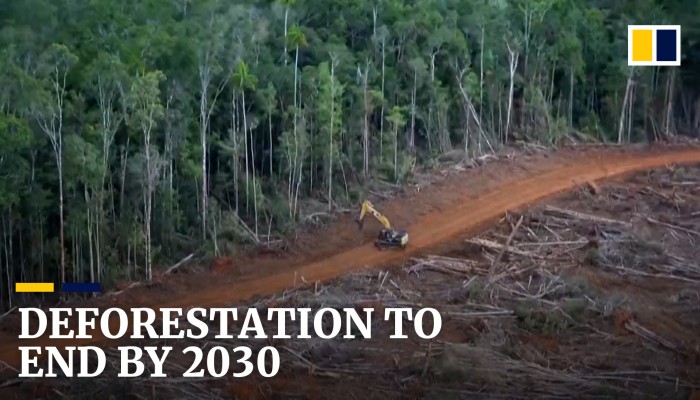
- Illegal logging for timber and charcoal.
- Clear‑cutting for pasture expansion, especially for beef.
- Conversion to soy and other cash crops.
Underlying Drivers
- Global demand for beef and soy, driven by rising incomes in China, the EU, and the United States.
- Weak land‑title enforcement in frontier municipalities.
- Infrastructure projects (roads, dams) that open remote areas to market access.
Amplifying Factors
- Climate‑induced droughts that increase fire susceptibility.
- Economic incentives that favor short‑term land clearing over long‑term forest stewardship.
Environmental and Human Impacts
Environmental Impacts
Deforestation releases stored carbon, contributing an estimated 0.5 Gt CO₂ yr⁻¹ to global emissions, according to the IPCC. Habitat loss threatens endemic species such as the jaguar (*Panthera onca*) and the pink river dolphin (*Inia geoffrensis*). Reduced canopy cover alters regional rainfall patterns, decreasing river discharge that supports downstream agriculture.
Human Health and Social Impacts
Air quality deteriorates during forest fires, raising respiratory illness risk for nearby communities. Indigenous peoples lose cultural sites and traditional livelihoods when forest cover shrinks, amplifying social vulnerability.
Economic and Infrastructure Impacts
While agricultural expansion can boost short‑term income, it often leads to soil degradation and lower long‑term productivity. Conversely, ecotourism and sustainable timber generate stable revenue streams that depend on forest preservation.
Regional Differences
Deforestation pressure is highest in the Brazilian states of Pará and Mato Grosso, where cattle ranching and soy cultivation dominate. In contrast, the Peruvian and Colombian Amazon portions have lower rates, partly because larger fractions are under indigenous tenure and experience less road development. These regional patterns illustrate how governance, market access, and land‑use history shape outcomes.
What Scientists Know With High Confidence
- The Amazon stores over 100 billion tonnes of carbon, making forest loss a major climate feedback.
- Indigenous-managed lands have significantly lower deforestation rates than adjacent non‑indigenous lands.
- Satellite‑based monitoring reliably detects clear‑cutting larger than 6 ha within days.
- Global demand for beef and soy is a primary economic driver of forest conversion.
What Remains Uncertain
Key uncertainties include the magnitude of future climate‑driven droughts, the resilience of forest carbon stocks under repeated fire events, and the political durability of enforcement mechanisms. Better long‑term ground‑based monitoring and integrated climate‑vegetation models are needed to narrow these gaps.
Common Misconceptions
Misconception: The 60% drop means the Amazon is safe from further loss.
Reality: The reduction reflects a slower rate, not the elimination of deforestation. Ongoing pressures could reverse the trend if enforcement wanes.
Misconception: Only illegal logging drives deforestation.
Reality: Legal agricultural expansion, especially for cattle and soy, accounts for the majority of forest conversion in recent years.
Misconception: Reforestation alone can offset all emissions from past clearing.
Reality: Young plantations store far less carbon than mature rainforest and cannot replace the biodiversity and hydrological functions of intact forest.
Solutions and Limitations
Effective strategies combine prevention, mitigation, and restoration:
- Enhanced law enforcement: Increases compliance but requires sustained funding and political will.
- Payment for ecosystem services (PES): Directs financial incentives to landowners who preserve forest, yet scaling PES is challenged by budget constraints.
- Supply‑chain traceability: Blockchain tools can verify sustainable sourcing, but adoption is uneven across small‑holder producers.
- Agricultural intensification: Higher yields on existing fields reduce frontier pressure, but may increase fertilizer runoff if not managed.
- Restoration of degraded lands: Offers carbon sequestration potential, yet restored areas often lack the full biodiversity of primary forest.
What Individuals, Communities, and Governments Can Do
What Individuals Can Do
Choose certified sustainable products (e.g., FSC timber, RSPO palm oil), support NGOs that work with Amazon communities, and advocate for transparent supply‑chain labeling.
What Communities and Organizations Can Do
Develop community‑led monitoring using low‑cost drones, expand agroforestry training, and create local ecotourism enterprises that tie income to forest health.
What Governments Can Do
Maintain and strengthen the Forest Code, allocate budget for satellite‑based enforcement, expand recognition of indigenous territories, and incentivize sustainable commodity certification through tax benefits.
What Businesses and Industries Can Do
Implement zero‑deforestation commitments verified by third‑party audits, invest in supply‑chain traceability, and fund reforestation projects that prioritize native species.
Closing Synthesis
The 60% decline in Amazon deforestation rates demonstrates that policy, technology, and market shifts can produce measurable environmental gains. High‑confidence science confirms the forest’s role in climate regulation and biodiversity preservation, while uncertainties about climate stressors and political continuity highlight the fragility of the trend. Sustainable outcomes will depend on integrating enforcement, economic incentives, and community stewardship at scale, rather than relying on any single measure. By aligning actions across individuals, businesses, and governments, the Amazon’s protective functions can be maintained for generations to come.
Frequently Asked Questions
What does a 60% reduction in Amazon deforestation actually mean?
It means that the annual rate at which forest is cleared dropped by about 60% between 2012 and 2022, based on satellite data from Brazil’s National Institute for Space Research (INPE).
Which factors have contributed most to the recent decline in deforestation?
Stronger law enforcement, real‑time satellite monitoring, recognition of indigenous territories, and growing markets for certified sustainable commodities are the primary contributors.
Is the Amazon’s carbon storage capacity affected by the recent deforestation trend?
Yes. The forest stores over 100 billion tonnes of carbon, so any loss releases CO₂. The recent slowdown helps keep that carbon locked in, but continued loss would still threaten climate regulation.
What are the biggest risks that could reverse the decline in deforestation?
Rising global demand for beef and soy, political shifts that weaken enforcement, and climate‑driven droughts that increase fire risk are the most significant threats.
How can individuals help sustain the reduction in Amazon deforestation?
Individuals can choose certified sustainable products, support NGOs working with Amazon communities, and advocate for transparent supply‑chain labeling that discourages illegal forest clearing.






Leave a Comment