
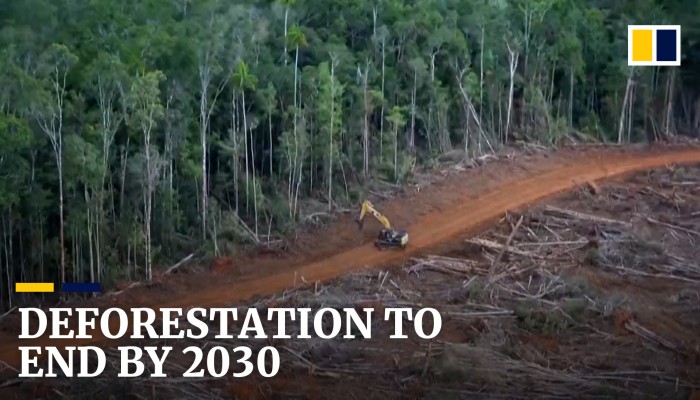
At COP26, 100 nations pledged to halt deforestation by 2030, a target that could curb climate change, protect biodiversity, and secure ecosystem services if backed by robust policies, financing, and inclusive governance.
Quick Answer
The 100‑country pledge announced at COP26 commits signatories to eliminate net forest loss by 2030 through legal safeguards, financial incentives, and monitoring systems. Scientific evidence shows that forests store roughly 30% of terrestrial carbon and that deforestation contributes about 10% of global greenhouse‑gas emissions, so stopping loss would meaningfully aid climate mitigation. However, the pledge’s success depends on national capacity, enforcement, and alignment of economic interests, making its outcome uncertain but plausible if key barriers are addressed.
Key Takeaways
- Forests cover ~30% of Earth’s land and sequester billions of tonnes of CO₂ each year.
- The 2020 tropical tree‑cover loss was 25 million acres, underscoring the urgency of the 2030 target.
- Economic incentives such as Payments for Ecosystem Services (PES) and sustainable agroforestry are central to shifting land‑use decisions.
- Strong governance, transparent monitoring, and the inclusion of Indigenous peoples increase the likelihood of meeting the pledge.
- Uncertainties remain around financing mechanisms, enforcement capacity, and the ability to balance development pressures with conservation.
What Is 100 Countries Pledge to End Deforestation by 2030 at COP26—Will It Work?
The pledge is a collective, non‑binding political commitment made by 100 governments during the United Nations Climate Change Conference (COP26) in Glasgow, Scotland, in November 2021. It obliges signatories to achieve “zero net deforestation” by the end of 2030, meaning that any forest loss must be balanced by an equal amount of forest gain through protection, restoration, or re‑planting. The pledge differs from earlier voluntary statements because it is linked to the United Nations Framework Convention on Climate Change (UNFCCC) reporting cycle and is meant to be tracked through national forest‑monitoring systems.
How Does It Work?
Implementing the pledge involves several interlocking steps that operate across ecological and socio‑economic systems.
1. Legal and Policy Frameworks
- Countries adopt or strengthen laws that prohibit illegal logging and land‑clearing for agriculture.
- Nationally Determined Contributions (NDCs) are updated to include forest‑related targets and financing plans.
2. Financial Incentives
- Payments for Ecosystem Services (PES) reward landholders for maintaining forest carbon stocks.
- Carbon markets can generate revenue by selling verified forest‑based emissions reductions.
- International climate funds (e.g., Green Climate Fund) provide grants for community‑based conservation.
3. Monitoring, Reporting, and Verification (MRV)
- Satellite imagery (e.g., NASA’s Landsat, ESA’s Sentinel) tracks canopy cover in near‑real time.
- Ground‑based inventories validate remote‑sensing data and assess forest carbon density.
- Public dashboards increase transparency and enable civil‑society oversight.
4. Stakeholder Engagement
- Indigenous peoples and local communities are granted secure land tenure and decision‑making authority.
- Private sector actors adopt zero‑deforestation supply‑chain policies.
- Multi‑stakeholder platforms coordinate actions across ministries, NGOs, and businesses.
What Does the Evidence Show?
Multiple lines of evidence converge on the importance of forest protection for climate mitigation. The Intergovernmental Panel on Climate Change (IPCC) Fifth Assessment Report (2014) identified forests as the largest terrestrial carbon sink, accounting for roughly 10 Gt C yr⁻¹. More recent systematic reviews (e.g., Griscom et al., 2021, *Science*) estimate that halting deforestation could avoid up to 10 Gt CO₂ eq yr⁻¹, equivalent to about one‑third of current global emissions. Long‑term monitoring by the Food and Agriculture Organization (FAO) shows that countries with strong tenure security experience 30‑40 % lower deforestation rates than those without. Conversely, case studies in Brazil and Indonesia illustrate that policy roll‑backs can trigger rapid forest loss, confirming the causal link between governance and outcomes.
Main Causes or Drivers
Direct Causes
- Commercial agriculture expansion (e.g., soy, palm oil, cattle ranching).
- Timber extraction for domestic and export markets.
- Infrastructure development such as roads and mining concessions.
Underlying Drivers
- Global commodity demand and price volatility that incentivise land conversion.
- Weak land‑use planning and fragmented land tenure.
- Limited fiscal capacity for enforcement and monitoring.
- Population growth and rural‑urban migration increasing pressure on forest fringes.
Environmental and Human Impacts
Environmental Impacts
Deforestation releases stored carbon, reduces evapotranspiration, and alters regional rainfall patterns, contributing to a feedback loop that can accelerate climate change. Biodiversity loss follows as habitat fragmentation drives species toward extinction; the World Wildlife Fund (2022) reports that 68 % of threatened vertebrates depend on forest ecosystems. Soil erosion and water‑quality degradation often accompany forest clearing, affecting downstream agriculture and fisheries.
Human Health and Social Impacts
Air quality declines when tree cover is removed, increasing respiratory disease risk in nearby communities. Loss of forest‑derived medicines and food sources weakens livelihoods, especially for Indigenous peoples who derive ≈80 % of their protein from forest resources. Economic displacement can trigger migration to urban centers, straining infrastructure and social services.
Economic and Infrastructure Impacts
While short‑term profits from timber or agriculture can boost GDP, the long‑term loss of ecosystem services—such as pollination, water regulation, and carbon sequestration—represents a hidden cost that can outweigh immediate gains. The World Bank estimates that ecosystem‑service losses amount to 4–5 % of global GDP annually.
Regional Differences
Deforestation dynamics vary markedly across continents. In the Amazon basin, road expansion and cattle ranching are primary drivers, whereas in Southeast Asia, palm‑oil plantations dominate. Sub‑Saharan Africa faces a mix of small‑scale shifting agriculture and charcoal production. High‑latitude boreal forests experience loss mainly from logging and climate‑induced fire regimes. These patterns imply that policy mixes must be tailored to local drivers and governance contexts.
What Scientists Know With High Confidence
- Forests act as a major carbon sink, removing roughly 2.6 Gt C per year from the atmosphere.
- Deforestation contributes about 10 % of global anthropogenic greenhouse‑gas emissions.
- Secure land tenure and community‑managed forests consistently reduce deforestation rates.
- Satellite‑based MRV systems can detect forest loss of >30 m² with a latency of <30 days.
What Remains Uncertain
Key uncertainties include the scale of financing needed to operationalise PES schemes in low‑income countries, the effectiveness of voluntary corporate zero‑deforestation pledges without enforceable standards, and how climate‑induced disturbances (e.g., drought‑driven fires) may offset gains from protection. Data gaps also persist in measuring below‑ground carbon stocks and in tracking illegal logging that occurs under forest canopy.
Common Misconceptions
Misconception: Planting trees alone can reverse deforestation.
Reality: Tree planting adds biomass but does not replace the complex ecological functions of mature forests, nor does it address the carbon released by past clearing. Restoration can complement protection but cannot substitute for stopping new loss.
Misconception: The 2030 pledge is a legally binding treaty.
Reality: The commitment is politically voluntary; compliance relies on national legislation, reporting, and international peer pressure rather than enforceable legal mechanisms.
Misconception: All forest loss is driven by illegal activities.
Reality: A substantial portion of clearing is legally sanctioned for agriculture or infrastructure, especially where land‑use policies prioritize economic development over conservation.
Solutions and Limitations
Effective strategies fall into several categories, each with trade‑offs.
- Prevention: Strengthening land‑use planning and enforcing anti‑logging laws can curb new loss, but requires political will and resources for patrols.
- Mitigation: Integrating forests into carbon‑market mechanisms can generate finance, yet market volatility and verification challenges limit reliability.
- Restoration: Large‑scale reforestation projects increase carbon stocks, but success depends on species selection, soil suitability, and long‑term maintenance.
- Indigenous stewardship: Recognising Indigenous land rights yields low‑deforestation outcomes, but must be paired with capacity‑building and respect for cultural autonomy.
- Private‑sector engagement: Zero‑deforestation commitments can shift supply chains, yet without third‑party audits they risk green‑washing.
All approaches require sustained financing, transparent monitoring, and equitable benefit sharing to avoid unintended social or ecological harms.
What Individuals, Communities, and Governments Can Do
What Individuals Can Do
- Choose certified sustainable products (e.g., FSC timber, RSPO palm oil) to reduce demand for forest‑destructive commodities.
- Support NGOs that fund community‑based forest monitoring or PES schemes.
- Advocate for stronger forest policies through voting, petitions, or public comment periods.
What Communities and Organizations Can Do
- Develop community forest management plans that combine sustainable harvesting with conservation.
- Utilise participatory mapping tools to document customary land boundaries.
- Partner with academic institutions to implement citizen‑science forest‑monitoring projects.
What Governments Can Do
- Enact and enforce clear land‑tenure laws that recognise Indigenous and local rights.
- Allocate budgetary resources for satellite‑based MRV and forest‑ranger training.
- Integrate forest protection targets into NDCs and link them to climate‑finance disbursements.
What Businesses and Industries Can Do
- Adopt transparent, science‑based zero‑deforestation policies with third‑party verification.
- Invest in supply‑chain traceability technologies (e.g., blockchain) to certify forest‑friendly sourcing.
- Provide financial support for on‑the‑ground conservation projects in their operating regions.
Closing Synthesis
The 100‑country pledge represents a historic convergence of climate and forest policy, offering a pathway to curb a major source of emissions and safeguard biodiversity. Scientific evidence confirms that protecting existing forests yields immediate climate benefits, while the inclusion of Indigenous stewardship and robust MRV systems strengthens implementation prospects. Nevertheless, uncertainties around financing, enforcement capacity, and the balance between development and conservation mean the pledge’s success is not guaranteed. Realising the 2030 goal will require coordinated action across legal reforms, economic incentives, community empowerment, and transparent monitoring. If these elements align, the pledge could become a cornerstone of global climate mitigation and a model for future nature‑based commitments.
Frequently Asked Questions
What does the 2030 deforestation pledge aim to achieve?
The pledge commits signatory countries to achieve zero net forest loss by 2030, meaning any forest cleared must be balanced by an equal amount of forest restoration or protection, thereby reducing carbon emissions and preserving biodiversity.
How does deforestation contribute to global greenhouse‑gas emissions?
Deforestation releases stored carbon from trees, accounting for roughly 10 % of total anthropogenic greenhouse‑gas emissions. Stopping forest loss would therefore cut a significant source of CO₂ that would otherwise enter the atmosphere.
Why are Indigenous peoples important for meeting the pledge?
Indigenous communities often manage forests sustainably; studies show that lands under Indigenous stewardship have 30‑40 % lower deforestation rates, making their rights and participation critical for effective forest protection.
What are the main financial tools used to support forest conservation?
Key tools include Payments for Ecosystem Services (PES), which reward landowners for maintaining forest carbon, and carbon‑market mechanisms that sell verified emissions reductions from avoided deforestation.
Can planting trees replace the need to stop deforestation?
No. Tree planting adds new biomass but does not restore the complex ecological functions of mature forests or reverse the carbon released by past clearing; protecting existing forests remains essential.







Leave a Comment