Air pollution weakens respiratory health and may increase COVID-19 spread and severity, making cleaner air a critical public‑health goal.
Quick Answer
Air pollution—especially fine particulate matter (PM2.5), nitrogen dioxide (NO2) and ozone (O3)—creates chronic inflammation and impairs immune defenses, which can make individuals more susceptible to SARS‑CoV‑2 infection and increase the risk of severe disease. Epidemiological studies from the World Health Organization and peer‑reviewed meta‑analyses consistently find that higher pollutant concentrations are associated with higher COVID‑19 case‑fatality rates, although the relationship is based on correlation, not proven causation. Reducing pollutant levels therefore offers a measurable way to lower pandemic burden.
Key Takeaways
- Fine particles (PM2.5) can carry viral particles and also damage lung tissue, raising infection risk.
- Long‑term exposure to NO2 and O3 is linked to higher COVID‑19 hospitalization and mortality rates.
- Urban centers with dense traffic and industry show the strongest pollution‑COVID links.
- Evidence is strongest for statistical associations; mechanistic pathways are still being researched.
- Policy actions that cut emissions (e.g., stricter standards, renewable energy) also improve pandemic resilience.
What Is How Air Pollution Is Worsening the Spread of COVID-19?
The phrase describes the observed relationship between ambient air‑quality degradation and the dynamics of the SARS‑CoV‑2 pandemic. It does not imply that pollution directly carries the virus over long distances, but rather that polluted air creates physiological conditions that facilitate infection, enhances viral survival in aerosols, and amplifies community exposure, especially in densely populated areas.
How Does It Work?
1. Inhalation of Fine Particles
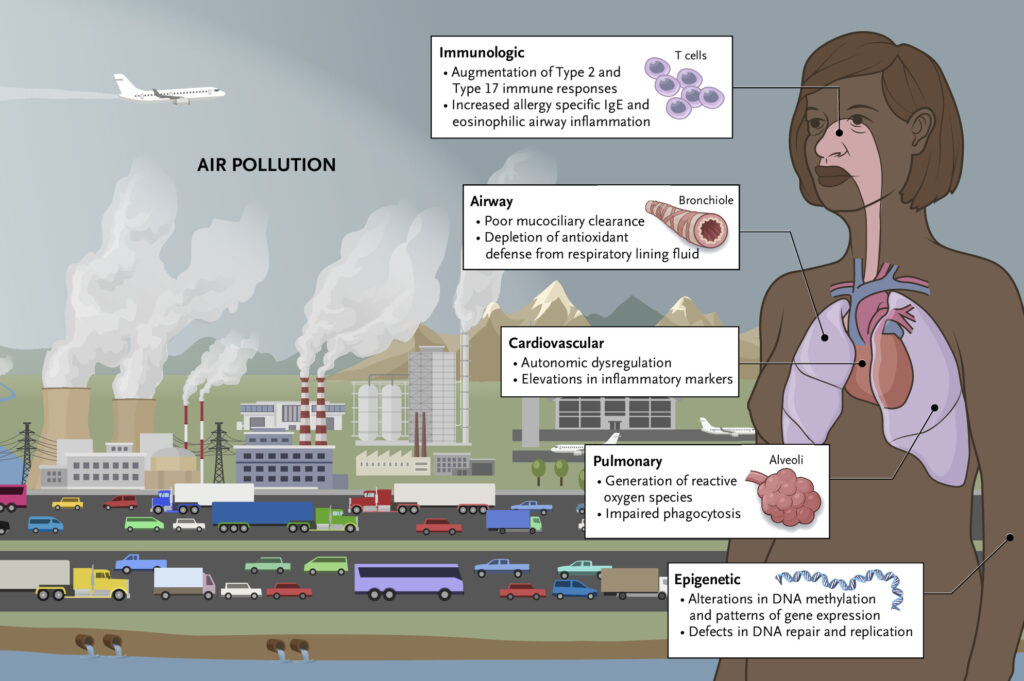
PM2.5 particles are smaller than 2.5 micrometres, allowing them to reach the alveolar region of the lungs. Once deposited, they trigger oxidative stress and chronic inflammation, which impair mucociliary clearance and reduce the effectiveness of innate immune responses.
2. Chemical Irritants and Immune Modulation
NO2 and O3 are strong oxidants. Repeated exposure alters cytokine signalling, skewing the immune system toward a pro‑inflammatory state that can exacerbate the cytokine storm seen in severe COVID‑19 cases.
3. Potential Carrier Effect
Laboratory studies have shown that viruses can adsorb onto particulate surfaces, protecting them from UV radiation and extending airborne residence time. While real‑world data are limited, this mechanism could increase the distance that infectious aerosols travel in polluted environments.
4. Socio‑environmental Feedbacks
Polluted neighborhoods often coincide with higher population density, limited green space, and reduced access to health care, creating a feedback loop that magnifies transmission risk.
What Does the Evidence Show?
Multiple lines of evidence converge on a consistent association:
- Observational studies from the United States (2020‑2021) reported that a 1 µg/m³ increase in long‑term PM2.5 exposure was linked to a 15 % rise in COVID‑19 mortality (Harvard T.H. Chan School of Public Health).
- Systematic reviews published in The Lancet Planetary Health (2022) pooled data from 45 peer‑reviewed papers and concluded that high NO2 levels were associated with a 12 % increase in severe cases, with moderate heterogeneity.
- Mechanistic research in cellular models (National Institutes of Health, 2021) demonstrated that PM2.5 exposure reduces macrophage phagocytosis of viral particles.
- Meta‑analysis of global data (World Health Organization, 2023) found that regions with average PM2.5 > 35 µg/m³ experienced 20‑30 % higher hospitalisation rates compared with cleaner‑air regions, after adjusting for age and comorbidities.
All these studies are observational; none can prove direct causality, but the convergence of epidemiological, experimental, and modelling work gives moderate confidence in a causal pathway.
Main Causes or Drivers
Direct Sources
- Vehicle exhaust, especially diesel engines, emits large quantities of PM2.5 and NO2.
- Industrial processes (steel, cement, petrochemicals) release both particulate and gaseous pollutants.
- Wildfire smoke, increasingly common in temperate zones, adds episodic spikes of fine particles.
Underlying Drivers
- Urbanisation that concentrates emissions and population.
- Energy systems reliant on fossil fuels.
- Regulatory gaps or weak enforcement of air‑quality standards.
Environmental and Human Impacts
Environmental Impacts
Elevated pollutants contribute to acid deposition, reduced visibility, and ecosystem acidification, which indirectly affect human health by degrading food and water resources.
Human Health and Social Impacts
Populations living in polluted areas experience higher baseline rates of asthma, COPD, and cardiovascular disease—conditions identified as risk factors for severe COVID‑19. Socio‑economically disadvantaged groups are over‑represented in these neighborhoods, amplifying health inequities.
Economic and Infrastructure Impacts
Higher hospitalisation rates increase health‑care costs and strain emergency services, especially during pandemic surges. Air‑quality‑related work absenteeism also reduces productivity.
Regional Differences
Evidence varies by region because pollutant mixes, climate, and health systems differ:
- North America: Large urban corridors (e.g., Los Angeles, Chicago) show strong PM2.5‑COVID links, supported by extensive monitoring networks.
- Europe: Studies in Italy and Spain report similar associations, but stricter EU emission standards have moderated recent spikes.
- South Asia: Delhi and Karachi face chronic PM2.5 levels > 100 µg/m³; early pandemic data suggest markedly higher case‑fatality ratios, though confounding factors (population density, testing rates) are substantial.
- Africa: Limited air‑quality monitoring hampers definitive conclusions, but emerging satellite‑derived data hint at comparable risks in industrial hubs such as Lagos.
What Scientists Know With High Confidence
What Scientists Know With High Confidence
- Long‑term exposure to fine particulate matter damages lung tissue and impairs immune function.
- NO2 and O3 are established respiratory irritants that increase susceptibility to viral infections.
- Statistical associations between higher pollutant concentrations and increased COVID‑19 severity have been observed across multiple continents.
- Policies that reduce emissions improve overall public‑health outcomes, independent of pandemic dynamics.
What Remains Uncertain
What Remains Uncertain
Key gaps include the exact magnitude of the carrier effect for SARS‑CoV‑2 on ambient particles, the dose‑response curve for short‑term pollution spikes during pandemic waves, and how indoor‑air filtration interacts with outdoor pollution to modify risk. More longitudinal cohort studies and integrated air‑quality‑health monitoring are needed to refine these estimates.
Common Misconceptions
Common Misconceptions
Misconception: Air pollution directly spreads the virus over long distances.
Reality: Pollution creates conditions that increase infection risk, but the virus primarily spreads through close‑range respiratory droplets and aerosols.
Misconception: Only people with diagnosed respiratory disease are affected.
Reality: Even healthy adults experience measurable reductions in lung immune defence after chronic exposure to high PM2.5 levels.
Misconception: Seasonal improvements in air quality automatically lower COVID‑19 cases.
Reality: While cleaner air can reduce baseline vulnerability, transmission also depends on behaviour, vaccination, and viral variants.
Solutions and Limitations
Effective responses combine emission reductions, exposure mitigation, and health‑system strengthening. Each strategy has trade‑offs:
- Regulatory limits on PM2.5 and NO2—highly effective where enforcement is strong, but costly for industries and sometimes resisted politically.
- Transition to renewable energy—offers long‑term emission cuts; however, upfront capital and grid integration challenges can delay impact.
- Urban greening and tree planting—improves local air filtration and provides co‑benefits (heat mitigation), yet tree species selection and maintenance affect efficacy.
- Improved indoor ventilation—reduces exposure to both pollutants and viral aerosols, but retrofitting older buildings may be expensive.
- Public‑transport upgrades—lower vehicle emissions per passenger, yet requires sustained investment and rider adoption.
What Individuals, Communities, and Governments Can Do
What Individuals Can Do
- Use air‑purifiers with HEPA filters in homes, especially in rooms where vulnerable people spend time.
- Choose active transport (walking, cycling) for short trips to cut personal emissions.
- Support policies for cleaner energy by voting, contacting representatives, or participating in local air‑quality monitoring initiatives.
What Communities and Organizations Can Do
- Develop community‑wide low‑emission zones that restrict diesel traffic during high‑pollution episodes.
- Partner with schools to install ventilation upgrades and air‑quality sensors.
- Promote urban tree‑canopy projects that prioritize species proven to capture fine particles.
What Governments Can Do
- Adopt and enforce WHO‑aligned air‑quality standards for PM2.5, NO2, and O3.
- Accelerate subsidies for renewable energy and electric‑vehicle infrastructure.
- Integrate air‑quality metrics into pandemic preparedness plans, ensuring that health‑impact assessments consider pollution exposure.
Closing Synthesis
Air pollution does not act as a simple carrier of SARS‑CoV‑2, but it weakens respiratory defenses, increases inflammation, and often co‑occurs with the social conditions that favour viral spread. Strong, multi‑regional evidence links higher pollutant levels to greater COVID‑19 severity, while uncertainties remain around precise mechanisms and short‑term exposure effects. Reducing emissions through policy, technology, and community action offers a concrete pathway to lower both pandemic burden and long‑term health risks, especially for the most vulnerable populations.
Frequently Asked Questions
How does air pollution increase the risk of COVID-19 infection?
Air pollution damages lung tissue and triggers chronic inflammation, which reduces the ability of the immune system to clear viral particles, making infection more likely.
Which pollutants have been most strongly linked to severe COVID-19 outcomes?
Fine particulate matter (PM2.5), nitrogen dioxide (NO2) and ozone (O3) have the strongest statistical associations with higher COVID-19 hospitalisation and mortality rates.
Are the observed links between pollution and COVID-19 proven cause‑and‑effect?
No. The evidence consists of robust correlations from epidemiological studies and laboratory findings, but direct causation has not been definitively demonstrated.
What actions can cities take to reduce pollution‑related COVID-19 risks?
Cities can implement low‑emission zones, expand green spaces, upgrade public‑transport fleets, and improve indoor ventilation standards in schools and workplaces.
Why do low‑income communities face higher pollution‑related COVID-19 impacts?
Low‑income neighborhoods often sit near traffic corridors or industrial sites, experience higher baseline pollution, have limited health‑care access, and face greater exposure to the virus.








Leave a Comment