
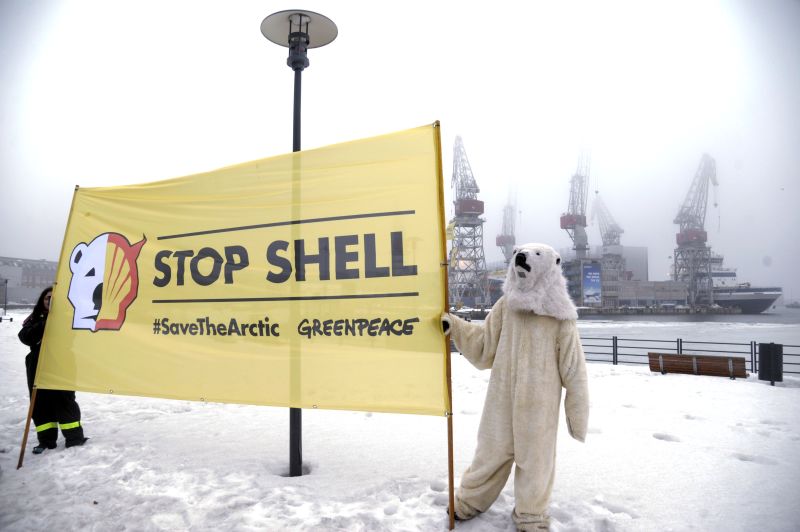
Activists in Norway have filed a court challenge to stop oil drilling in the Arctic, arguing that the projects threaten fragile ecosystems, indigenous livelihoods, and global climate goals.
Quick Answer
The Norwegian activists are using the judicial system to contest permits for offshore oil drilling in the Arctic, asserting that the projects violate constitutional environmental protections and international climate commitments. The legal case hinges on scientific evidence of rapid Arctic warming, the risk of oil spills, and the rights of indigenous Sami communities. While the courts must balance economic arguments with environmental law, the prevailing scientific consensus indicates that continued drilling would exacerbate climate change and biodiversity loss. Uncertainty remains around the exact magnitude of future spill risks and the court’s willingness to prioritize long‑term climate goals over short‑term revenue.
Key Takeaways
- Arctic temperatures are rising roughly twice as fast as the global average, intensifying ecological vulnerability.
- Norwegian law requires the government to protect the environment and uphold indigenous rights, which activists claim the drilling permits breach.
- Potential oil spills in icy waters could cause long‑lasting damage to marine life, fisheries, and tourism.
- Legal outcomes may set precedents for climate‑related litigation worldwide.
- Transitioning to renewable energy and expanding protected marine areas are considered the most effective long‑term mitigation strategies.
What Is Activists Push Court Challenge Against Arctic Oil Drilling in Norway?
The court challenge is a formal legal action initiated by a coalition of Norwegian environmental NGOs, Sami representatives, and scientific experts. It seeks to halt the issuance of exploration and production licenses for offshore oil fields located north of the Arctic Circle, such as the Barents Sea projects approved in the 2020s. The activists argue that the permits conflict with Norway’s constitution, the Climate Act of 2017, and Norway’s commitments under the Paris Agreement. Unlike general protest, this approach uses existing environmental statutes and international law to demand judicial review of the government’s decision‑making process.
How Does It Work?
Legal Process
- Activists file a petition with the Oslo District Court alleging violations of constitutional environmental provisions.
- The court reviews the petition, requests evidence from the Ministry of Petroleum and Energy, and may appoint expert witnesses.
- A hearing is scheduled where both sides present scientific data, economic analyses, and legal arguments.
- The court issues a ruling that can suspend permits, require additional environmental impact assessments, or uphold the licences.
Oil Extraction Pathway
- Exploration involves seismic surveys that can disturb marine mammals.
- If commercial reserves are confirmed, drilling rigs are installed on the seabed or as floating platforms.
- Produced oil is piped to on‑shore facilities for processing and export.
- Throughout operations, the risk of accidental spills or leaks remains, especially in ice‑covered waters where containment is difficult.
Environmental Impact Pathways
- Increased greenhouse‑gas emissions from extracted oil contribute to global warming.
- Physical disturbances and noise affect Arctic species such as polar bears, seals, and migratory birds.
- Potential oil spills can coat sea ice, impair photosynthesis, and enter the food web.
- Infrastructure development may fragment traditional Sami hunting grounds and affect water quality for coastal communities.
What Does the Evidence Show?
Long‑term monitoring by the Norwegian Meteorological Institute and the Arctic Monitoring and Assessment Programme (AMAP) confirms that average surface temperatures in the Barents Sea region have risen about 2 °C since 1990, roughly double the global mean (IPCC, 2021). Satellite data reveal a consistent loss of multi‑year sea ice, reducing natural barriers that would otherwise limit oil spill spread. Peer‑reviewed studies published in *Nature Climate Change* (2020) indicate that each additional gigaton of Arctic oil production could add 0.04 °C to global average warming by 2100 under high‑emission scenarios. Field observations show that oil residues persist on ice for months, increasing toxicity to benthic organisms (NOAA, 2019). Together, these lines of evidence suggest that new Arctic drilling would amplify climate change and pose serious ecological risks.
Main Causes or Drivers
Economic Incentives
Norway’s petroleum sector contributes roughly 15 % of national GDP and provides high‑paying jobs, creating strong political pressure to expand extraction into newly accessible Arctic areas.
Energy Demand and Export Markets
European demand for low‑carbon‑intensity fuels has driven interest in Arctic oil as a bridge to a renewable future, despite growing consensus on the need to leave most fossil reserves un‑burned.
Policy Framework
National legislation permits drilling if a project passes a cost‑benefit analysis that includes environmental impact assessments, but critics argue that climate‑related costs are under‑weighted.
Accelerating Climate Change
Warming temperatures melt sea ice, opening previously inaccessible offshore basins and reducing operational costs for drilling companies.
Environmental and Human Impacts
Environmental Impacts
Potential oil spills in icy waters can spread under ice cover, making clean‑up extremely challenging. Modeling by the International Maritime Organization (2022) estimates that a 10‑kilometer spill could affect up to 1,200 km of coastline in the Barents Sea. Increased greenhouse‑gas emissions from new extraction would undermine Norway’s climate targets and contribute to global sea‑level rise, threatening low‑lying coastal regions worldwide.
Human Health and Social Impacts
Indigenous Sami communities rely on reindeer herding, fishing, and hunting, all of which could be disrupted by habitat degradation and pollution. Exposure to oil‑related contaminants has been linked to respiratory and skin irritation in nearby populations (European Environment Agency, 2020).
Economic and Infrastructure Impacts
While drilling promises job creation and tax revenue, it also risks harming Norway’s growing eco‑tourism sector, which generated over NOK 12 billion in 2021 (Statistics Norway). A major spill could lead to costly remediation, legal liabilities, and loss of international reputation.
Regional Differences
The Norwegian Arctic differs from the Canadian or Russian Arctic in several ways. Norway has a robust environmental review system and a constitution that explicitly protects nature, giving activists a stronger legal foothold. In contrast, the Russian Arctic has fewer public participation mechanisms, and the Canadian Arctic has seen recent moratoria on new offshore drilling. Nonetheless, all Arctic regions share rapid warming, loss of sea ice, and similar biodiversity concerns, making the Norwegian case a bellwether for broader geopolitical debates.
What Scientists Know With High Confidence
- The Arctic is warming at roughly twice the global average rate, leading to sea‑ice decline and permafrost thaw.
- Oil extraction releases CO₂ and methane, both potent greenhouse gases that contribute to global warming.
- Oil spills in cold, ice‑covered waters are more difficult to contain and have longer ecological persistence than in temperate seas.
- Indigenous peoples in the Arctic depend on intact ecosystems for cultural, nutritional, and economic well‑being.
What Remains Uncertain
Key uncertainties include the exact probability and scale of a large‑scale oil spill in Arctic conditions, the cumulative climate impact of multiple small‑scale projects, and how future court decisions will interpret Norway’s climate‑related constitutional provisions. Improved basin‑specific spill modeling and long‑term health monitoring of nearby communities would help reduce these gaps.
Common Misconceptions
Misconception: Arctic oil drilling is essential for Norway’s energy security.
Reality: Norway already imports the majority of its electricity from renewable hydropower and wind. Oil extraction primarily serves export markets, not domestic energy needs.
Misconception: A single oil spill would be harmless because the ocean can dilute it.
Reality: In cold, low‑energy Arctic waters, oil can remain on the surface or become trapped under ice for months, causing prolonged exposure to marine life.
Misconception: Legal challenges delay progress but do not affect outcomes.
Reality: Judicial rulings can force stricter environmental assessments, limit project scopes, or even cancel licences, influencing industry investment decisions.
Solutions and Limitations
Effective responses combine policy, technology, and societal change. Establishing marine protected areas (MPAs) in ecologically sensitive zones can legally block drilling, but MPAs require robust enforcement and international cooperation. Accelerating Norway’s renewable energy transition reduces economic reliance on oil revenues, yet the shift demands substantial investment and grid upgrades. Strengthening the Climate Act to explicitly require alignment with the Paris 1.5 °C pathway would increase legal scrutiny, but may face political resistance. Finally, improving spill‑response capabilities in ice conditions is technically possible, yet it cannot fully mitigate the inherent risks of operating in such a fragile environment.
What Individuals, Communities, and Governments Can Do
What Individuals Can Do
- Support NGOs that monitor Arctic drilling and provide legal assistance.
- Choose low‑carbon products and advocate for renewable energy policies.
- Engage in public comment periods for environmental assessments when available.
What Communities and Organizations Can Do
- Partner with Sami groups to amplify indigenous voices in policy debates.
- Develop citizen‑science programs that track local wildlife health and water quality.
- Organize awareness campaigns that highlight the link between Arctic drilling and global climate goals.
What Governments Can Do
- Apply the precautionary principle in licensing decisions, requiring full accounting of climate and biodiversity costs.
- Increase funding for renewable energy projects to offset revenue losses from halted drilling.
- Adopt stricter spill‑prevention standards and invest in Arctic‑specific emergency response assets.
Synthesis
The Norwegian activists’ court challenge brings scientific evidence, constitutional law, and indigenous rights together to question the expansion of Arctic oil drilling. Robust data show that the Arctic is warming rapidly, that oil extraction adds greenhouse gases, and that spills in icy waters are especially damaging. While uncertainties remain around spill probabilities and future legal interpretations, the high‑confidence findings provide a strong basis for precautionary action. Solutions such as expanding protected areas, accelerating renewable energy, and tightening climate‑related legislation offer viable pathways, though each carries trade‑offs that require careful governance. Ultimately, the case underscores that protecting the Arctic is not only a regional concern but a critical component of the global effort to limit climate change.
Frequently Asked Questions
What is the main legal basis for the activists' court challenge against Arctic oil drilling in Norway?
The activists rely on Norway’s constitution, the Climate Act of 2017, and the country's commitments under the Paris Agreement, arguing that new drilling licences breach environmental protection and indigenous rights.
How does Arctic warming affect the risk of oil spills?
Rapid Arctic warming reduces sea‑ice cover, exposing open water where oil can spread more easily, and makes spill clean‑up harder because oil can become trapped under remaining ice for months, increasing ecological damage.
What are the potential economic impacts of halting Arctic oil drilling?
Stopping drilling could reduce short‑term tax revenue and job creation in the petroleum sector, but it protects Norway’s growing eco‑tourism industry and avoids costly spill remediation and reputational loss.
Why are indigenous Sami communities central to the court case?
Sami people rely on the Arctic’s land and sea for reindeer herding, fishing, and cultural practices; drilling threatens their livelihoods and infringes on rights protected by Norwegian law and international conventions.
What alternative strategies can reduce Norway’s reliance on Arctic oil?
Investing in renewable energy such as wind and hydropower, expanding marine protected areas, and tightening climate legislation can shift the economy away from fossil‑fuel dependence while preserving Arctic ecosystems.











Leave a Comment