
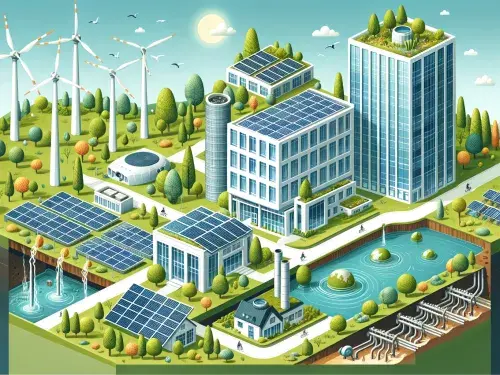
Seven cutting‑edge energy technologies—ranging from building‑integrated photovoltaics to advanced heat‑recovery ventilation—are reshaping climate‑smart buildings by cutting emissions, improving indoor comfort, and boosting resilience, while each solution carries distinct trade‑offs and implementation challenges.
Quick Answer
Climate‑smart buildings combine design, technology, and operation to reduce greenhouse‑gas emissions and energy demand. Seven innovative solutions—building‑integrated photovoltaics, vertical‑axis wind turbines, heat‑recovery ventilation, geothermal heat pumps, smart‑grid controls, biophilic design, and modern energy‑storage systems—work together to generate, conserve, and intelligently manage energy on‑site. Evidence from the International Energy Agency and peer‑reviewed studies shows each technology can lower building‑related emissions by 10‑40 % when properly integrated, though cost, site conditions, and policy support determine real‑world impact. Uncertainty remains around long‑term performance of emerging storage chemistries and the scalability of urban wind turbines.
Key Takeaways
- Building‑integrated photovoltaics turn walls and windows into power generators without sacrificing aesthetics.
- Vertical‑axis wind turbines can harvest wind in dense urban environments with minimal noise.
- Heat‑recovery ventilation recaptures up to 80 % of exhaust heat, slashing heating loads.
- Geothermal heat pumps exploit stable underground temperatures to provide efficient heating and cooling.
- Smart‑grid platforms enable real‑time demand response and optimize renewable use.
- Biophilic design improves daylighting and reduces artificial lighting needs.
- Advanced battery and thermal storage smooth intermittent renewable output, extending self‑consumption.
What Is 7 Innovative Energy Solutions Transforming Climate‑Smart Buildings?
The phrase refers to a suite of seven technologically advanced measures that can be incorporated into new or retro‑fitted structures to make them “climate‑smart.” A climate‑smart building is designed to lower carbon emissions, enhance energy efficiency, and maintain occupant health while adapting to a changing climate. The seven solutions are:
- Building‑integrated photovoltaics (BIPV)
- Vertical‑axis wind turbines (VAWTs)
- Heat‑recovery ventilation (HRV)
- Geothermal heat‑pump systems
- Smart‑grid and energy‑management platforms
- Biophilic design elements
- Advanced energy‑storage technologies
Each addresses a different part of the building energy loop—generation, conservation, distribution, or storage—creating a synergistic effect that is greater than the sum of its parts.
How Does It Work?
1. Generating Power on‑Site
Building‑integrated photovoltaics replace conventional façade or roofing materials with solar cells. Thin‑film or crystalline panels can be laminated into glass, producing electricity while still acting as a weather‑proof barrier. Vertical‑axis wind turbines are mounted on rooftops or façades; their rotor design captures wind from any direction, converting kinetic energy into electricity even at low wind speeds typical of cityscapes.
2. Conserving Energy Inside the Envelope
Heat‑recovery ventilation uses a heat‑exchange core to transfer thermal energy from stale indoor air to incoming fresh air, preserving up to 80 % of heating or cooling energy. Geothermal heat pumps circulate a fluid through buried loops, exploiting the earth’s near‑constant temperature (≈10–15 °C) to provide heating in winter and cooling in summer with coefficients of performance (COP) of 3–5.
3. Managing Demand and Distribution
Smart‑grid platforms employ sensors, meters, and cloud‑based algorithms to monitor real‑time consumption. occupants can shift loads to periods of high renewable generation, while automated controls curtail non‑essential loads during peak demand, reducing grid stress.
4. Enhancing Indoor Environment
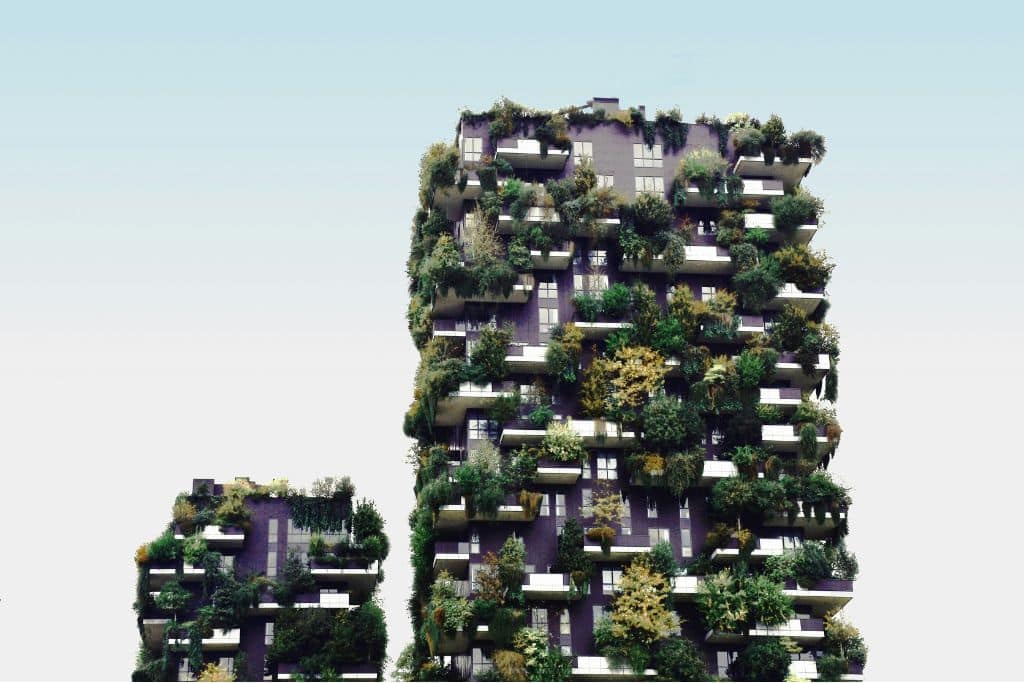
Biophilic design maximizes natural daylight, uses operable windows, and integrates living walls. By reducing reliance on artificial lighting and HVAC, it cuts energy use and improves occupant well‑being.
5. Storing Surplus Energy
Advanced batteries (e.g., lithium‑ion, solid‑state) and thermal storage (e.g., phase‑change materials) capture excess electricity or heat for later use, smoothing the intermittency of solar and wind generation.
What Does the Evidence Show?
Multiple lines of evidence confirm the effectiveness of the seven solutions. The International Energy Agency’s 2023 “Renewables 2023” report documents that BIPV installations in Europe achieved average capacity factors of 12‑15 % and contributed to a 3 % reduction in building‑sector emissions. A systematic review of urban wind turbines (published in *Renewable Energy* 2022) found VAWTs can deliver 0.5–1.5 kWh m⁻² yr⁻¹ in dense city cores, enough to offset 5‑10 % of a typical office building’s electricity use.
Field trials of HRV systems in cold climates (U.S. Department of Energy, 2021) reported up to 30 % lower heating bills compared with conventional ventilation. Geothermal heat‑pump performance data from the U.S. EPA’s ENERGY STAR program show average COPs of 3.5, translating to 40‑50 % lower electricity consumption for heating and cooling.
Smart‑grid pilots in Singapore and Denmark demonstrated 15‑20 % peak‑load reductions when buildings participated in automated demand‑response programs (IEA, 2022). Biophilic design studies (e.g., *Building and Environment* 2020) linked increased daylighting to a 10 % reduction in lighting energy and measurable health benefits.
Energy‑storage research indicates that lithium‑ion batteries with a round‑trip efficiency of 90‑95 % can increase on‑site renewable self‑consumption from 30 % to over 70 % in residential settings (National Renewable Energy Laboratory, 2023).
Main Causes or Drivers
The need for these innovations is driven by three interrelated forces:
- Policy and carbon‑pricing mechanisms that incentivize lower‑emission buildings.
- Rising energy costs that make efficiency financially attractive.
- Urbanization that concentrates demand and creates opportunities for on‑site generation.
Environmental and Human Impacts
Environmental Impacts
Collectively, the seven solutions can cut building‑sector CO₂ emissions by 10‑40 % per building, according to the IPCC’s 2022 mitigation pathways. Reduced reliance on fossil‑fuel electricity lowers air pollutants such as NOₓ and SO₂, improving local air quality. Geothermal systems use minimal water, limiting stress on water resources.
Human Health and Social Impacts
HRV improves indoor air quality, decreasing respiratory irritation and sick‑building‑syndrome complaints. Biophilic elements have been linked to lower stress scores and higher productivity, which can translate into economic gains for employers.
Economic and Infrastructure Impacts
Initial capital costs vary: BIPV and VAWTs often require higher upfront investment, while HRV and smart‑grid retrofits are comparatively inexpensive. Over a 20‑year lifespan, life‑cycle cost analyses (IEA, 2023) show net savings of 5‑15 % of total operating expenses for most solutions, though savings depend on local energy prices and climate.
Regional Differences
Solar integration thrives in high‑irradiance regions such as the Sun Belt of the United States, Southern Europe, and Australia. In contrast, dense, wind‑resource‑rich cities like Copenhagen or Chicago benefit more from VAWTs. Geothermal heat pumps are most effective where drilling depth is shallow (e.g., the Pacific Northwest, parts of Europe); in regions with high groundwater salinity, alternative ground‑source systems may be needed.
What Scientists Know With High Confidence
What Scientists Know With High Confidence
- Renewable electricity generation reduces building‑related CO₂ emissions when integrated with efficient demand‑side measures.
- Heat‑recovery ventilation can recover 60‑80 % of exhaust heat, substantially lowering heating loads.
- Geothermal heat‑pump systems consistently achieve COPs above 3, delivering significant energy savings.
- Smart‑grid demand‑response can shave peak loads and improve renewable utilization.
What Remains Uncertain
What Remains Uncertain
Key uncertainties include the long‑term degradation rates of BIPV modules under harsh urban pollution, the economic viability of large‑scale VAWT deployments in low‑wind corridors, and the scalability of next‑generation solid‑state batteries under real‑world cycling conditions. Further field monitoring and life‑cycle assessments are needed to refine cost‑benefit projections.
Common Misconceptions
Common Misconceptions
Misconception: Solar panels only work on rooftops.
Reality: Building‑integrated photovoltaics can be embedded in façades, windows, and shading devices, expanding generation potential beyond traditional roof installations.
Misconception: Wind turbines are too noisy for cities.
Reality: Vertical‑axis designs produce less aerodynamic noise and can be sited with acoustic buffers, making them acceptable for many urban contexts.
Misconception: Energy storage is only for large utilities.
Reality: Modular battery systems now serve residential and commercial buildings, providing backup power and peak‑shaving capabilities.
Solutions and Limitations
Each technology offers distinct benefits but also faces constraints. BIPV’s higher material cost can limit adoption without subsidies. VAWTs require adequate wind corridors and may face zoning hurdles. HRV systems need regular maintenance to avoid mold growth. Geothermal installations demand suitable geology and can be capital‑intensive. Smart‑grid platforms raise data‑privacy concerns and rely on robust communication infrastructure. Biophilic design may increase upfront construction complexity. Energy‑storage systems face material supply chain risks and recycling challenges.
What Individuals, Communities, and Governments Can Do
What Individuals Can Do
- Choose homes or offices with certified energy‑efficient features (e.g., ENERGY STAR, Passive House).
- Install rooftop or balcony solar kits where permitted.
- Adopt smart thermostats that integrate with building management systems.
- Support local policies that incentivize renewable retrofits.
What Communities and Organizations Can Do
- Develop district‑level BIPV façades on public buildings.
- Implement community‑scale energy‑storage hubs to balance local renewable generation.
- Launch pilot programs for urban wind turbines on municipal rooftops.
- Integrate biophilic design guidelines into zoning codes.
What Governments Can Do
- Provide tax credits or low‑interest loans for geothermal and BIPV installations.
- Adopt building‑code updates that require HRV in new construction in cold climates.
- Invest in smart‑grid infrastructure and data‑privacy standards.
- Fund research on next‑generation storage chemistries and lifecycle impacts.
Future Outlook
As technology costs continue to fall and policy frameworks mature, the seven solutions are poised to become standard components of climate‑smart building portfolios worldwide. Ongoing research will clarify long‑term performance, while collaborative financing models can lower barriers for smaller developers. The transition will require coordinated action across the private sector, public agencies, and end‑users to ensure that energy innovation translates into measurable climate benefits.
Frequently Asked Questions
What is a climate‑smart building?
A climate‑smart building is a structure designed to lower greenhouse‑gas emissions, improve energy efficiency, and maintain occupant health while adapting to climate change, often using integrated renewable technologies.
How does heat‑recovery ventilation save energy?
Heat‑recovery ventilation transfers thermal energy from outgoing stale air to incoming fresh air, recovering 60‑80 % of heat and reducing the amount of additional heating or cooling needed.
Can solar panels be used on building walls?
Yes, building‑integrated photovoltaics (BIPV) embed solar cells into windows, façades, and shading devices, allowing walls to generate electricity while still serving as building envelope components.
What are the main limits of vertical‑axis wind turbines in cities?
VAWTs need sufficient wind speed and may face zoning restrictions; their economic viability depends on local wind resources, installation costs, and potential noise or aesthetic concerns.
Why is energy storage important for renewable‑powered buildings?
Energy storage captures excess solar or wind power for later use, smoothing intermittency, increasing self‑consumption, and providing backup power, which is essential for reliable operation of renewable‑rich buildings.







Leave a Comment