
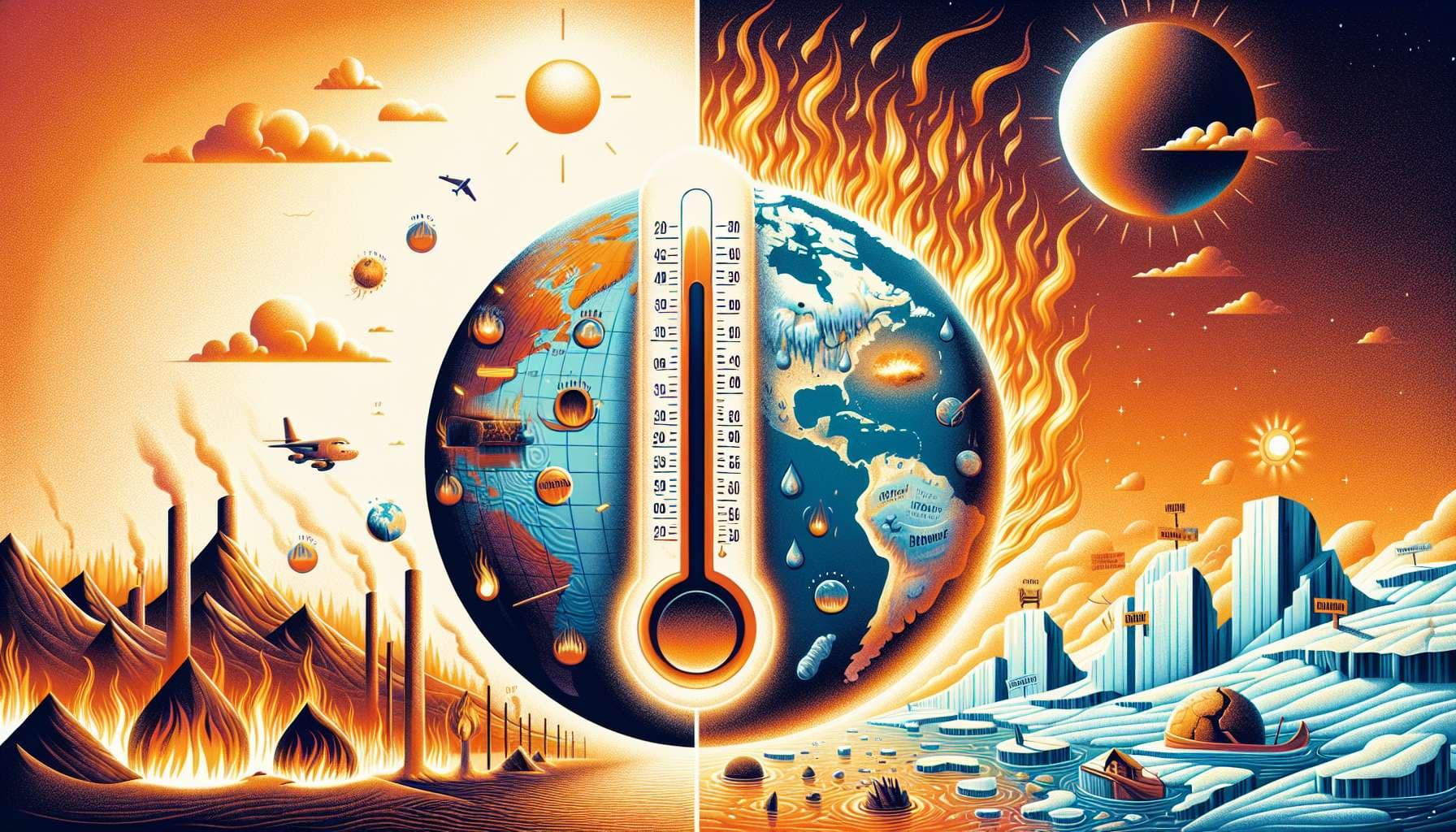
2025 is virtually certain to become the hottest year on record, reflecting a long‑term rise in global temperatures driven by human‑made greenhouse‑gas emissions and signaling widespread environmental and societal impacts.
Quick Answer
Scientific assessments from the Intergovernmental Panel on Climate Change (IPCC) and major meteorological agencies indicate that, based on temperature observations through 2024 and climate‑model projections, 2025 is virtually certain (greater than 90% probability) to surpass all previous annual global‑average temperature records. The underlying mechanism is the continued accumulation of carbon dioxide, methane, and other greenhouse gases that trap infrared radiation, raising the planet’s energy balance. This record‑setting heat will intensify heat‑related stress on ecosystems, public health, and infrastructure, although exact regional outcomes retain some uncertainty due to natural variability and differing local mitigation efforts.
Key Takeaways
- Global average surface temperature has risen about 1.2 °C since pre‑industrial times, and 2025 is projected to exceed the 2016 record.
- The primary driver is anthropogenic greenhouse‑gas emissions, especially CO₂ from fossil‑fuel combustion and deforestation.
- Impacts include more frequent extreme heatwaves, accelerated ice melt, and heightened risks to human health, food security, and water resources.
- High‑confidence findings confirm the warming trend; uncertainties remain in regional precipitation changes and exact timing of climate‑system feedbacks.
- Mitigation (emission cuts) and adaptation (resilience planning) are both essential, but each faces technical, economic, and equity trade‑offs.
What Is 2025 Virtually Certain to Be the Hottest Year in Recorded History?
The phrase refers to the statistical expectation that the calendar year 2025 will register the highest global‑average surface temperature ever measured since systematic records began in 1880. “Virtually certain” is a probability term used by the IPCC to denote a likelihood greater than 90 %. This assessment combines observed temperature anomalies, satellite data, and ensemble climate‑model outputs. It differs from short‑term weather extremes because it reflects a sustained shift in the climate baseline, not a single heat event.
How Does It Work?
1. Greenhouse‑Gas Accumulation
Burning coal, oil, and gas releases CO₂, while agriculture and waste management emit methane (CH₄) and nitrous oxide (N₂O). These gases absorb outgoing infrared radiation, reducing Earth’s ability to radiate heat to space.
2. Energy‑Balance Imbalance
The extra retained energy raises surface and lower‑troposphere temperatures. Climate models quantify this imbalance as a positive radiative forcing of roughly 2.8 W m⁻² relative to pre‑industrial conditions (IPCC AR6, 2021).
3. Feedback Processes
- Water‑vapour feedback: Warmer air holds more moisture, which is itself a greenhouse gas, amplifying warming.
- Ice‑albedo feedback: Melting snow and ice expose darker surfaces that absorb more solar energy.
4. Global Temperature Averaging
Surface temperature data from the World Meteorological Organization’s Global Climate Observing System (GCOS) are combined with satellite measurements to calculate a global mean. Annual averages smooth out short‑term fluctuations, allowing detection of the long‑term trend.
What Does the Evidence Show?
Multiple independent lines of evidence converge on the conclusion that the planet is warming:
- Instrumental records: Thermometer networks worldwide show a mean increase of about 0.18 °C per decade since 1970 (NOAA, 2023).
- Satellite observations: Remote sensing of atmospheric temperature confirms tropospheric warming consistent with surface trends.
- Ice‑core and sediment data: Paleoclimate reconstructions indicate that recent warming exceeds natural variability of the past several millennia.
- Attribution studies: Detection‑and‑attribution analyses attribute more than 95 % of the observed warming since 1950 to human activities (IPCC AR6, 2021).
When the 2024 temperature record is added to these datasets, statistical ensembles of the Coupled Model Intercomparison Project (CMIP6) assign a >90 % probability that 2025 will top all previous years.
Main Causes or Drivers
Direct Human Causes
- Fossil‑fuel combustion (≈ 75 % of CO₂ emissions).
- Land‑use change, especially deforestation, which reduces carbon sinks.
- Agricultural emissions of CH₄ and N₂O.
Underlying Drivers
- Global economic growth reliant on carbon‑intensive energy.
- Population increase and urbanisation expanding energy demand.
- Policy gaps that delay transition to renewable energy.
Environmental and Human Impacts
Environmental Impacts
- More intense and longer heatwaves across continents, stressing ecosystems.
- Accelerated melting of Greenland and Antarctic ice, contributing to sea‑level rise.
- Shifts in species ranges, with tropical species moving poleward and alpine habitats contracting.
- Increased frequency of droughts in the Sahel, western North America, and parts of Australia.
Human Health and Social Impacts
- Higher incidence of heat‑related illnesses and mortality, especially among older adults and outdoor workers.
- Exacerbated air‑quality problems as heat promotes ground‑level ozone formation.
- Reduced agricultural yields in heat‑sensitive crops, threatening food security in low‑income regions.
- Greater strain on water supplies, increasing competition between agriculture, industry, and households.
Economic and Infrastructure Impacts
- Increased energy demand for cooling, raising electricity costs and stressing grids.
- Damage to roads, railways, and bridges from thermal expansion and extreme weather.
- Higher insurance premiums and financial losses from climate‑related disasters.
Regional Differences
Temperature rise is globally pervasive, but its expression varies:
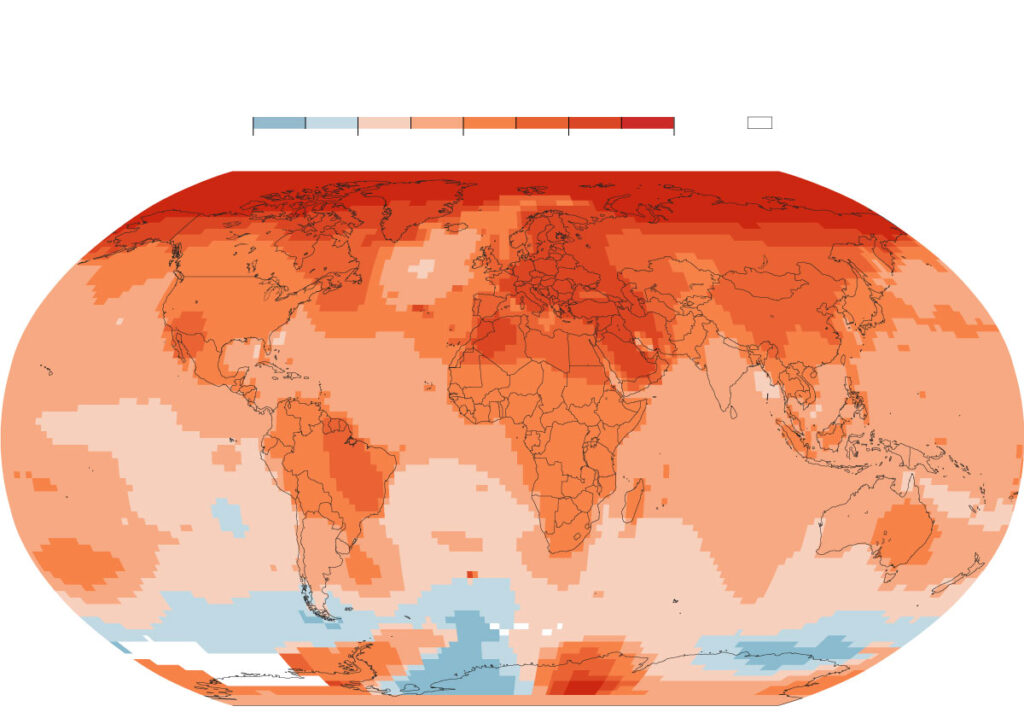
- Arctic and high‑latitude regions: Warming rates exceed the global mean by up to threefold, intensifying permafrost thaw.
- Tropical regions: Small absolute temperature increases translate into large relative heat stress because baseline temperatures are already high.
- Coastal low‑lying areas: Combined heat and sea‑level rise increase flood risk, especially during storm surges.
- Dryland interiors: Enhanced evapotranspiration amplifies drought severity, affecting agriculture and water availability.
What Scientists Know With High Confidence
What Scientists Know With High Confidence
- Human activities are the dominant cause of observed global warming since the mid‑20th century.
- The global average surface temperature has risen about 1.2 °C relative to the 1850‑1900 baseline.
- Continued emissions will keep raising temperatures, with each additional 0.5 °C increase linked to higher frequency of extreme heat events.
- Feedbacks such as water vapour and ice‑albedo amplify the warming caused by greenhouse gases.
What Remains Uncertain
What Remains Uncertain
Key uncertainties centre on the magnitude and timing of regional precipitation changes, the strength of carbon‑cycle feedbacks (e.g., permafrost methane release), and socioeconomic pathways that determine future emissions. While these uncertainties do not alter the conclusion that 2025 will be hotter than any year on record, they affect projections of specific impacts such as flood frequency in particular river basins.
Common Misconceptions
Common Misconceptions
Misconception: One hot year proves climate change is “just weather.”
Reality: Climate refers to long‑term statistical patterns. A single year’s temperature record is the result of underlying climate trends, not random weather variation.
Misconception: Only industrialized nations cause the heat.
Reality: While high‑income countries historically emitted the most CO₂, rapid growth in emerging economies now contributes a substantial share of current emissions.
Misconception: Renewable energy alone can instantly stop warming.
Reality:</ Transitioning to renewables reduces future emissions, but the climate system has inertia; temperatures will continue to rise for decades even after emissions peak.
Solutions and Limitations
Addressing the 2025 heat record requires both mitigation (reducing greenhouse‑gas emissions) and adaptation (preparing for unavoidable impacts). Major strategies include:
- Decarbonising the energy sector: Shifting to wind, solar, and nuclear reduces CO₂, but challenges include grid integration, storage costs, and political resistance.
- Improving energy efficiency: Buildings and industry can cut demand, yet retrofitting older structures requires capital and skilled labour.
- Reforestation and avoided deforestation: Enhances carbon sinks, but land‑use competition and permanence concerns limit effectiveness.
- Urban heat‑island mitigation: Adding green roofs and reflective surfaces lowers local temperatures, though implementation varies by city budget.
- Climate‑resilient agriculture: Drought‑tolerant crops and altered planting dates can sustain yields, yet adoption depends on farmer access to technology and finance.
Each solution carries trade‑offs: for example, large‑scale bioenergy may compete with food production, and electric‑vehicle rollout depends on rare‑earth mineral supply chains.
What Individuals, Communities, and Governments Can Do
What Individuals Can Do
- Reduce personal carbon footprints by using public transit, improving home insulation, and choosing lower‑carbon foods.
- Support policies that price carbon or fund renewable‑energy projects.
- Participate in local climate‑action groups that plant trees, create community gardens, or advocate for green infrastructure.
What Communities and Organizations Can Do
- Develop heat‑action plans that include cooling centers, early‑warning systems, and vulnerable‑population registries.
- Invest in district‑level renewable energy and micro‑grids to increase resilience.
- Adopt sustainable procurement standards that prioritize low‑carbon suppliers.
What Governments Can Do
- Implement and strengthen nationally determined contributions (NDCs) under the Paris Agreement to achieve net‑zero emissions by mid‑century.
- Provide financing for climate‑resilient infrastructure, especially in low‑income regions.
- Enforce building codes that require energy‑efficient designs and heat‑mitigation features.
Closing Synthesis
2025’s near‑certain status as the hottest year on record is a clear indicator that the long‑term warming trend driven by anthropogenic greenhouse gases is now manifesting in annual climate statistics. Robust observations and model ensembles give high confidence to this projection, while regional details and feedback strengths retain some uncertainty. The evidence underscores the urgency of comprehensive mitigation to curb emissions and adaptive measures to safeguard ecosystems and societies. By aligning individual choices, community initiatives, and decisive government policies, the world can limit the most severe consequences of a warming planet and move toward a sustainable future.
Frequently Asked Questions
Why is 2025 considered virtually certain to be the hottest year on record?
Scientific assessments combine observed temperature data up to 2024 with climate‑model ensembles, giving a greater than 90 % probability that 2025 will exceed all previous annual global‑average temperature records.
What are the main human activities driving the 2025 heat record?
The primary drivers are fossil‑fuel combustion, which releases most of the CO₂, and land‑use changes such as deforestation that reduce natural carbon sinks, together accounting for the bulk of recent greenhouse‑gas emissions.
How does a higher global average temperature affect human health?
Higher temperatures increase heat‑related illnesses and mortality, especially among the elderly and outdoor workers, and worsen air quality by promoting ground‑level ozone formation, which can aggravate respiratory conditions.
Which regions are expected to feel the strongest impacts of the 2025 heat record?
Arctic and high‑latitude areas may warm up to three times faster than the global average, while tropical and low‑lying coastal regions face heightened heat stress, water scarcity, and flood risk due to combined heat and sea‑level rise.
What actions can governments take to address the 2025 heat record?
Governments can strengthen their Paris‑Agreement commitments, fund climate‑resilient infrastructure, enforce energy‑efficient building codes, and create heat‑action plans that protect vulnerable populations from extreme heat events.






Leave a Comment