
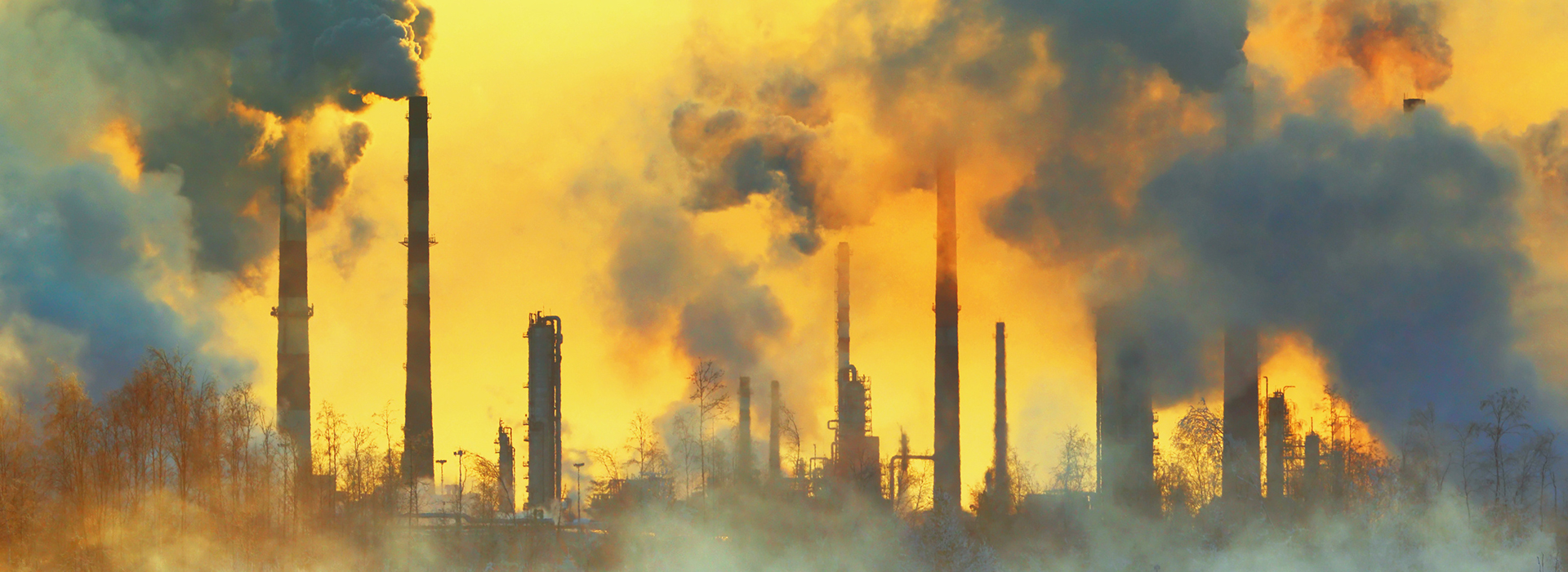
Air pollution and climate change are tightly linked, and ten well‑documented facts reveal how pollutants harm human health, ecosystems, and the planet’s energy balance.
Quick Answer
Air pollution is the presence of harmful substances—such as particulate matter, ozone, nitrogen oxides, and black carbon—in the atmosphere at levels that threaten health and the climate. These pollutants originate mainly from fossil‑fuel combustion, industrial processes, and agriculture. Scientific assessments (e.g., IPCC 2021, WHO 2021) show that air pollutants not only cause millions of premature deaths but also amplify warming by absorbing sunlight and altering cloud formation. The most critical implication is that reducing air pollution offers immediate health benefits while also slowing climate change, although uncertainties remain about regional climate feedbacks.
Key Takeaways
- Air pollution contributes an estimated 7 million premature deaths each year (WHO, 2021).
- Black carbon and tropospheric ozone act as short‑lived climate forcers, accelerating warming.
- Economic losses from pollution exceed US$5 trillion annually worldwide (World Bank, 2020).
- Vulnerable groups—children, the elderly, low‑income communities—experience disproportionate health impacts.
- Policy measures that cut emissions of both CO₂ and pollutants yield double‑benefit outcomes.
What Is 10 Alarming Facts About Air Pollution and Its Climate Impact?
The phrase refers to a set of ten evidence‑based observations that illustrate how air pollutants affect climate systems and human well‑being. It encompasses primary pollutants (e.g., PM₂.₅, NOₓ) and secondary pollutants (e.g., ozone) that arise from chemical reactions in the atmosphere. Unlike greenhouse gases, many of these pollutants have short atmospheric lifetimes but high radiative efficiency, meaning they can cause rapid warming while also posing acute health risks.
How Does It Work?
Physical and Chemical Pathways
When fossil fuels are burned, they release carbon dioxide (CO₂) and a mixture of gases and particles. Nitrogen oxides (NOₓ) and volatile organic compounds (VOCs) react under sunlight to form ground‑level ozone, a powerful oxidant that impairs lung function. Black carbon particles absorb solar radiation, heating the surrounding air and snow surfaces, which reduces albedo and speeds melt.
Feedback Loops
Warmer temperatures increase the rate of chemical reactions that generate ozone, creating a positive feedback between climate warming and air‑quality degradation. Similarly, reduced snow cover from black‑carbon‑induced melting exposes darker ground, further enhancing absorption of sunlight.
Timescales
Many pollutants, such as ozone and black carbon, persist for days to weeks, producing near‑term climate forcing. In contrast, CO₂ remains for centuries, contributing to long‑term warming. Managing short‑lived pollutants can therefore deliver rapid climate benefits alongside health gains.
What Does the Evidence Show?
Long‑term monitoring networks (e.g., the U.S. EPA Air Quality System, European Environment Agency) document rising concentrations of PM₂.₅ in rapidly industrializing regions. A 2020 systematic review of cohort studies linked each 10 µg m⁻³ increase in PM₂.₅ to a 6 % rise in all‑cause mortality, indicating strong epidemiological evidence. The Intergovernmental Panel on Climate Change (IPCC) 2021 report quantifies black carbon’s global warming potential as roughly 900 times that of CO₂ on a 20‑year horizon, underscoring its climate relevance. Economic analyses from the World Bank (2020) estimate annual welfare losses of US$5 trillion due to premature mortality, reduced labor productivity, and health‑care costs.
Main Causes or Drivers
Direct Sources
- Transportation: diesel engines emit PM₂.₅, NOₓ, and black carbon.
- Power Generation: coal‑fired plants are major sources of SO₂, PM, and CO₂.
- Industrial Processes: steel, cement, and chemical manufacturing release a suite of pollutants.
- Agriculture: ammonia from livestock contributes to secondary particulate formation.
Underlying Drivers
Economic growth in low‑ and middle‑income countries often relies on inexpensive, high‑emission energy sources. Urbanization increases vehicle miles traveled, while insufficient regulatory enforcement allows legacy polluting infrastructure to persist. Climate‑change‑induced heatwaves can exacerbate ozone formation, creating a synergistic driver.
Environmental and Human Impacts
Environmental Impacts
- Accelerated glacier melt from black‑carbon deposition (observed in the Himalayas, IPCC 2021).
- Altered precipitation patterns due to aerosol‑induced cloud changes.
- Acid deposition from sulfur and nitrogen compounds harming freshwater ecosystems.
Human Health and Social Impacts
- Approximately 7 million premature deaths per year are linked to ambient air pollution (WHO, 2021).
- Children exposed to high PM₂.₅ levels show reduced lung development and lower cognitive test scores.
- Low‑income neighborhoods often experience higher pollutant concentrations, amplifying health inequities.
Economic and Infrastructure Impacts
Beyond the US$5 trillion annual welfare loss, air pollution damages crops—ground‑level ozone can reduce wheat yields by 10 % in some regions—threatening food security. Infrastructure such as buildings suffers accelerated corrosion from acidic pollutants.
Regional Differences
In South Asia, rapid industrialization and seasonal biomass burning drive PM₂.₅ concentrations above 100 µg m⁻³, far exceeding the WHO guideline of 10 µg m⁻³. Europe, by contrast, has seen declining trends due to stringent emission standards, yet urban hotspots still exceed limits. In the United States, the western states experience higher ozone episodes during summer heatwaves, while the Midwest contends with wintertime particulate spikes from agricultural activities.
What Scientists Know With High Confidence
- Air pollution causes millions of premature deaths worldwide.
- Black carbon and tropospheric ozone are short‑lived climate forcers that warm the climate.
- Reductions in fossil‑fuel combustion lower both pollutant concentrations and CO₂ emissions.
- Vulnerable populations bear a disproportionate share of health impacts.
What Remains Uncertain
Key uncertainties include the exact magnitude of aerosol‑cloud interactions on regional precipitation, the long‑term climate feedbacks of black‑carbon deposition on snow and ice, and the effectiveness of emerging low‑cost sensor networks for exposure assessment in low‑resource settings. Improved satellite retrievals and ground‑based monitoring are needed to narrow these gaps.
Common Misconceptions
Misconception: Air pollution only affects the lungs.
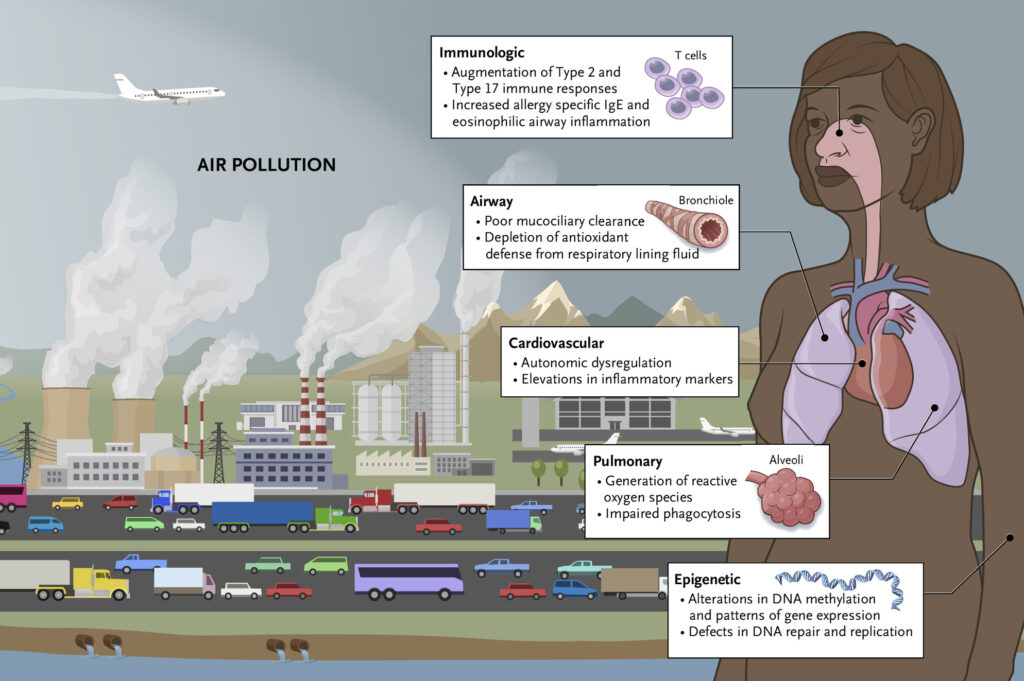
Reality: Fine particles can cross into the bloodstream, influencing cardiovascular disease, metabolic disorders, and even neurological outcomes.
Misconception: Cutting CO₂ will automatically solve air‑quality problems.
Reality: Some pollutants (e.g., black carbon, ozone precursors) have different sources and lifetimes; targeted controls are required alongside CO₂ mitigation.
Misconception: Rural areas have clean air.
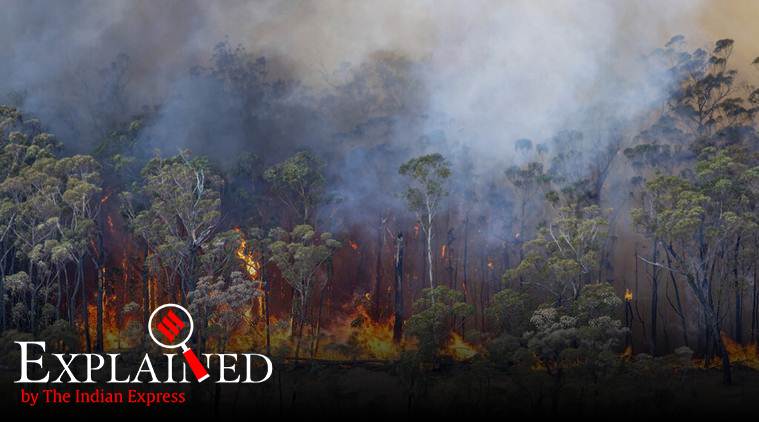
Reality: Agricultural emissions, wild‑fire smoke, and dust can create hazardous conditions far from cities.
Solutions and Limitations
Effective responses combine emission controls, clean‑energy transitions, and public‑health measures. Key strategies include:
- Regulatory standards: Tightening PM₂.₅ and NOₓ limits yields rapid health benefits, but enforcement costs can be high for developing economies.
- Renewable energy adoption: Shifting from coal to wind or solar eliminates many co‑emitted pollutants; however, intermittency requires grid upgrades.
- Vehicle electrification: Electric cars remove tailpipe emissions, yet upstream electricity generation must be clean to avoid shifting pollution.
- Urban planning: Expanding public transit and low‑emission zones reduces traffic‑related pollutants, though political resistance may delay implementation.
- Nature‑based solutions: Urban trees capture particulates, yet species selection and maintenance affect efficacy.
Each approach carries trade‑offs: for example, bioenergy can emit pollutants if combustion is inefficient, and large‑scale solar farms require land that could otherwise support biodiversity.
What Individuals, Communities, and Governments Can Do
What Individuals Can Do
- Use public transit, bike, or walk for short trips to lower personal exposure.
- Choose low‑emission appliances and maintain indoor ventilation filters.
- Support policies that fund clean‑energy projects in local elections.
What Communities and Organizations Can Do
- Establish air‑quality monitoring hubs using low‑cost sensors to identify hotspots.
- Implement green‑infrastructure (e.g., tree planting, green roofs) in high‑traffic neighborhoods.
- Run awareness campaigns that explain the health risks of smoke from open burning.
What Governments Can Do
- Adopt and enforce WHO‑aligned ambient air‑quality standards.
- Phase out coal power with clear timelines and just‑transition plans for workers.
- Provide subsidies for electric‑vehicle purchases and for retrofitting buildings with efficient filtration.
- Invest in regional monitoring networks to improve data for policy evaluation.
Closing Synthesis
Air pollution is a pervasive, short‑lived climate forcer that also drives a massive health burden. Robust evidence confirms that cutting pollutants like black carbon and ozone yields immediate health gains and slows warming, especially when paired with carbon‑dioxide reductions. While uncertainties remain around aerosol‑cloud interactions and monitoring gaps, the path forward is clear: enforce stringent standards, accelerate clean‑energy deployment, and ensure that solutions are equitable and technically sound. By addressing air pollution holistically, societies can protect both people and the planet for generations to come.
Frequently Asked Questions
What is the most harmful type of air pollutant for human health?
Fine particulate matter (PM₂.₅) is considered the most harmful because its tiny size allows it to penetrate deep into the lungs and enter the bloodstream, increasing risks of cardiovascular disease, respiratory illness, and premature death.
How does black carbon affect the climate?
Black carbon absorbs sunlight and heats the surrounding air; when it settles on snow or ice it reduces surface reflectivity (albedo), accelerating melt. The IPCC estimates its warming potential is about 900 times that of CO₂ over a 20‑year horizon.
Why is ground‑level ozone a concern even though it is not emitted directly?
Ground‑level ozone forms when nitrogen oxides and volatile organic compounds react under sunlight. It irritates the respiratory system, reduces lung function, and can lower crop yields, making it a major health and food‑security issue.
Which regions experience the highest air‑pollution‑related health impacts?
South Asian megacities often record PM₂.₅ concentrations exceeding 100 µg m⁻³, leading to the greatest number of premature deaths, while low‑income urban neighborhoods worldwide also face disproportionate exposure.
Can reducing air pollution also help mitigate climate change?
Yes. Cutting emissions of short‑lived pollutants such as black carbon and ozone precursors reduces their direct warming effect and, when combined with CO₂ reductions, delivers immediate health benefits and slower climate warming.







Leave a Comment