

A rising snowline shifts the elevation where snow persists year‑round, reducing glacier accumulation, accelerating melt, and altering water resources, ecosystems, and societies downstream.
Quick Answer
The snowline is the altitude above which snow remains throughout the year; when warming pushes this line higher, the zone of accumulation on a glacier shrinks, leading to a negative mass balance and faster retreat. The main implication is reduced freshwater storage and downstream flow, which can affect water supply, hazard risk, and alpine habitats. While the overall direction of change is well supported by long‑term observations, the exact timing of local impacts depends on regional climate variability and glacier geometry.
Key Takeaways
- The snowline marks the boundary between accumulation and ablation on a glacier.
- Warmer temperatures raise the snowline, decreasing net snow input and causing glaciers to lose mass.
- Reduced glacier volume changes seasonal water availability and can increase flood risk from glacial lake outburst floods.
- Alpine ecosystems lose cold‑adapted habitats, and communities that rely on meltwater face water‑security challenges.
- High‑confidence evidence links snowline rise to global warming, but uncertainties remain about local response rates and future thresholds.
What Is What Happens When the Snowline Rises on a Glacier?
The phrase describes the cascade of physical and ecological changes that occur when the altitude at which snow persists year‑round moves upward on a glacier. The snowline separates the accumulation zone—where snowfall adds mass—from the ablation zone—where melting removes ice. As the snowline climbs, the accumulation zone contracts and the ablation zone expands, altering the glacier’s mass balance, shape, and downstream influence. This process is distinct from short‑term seasonal snow cover fluctuations; it reflects a sustained shift in climate conditions.
How Does It Work?
1. Temperature‑driven elevation shift
Increasing air temperatures raise the altitude at which the mean annual temperature stays below 0 °C, the threshold for persistent snow. Climate‑monitoring networks (e.g., NOAA and the World Meteorological Organization) have documented average temperature rises of 0.2 °C per decade in many mid‑latitude mountain ranges since the 1980s, prompting measurable snowline lifts.
2. Reduction of the accumulation area
When the snowline rises, less of the glacier surface receives net snowfall each year. The reduced accumulation lowers the glacier’s overall mass balance, meaning that melt exceeds gain.
3. Acceleration of ablation
With a larger portion of the glacier exposed to temperatures above freezing, melt rates increase. Darker ice and exposed rock absorb more solar radiation—a feedback known as the albedo effect—further speeding up loss.
4. Geometric response
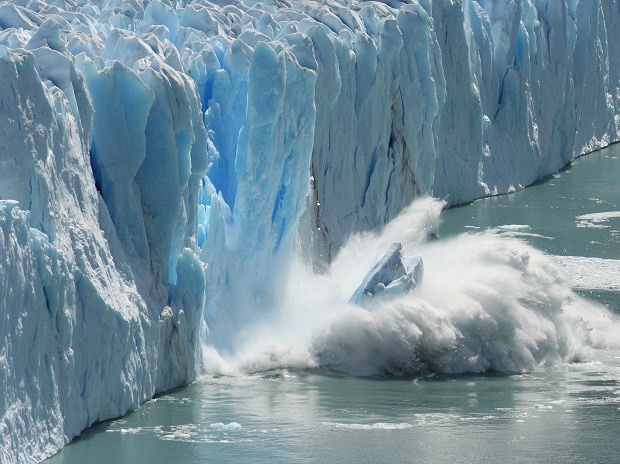
As mass is lost, glacier thickness and surface slope decrease, which can cause the glacier to retreat up the valley. This retreat often uncovers new terrain that can collect meltwater in proglacial lakes.
5. Hydrological timing shift
Earlier melt onset and reduced late‑summer melt alter the seasonal hydrograph of rivers fed by glaciers, shifting peak flows to earlier in the year and lowering low‑flow volumes.
What Does the Evidence Show?
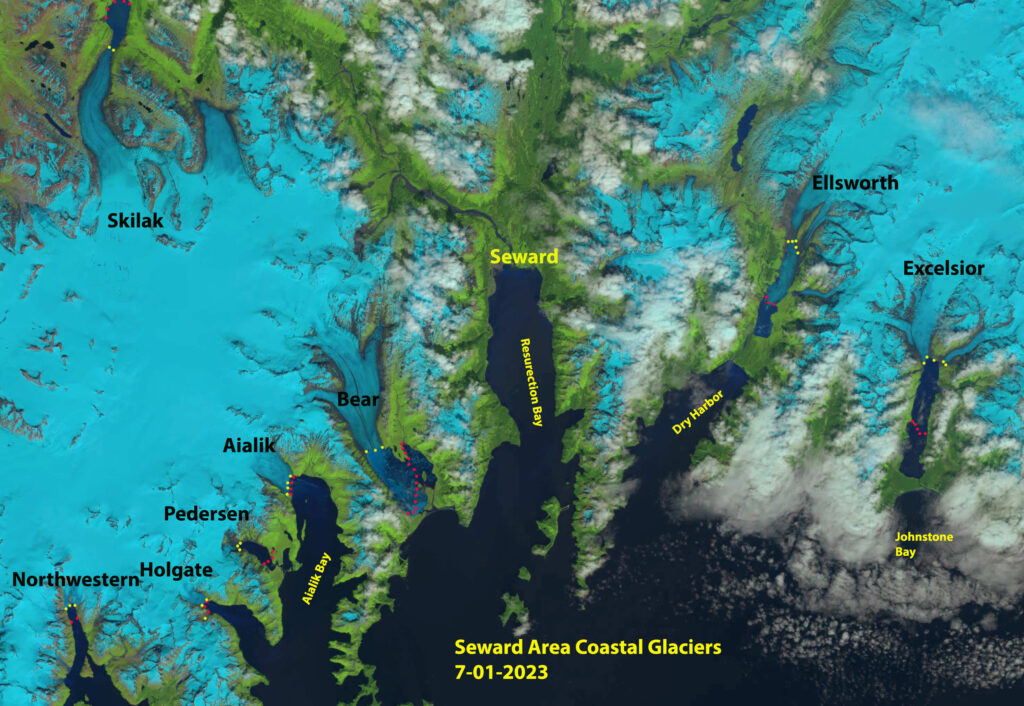
Multiple lines of evidence converge on the same conclusion: snowlines have risen on most monitored glaciers over the past four decades. Long‑term observations from the World Glacier Monitoring Service (WGMS) indicate an average snowline ascent of 30‑50 m per decade in the European Alps, the Himalayas, and the Andes (IPCC, 2021 Assessment Report). Remote‑sensing studies using Landsat imagery corroborate these trends, showing a systematic retreat of accumulation zones in the Rocky Mountains and Patagonia.
Field measurements of mass balance demonstrate that glaciers with a snowline shift exceeding 40 m experience a net mass loss of 0.5‑1.0 m w.e. (water equivalent) per year, a rate significantly higher than glaciers where the snowline remains stable. Model simulations that incorporate observed temperature trajectories reproduce the observed retreat patterns, reinforcing the causal link between warming, snowline rise, and glacier loss.
Main Causes or Drivers
Direct climatic drivers
Rising mean annual air temperature is the primary driver; it directly determines the altitude where snow can persist. Changes in precipitation type (snow versus rain) also influence the snowline, especially in marginal zones where warmer winters convert snowfall to rain.
Atmospheric circulation patterns
Shifts in large‑scale patterns such as the North Atlantic Oscillation or the El Niño‑Southern Oscillation can modify regional temperature and snowfall, causing year‑to‑year variability in snowline position.
Feedback mechanisms
The albedo feedback—where exposed ice or rock absorbs more solar energy—amplifies melting once the snowline has moved upward. Additionally, reduced glacier volume lessens the gravitational driving stress, potentially altering ice flow dynamics.
Environmental and Human Impacts
Environmental Impacts
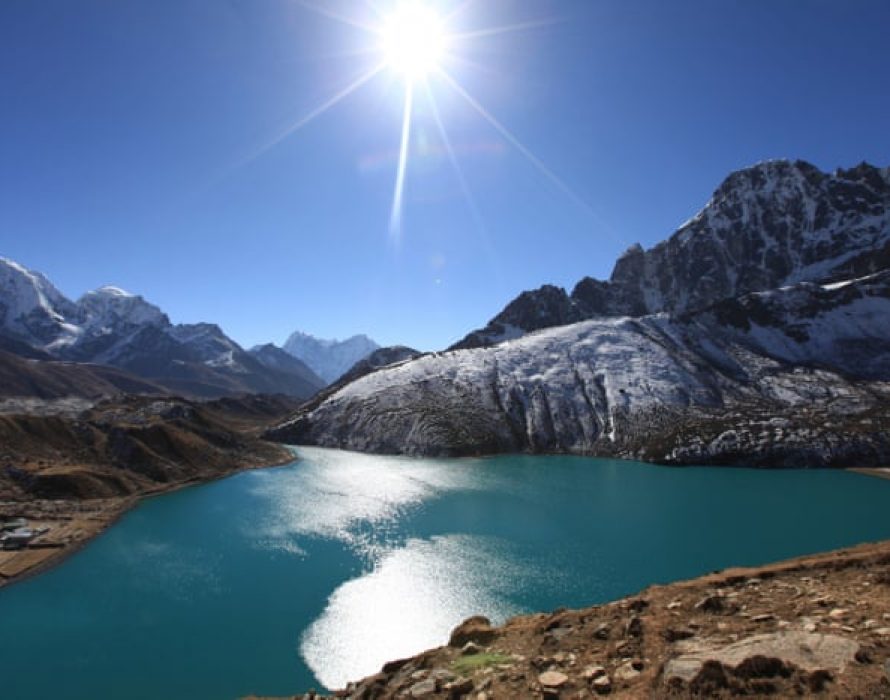
Loss of the accumulation zone reduces the glacier’s ability to buffer seasonal water supply, leading to earlier peak discharge and lower late‑summer flows. Alpine flora and fauna adapted to cold, stable conditions lose habitat, and invasive lower‑elevation species can encroach. Proglacial lakes formed by retreat may become sources of glacial lake outburst floods (GLOFs), posing geomorphic hazards.
Human Health and Social Impacts
Communities that depend on glacier melt for irrigation, drinking water, or hydropower—such as those in the Andes, Central Asia, and the Himalayas—face heightened water insecurity during dry seasons. Reduced meltwater can exacerbate competition over water resources, potentially leading to conflict.
Economic and Infrastructure Impacts
Tourism that relies on iconic glacial landscapes may decline as ice recedes, affecting local economies. Infrastructure built near glacier termini, such as roads and hydroelectric dams, can be threatened by GLOFs or by increased sediment load from accelerated melt.
Regional Differences
The magnitude of snowline rise and its consequences vary with latitude, elevation, and local climate. In the high Arctic, where temperatures are already near freezing, even a modest warming can cause a rapid snowline shift, dramatically thinning ice caps. In the tropical Andes, glaciers sit at lower elevations; a 1 °C warming can move the snowline above the mountain crest, leading to near‑total loss within decades. Conversely, in the European Alps, extensive monitoring shows a more gradual rise, allowing some adaptation measures such as water storage reservoirs.
What Scientists Know With High Confidence
- Global average temperatures have risen since the pre‑industrial era, and this warming is the dominant factor driving snowline elevation gains.
- Long‑term glacier monitoring shows a consistent upward trend in snowline altitude across most mountain ranges.
- Higher snowlines reduce net accumulation, leading to negative glacier mass balance and accelerated retreat.
- Reduced glacier storage alters downstream river hydrographs, decreasing late‑summer water availability.
What Remains Uncertain
Key uncertainties include the precise timing of snowline responses for small, debris‑covered glaciers, the threshold at which proglacial lakes become unstable, and how future precipitation patterns may offset or amplify temperature‑driven snowline rise. Improved high‑resolution climate and mass‑balance modeling, combined with expanded in‑situ observations, are needed to narrow these gaps.
Common Misconceptions
Misconception: Snowline rise only affects ski resorts.
Reality: While ski‑area snowmaking can be impacted, the primary consequences are glaciological—altering water storage, ecosystem health, and downstream livelihoods.
Misconception: All glaciers melt at the same rate once the snowline rises.
Reality: Glacier response depends on size, slope, debris cover, and local climate; some retreat rapidly, others persist longer despite similar snowline shifts.
Misconception: Snowline elevation is a short‑term weather phenomenon.
Reality: The snowline reflects long‑term climate conditions; its upward movement is documented over decades, not days or weeks.
Solutions and Limitations
Addressing snowline rise requires both mitigation of global warming and adaptation to inevitable changes.
- Mitigation: Rapid decarbonisation of energy systems reduces future temperature rise, limiting further snowline ascent. However, even with aggressive mitigation, some snowline increase is projected due to climate inertia.
- Adaptation – Water management: Expanding reservoir capacity, improving water‑use efficiency, and developing early‑warning systems for GLOFs can reduce vulnerability. These measures require substantial investment and coordinated governance.
- Ecological conservation: Protecting high‑altitude habitats and facilitating species migration corridors help biodiversity cope with habitat loss, but such actions cannot fully replace lost glacial environments.
- Monitoring and research: Sustained glacier and climate monitoring improves predictive capacity, yet funding gaps and remote terrain limit data collection in many regions.
What Individuals, Communities, and Governments Can Do
What Individuals Can Do
Support policies that accelerate greenhouse‑gas reductions, conserve water, and fund glacier monitoring programs. Reducing personal carbon footprints—through energy‑efficient transport, diet, and home heating—contributes to the larger mitigation effort.
What Communities and Organizations Can Do
Implement integrated water‑resource management that accounts for reduced glacier melt, develop early‑warning systems for GLOFs, and promote ecotourism that values glacier preservation while diversifying local economies.
What Governments Can Do
Adopt and enforce ambitious climate‑action targets, allocate resources for high‑altitude monitoring networks, invest in climate‑resilient infrastructure, and facilitate transboundary water‑sharing agreements in basins fed by glacial melt.
Synthesis of Findings
A rising snowline is a clear indicator of a warming climate and directly drives glacier mass loss, altered water regimes, and ecosystem disruption. High‑confidence evidence links temperature rise to snowline elevation, while uncertainties remain around local response rates and future precipitation patterns. Effective responses combine rapid emissions reductions with targeted adaptation measures that safeguard water security, reduce hazard risk, and protect alpine biodiversity. Continued monitoring and collaborative governance are essential to manage the cascading impacts of a changing snowline.
Frequently Asked Questions
What is the snowline on a glacier?
The snowline is the altitude above which snow remains throughout the year, separating the accumulation zone where snowfall adds ice from the ablation zone where melting removes ice.
How does a higher snowline affect glacier mass balance?
A higher snowline reduces the area that receives net snowfall, decreasing accumulation while expanding the melt‑dominated zone, which leads to a negative mass balance and faster glacier retreat.
Why does a rising snowline impact downstream water availability?
Glaciers act as natural water reservoirs; when the snowline rises, less ice is stored and melt occurs earlier, lowering late‑summer river flows and reducing water available for agriculture, drinking, and hydropower.
Which regions are most vulnerable to snowline rise?
Tropical mountain ranges such as the Andes and Himalayas are especially vulnerable because their glaciers sit at lower elevations, so even modest warming can push the snowline above the mountain crest, leading to rapid ice loss.
What actions can help mitigate the impacts of a rising snowline?
Mitigation includes rapid greenhouse‑gas reductions to limit further warming. Adaptation measures involve expanding water‑storage capacity, improving water‑use efficiency, monitoring proglacial lakes for flood risk, and protecting high‑altitude ecosystems.




Leave a Comment