
Biodiversity – the variety of life at genetic, species and ecosystem levels – underpins the natural processes that clean air, filter water, store carbon and produce food, making its health essential for both ecosystems and human societies.
Quick Answer
Biodiversity is the range of genetic variation within species, the number of different species, and the diversity of ecosystems. It sustains ecosystem services such as pollination, water purification, climate regulation and disease regulation. Strong scientific assessments show that ecosystems with higher species richness are more resilient to disturbances, while loss of species weakens these services and can raise the risk of food insecurity, water scarcity and zoonotic disease. The most important implication is that declining biodiversity directly threatens human well‑being, although the timing and magnitude of impacts vary by region and depend on future land‑use and climate pathways.
Key Takeaways
- Rich biodiversity enhances ecosystem resilience and the delivery of essential services.
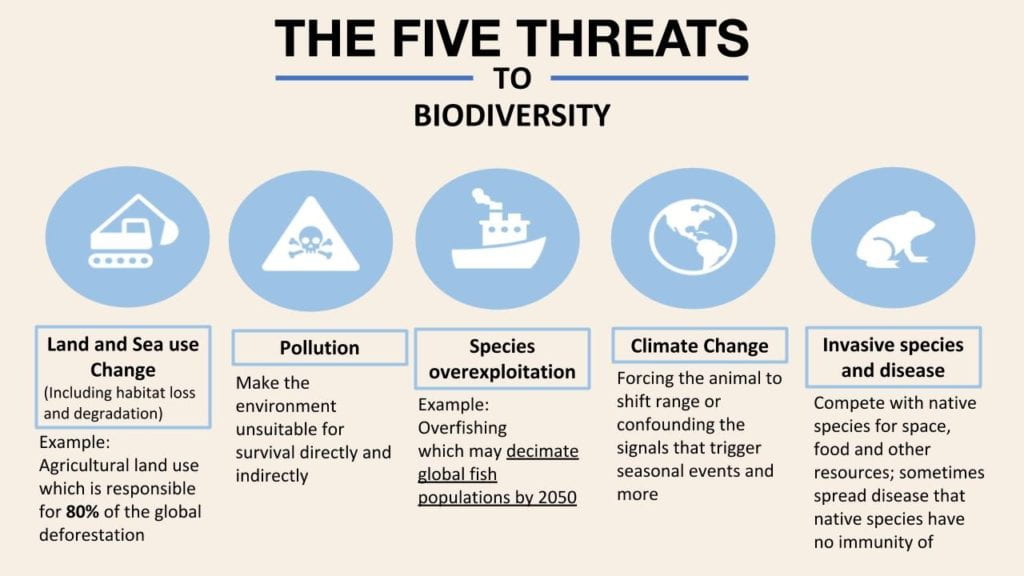
- Habitat loss, climate change, overexploitation, pollution and invasive species are the main direct drivers of loss.
- Impacts include reduced crop yields, weakened water quality, increased disease risk and heightened climate feedbacks.
- High‑confidence findings link diversity to pollination, carbon storage, soil fertility and water regulation.
- Effective responses combine protected areas, sustainable land use, restoration and supportive policies, but each carries trade‑offs.
What Is Biodiversity and Environmental Matters: Why It Affects Everything?
Biodiversity encompasses three nested levels. Genetic diversity refers to differences among individuals within a species, which provide the raw material for adaptation. Species diversity counts the number of distinct species and their relative abundances. Ecosystem diversity describes the variety of habitats, ecological processes and landscape configurations. The term differs from “biodiversity loss,” which denotes reductions in any of these components, and from “ecosystem services,” which are the benefits humans obtain from functioning ecosystems.
The importance of biodiversity stems from the fact that every major natural process – from photosynthesis that draws down carbon to the pollination of flowering plants – relies on a web of interacting organisms. When that web is simplified, the efficiency, stability and redundancy of the process decline, creating feedbacks that affect climate, economies and public health.
How Does It Work?
1. Functional Redundancy and Resilience
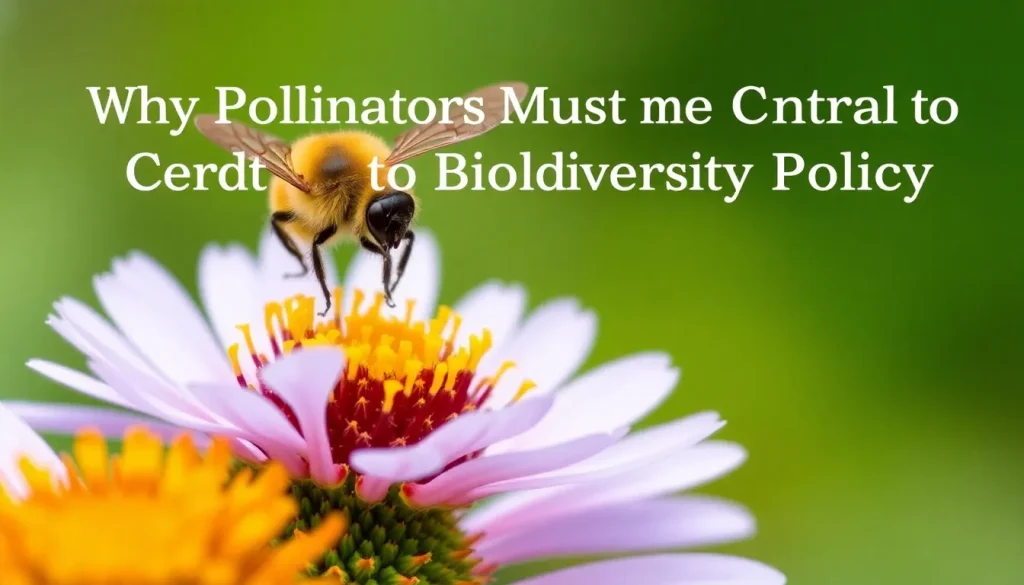
In a diverse community, multiple species often perform similar ecological roles. For example, several bee species may visit the same crop flower. If one pollinator declines, others can compensate, preserving pollination services. This functional redundancy is a cornerstone of ecosystem resilience.
2. Trophic Cascades Transfer Effects Across Levels
Predators control herbivore populations; herbivores shape plant community composition. Removing top predators can trigger overgrazing, reducing plant diversity and altering soil carbon dynamics. Such cascades illustrate how biodiversity shapes biogeochemical cycles.
3. Genetic Diversity Buffers Environmental Change
Populations with high genetic variation contain individuals better suited to survive drought, disease or temperature shifts. This adaptive capacity helps species persist under climate change.
4. Habitat Complexity Generates Multiple Services
Forests, wetlands and coral reefs provide carbon sequestration, water filtration and storm protection simultaneously. The structural complexity created by a rich assemblage of organisms is the physical basis for many services.
What Does the Evidence Show?
Long‑term monitoring by the United Nations Environment Programme and national agencies consistently links higher species richness to greater pollination rates, increased soil fertility and more stable water yields. A 2018 systematic review in Nature found that ecosystems with more than 30 % higher species richness produced 20–30 % more biomass under variable climate conditions, demonstrating a strong diversity–stability relationship.
The Intergovernmental Science‑Policy Platform on Biodiversity and Ecosystem Services (IPBES) Global Assessment 2019 reported that roughly one million animal and plant species face elevated extinction risk – a rate up to 1,000 times background levels. The same assessment highlighted that loss of pollinator diversity has already reduced global crop yields by an estimated 5 %.
Field experiments in agricultural landscapes show that polyculture plots experience 40 % fewer pest outbreaks than monocultures, reducing the need for synthetic pesticides (Journal of Applied Ecology, 2020). Epidemiological work in the United States associates reduced mammalian diversity with higher incidence of Lyme disease, supporting the “dilution effect” hypothesis.
Main Causes or Drivers
Direct Causes
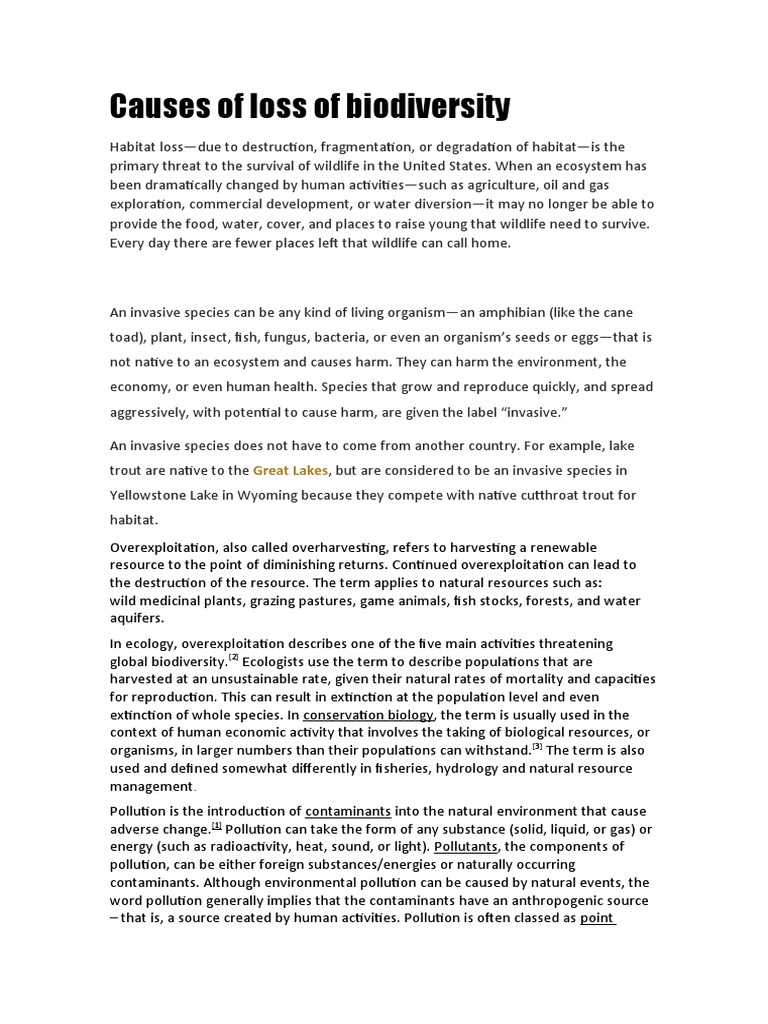
- Habitat destruction from logging, urban expansion and intensive agriculture.
- Overexploitation of wildlife for food, medicine and trade.
- Pollution, including plastic debris, nutrient runoff and chemical contaminants.
- Invasive species outcompeting native organisms.
Underlying Drivers
- Economic incentives that prioritize short‑term gains over long‑term ecosystem health.
- Population growth increasing land‑use pressure.
- Climate change amplifying stress on already vulnerable species.
- Weak governance and insufficient enforcement of conservation laws.
Environmental and Human Impacts
Environmental Impacts
Reduced biodiversity diminishes carbon sequestration in forests and soils, accelerating atmospheric CO₂ rise. Water purification services decline, leading to higher treatment costs and eutrophication. Thinner plant cover increases soil erosion, degrading agricultural productivity.
Human Health and Social Impacts
Loss of natural buffers raises exposure to extreme weather events, disproportionately affecting low‑income coastal communities. The dilution‑effect literature suggests that fewer host species can heighten transmission of zoonotic diseases such as hantavirus or Ebola. Cultural heritage tied to specific species or ecosystems also erodes, impacting indigenous identities.
Economic and Infrastructure Impacts
Global estimates place the annual value of ecosystem services at about US$125 trillion (Costanza et al., 2014). Declines in pollination alone could cost the global food system up to US$540 billion per year, according to the Food and Agriculture Organization (FAO, 2021).
Regional Differences
In tropical regions, high species richness means that deforestation can cause abrupt losses of carbon storage and medicinal resources. Temperate agricultural zones experience pollinator declines that directly affect fruit and vegetable yields. Arctic ecosystems, while low in species count, are highly sensitive to climate‑driven shifts that cascade through food webs. Monitoring capacity also varies: Europe maintains extensive biodiversity databases, whereas many sub‑Saharan nations rely on limited field surveys, creating data gaps that hinder precise impact assessments.
What Scientists Know With High Confidence
What Scientists Know With High Confidence
- Diverse ecosystems are more resilient to climatic and anthropogenic disturbances.
- Pollination, water purification, carbon storage and soil fertility are directly linked to species and ecosystem diversity.
- Habitat loss is the leading driver of global biodiversity decline.
- Protecting and restoring native habitats can rapidly improve ecosystem service provision.
What Remains Uncertain
What Remains Uncertain
Key uncertainties include the precise thresholds at which loss of particular species triggers irreversible ecosystem collapse, the long‑term effectiveness of assisted migration as a climate‑adaptation tool, and how synergistic stressors such as climate change combined with pollution will interact across biomes. Improved long‑term monitoring and integrated modelling are needed to narrow these gaps.
Common Misconceptions
Common Misconceptions
Misconception: “Only charismatic megafauna matter for conservation.”
Reality: Ecosystem functions often depend on less‑visible organisms such as soil microbes, insects and small fish. Protecting a single iconic species does not guarantee the health of the whole system.
Misconception: “Biodiversity loss is a problem for future generations only.”
Reality: Current communities already experience reduced water quality, lower crop yields and higher disease risk as a direct result of recent biodiversity declines.
Misconception: “Economic development inevitably harms biodiversity.”
Reality: Sustainable land‑use practices, agroforestry and green infrastructure can deliver economic benefits while maintaining or enhancing biodiversity.
Solutions and Limitations
Effective strategies combine protection, sustainable use and restoration.
- Protected Areas: Legally designated zones safeguard habitats, but may conflict with local livelihoods if not co‑managed.
- Agroecology: Integrating crops, livestock and native vegetation improves soil health and pest control, yet often requires new knowledge and upfront investment.
- Restoration Ecology: Replanting native vegetation restores functions, but success depends on site conditions and long‑term maintenance.
- Policy Instruments: Subsidies for sustainable practices and penalties for illegal logging can shift incentives, though enforcement capacity varies.
- Technology: Remote sensing and environmental DNA monitoring enhance detection of biodiversity change, yet data interpretation requires expertise and may miss cryptic species.
Each approach carries trade‑offs: land set aside for conservation can limit agricultural expansion; intensive restoration may consume water resources; policy reforms can face political resistance.
What Individuals, Communities, and Governments Can Do
What Individuals Can Do
- Choose foods with certified sustainable sourcing (e.g., Rainforest Alliance, organic).
- Support local conservation NGOs through donations or volunteering.
- Reduce waste, especially single‑use plastics that harm marine life.
What Communities and Organizations Can Do
- Implement community‑based monitoring programs to track local species.
- Adopt agroforestry or polyculture practices on communal lands.
- Develop ecotourism that provides income while incentivizing habitat protection.
What Governments Can Do
- Expand and effectively manage a network of protected areas meeting the Aichi Target 11 of 17 % terrestrial and 10 % marine coverage.
- Integrate biodiversity considerations into national climate‑adaptation plans.
- Provide financial incentives for farmers transitioning to regenerative agriculture.
- Strengthen enforcement against illegal wildlife trade and habitat destruction.
Closing Synthesis
Biodiversity is the foundation of the ecosystem services that sustain human societies, from clean air to food security. Robust evidence shows that diverse systems are more resilient, while the drivers of loss – habitat conversion, overexploitation, climate change and pollution – are largely human‑induced. High‑confidence findings confirm the essential role of diversity in pollination, carbon storage and water regulation, even as uncertainties remain about tipping points and synergistic stressors. Solutions that blend protection, sustainable land use, restoration and supportive policy offer the most promising path, though each carries trade‑offs that must be managed. By aligning individual choices, community initiatives and governmental action, we can preserve the web of life that underpins our own future.
Frequently Asked Questions
What is biodiversity and why is it important?
Biodiversity is the variety of life at genetic, species and ecosystem levels. It supports essential services such as pollination, water purification, carbon storage and disease regulation, making it crucial for both natural systems and human well‑being.
How does biodiversity affect climate regulation?
Diverse forests, wetlands and grasslands store more carbon than simplified systems because multiple species contribute to biomass growth and soil organic matter. This enhances the landscape’s ability to draw down atmospheric CO₂ and buffer climate change.
What are the main drivers of biodiversity loss?
The primary drivers are habitat destruction from logging, urban expansion and agriculture; overexploitation of wildlife; pollution such as plastic and nutrient runoff; and invasive species. Underlying these are economic incentives, population growth, climate change and weak governance.
Can protecting pollinators really increase crop yields?
Yes. High‑confidence assessments link pollinator diversity to higher yields. The IPBES 2019 report estimated that global crop yields have already fallen about 5 % due to pollinator loss, and field studies show polyculture farms with diverse pollinators produce more stable harvests.
What actions can individuals take to support biodiversity?
Individuals can choose sustainably sourced foods, support local conservation groups, and reduce waste—especially single‑use plastics that harm marine life. While personal choices alone cannot solve systemic loss, they contribute to broader demand for responsible practices.





Leave a Comment