
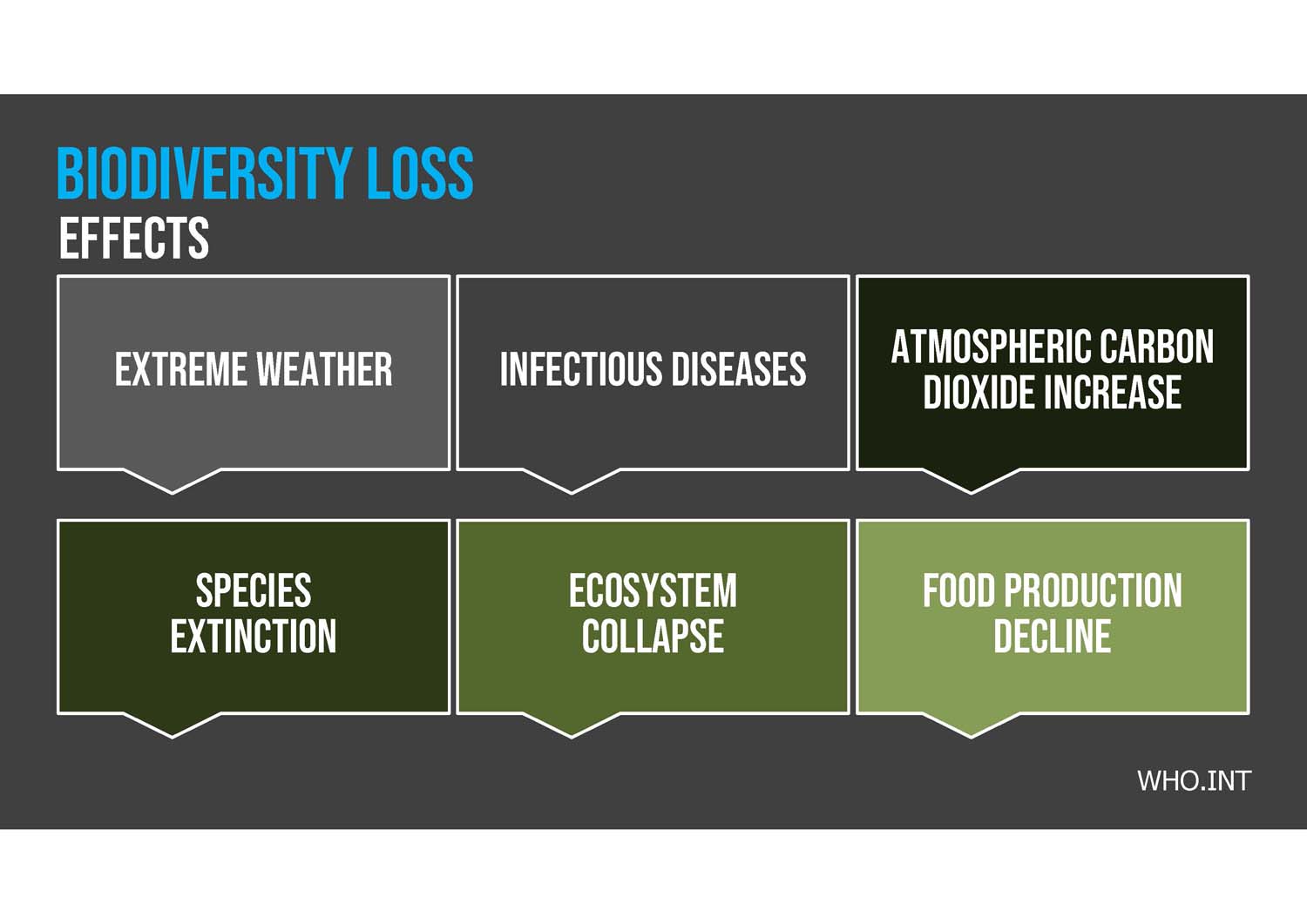
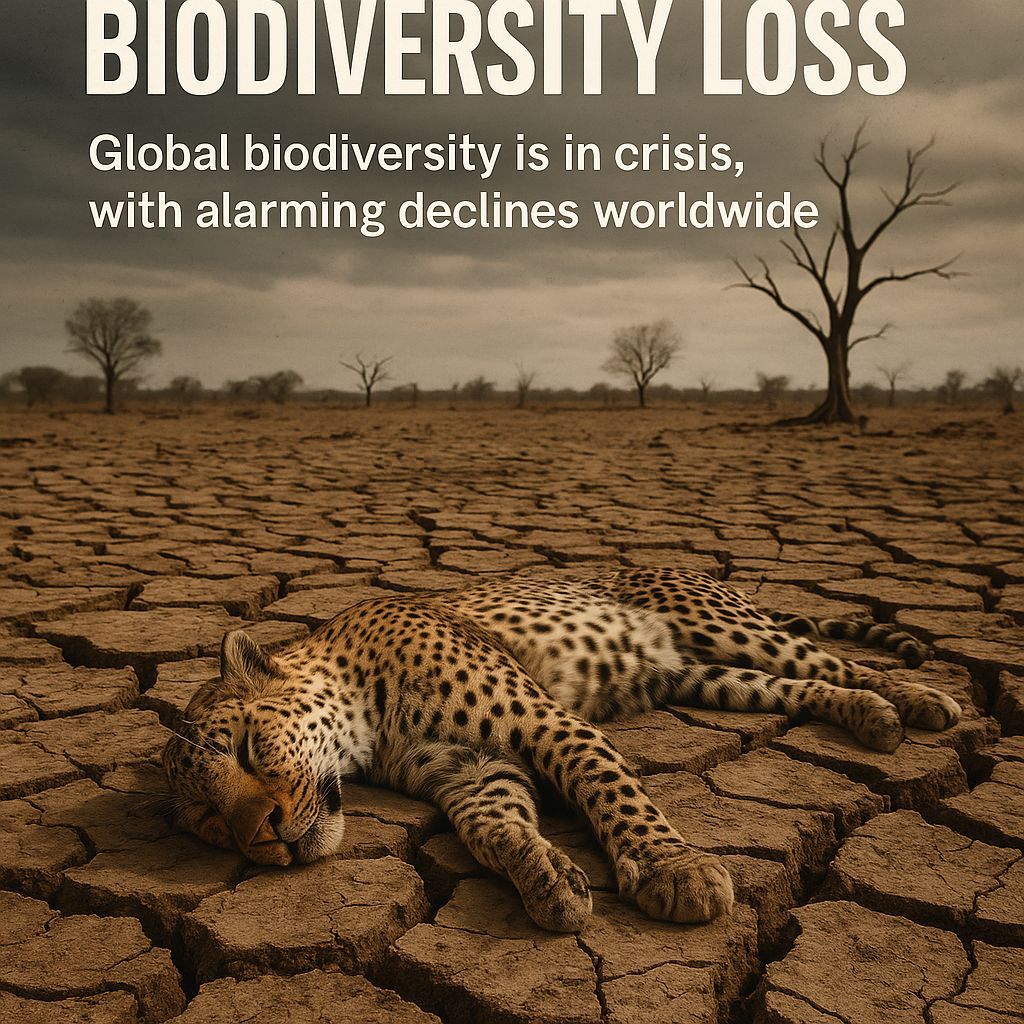
Biodiversity loss weakens ecosystem services, reduces climate regulation, degrades soils, and heightens human vulnerability, making the health of the whole planet dependent on reversing species declines.
Quick Answer
Biodiversity loss means the reduction in the variety of species, genes, and ecosystems that sustain life on Earth. When species disappear, the complex web of interactions that provides food, clean water, climate stability, and cultural benefits unravels. Scientific assessments such as the 2019 IPBES Global Assessment and the IPCC Sixth Assessment report show that declining biodiversity directly diminishes ecosystem resilience and amplifies climate impacts. The most urgent implication is that human societies become less able to secure food, water, and health, especially in regions already facing stress. Uncertainty remains around the timing of ecosystem thresholds, but the overall direction of risk is clear.
Key Takeaways
- Biodiversity underpins all major ecosystem services that humans rely on.
- Loss of species reduces carbon storage, water purification, pollination, and soil fertility.
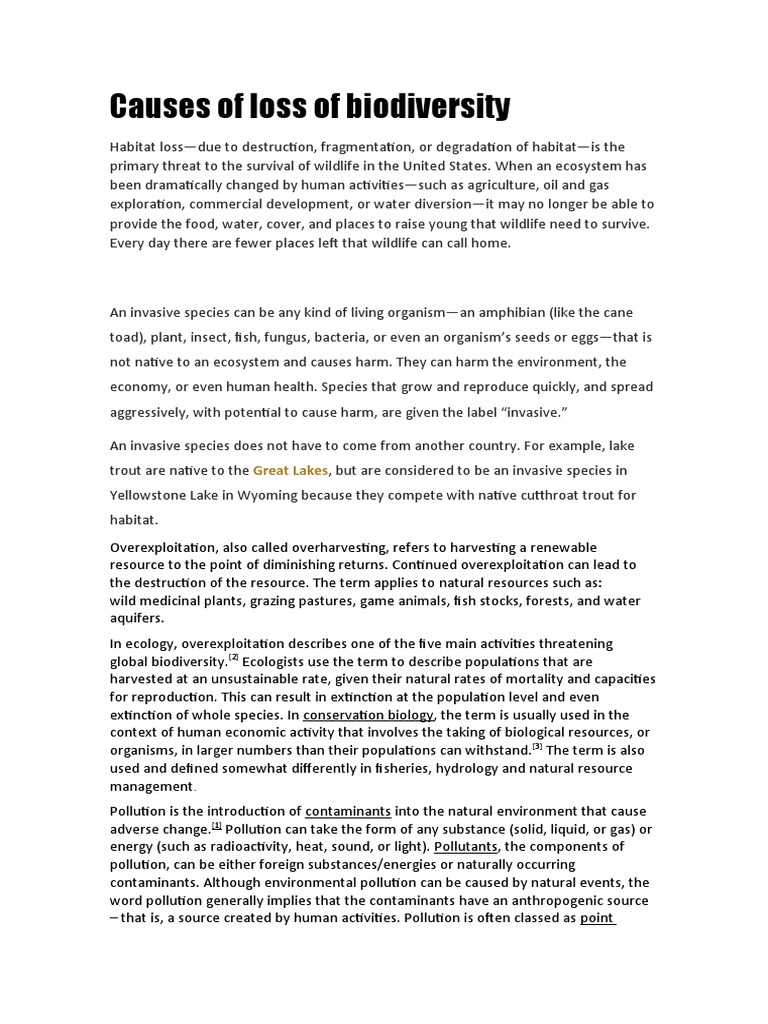
- Climate change, habitat destruction, pollution, and invasive species are the primary drivers.
- Impacts vary by region, with tropical forests and coral reefs facing the greatest risk.
- High‑confidence evidence links biodiversity loss to reduced climate regulation and food‑security challenges.
- Effective solutions combine habitat protection, sustainable land‑use, and community‑led restoration, but must consider trade‑offs and equity.
What Is How Biodiversity Loss Impacts the Entire Environment?
Biodiversity loss refers to the decline in the number, abundance, and variety of living organisms across genetic, species, and ecosystem levels. It is measured through indicators such as species extinction rates, population trends, and habitat fragmentation. The concept differs from simple species counts because it emphasizes functional roles—how organisms contribute to processes like nutrient cycling, pollination, and climate regulation. Understanding this impact matters because the stability of food, water, and climate systems depends on the continued interaction of diverse species.
How Does It Work?
Loss of Ecosystem Services
Every ecosystem provides provisioning (e.g., food, timber), regulating (e.g., climate, disease control), supporting (e.g., nutrient cycling), and cultural services. When keystone species disappear, these services deteriorate. For example, the decline of native pollinators reduces fruit set in crops, leading to lower yields (FAO, 2020).
Reduced Climate Regulation
Forests, wetlands, and coral reefs store large amounts of carbon. The IPCC (2022) estimates that intact tropical forests sequester about 2.5 Gt CO₂ yr⁻¹, a capacity that falls sharply as species composition changes and forest health declines.
Soil Degradation
Diverse soil microbes and invertebrates decompose organic matter and create soil structure. Meta‑analyses show that loss of soil biodiversity can cut crop yields by up to 30 % in low‑input systems (Birkhofer et al., 2018).
Collapse of Food Webs
Food webs rely on multiple trophic levels. Removing a predator can cause mesopredator release, altering herbivore pressure and plant community composition, a phenomenon documented in North American grasslands (Estes et al., 2011).
What Does the Evidence Show?
Long‑term monitoring by the Global Biodiversity Information Facility (GBIF) records a 68 % average decline in monitored vertebrate populations since 1970. Systematic reviews of field experiments confirm that higher species richness consistently improves productivity and stability across ecosystems (Cardinale et al., 2012). The IPBES (2019) report concludes with high confidence that biodiversity loss is a driver of climate change impacts, reduced food security, and increased disease emergence.
Main Causes or Drivers
Direct Causes
- Habitat destruction from agriculture, urban expansion, and logging.
- Overexploitation of fisheries, wildlife trade, and timber.
- Pollution, including plastic, nutrient runoff, and chemical pesticides.
- Invasive species outcompeting native flora and fauna.
Underlying Drivers
- Population growth and rising consumption patterns.
- Economic incentives that favor short‑term resource extraction.
- Climate change accelerating habitat shifts and extinction risk.
- Weak governance and insufficient protected‑area networks.
Environmental and Human Impacts
Environmental Impacts
- Reduced carbon sequestration and heightened atmospheric CO₂ levels.
- Degraded water quality from loss of riparian vegetation.
- Increased soil erosion and loss of fertility.
- Greater susceptibility of ecosystems to invasive species and disease.
Human Health and Social Impacts
- Food insecurity from lower pollination and fisheries yields.
- Higher exposure to vector‑borne diseases as ecological balances shift.
- Loss of cultural identity for Indigenous peoples tied to specific species.
Economic and Infrastructure Impacts
- Declining tourism revenue in biodiversity hotspots.
- Increased costs for water treatment and flood mitigation.
- Reduced productivity in agriculture and aquaculture sectors.
Regional Differences
Tropical regions host more than 70 % of terrestrial species, making them especially vulnerable to deforestation and climate stress. The Amazon basin, for example, has lost roughly 17 % of its primary forest cover since 2000 (PRODES, 2021). In contrast, temperate regions often experience slower species loss but face intense agricultural intensification that depletes soil biodiversity. Coral reefs in the Indo‑Pacific are eroding at rates of 1–2 % yr⁻¹ due to ocean warming and acidification, while Arctic tundra ecosystems confront rapid permafrost thaw, altering microbial communities and carbon release.
What Scientists Know With High Confidence
- Habitat loss is the leading direct driver of species extinction (IPBES, 2019).
- Ecosystem services decline as species richness declines, with consistent evidence across biomes.
- Biodiverse ecosystems are more resilient to climate extremes.
- Loss of pollinators directly reduces yields of many staple crops.
What Remains Uncertain
Key uncertainties include the precise timing of ecosystem tipping points, the magnitude of feedbacks between biodiversity loss and climate change, and the long‑term effectiveness of large‑scale restoration under future climate scenarios. Data gaps in marine micro‑biodiversity and invertebrate monitoring limit our ability to project full ecosystem consequences.
Common Misconceptions
Misconception: Biodiversity loss only matters for exotic or charismatic species.
Reality: Even small, inconspicuous organisms like soil microbes and insects play essential roles in nutrient cycling and pollination, and their loss can cascade to affect food production.
Misconception: One protected area can halt biodiversity loss.
Reality: Protected areas are vital, but without connectivity, adequate management, and addressing external pressures such as agriculture, they cannot fully safeguard species.
Misconception: Climate change and biodiversity loss are unrelated problems.
Reality: Climate change alters habitats and species ranges, while biodiversity loss reduces ecosystem capacity to buffer climate impacts, creating a reinforcing feedback loop.
Solutions and Limitations
Effective strategies combine prevention, mitigation, and restoration:
- Habitat protection: Expanding and effectively managing protected areas can conserve up to 30 % of terrestrial biodiversity, but requires sufficient funding and enforcement.
- Sustainable agriculture: Agroecological practices preserve on‑farm biodiversity and improve yields, yet may face yield trade‑offs in high‑input systems.
- Restoration of degraded lands: Reforestation and wetland reconstruction boost carbon storage, but success depends on species selection and long‑term monitoring.
- Invasive species control: Early detection programs reduce establishment risk, but eradication can be costly and socially contentious.
- Policy and financing: International agreements like the Convention on Biological Diversity provide frameworks, yet implementation varies widely across nations.
What Individuals, Communities, and Governments Can Do
What Individuals Can Do
- Choose food with lower ecological footprints, such as plant‑based options and certified sustainable seafood.
- Support native‑plant gardening to provide habitat for pollinators.
- Advocate for stronger biodiversity policies through voting and civic engagement.
What Communities and Organizations Can Do
- Establish community‑managed conservation areas and citizen‑science monitoring programs.
- Implement watershed protection projects that reduce runoff and protect aquatic habitats.
- Partner with Indigenous groups to integrate traditional ecological knowledge into management plans.
What Governments Can Do
- Set and enforce legally binding targets for habitat protection and restoration.
- Incorporate biodiversity considerations into climate‑adaptation planning and infrastructure design.
- Provide incentives for sustainable land‑use, such as payments for ecosystem services.
Synthesis
Biodiversity loss erodes the foundational services that regulate climate, purify water, sustain soils, and support human well‑being. Robust evidence links species declines to reduced ecosystem resilience and heightened vulnerability to climate extremes. While uncertainties remain about exact tipping points, the direction of risk is unequivocal. Protecting and restoring diverse ecosystems—through protected areas, sustainable practices, and inclusive governance—offers the most reliable pathway to safeguard both nature and humanity.
Frequently Asked Questions
What is biodiversity loss?
Biodiversity loss is the reduction in the variety of life at genetic, species, and ecosystem levels, caused by declines in populations, extinctions, and habitat fragmentation, which weakens the natural processes that support human societies.
How does biodiversity loss affect climate regulation?
When diverse forests, wetlands, and coral reefs lose species, their ability to store carbon and regulate temperature declines. Studies cited by the IPCC show that intact tropical forests can sequester about 2.5 Gt CO₂ per year, a capacity that drops sharply as ecosystem health deteriorates.
Which ecosystem services are most threatened by species declines?
Pollination, water purification, carbon sequestration, and soil fertility are among the services most sensitive to species loss. Declines in pollinators reduce crop yields, while reduced microbial diversity harms nutrient cycling and soil structure.
What are the main drivers of biodiversity loss?
The primary drivers are habitat destruction, overexploitation, pollution, and invasive species. Underlying these are population growth, rising consumption, economic incentives for short‑term extraction, and insufficient governance.
What actions can individuals take to help preserve biodiversity?
Individuals can choose sustainably sourced foods, plant native species in gardens, reduce pesticide use, and support policies that protect habitats. Engaging in citizen‑science projects and advocating for stronger biodiversity legislation also make a difference.





Leave a Comment