
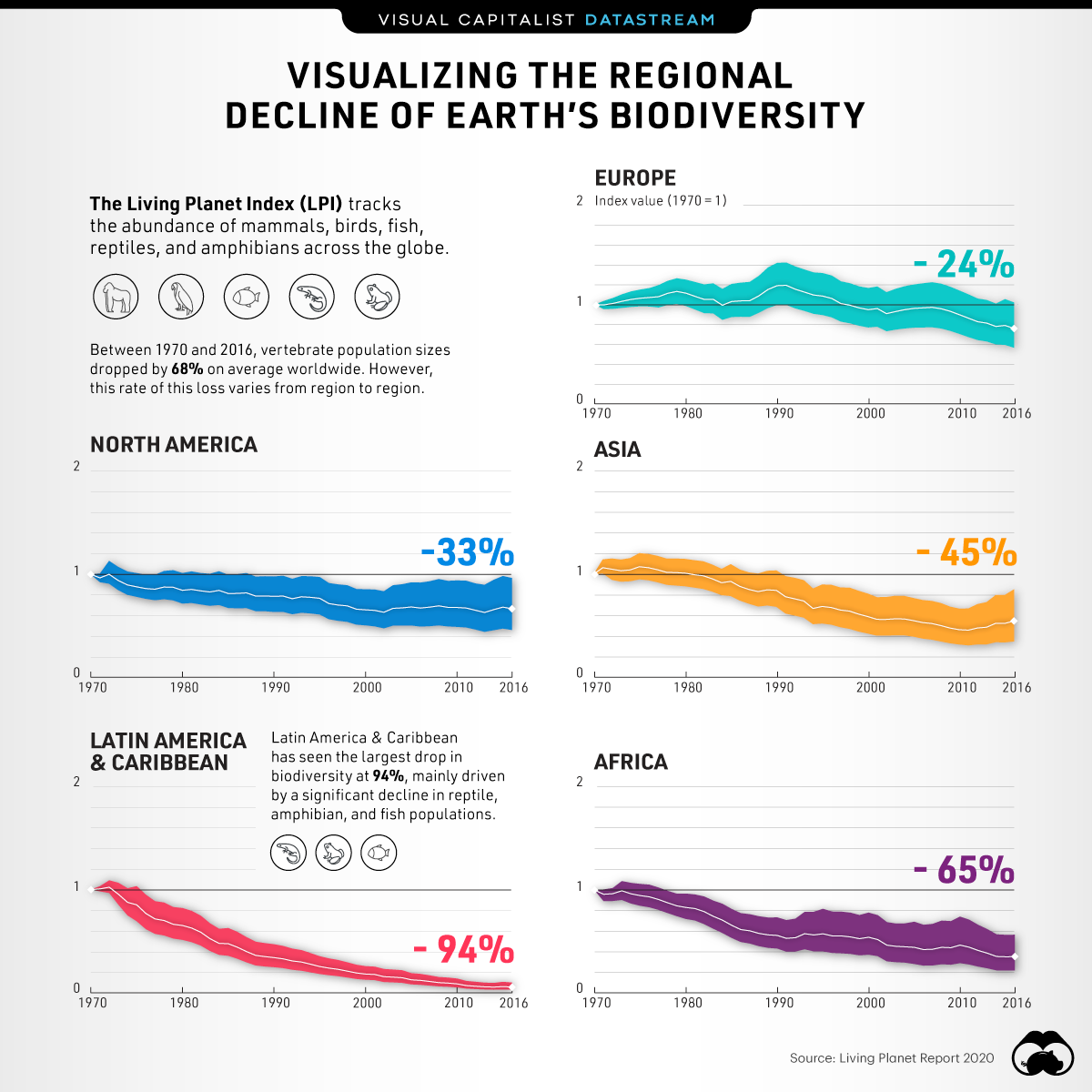
Biodiversity loss may continue to accelerate unless the combined pressures of habitat loss, climate change, pollution and overexploitation are curbed, but recent restoration efforts suggest a possible slowdown if policies and investments are scaled up.
Quick Answer
Biodiversity loss is the net decline in species abundance, genetic variation and ecosystem integrity caused by human activities. The main drivers—land‑use change, climate change, pollution and overexploitation—have historically produced a steep downward trend, and most long‑term monitoring (e.g., the Living Planet Index) shows declines of 68% in vertebrate populations since 1970 (World Wildlife Fund, 2020). Recent large‑scale restoration projects and stronger legal protections have begun to slow declines in some regions, but global rates remain high and are projected to increase under current emission pathways (IPCC, 2021). Therefore, the evidence suggests that without decisive action the loss will keep accelerating, while targeted interventions can produce localized slow‑downs.
Key Takeaways
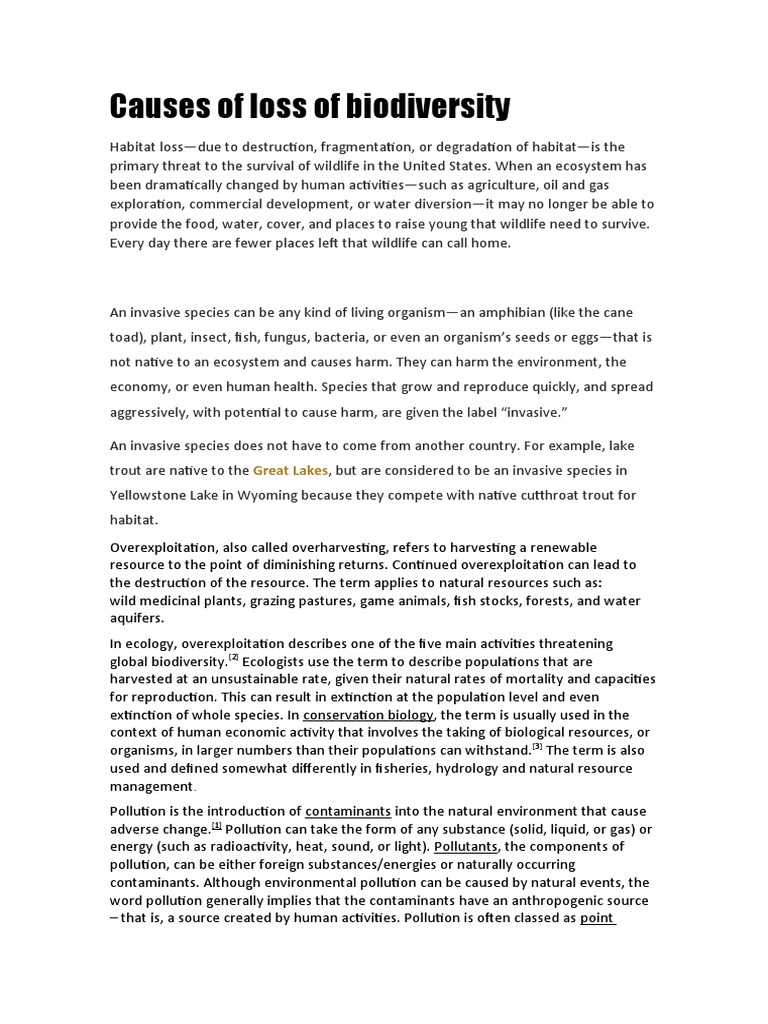
- Habitat conversion and climate change are the two strongest global drivers of species decline.
- Long‑term monitoring shows a 68% average decline in vertebrate abundance from 1970 to 2020.
- Restoration, protected‑area expansion and sustainable resource use can halt or reverse loss locally, but scale is insufficient.
- Uncertainty remains around tipping points, especially for marine and tropical systems.
- Solutions require coordinated policy, financing and community engagement; individual actions matter mainly as part of collective pressure.
What Is Will Biodiversity Loss Slow Down—or Keep Accelerating??
The phrase asks whether the global trend of decreasing biological diversity will decelerate, remain steady, or intensify. Biodiversity encompasses species richness, genetic variation within species and the functional roles that organisms play in ecosystems. The assessment focuses on the rate of change in these components, not on isolated events. It differs from “climate change” or “pollution” because it integrates multiple stressors and measures outcomes in living systems rather than physical parameters.
How Does It Work?
Multiple interacting pathways drive the rate of biodiversity loss:
1. Habitat Destruction
Conversion of forests, wetlands and grasslands to agriculture, urban areas or infrastructure removes the physical space species need to survive. Fragmentation isolates populations, reducing gene flow and increasing extinction risk.
2. Climate Change
Rising temperatures, altered precipitation patterns and sea‑level rise shift species’ climatic niches. Species that cannot migrate or adapt quickly face local or global extinction.
3. Pollution
Chemical runoff, plastic debris and heavy metals degrade habitats and cause direct mortality or sub‑lethal stress that lowers reproductive success.
4. Overexploitation
Unsustainable fishing, logging and wildlife trade deplete populations faster than they can replenish, often targeting keystone species that hold ecosystems together.
These drivers often act synergistically. For example, climate‑induced range shifts can increase exposure to invasive species, while pollution can weaken organisms’ ability to cope with temperature extremes. Feedback loops—such as loss of forest cover reducing carbon sequestration and accelerating warming—can create accelerating trajectories.
What Does the Evidence Show?
Multiple lines of high‑quality evidence converge on a consistent picture of rapid loss:
- Long‑term population monitoring: The Living Planet Index, which tracks >4,000 vertebrate populations, records a 68% average decline between 1970 and 2020 (World Wildlife Fund, 2020).
- Red List assessments: The International Union for Conservation of Nature (IUCN) lists >37,000 species as threatened with extinction as of 2022, up from ~22,000 in 2010.
- Remote‑sensing of habitat loss: Global forest cover fell by 10% between 1990 and 2020, with the highest rates in the Congo Basin and Amazon (UNEP, 2022).
- Meta‑analyses of climate impacts: A 2021 systematic review found that 60% of species studied showed range contractions linked to warming (IPCC, 2021).
These independent data streams—field surveys, satellite observations and meta‑analyses—support the conclusion that biodiversity is declining at an unprecedented rate. However, some regional case studies (e.g., reforestation in Costa Rica) show stabilisation or modest recovery, indicating that targeted actions can alter trajectories locally.
Main Causes or Drivers
Direct Causes
- Land‑use conversion (agriculture, mining, urban expansion)
- Unsustainable harvest of wildlife and plant resources
- Industrial and agricultural pollution
- Climate‑induced habitat alteration
Underlying Drivers
- Economic incentives that prioritise short‑term yield over long‑term ecosystem health
- Population growth and consumption patterns driving resource demand
- Governance gaps that limit enforcement of environmental regulations
- Global trade networks that spread invasive species and demand for exotic pets
Environmental and Human Impacts
Environmental Impacts
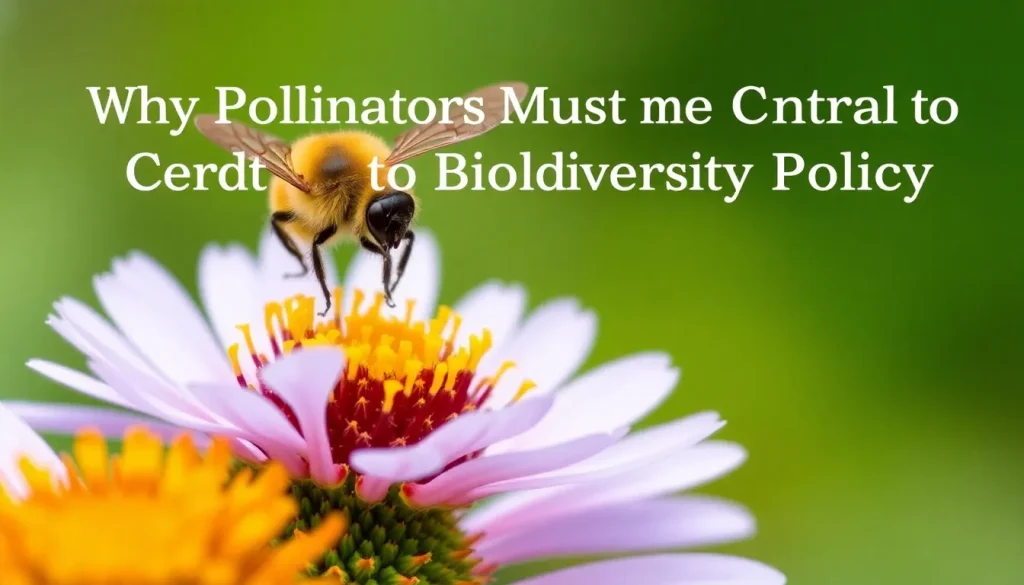
Loss of pollinators reduces crop yields; the disappearance of apex predators can cause trophic cascades that alter fire regimes and water quality. Coral reef degradation eliminates habitat for thousands of marine species and diminishes coastal protection.
Human Health and Social Impacts
Reduced ecosystem services—such as water purification, disease regulation and climate buffering—increase vulnerability to floods, heatwaves and zoonotic disease emergence. Indigenous communities that rely on biodiversity for food, medicine and cultural identity face loss of livelihood and cultural erosion.
Economic and Infrastructure Impacts
The World Bank estimates that ecosystem degradation costs roughly 7% of global GDP annually, a figure that rises in regions heavily dependent on natural resources.
Regional Differences
Patterns vary by continent and ecosystem type:
- Amazon Basin: Deforestation rates of 0.5%‑0.7% per year (UNEP, 2022) drive steep declines in amphibian and bird diversity.
- Southeast Asia: Intensive palm‑oil expansion and illegal wildlife trade have pushed many mammal species toward critical endangerment.
- Europe: Agricultural intensification has reduced pollinator abundance, but the EU Biodiversity Strategy 2030 is expanding protected areas, showing early signs of stabilization.
- Polar regions: Climate‑driven sea‑ice loss threatens ice‑dependent seals and polar bears, with limited mitigation options beyond global emission reductions.
What Scientists Know With High Confidence
What Scientists Know With High Confidence
- Human activities are the primary driver of the current global biodiversity crisis (IPBES, 2019).
- Habitat loss and climate change together account for roughly 75% of observed species declines (IPCC, 2021).
- Protected areas that are well‑managed can reduce local extinction risk by 20‑30% (UNEP, 2022).
- Ecosystem services such as pollination, carbon storage and water regulation are directly linked to species richness.
What Remains Uncertain
What Remains Uncertain
Key gaps include the precise location of ecological tipping points, especially in marine ecosystems where long‑term data are sparse. The interaction between climate‑induced range shifts and invasive‑species dynamics is poorly quantified, limiting the ability to predict synergistic losses. Finally, the effectiveness of large‑scale restoration under future climate scenarios remains an active research area.
Common Misconceptions
Common Misconceptions
Misconception: “Biodiversity loss is only a concern for exotic or charismatic species.”
Reality: Even modest declines in common species can erode ecosystem function, because many services (e.g., pollination, soil formation) rely on abundant, non‑charismatic taxa.
Misconception: “If a species is listed as endangered, it is already extinct.”
Reality: The IUCN “Endangered” category indicates a very high risk of extinction, but many such species still have viable populations that can recover with proper conservation.
Misconception: “Planting trees anywhere will solve biodiversity loss.”
Reality: Tree planting must use native species and consider local hydrology; monoculture plantations often provide little habitat value and can even exacerbate water stress.
Solutions and Limitations
Effective responses fall into several categories:
- Prevention: Strengthening land‑use planning, enforcing anti‑poaching laws and reducing demand for unsustainable products. Limitation: Requires political will and cross‑border cooperation.
- Mitigation: Reducing greenhouse‑gas emissions to limit climate‑driven habitat change. Limitation: Global coordination is challenging and benefits accrue over decades.
- Adaptation: Assisting species migration through ecological corridors and protecting climate refugia. Limitation: May be insufficient where habitat is already fragmented.
- Conservation: Expanding and properly managing protected areas. Limitation: Funding gaps and “paper parks” where protection exists only on maps.
- Restoration: Reforestation, wetland rehabilitation and coral‑reef restoration. Limitation: Success depends on site selection, native species use, and future climate suitability.
What Individuals, Communities, and Governments Can Do
What Individuals Can Do
Choose sustainably sourced products, reduce food waste, support biodiversity‑friendly certifications, and engage in citizen‑science monitoring programs.
What Communities and Organizations Can Do
Implement local habitat restoration projects, adopt pollinator‑friendly landscaping, and develop community‑led monitoring that feeds into national databases.
What Governments Can Do
Integrate biodiversity considerations into national development plans, increase funding for protected‑area management, enforce stricter pollution standards, and meet international commitments such as the Convention on Biological Diversity’s post‑2020 framework.
What Businesses and Industries Can Do
Adopt supply‑chain due diligence to eliminate illegal wildlife trade, set science‑based targets for deforestation‑free sourcing, and invest in nature‑based solutions that are verified by third‑party standards.
Synthesis
Biodiversity loss is driven by a suite of interlinked human pressures that have produced a clear, accelerating decline in species abundance and ecosystem health. High‑confidence evidence confirms that habitat loss and climate change are the dominant forces, while emerging data show that well‑designed protection and restoration can halt loss locally. Major uncertainties involve the timing of ecosystem tipping points and the effectiveness of large‑scale interventions under future climate conditions. The balance of evidence suggests that without decisive, coordinated action the trend will continue to accelerate, but targeted policies, financing and community engagement can create pockets of slowdown and even recovery.
Frequently Asked Questions
What is the main driver of global biodiversity loss?
Human activities, especially habitat conversion and climate change, are identified by the IPBES (2019) as the primary drivers of the worldwide decline in species and ecosystem health.
How much have vertebrate populations declined since 1970?
The Living Planet Index shows an average 68% decline in monitored vertebrate populations between 1970 and 2020, according to the World Wildlife Fund's 2020 report.
Can protected areas stop species extinction?
Well‑managed protected areas can lower local extinction risk by 20‑30%, but their effectiveness depends on adequate funding, enforcement, and connectivity to other habitats.
What are the biggest uncertainties about future biodiversity trends?
Key uncertainties include the exact locations of ecological tipping points, especially in oceans, and how climate‑induced range shifts will interact with invasive species and restoration efforts.
What actions can individuals take to help biodiversity?
Individuals can choose sustainably sourced products, reduce food waste, support certified biodiversity‑friendly brands, and participate in citizen‑science projects that monitor local species.





Leave a Comment