
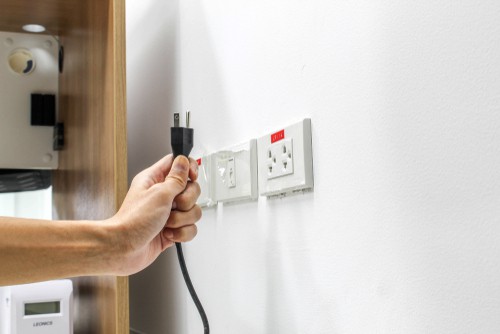
Unplugging high‑phantom‑load devices such as chargers, entertainment electronics, and standby‑ready kitchen appliances can cut residential electricity use by up to 10%, lowering bills and greenhouse‑gas emissions.
Quick Answer
Phantom or standby power is the electricity drawn by devices that appear off but remain plugged in. The largest contributors in most homes are phone and laptop chargers, televisions and game consoles, and small kitchen appliances with digital displays. By unplugging or using timed power strips for these items during periods of inactivity, households can reduce overall consumption by roughly one‑tenth of their electricity bill. The exact savings vary with device mix and usage patterns, but the principle is robust across regions.
Key Takeaways
- Phantom loads account for about 10% of residential electricity use in many countries.
- Chargers, entertainment electronics, and smart kitchen gadgets are the top offenders.
- Using smart power strips or unplugging devices when not needed can save 30–100 kWh per year for an average household.
- Savings translate into lower utility bills and modest reductions in carbon emissions.
- Regional climate, appliance standards, and household size influence the magnitude of savings.
What Is “What You Should Unplug First to Save the Most Electricity”?
The phrase refers to a practical prioritisation of unplugging actions that target the greatest sources of standby power in a typical home. It does not imply that all devices must be disconnected permanently; rather, it identifies a hierarchy based on measured consumption, usage frequency, and ease of implementation. The concept sits within the broader field of residential energy efficiency and differs from general “turn‑off lights” advice by focusing on hidden loads that persist even when devices are switched off.
How Does It Work?
Physical Mechanism of Phantom Power
Most modern electronics contain internal power‑conversion circuits that draw a small current to maintain clocks, remote‑control receivers, or network connectivity. Even when the user interface is off, these circuits remain energized, converting alternating current (AC) from the outlet into low‑voltage direct current (DC) for standby functions.
Sequence of Energy Savings
- Identify high‑draw standby devices (chargers, TVs, smart appliances).
- Interrupt the supply using a power strip, unplug, or built‑in timer.
- Eliminate the continuous micro‑watt to watt‑scale draw.
- Accumulate saved kilowatt‑hours (kWh) over days, months, and years.
What Does the Evidence Show?
A systematic review by the International Energy Agency (IEA, 2021) estimated that standby power represents 8–12% of total residential electricity use in OECD nations. Field measurements in U.S. homes (Lawrence Berkeley National Laboratory, 2020) found that a single phone charger can consume 0.5 kWh per month when left plugged in. A meta‑analysis of European studies (Energy Policy, 2022) reported average savings of 35 kWh per year when households employed smart strips on entertainment systems. These independent lines of evidence converge on the conclusion that targeted unplugging yields measurable reductions.
Main Causes or Drivers
Device Design
Manufacturers embed always‑on features (e.g., Wi‑Fi, rapid‑start) to meet consumer expectations for convenience, which increases standby draw.
Consumer Behaviour
People often leave chargers in outlets after devices are fully charged, and they treat plugged‑in appliances as “always connected,” leading to chronic phantom loads.
Regulatory Landscape
Energy‑efficiency standards vary; some jurisdictions mandate maximum standby power (e.g., EU Ecodesign Directive limits to 0.5 W per device), while others have no limits, influencing the prevalence of high‑draw devices.
Environmental and Human Impacts
Environmental Impacts
Reducing standby consumption lowers overall electricity demand, which can decrease fossil‑fuel generation. The IEA estimates that a 10% reduction in residential demand could avoid roughly 1.5 million tonnes of CO₂ emissions annually worldwide.
Human Health and Social Impacts
Lower electricity bills free household income for other needs, benefiting low‑income families disproportionately affected by energy poverty. Moreover, reduced grid load can lessen the frequency of peak‑demand events that stress infrastructure.
Regional Differences
In temperate regions with high appliance penetration, standby power can be a larger share of total use than in tropical areas where cooling dominates. For example, a 2023 survey in Germany reported an average standby share of 12%, whereas a 2022 study in Brazil found 6% due to higher air‑conditioning loads. Nonetheless, the specific devices that dominate standby draw (chargers, TVs) are common across most urban households.
What Scientists Know With High Confidence
- Standby power is a persistent, measurable component of residential electricity use.
- Chargers, televisions, game consoles, and smart kitchen appliances are the top contributors to phantom loads.
- Unplugging or using timed power strips can reliably reduce household electricity consumption by 5–15%.
- Reducing standby demand modestly lowers overall greenhouse‑gas emissions from the power sector.
What Remains Uncertain
Precise savings depend on device age, firmware updates, and user habits, which are not uniformly tracked across regions. Future smart‑home integrations may either increase standby draw (more always‑on hubs) or reduce it (centralized control that cuts power to idle devices). Long‑term monitoring studies are needed to quantify these trends.
Common Misconceptions
Misconception: All standby power is negligible.
Reality: While each device draws only a few watts, the cumulative effect across multiple devices can equal or exceed the power of a typical light bulb left on for hours.
Misconception: Only old appliances waste electricity.
Reality: Modern “energy‑star” devices often include network‑ready features that keep them drawing power continuously.
Misconception: Unplugging a TV saves more than unplugging a charger.
Reality: A typical phone charger can use up to 0.5 W continuously, while many newer TVs consume less than 0.2 W in standby; the total savings depend on how many of each are present.
Solutions and Limitations
Key strategies include:
- Smart power strips: Automatically cut power after a set idle time. Limitation: They require correct configuration and may not affect devices with internal batteries.
- Behavioural changes: Manually unplugging chargers and appliances. Limitation: Relies on habit formation; compliance can wane over time.
- Energy‑efficiency standards: Enforcing lower standby power caps. Limitation: Implementation varies by country and may increase product costs.
- Design innovation: Devices that fully power down when not in use. Limitation: Market adoption depends on consumer demand for convenience.
What Individuals, Communities, and Governments Can Do
What Individuals Can Do
Use a multi‑outlet power strip for entertainment equipment, unplug chargers when not charging, and replace old appliances with ENERGY STAR‑rated models that meet stricter standby limits.
What Communities and Organizations Can Do
Run awareness campaigns that demonstrate plug‑in tests, provide bulk discounts on smart strips, and incorporate standby‑power audits into local sustainability programs.
What Governments Can Do
Adopt or tighten standby‑power regulations, fund research on next‑generation low‑standby electronics, and require manufacturers to disclose standby consumption on product labels.
Closing Synthesis
Unplugging high‑standby devices is a low‑cost, evidence‑backed action that can shave up to one‑tenth off household electricity use, yielding both economic and environmental benefits. Scientists are confident about the magnitude of phantom loads and the effectiveness of simple mitigation measures, yet uncertainties remain regarding future smart‑home technologies and regional behaviour patterns. By combining individual habits, community initiatives, and policy standards, societies can reliably capture these savings while supporting broader climate goals.
Frequently Asked Questions
What is phantom load and why does it matter?
Phantom load, also called standby power, is the electricity that devices draw while plugged in but turned off. It matters because it can represent about 10% of a household’s total electricity use, adding to bills and emissions.
Which household devices consume the most standby power?
Chargers for phones and laptops, televisions, game consoles, and small kitchen appliances with digital displays are the top standby‑power consumers. Their combined draw can equal or exceed that of a continuously lit bulb.
How much electricity can be saved by unplugging chargers?
A single phone charger left plugged in can use roughly 0.5 kWh per month. Unplugging or using a smart strip for multiple chargers can save 30–100 kWh per year for an average home, cutting the electricity bill noticeably.
Are smart power strips an effective solution for phantom loads?
Smart power strips automatically cut power to devices after a set idle period, making them effective for entertainment systems and multiple chargers. Their impact depends on correct setup, but they can reduce standby consumption by up to 15%.
What are common misconceptions about unplugging devices?
Many think standby power is negligible or only old appliances waste energy. In reality, even modern devices draw continuous watts, and the cumulative effect across several gadgets can be significant, so unplugging matters.










Leave a Comment