
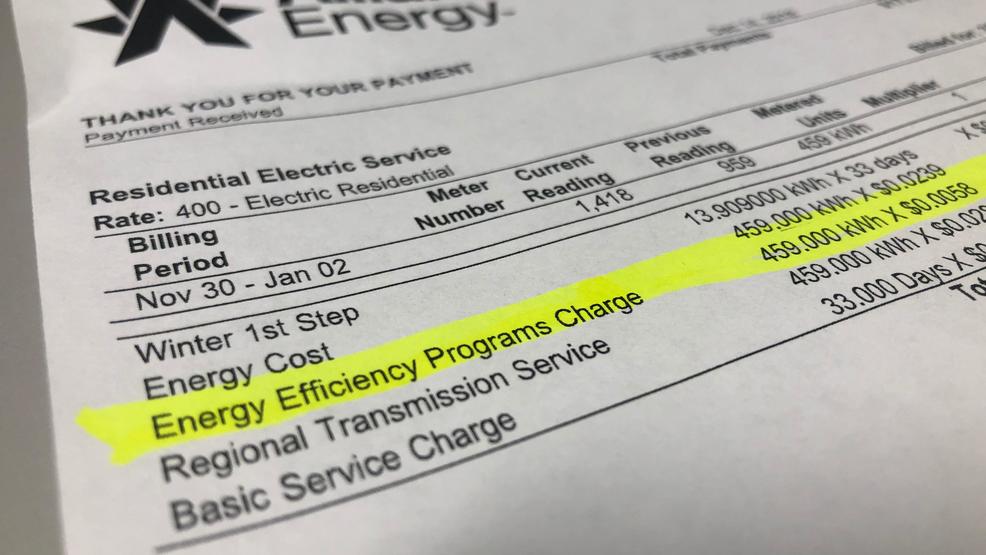
The Energy Efficiency Charge is a modest fee on utility bills that funds programs to reduce electricity use, lower emissions, and promote consumer savings.
Quick Answer
The Energy Efficiency Charge (EEC) is a line‑item fee that utilities collect to finance energy‑efficiency programs such as rebates for efficient appliances, home‑weatherization assistance, and demand‑response initiatives. By pooling small contributions from many customers, the charge creates a stable funding source that helps utilities lower overall demand, defer new power‑plant construction, and cut greenhouse‑gas emissions. While the exact amount varies by state and provider, the EEC typically represents less than 1 % of a residential bill. The charge does not directly increase a household’s usage, but it supports actions that can reduce future energy costs.
Key Takeaways
- The Energy Efficiency Charge is a dedicated funding mechanism for utility‑run conservation programs.
- It is usually a small, fixed dollar amount or a fraction of a percent of total usage.
- Programs financed by the charge can lower household energy bills and reduce regional emissions.
- Evidence from the U.S. EPA and the International Energy Agency shows that funded efficiency measures save billions of kilowatt‑hours annually.
- Uncertainty remains about the optimal charge level and how best to target low‑income customers.
What Is the Energy Efficiency Charge on Your Utility Bill?
The Energy Efficiency Charge (sometimes called an “energy‑efficiency surcharge” or “conservation fee”) is a regulatory‑mandated cost that appears on most residential and commercial electricity statements in the United States and in several other countries. Unlike usage‑based charges that reflect how many kilowatt‑hours you consume, the EEC is a flat or formula‑based fee that does not vary with daily consumption. Its purpose is to create a reliable revenue stream for utility‑sponsored programs that aim to reduce overall demand, improve system reliability, and meet state or federal clean‑energy targets.
How Does It Work?
Funding Flow
- Regulators (state public utility commissions) approve an annual budget for efficiency programs.
- Utilities calculate a charge that, when applied to all customers, will generate the approved budget.
- The charge is added to each monthly bill, often listed separately from electricity usage.
- Collected revenues are placed into a dedicated fund managed by the utility or a third‑party program administrator.
- Funds are allocated to specific activities such as appliance rebates, home insulation upgrades, and outreach campaigns.
Program Delivery
Program administrators design incentives based on cost‑effectiveness analyses. For example, the U.S. Department of Energy defines a “high‑impact” measure as one that saves at least 0.5 kWh per dollar spent. Typical offerings include:
- Rebates for ENERGY STAR‑rated refrigerators, washing machines, and HVAC systems.
- Low‑interest loans for whole‑house weatherization (insulation, sealing, windows).
- Smart‑thermostat incentives that enable demand‑response participation.
- Technical assistance for small businesses to conduct energy audits.
What Does the Evidence Show?
Multiple independent assessments confirm that utility‑funded efficiency programs achieve measurable savings. The International Energy Agency’s 2022 review found that, on average, every dollar invested in residential efficiency yields 2–3 dollars in avoided electricity generation, equivalent to 1.5 million tCO₂e avoided globally each year. In the United States, the EPA’s ENERGY STAR program reports that rebates funded through EECs have saved over 150 billion kWh since 2010, enough to power roughly 14 million homes for a year. These outcomes are supported by long‑term monitoring of utility load curves, which consistently show a slower growth in peak demand in regions with active efficiency charges.
Main Causes or Drivers
Regulatory Drivers
State renewable portfolio standards and federal climate goals create a policy environment that encourages demand‑side management. By funding efficiency, utilities can meet mandated emissions reductions without building additional generation capacity.
Economic Drivers
Energy efficiency offers a low‑cost alternative to supply‑side expansion. The levelized cost of saved electricity (LCSE) for many efficiency measures is often below $0.05 /kWh, far cheaper than constructing new natural‑gas plants.
Consumer‑Behavior Drivers
The presence of a charge raises awareness of energy waste, prompting households to adopt low‑cost actions such as turning off standby devices or adjusting thermostat settings.
Environmental and Human Impacts
Environmental Impacts
Reduced electricity demand lessens the need for fossil‑fuel power plants, directly lowering carbon dioxide, sulfur dioxide, and nitrogen oxide emissions. A 2021 analysis by the National Renewable Energy Laboratory (NREL) estimated that every megawatt‑hour avoided saves roughly 0.9 tCO₂e, contributing to climate‑change mitigation and improved air quality.
Human Health and Social Impacts
Better air quality translates into fewer respiratory illnesses, especially in urban areas where power‑plant emissions are a major health risk. Moreover, efficiency upgrades often improve indoor comfort, reducing mold growth and enhancing overall well‑being.
Economic and Infrastructure Impacts
By flattening peak demand, utilities can defer expensive transmission upgrades and avoid costly capacity purchases. Savings are frequently passed back to ratepayers through lower fixed charges, creating a virtuous cycle of affordability and conservation.
Regional Differences
The design and impact of the Energy Efficiency Charge vary by geography. In the Northeastern United States, where electricity prices are high and climate is cold, weatherization programs dominate the funded activities. In contrast, Sun Belt states focus more on cooling‑efficiency incentives and demand‑response for air‑conditioning loads. Internationally, Canada’s provincial utilities apply similar charges, but the funded programs often include renewable‑energy integration alongside efficiency.
What Scientists Know With High Confidence
- Energy‑efficiency measures funded by utility charges consistently reduce electricity consumption at the regional level.
- Reduced demand leads to measurable decreases in greenhouse‑gas emissions when the displaced generation is fossil‑fuel based.
- Cost‑effectiveness analyses show that most funded measures have a positive net‑benefit to society.
- Well‑designed charges are an equitable way to spread program costs across all ratepayers.
What Remains Uncertain
Key uncertainties include the optimal charge level for different income groups, the long‑term persistence of behavioral changes after incentives end, and how emerging technologies such as battery storage will interact with traditional efficiency programs. Additionally, data gaps remain in measuring indirect effects, such as rebound effects where saved energy leads to increased consumption elsewhere.
Common Misconceptions
Misconception: The charge is a penalty for using electricity.
Reality: The Energy Efficiency Charge is a fixed fee intended to fund programs that help you use less electricity, not a penalty for consumption.
Misconception: All of the money goes to administrative overhead.
Reality: Program audits by state regulators show that the majority of EEC revenues are spent on rebates, incentives, and direct customer assistance, with administrative costs typically below 10 %.
Misconception: Only high‑income households benefit.
Reality: Many utilities target low‑income customers with zero‑cost weatherization and free appliance upgrades, recognizing that energy burden is highest among these groups.
Solutions and Limitations
Funding efficiency through a charge is effective, but it is not a silver bullet. Limitations include:
- Equity concerns: Flat fees can be regressive if not offset by targeted assistance.
- Program saturation: Over time, the pool of easily upgraded appliances shrinks, reducing marginal savings.
- Rebound effect: Some households may increase usage after saving money, partially offsetting gains.
- Administrative complexity: Managing rebates and verification requires robust oversight.
Complementary strategies—such as dynamic pricing, building‑code updates, and renewable‑energy incentives—are needed to sustain long‑term demand reduction.
What Individuals, Communities, and Governments Can Do
What Individuals Can Do
Take advantage of utility rebates for ENERGY STAR appliances, request a home‑energy audit, and install programmable thermostats. Simple behavior changes—turning off lights, using cold water for laundry, and sealing drafts—multiply the benefits of funded programs.
What Communities and Organizations Can Do
Partner with local utilities to host outreach events, aggregate demand‑response participation, and advocate for inclusive program design that addresses low‑income households.
What Governments Can Do
Set clear efficiency targets, ensure transparent oversight of EEC revenues, and design tiered charges that protect vulnerable consumers while maintaining sufficient funding for high‑impact measures.
Closing Synthesis
The Energy Efficiency Charge translates a modest, collective contribution into large‑scale savings, lower emissions, and improved system resilience. Robust evidence confirms that the funded programs deliver net benefits, yet uncertainties about optimal pricing and equity remain. By pairing the charge with complementary policies—such as progressive rate designs, strong building codes, and targeted assistance—utilities, policymakers, and consumers can together advance a more sustainable energy future.
Frequently Asked Questions
What exactly is the Energy Efficiency Charge on my utility bill?
The Energy Efficiency Charge is a small, regular fee added to your electricity bill that funds utility‑run programs aimed at reducing overall energy use, such as appliance rebates and home‑weatherization assistance.
How does the Energy Efficiency Charge help lower my future electricity costs?
By financing efficiency measures, the charge enables upgrades that consume less power, which can reduce your household’s electricity consumption and therefore lower future monthly bills.
Are low‑income households eligible for the programs funded by the charge?
Yes, many utilities design targeted assistance—like free weatherization or no‑cost appliance upgrades—for low‑income customers, recognizing that they face the highest energy burden.
What evidence shows that the Energy Efficiency Charge is effective?
Studies from the EPA, IEA, and NREL report billions of kilowatt‑hours saved, measurable emissions reductions, and a cost‑effectiveness ratio of roughly 2–3 dollars saved for every dollar invested in efficiency programs.
Can the Energy Efficiency Charge be considered a penalty for using electricity?
No. The charge is a fixed fee that funds programs to help you use less electricity; it does not increase based on how much energy you consume.









Leave a Comment