
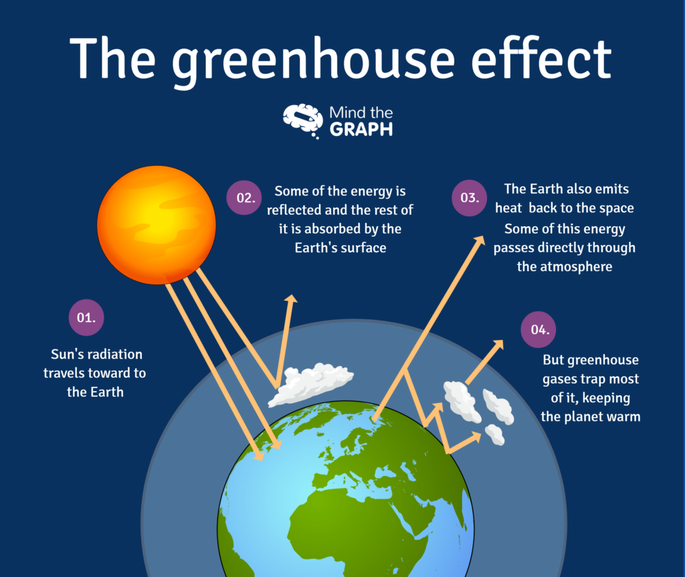
The greenhouse effect is a natural atmospheric process that traps infrared radiation, keeping Earth warm enough for liquid water, ecosystems, and human societies to thrive.
Quick Answer
The greenhouse effect is the warming of Earth’s surface caused by atmospheric gases—primarily water vapor, carbon dioxide, methane and nitrous oxide—absorbing and re‑emitting infrared radiation emitted by the planet. This natural insulation raises the average surface temperature from about -18 °C (0 °F) to roughly 15 °C (59 °F), enabling liquid water and life. Scientists are highly confident that the effect is essential for habitability, while acknowledging that human‑added greenhouse gases amplify the process and create climate risks.
Key Takeaways
- The greenhouse effect is a natural, life‑supporting climate regulator.
- Without it, average global temperatures would be below freezing, precluding most ecosystems.
- Water vapor is the strongest greenhouse gas, but carbon dioxide, methane and nitrous oxide are critical long‑term drivers.
- Human emissions increase atmospheric concentrations, strengthening the effect and altering climate patterns.
- Solutions focus on limiting additional greenhouse gases while preserving the natural, beneficial component.
What Is The Purpose of the Greenhouse Effect: Why Earth Needs It?
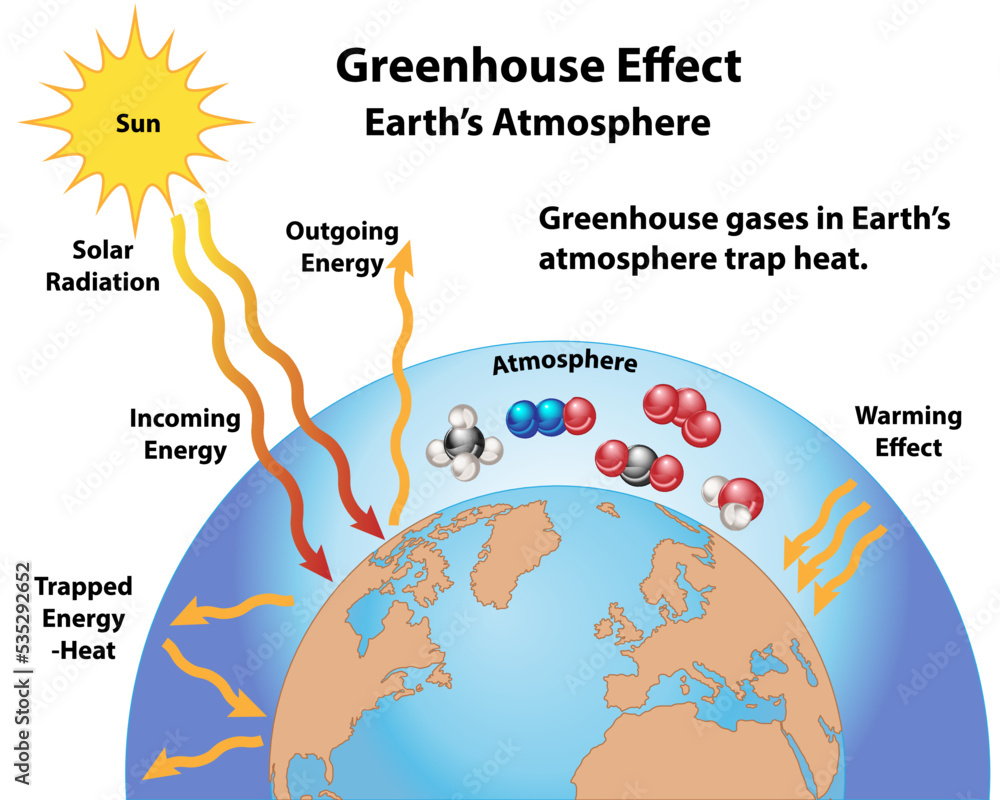
The greenhouse effect is the process by which certain gases in the atmosphere trap heat that would otherwise escape to space. It is a fundamental component of Earth’s energy balance, operating continuously as sunlight reaches the planet, is absorbed by land and oceans, and is re‑radiated as longer‑wavelength infrared radiation. Greenhouse gases (GHGs) absorb part of this infrared radiation and re‑emit it in all directions, including back toward the surface, creating a warming influence.
This natural warming is distinct from the term “global warming,” which usually refers to the additional warming caused by anthropogenic emissions. The purpose of the natural greenhouse effect is to maintain a climate within the narrow range that supports liquid water, stable weather, and diverse ecosystems.
How Does It Work?
1. Solar Energy Inflow
Sunlight, primarily visible and short‑wave radiation, passes through the clear atmosphere and is absorbed by the surface, raising its temperature.
2. Infrared Emission
Warm surfaces emit infrared (long‑wave) radiation upward. In a vacuum, this energy would escape directly to space.
3. Absorption by Greenhouse Gases
Molecules of water vapor, CO₂, CH₄, N₂O and others have vibrational modes that resonate with infrared wavelengths. When infrared photons encounter these gases, the molecules absorb the energy, become excited, and later re‑emit photons in random directions.
4. Re‑radiation Toward the Surface
Approximately half of the re‑emitted radiation is directed back to Earth’s surface, adding to the heat already present. This “back‑radiation” raises surface temperature until a new equilibrium is reached.
5. Feedback Loops
Warmer air holds more water vapor—a powerful GHG—creating a positive feedback that intensifies warming. Other feedbacks involve clouds, ice‑albedo changes, and carbon cycle responses.
What Does the Evidence Show?
Multiple lines of evidence confirm the greenhouse effect’s role in Earth’s climate. Direct laboratory measurements of gas absorption spectra have been known since the 19th century (e.g., John Tyndall’s work). Satellite observations from NASA’s CERES instrument (since 2000) quantify how much infrared radiation is trapped by the atmosphere. Long‑term surface temperature records, compiled by NOAA and the World Meteorological Organization, show a stable average of ~15 °C that would be far colder without GHGs, as demonstrated by climate‑model simulations that remove greenhouse gases (IPCC, 2021 Assessment Report).
Paleoclimate reconstructions indicate that during the Last Glacial Maximum, atmospheric CO₂ was ~180 ppm and global mean temperature was ~4–5 °C lower than today, consistent with reduced greenhouse forcing. Conversely, periods of high CO₂ in Earth’s deep past (e.g., the Cretaceous) corresponded with much warmer climates, supporting the causal link between GHG concentrations and temperature.
Main Causes or Drivers
Natural Drivers
- Solar irradiance variations (tiny on centennial scales).
- Volcanic eruptions releasing aerosols that temporarily cool the climate.
- Natural carbon cycle fluxes (e.g., ocean outgassing, plant respiration).
Human Influences
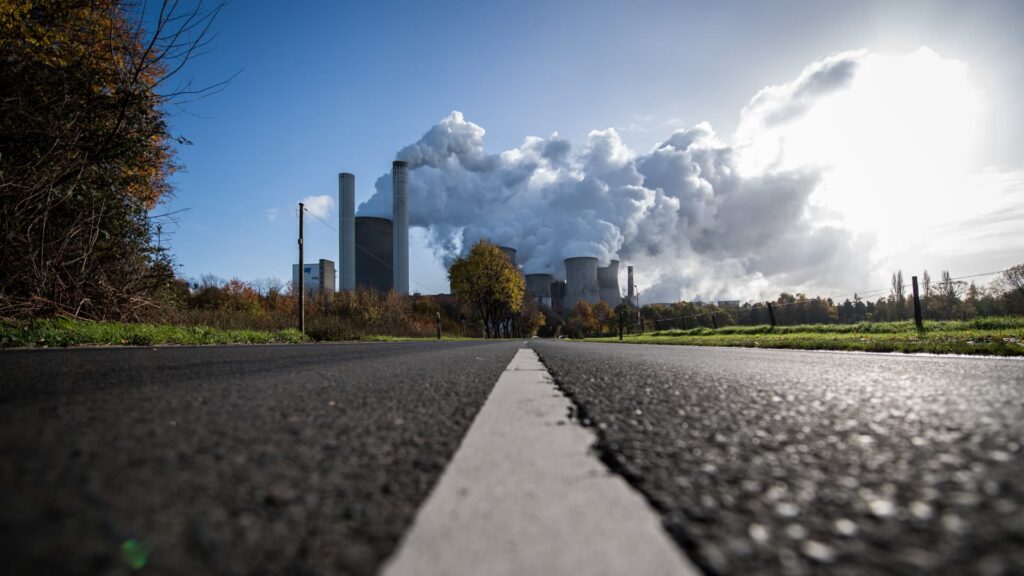
- Burning of fossil fuels releases CO₂ and CH₄.
- Agricultural practices emit CH₄ (livestock) and N₂O (fertilizers).
- Deforestation reduces carbon uptake, increasing atmospheric CO₂.
- Industrial processes (e.g., cement production) add CO₂.
Environmental and Human Impacts
Environmental Impacts
The greenhouse effect sustains the hydrological cycle by keeping oceans warm enough to evaporate, generating precipitation that supports ecosystems worldwide. It also stabilizes temperatures, allowing diverse biomes—from tropical rainforests to temperate grasslands—to persist.
Human Health and Social Impacts
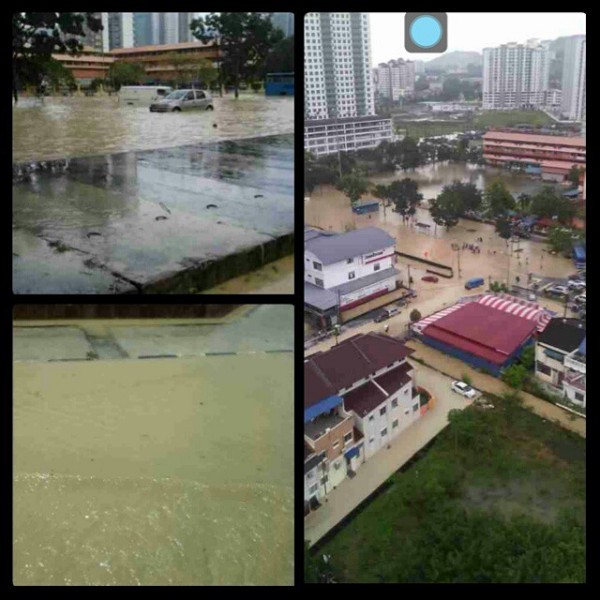
By maintaining a temperate climate, the greenhouse effect underpins agriculture, water availability, and disease‑vector distributions. However, when human‑induced enhancements raise temperatures, heat‑related illnesses increase, and extreme weather (e.g., heatwaves, heavy rains) can strain infrastructure and livelihoods.
Economic and Infrastructure Impacts
Stable climate conditions reduce the cost of heating and cooling, support tourism, and protect coastal infrastructure. Amplified warming can raise energy demand, damage roads and ports, and increase insurance costs.
Regional Differences
Because greenhouse‑gas concentrations are globally mixed, the basic warming effect is worldwide, but regional expressions vary. High‑latitude regions experience amplified warming (Arctic amplification) due to ice‑albedo feedbacks. Tropics see changes in precipitation patterns, affecting agriculture in sub‑Saharan Africa and Southeast Asia. Coastal low‑lying islands face sea‑level rise that is a downstream consequence of global warming, not a regional greenhouse‑gas concentration difference.
What Scientists Know With High Confidence
What Scientists Know With High Confidence
- The atmosphere contains greenhouse gases that absorb infrared radiation, creating a natural warming effect.
- Without this effect, Earth’s average surface temperature would be about -18 °C, making liquid water rare.
- Human activities have increased atmospheric CO₂ by roughly 50 % since pre‑industrial times, intensifying the greenhouse effect.
- Observations from multiple independent platforms (satellite, surface stations, ocean buoys) consistently show a warming trend linked to rising GHG concentrations.
What Remains Uncertain
What Remains Uncertain
Key uncertainties involve the magnitude of climate feedbacks, especially cloud responses and permafrost carbon release. These processes can either amplify or moderate future warming, and current climate models capture them with varying confidence. Uncertainty also exists around regional precipitation changes, which depend on complex interactions among atmospheric circulation, land‑surface processes, and ocean currents.
Common Misconceptions
Common Misconceptions
Misconception: The greenhouse effect is entirely harmful.
Reality: The natural greenhouse effect is essential for life; only the additional warming from human‑generated gases poses risks.
Misconception: All greenhouse gases are pollutants.
Reality: Water vapor, CO₂, CH₄ and N₂O are natural components of the atmosphere; their concentrations have increased due to human activities.
Misconception: If the greenhouse effect were removed, Earth would become a desert.
Reality: Without it, average temperatures would drop below freezing, eliminating most terrestrial ecosystems and most of the ocean’s liquid surface.
Solutions and Limitations
Addressing the amplified greenhouse effect involves mitigation, adaptation and preservation of natural carbon sinks.
- Mitigation: Rapidly reducing CO₂ emissions through renewable energy, energy efficiency, and phasing out coal. Evidence from IPCC scenario analyses shows that limiting warming to 1.5 °C requires net‑zero CO₂ by around 2050, but transition costs, technology availability, and political will vary across regions.
- Carbon‑Removal: Afforestation, soil carbon sequestration and emerging direct‑air‑capture can offset some emissions, yet scaling these methods faces land‑use competition, high costs and uncertain permanence.
- Adaptation: Enhancing water‑storage infrastructure, climate‑resilient crops, and early‑warning systems reduces vulnerability, especially in low‑income regions where capacity is limited.
- Limitations: No single solution can fully counteract the enhanced greenhouse effect. Trade‑offs include potential biodiversity loss from large‑scale bioenergy, water stress from some renewable technologies, and socioeconomic impacts of rapid energy transitions.
What Individuals, Communities, and Governments Can Do
What Individuals Can Do
- Improve home energy efficiency (insulation, LED lighting) to reduce personal CO₂ footprints.
- Choose low‑carbon transportation options (public transit, biking, electric vehicles where feasible).
- Support policies and companies that prioritize renewable energy and sustainable practices.
What Communities and Organizations Can Do
- Develop local renewable projects (solar farms, community wind) to lower collective emissions.
- Implement urban greening and tree‑planting programs that enhance carbon sequestration and mitigate heat islands.
- Adopt climate‑risk assessments in planning for infrastructure, water management and emergency response.
What Governments Can Do
- Set ambitious, enforceable emission‑reduction targets aligned with the Paris Agreement.
- Invest in research, development and deployment of clean energy technologies.
- Protect and restore natural ecosystems (forests, wetlands, peatlands) that act as carbon sinks.
- Provide financing and capacity‑building for climate adaptation in vulnerable regions.
Closing Synthesis
The greenhouse effect is a natural, indispensable climate mechanism that keeps Earth warm enough for liquid water, agriculture and biodiversity. Scientific consensus confirms its fundamental role and the fact that human activities have amplified it, leading to measurable warming and associated risks. While uncertainties remain regarding feedback strength and regional impacts, the core understanding is robust. Effective responses combine emission reductions, protection of natural carbon reservoirs, and targeted adaptation, recognizing that the natural greenhouse effect must be preserved even as we curb its human‑driven intensification.
Frequently Asked Questions
What is the greenhouse effect and why is it important?
The greenhouse effect is the process by which gases like water vapor, carbon dioxide, methane and nitrous oxide trap infrared radiation emitted by Earth, warming the surface. It raises average global temperatures from about -18 °C to roughly 15 °C, making liquid water and most ecosystems possible.
How do greenhouse gases actually trap heat?
Greenhouse gas molecules absorb infrared photons because their molecular bonds vibrate at those wavelengths. After absorption, they re‑emit photons in all directions, sending roughly half back toward the surface, which adds extra heat and raises surface temperature.
What evidence confirms that the greenhouse effect is real?
Evidence includes laboratory spectra of gas absorption, satellite measurements of Earth's energy budget (NASA CERES), long‑term surface temperature records (NOAA, WMO), and climate‑model experiments that show temperatures drop dramatically when greenhouse gases are removed.
Why does human activity exacerbate the greenhouse effect?
Human activities such as burning fossil fuels, deforestation and agriculture add extra carbon dioxide, methane and nitrous oxide to the atmosphere, increasing the concentration of heat‑trapping gases and strengthening the natural greenhouse effect.
What actions can reduce the human‑enhanced greenhouse effect?
Key actions include rapidly cutting CO₂ emissions through renewable energy and efficiency, protecting and restoring forests and wetlands, developing low‑carbon technologies, and implementing climate‑adaptation measures to reduce vulnerability.






Leave a Comment