
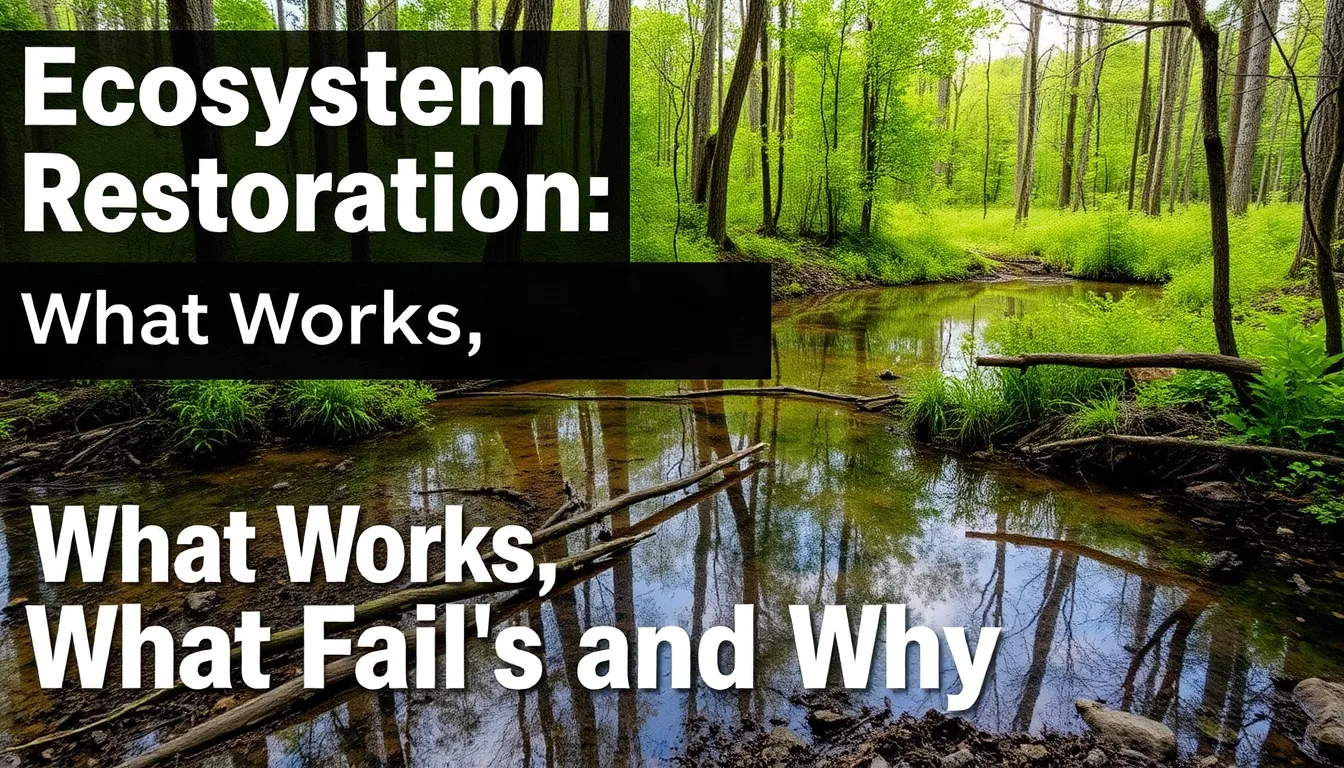
What Is Ecosystem Restoration?
In simple terms, ecosystem restoration aims to re‑establish the ecological integrity of a place that has lost its natural capacity to support life. It differs from rehabilitation, which focuses on short‑term functional gains, and from conservation, which seeks to preserve existing habitats. Restoration projects may involve planting native trees, removing invasive plants, re‑introducing keystone species, or reshaping waterways to revive natural flow regimes.
Why Ecosystem Restoration Matters
Restored ecosystems deliver multiple benefits that align with global biodiversity goals. They can:
- Increase habitat for threatened species, reducing species extinction risk.
- Sequester carbon in soils and forests, helping mitigate climate change.
- Improve water quality and flood regulation in freshwater ecosystems.
- Enhance soil fertility and prevent erosion, supporting sustainable agriculture.
Because these services are interlinked, successful restoration contributes to wildlife conservation, food security, and resilient communities.
Historical Context and the Rise of Restoration Ecology
Modern restoration ecology emerged in the 1980s as scientists recognized that protecting pristine habitats alone could not reverse the loss of ecosystem services. International agreements such as the Convention on Biological Diversity set targets for restoring 15 % of degraded land by 2020, prompting governments and NGOs to fund large‑scale projects. Today, the field blends ecological theory, social science, and engineering to design interventions that are both scientifically sound and socially acceptable.
Key Concepts and Terminology
Restoration vs. Rehabilitation
Restoration seeks to bring back a system’s original composition and processes, while rehabilitation aims for a functional but not necessarily original state. The distinction matters for setting realistic goals and measuring success.
Reference Condition
A reference condition is a baseline ecosystem—often a nearby undisturbed site—used to set targets for species composition, structure, and ecosystem processes.
Ecological Thresholds
Thresholds are points beyond which an ecosystem may shift to an alternative, less desirable state (e.g., from forest to savanna). Recognizing thresholds helps avoid irreversible degradation.
How Ecosystem Restoration Works: A Step‑by‑Step Framework
- Assessment and Goal Setting – Conduct site surveys, map soil and hydrology, and define clear, measurable objectives linked to biodiversity, carbon, or water outcomes.
- Stakeholder Engagement – Involve local communities, indigenous groups, landowners, and policymakers early to align ecological goals with social and economic needs.
- Design of Interventions – Choose appropriate methods such as native planting, assisted migration, invasive species control, or geomorphic reconstruction.
- Implementation – Carry out field actions, monitor progress, and adapt techniques as conditions change.
- Long‑Term Monitoring and Maintenance – Track species recovery, soil health, and ecosystem services for at least a decade to confirm that targets are met.
Each step relies on robust data and adaptive management to increase the likelihood of success.
Types of Ecosystem Restoration Projects
- Forest Restoration – Reforestation, afforestation, and natural regeneration to rebuild canopy cover, carbon stocks, and wildlife corridors. See our guide on forests and deforestation.
- Wetland and Freshwater Restoration – Re‑establishing floodplains, riparian buffers, and wetland hydrology to improve water quality and support amphibians.
- Grassland and Savanna Restoration – Managing grazing pressure, reseeding native grasses, and re‑introducing fire regimes.
- Coastal and Marine Habitat Restoration – Restoring mangroves, seagrass beds, and coral reefs to protect shorelines and fish stocks.
What Works: Proven Success Factors
Research and case studies highlight several recurring factors that increase restoration success:
- Use of Local Genotypes – Planting seeds or seedlings sourced from nearby populations improves survival and genetic compatibility.
- Addressing Underlying Drivers – Tackling root causes such as illegal logging, over‑grazing, or nutrient runoff prevents re‑degradation.
- Adaptive Management – Regular monitoring allows practitioners to modify techniques in response to unexpected outcomes.
- Community Ownership – Projects that provide tangible benefits (e.g., non‑timber forest products) gain local support and long‑term stewardship.
- Integration of Multiple Ecosystem Services – Designing interventions that deliver carbon, water, and biodiversity benefits creates broader stakeholder buy‑in.
Common Reasons Projects Fail
Even well‑intentioned efforts can fall short. The most frequent pitfalls include:
- Inadequate Baseline Data – Without a clear reference condition, goals become vague and progress hard to measure.
- Ignoring Socio‑Economic Context – Projects that restrict traditional land uses without offering alternatives often face resistance.
- Monoculture Plantings – Relying on a single fast‑growing species can lead to pest outbreaks and low biodiversity.
- Short‑Term Funding – Restoration is a multi‑decadal commitment; premature budget cuts leave sites unmanaged.
- Failure to Control Invasives – Invasive species can outcompete native plantings, eroding restoration gains.
Comparison of Successful vs. Unsuccessful Approaches
| Aspect | Successful Projects | Unsuccessful Projects |
|---|---|---|
| Planning | Data‑driven, clear reference conditions | Vague goals, limited site assessment |
| Community Involvement | Participatory, benefit‑sharing | Top‑down decisions, no local incentives |
| Species Choice | Local genotypes, diverse native mix | Exotic or single‑species focus |
| Funding Horizon | Long‑term, phased financing | One‑off grants, no maintenance budget |
| Invasive Management | Proactive monitoring and rapid response | Neglected or reactive control |
Best Practices for Practitioners and Donors
- Conduct a thorough ecological audit before setting targets.
- Engage stakeholders early and incorporate traditional ecological knowledge.
- Prioritize native species and genetic diversity.
- Design interventions that address the underlying causes of degradation, such as over‑extraction or pollution.
- Secure funding for at least 10 years of monitoring and maintenance.
- Implement a clear adaptive‑management plan with measurable indicators.
- Document lessons learned and share results openly to build a knowledge base.
Tools, Resources, and Further Reading
Several open‑source tools help plan and monitor restoration projects:
- RESTORE – A GIS‑based platform for mapping degraded lands and selecting suitable native species.
- OpenLand – A database of soil health indicators and carbon sequestration rates.
- Global Restoration Atlas – Provides baseline data on restoration targets worldwide.
For deeper dives into related topics, explore our articles on soil and land, habitat loss, and invasive species.
Future Trends in Ecosystem Restoration
Emerging approaches are reshaping the field:
- Nature‑Based Solutions (NbS) – Integrating restoration into climate‑adaptation strategies, such as coastal mangrove buffers for storm protection.
- Assisted Migration – Moving species to climatically suitable areas when their historic range becomes inhospitable.
- Digital Monitoring – Using drones, satellite imagery, and AI to track vegetation health in near‑real time.
- Payments for Ecosystem Services (PES) – Financial incentives that reward landowners for maintaining restored habitats.
These trends emphasize cross‑disciplinary collaboration and the need for scalable financing mechanisms.
How You Can Contribute
Individuals, NGOs, and policymakers can all play a role:
- Support reputable restoration NGOs that follow the best‑practice checklist.
- Advocate for policies that protect restored lands from future conversion.
- Volunteer for local planting events or invasive‑species removal days.
- Invest in or donate to funds that guarantee long‑term monitoring.
Conclusion
Ecosystem restoration is a powerful lever for reversing biodiversity loss, mitigating climate change, and securing essential ecosystem services. Successful projects share rigorous planning, community partnership, and adaptive management, while failures often stem from short‑term thinking and neglect of underlying pressures. By understanding what works and what fails, stakeholders can design resilient interventions that protect forests, freshwater ecosystems, and soils for generations to come.
Frequently Asked Questions
What is the difference between ecosystem restoration and rehabilitation?
Restoration aims to bring a degraded ecosystem back to its original composition, structure, and processes, while rehabilitation focuses on achieving short‑term functional gains without necessarily restoring the historic baseline.
How long does it typically take for a restored forest to provide ecosystem services?
Forest services such as carbon sequestration, water regulation, and habitat provision usually become measurable after several years, but full ecological functionality often requires a decade or more of growth and monitoring.
Why do some restoration projects fail despite good intentions?
Common reasons include lack of baseline data, ignoring socio‑economic contexts, reliance on monocultures, short‑term funding, and failure to control invasive species, all of which undermine long‑term success.
Which stakeholders should be involved in planning a restoration project?
Effective planning includes local communities, indigenous groups, landowners, NGOs, scientists, and government agencies to ensure ecological goals align with social and economic needs.
What are some easy ways individuals can support ecosystem restoration?
Individuals can volunteer for planting or invasive‑species removal events, donate to reputable restoration NGOs, advocate for protective policies, and choose products that support sustainable land management.






Leave a Comment