
Renewable electricity generation increasingly relies on two front‑runners: solar photovoltaic (PV) systems and on‑shore or off‑shore wind turbines. Both technologies have matured, but their suitability varies with geography, scale, and policy environment. This article compares solar and wind across the same functional unit—kilowatt‑hours generated over a typical plant lifetime—while keeping system boundaries consistent from raw‑material extraction through de‑commissioning. By examining emissions, land use, reliability, cost, resource needs, and broader environmental impacts, readers can see where each technology shines and where trade‑offs arise.
Quick Verdict
Overall, wind energy tends to deliver lower lifecycle greenhouse‑gas emissions and higher capacity factors in windy regions, making it the more efficient source where strong, consistent winds exist. Solar PV, however, excels in areas with abundant sunshine, offers greater siting flexibility, and typically incurs lower upfront capital costs per installed kilowatt. The decisive trade‑off is between wind’s superior energy density and solar’s broader geographic applicability. No single technology wins everywhere; the optimal choice depends on local wind patterns, solar irradiance, land availability, and grid integration needs.
Comparison Table
| Criterion | Solar PV | Wind | Key Consideration |
|---|---|---|---|
| Lifecycle GHG emissions | Low‑single‑digit to low‑double‑digit g CO2‑eq/kWh | Typically lower than solar, often < 10 g CO2‑eq/kWh | Depends on manufacturing mix and turbine size |
| Land footprint (per MWh) | Higher direct area; can share agricultural land | Lower direct area; requires space for turbines and access roads | Compatibility with other land uses varies |
| Capacity factor | 10–25 % in most climates | 25–45 % on average; higher offshore | Higher factor improves economics but adds intermittency |
| Levelized cost (USD/MWh) | Broad range; often comparable to wind in sunny regions | Generally lower where wind resources are strong | Policy incentives and financing affect both |
| Critical material demand | Silicon, silver, copper; increasing demand for rare‑earth‑free panels | Steel, copper, rare‑earth magnets (for some turbines) | Supply chain concentration can create risk |
Emissions
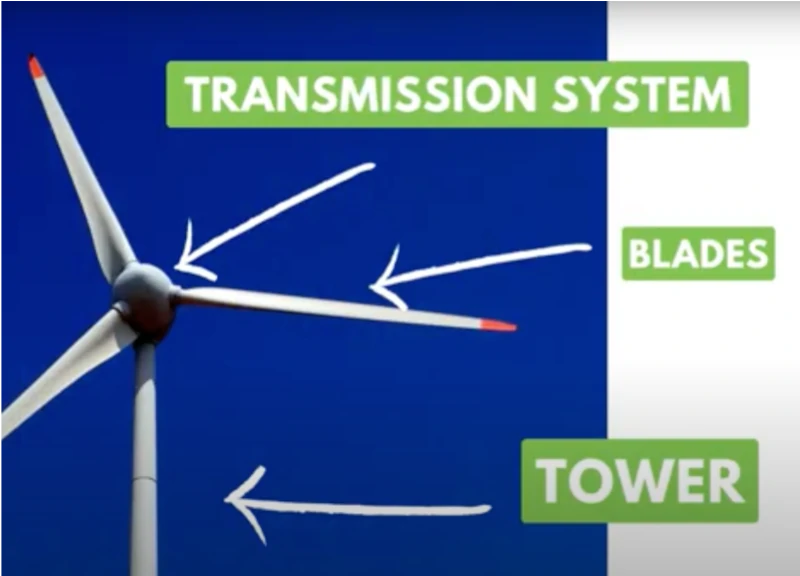
Both technologies emit negligible CO2 during operation, so most emissions arise from manufacturing, construction, and end‑of‑life processes. Solar PV modules require energy‑intensive silicon production and, in older designs, silver‑based contacts; modern thin‑film and bifacial panels reduce material intensity. Wind turbines involve steel‑heavy towers and, for many on‑shore models, rare‑earth magnets in the generator. Lifecycle assessments consistently show wind’s embodied emissions per kilowatt‑hour to be lower than solar’s, largely because wind turbines generate more electricity over their life (higher capacity factor). Recycling of steel and aluminum from turbines can further offset emissions, while PV recycling pathways are still developing.
Land Use
Solar farms occupy more surface area per megawatt of capacity because panels must be spaced to avoid shading. However, the land underneath can remain productive for agriculture or grazing, a practice known as “agrivoltaics.” Wind farms need less ground coverage; turbines are spaced widely, and the land between them often stays in its original use. Both technologies require transmission corridors and access roads, but wind’s visual and noise footprints extend farther from the turbine base, while solar’s impact is confined to the panel array.
Reliability
Reliability for renewable sources is expressed through capacity factor and intermittency. Wind’s higher capacity factor means it produces more steady energy in windy locations, yet wind speed can fluctuate hourly and seasonally. Solar output follows a predictable diurnal pattern but drops sharply on cloudy days and is absent at night. Both technologies benefit from storage or complementary generation; wind may need less storage in regions with strong, consistent breezes, whereas solar often pairs with batteries to smooth daytime peaks.
Cost
Cost analysis separates upfront capital expenditure (CAPEX), operating expenditure (OPEX), and levelized cost of electricity (LCOE). Solar PV installations have seen rapid CAPEX declines due to module price reductions, making them competitive even in modest‑sunlight areas. Wind projects typically have higher CAPEX per megawatt because of large foundations and turbine hardware, but their higher capacity factors lower the LCOE where wind resources are strong. OPEX for both is modest; wind incurs higher maintenance due to moving parts, while solar panels require periodic cleaning, especially in dusty climates. De‑commissioning costs are comparable, with both offering recycling pathways that can reclaim a substantial portion of material value.
Resource Requirements
Solar PV production draws heavily on silicon, copper, and, historically, silver. Advances in metallization aim to cut silver use, and some manufacturers are moving toward copper‑based contacts. Wind turbines demand large quantities of steel, concrete, and, for certain designs, neodymium‑based rare‑earth magnets. The supply chains for these materials are geographically concentrated—silicon and steel are globally sourced, while rare‑earths are largely mined in a few countries—introducing geopolitical risk. Both technologies require substantial land‑based infrastructure, but water use during construction is modest for both, and operational water consumption is negligible.
Environmental Impacts
Beyond carbon, solar farms can cause habitat alteration when built on undeveloped land, but careful siting can mitigate this. Panel end‑of‑life waste includes glass and encapsulant polymers; recycling rates are improving but not yet universal. Wind turbines pose risks to birds and bats, especially in migratory corridors; proper turbine placement and technology (e.g., blade feathering) can reduce collisions. Noise and visual impact are more pronounced for wind, while solar’s reflective glare can affect nearby ecosystems if not managed. Neither technology consumes water during electricity generation, a key advantage over thermal power.
Best Use Cases
Solar PV is ideal for:
- Regions with high solar irradiance and limited wind resources (e.g., deserts, low‑latitude plains).
- Distributed generation on rooftops, parking structures, or community sites where land is scarce.
- Projects requiring rapid deployment and lower upfront financing barriers.
Wind energy is optimal for:
- Coastal, offshore, or elevated inland sites with strong, consistent winds.
- Utility‑scale farms where high capacity factors improve economic returns.
- Areas where land can remain in agricultural use between turbines.
Limitations
Solar PV limitations include lower capacity factors, the need for energy storage or complementary generation to address night‑time gaps, and material intensity that may strain supply chains if deployment scales dramatically. Wind’s constraints involve site‑specific wind resource assessment, visual and noise concerns, higher maintenance costs, and potential wildlife impacts. Both face grid integration challenges when scaling up without sufficient transmission capacity or storage.
Final Decision Framework
- Choose Solar PV when: solar irradiance is high, land can be shared with other uses, rapid deployment is needed, and financing favors lower CAPEX.
- Choose Wind when: wind speeds are consistently strong, the project can secure suitable sites with minimal visual impact, and higher capacity factor is essential for economic viability.
- Consider a combined approach when: a region exhibits both decent sun and wind, allowing each technology to complement the other and smooth overall output.
- Verify locally: conduct site‑specific wind and solar resource studies, assess land‑use compatibility, and evaluate grid connection costs before final selection.
Conclusion
Wind generally outperforms solar in lifecycle emissions and energy density where wind resources are strong, while solar offers greater flexibility and lower upfront costs in sunny, land‑constrained settings. The central trade‑off is between wind’s higher capacity factor and solar’s broader siting options. Each technology’s strongest use case aligns with its natural resource: wind for high‑speed breezes, solar for abundant sunshine. Uncertainties remain around future material availability and policy incentives, underscoring the value of context‑specific analysis.
Frequently Asked Questions
Which renewable source typically has lower lifecycle greenhouse‑gas emissions?
Wind energy generally exhibits lower lifecycle emissions per kilowatt‑hour than solar PV because turbines generate more electricity over their life, reducing the emissions attributed to manufacturing and construction.
Does solar or wind require more land for the same amount of electricity?
Solar PV usually needs a larger physical footprint per megawatt, but the land can often be used simultaneously for agriculture or grazing, whereas wind farms occupy less ground area but need space between turbines.
Which technology is more reliable in terms of consistent power output?
Wind power typically has a higher capacity factor in windy locations, providing more steady output, while solar output follows a predictable day‑night cycle and can be intermittent on cloudy days.
Which option tends to have lower upfront capital costs?
Solar photovoltaic installations have seen steep declines in module prices, making their upfront capital costs per installed kilowatt lower than many wind projects, especially in regions with good solar resources.
When should a combined solar‑wind approach be considered?
A hybrid system is advisable when a region has both decent solar irradiance and reliable wind speeds, allowing each technology to compensate for the other's intermittency and improve overall grid stability.





Leave a Comment