
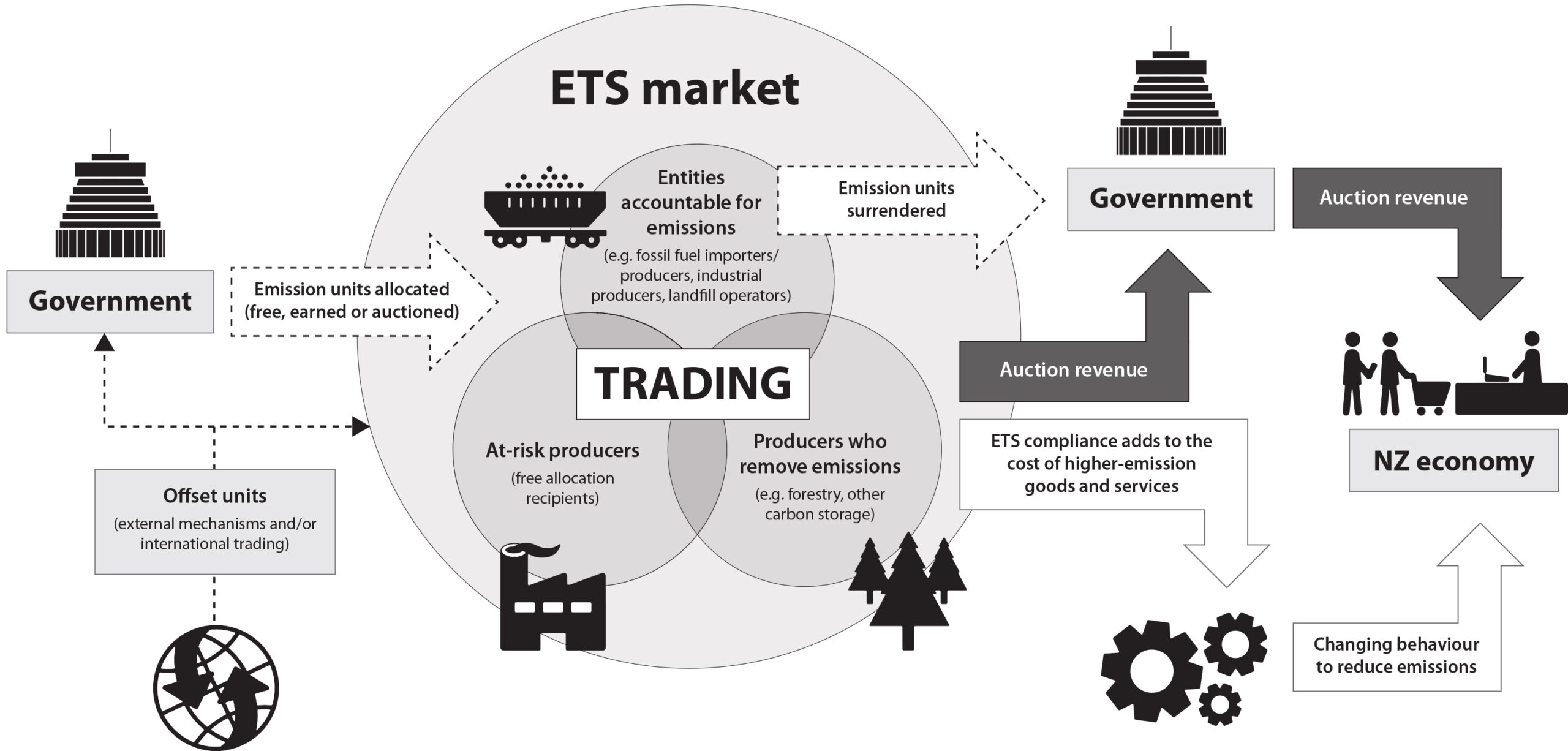
Carbon offset schemes let emitters fund projects that reduce or sequester greenhouse gases, but their real climate benefit depends on project quality, verification, and integration with broader emission‑reduction strategies.
Quick Answer
Carbon offsets are credits—usually one ton of CO₂‑equivalent reduced or removed—purchased by individuals, companies, or governments to compensate for emissions they cannot eliminate immediately. Projects range from renewable‑energy installations to forest restoration. The scientific consensus, reflected in IPCC assessment reports, is that high‑quality offsets can provide modest climate benefits, but they are not a substitute for direct emission cuts. Their impact is uncertain when projects lack rigorous additionality testing, permanence guarantees, or transparent monitoring.
Key Takeaways
- Offsets can complement, but not replace, direct reductions of fossil‑fuel use.
- Project integrity—additionality, permanence, and verification—is the main determinant of climate benefit.
- Well‑designed reforestation, renewable‑energy, and methane‑capture projects can deliver co‑benefits for biodiversity and local livelihoods.
- Uncertain or poorly monitored projects risk “greenwashing” without real emissions cuts.
- Policy frameworks and standards such as the Gold Standard or Verified Carbon Standard improve credibility.
What Is Carbon Offset Schemes Explained: Do They Really Work?
Carbon offset schemes are market‑based mechanisms that allow a buyer to finance emission‑reduction activities elsewhere, earning “credits” that can be counted against their own carbon footprint. A credit typically represents one metric ton of CO₂‑equivalent (CO₂e) avoided, removed, or stored. Offsets differ from carbon taxes (which levy a fee on emissions) and from internal emissions‑reduction programs, because the reductions occur outside the buyer’s direct operations.
Major sub‑types include:
- Renewable‑energy offsets – funding wind, solar, or hydro projects that displace fossil‑fuel generation.
- Forestry and land‑use offsets – planting trees, protecting existing forests, or improving soil carbon storage.
- Methane capture offsets – capturing landfill or agricultural methane that would otherwise enter the atmosphere.
The concept gained policy traction with the 1997 Kyoto Protocol, which introduced “flexible mechanisms” such as the Clean Development Mechanism (CDM). Since then, voluntary markets have expanded, driven by corporate sustainability pledges and consumer demand.
How Does It Work?
- Emission accounting. The buyer measures its greenhouse‑gas emissions using established protocols (e.g., GHG Protocol).
- Project selection. The buyer chooses an offset project that meets a recognized standard (Gold Standard, VCS, etc.).
- Verification. An independent third‑party auditor assesses the project’s baseline emissions, additionality, and monitoring plan.
- Credit issuance. Once verified, a registry issues carbon credits equal to the verified reduction.
- Retirement. The buyer “retires” the credits, meaning they cannot be resold, and records the offset against its inventory.
Physical processes vary by project type. Renewable‑energy offsets avoid emissions by replacing coal‑based electricity; forest offsets sequester carbon through photosynthesis, storing it in biomass and soils; methane capture converts a potent greenhouse gas (≈28 × CO₂ over 100 years) into usable energy.
What Does the Evidence Show?
Multiple lines of evidence suggest that high‑integrity offsets can achieve real, measurable climate benefits:
- Long‑term monitoring. The World Resources Institute reports that certified renewable‑energy projects in Brazil and India have avoided over 150 Mt CO₂e between 2010‑2020.
- Peer‑reviewed assessments. A systematic review in *Environmental Research Letters* (2022) found that 68 % of forest‑based projects meeting stringent additionality criteria delivered net sequestration for at least 20 years.
- IPCC confidence. The IPCC AR6 (2021) states that nature‑based solutions, including afforestation, can contribute up to 10 % of the emissions‑reduction pathway required to limit warming to 1.5 °C, provided permanence and leakage are managed.
Conversely, studies also highlight failures: a 2020 analysis of the CDM found that 30 % of projects over‑claimed reductions due to weak baselines. These mixed findings underscore the importance of robust standards.
Main Causes or Drivers of Offset Market Performance
Economic incentives
Corporate net‑zero pledges and consumer preference for “green” products create demand for offsets. Price signals can stimulate investment in low‑carbon technologies.
Regulatory frameworks
National or regional compliance schemes (e.g., California’s Cap‑and‑Trade) set minimum quality thresholds, influencing market credibility.
Standard‑setting bodies
Organizations such as the Gold Standard develop criteria for additionality, leakage prevention, and community benefits, shaping project design.
Environmental and Human Impacts
Environmental Impacts
Successful projects can:
- Reduce atmospheric CO₂e, contributing to climate mitigation.
- Enhance biodiversity when native species are planted.
- Improve water quality through reduced runoff in reforested watersheds.
Human Health and Social Impacts
Renewable‑energy offsets often displace coal plants, lowering local air pollutants such as PM₂.₅, which the WHO links to reduced respiratory disease. Community‑based forest projects can create jobs and support Indigenous land rights, though benefits depend on inclusive governance.
Regional Differences
Project availability and impact vary worldwide:
- Latin America. Large forest carbon pools make reforestation and avoided deforestation attractive, but governance challenges can raise leakage risk.
- South‑Asia. Rapid industrial growth fuels demand for renewable‑energy offsets; projects in India have supplied over 4 GW of clean capacity since 2015.
- Sub‑Saharan Africa. Limited monitoring infrastructure can hinder verification, yet community‑led agroforestry projects have shown promise for both carbon storage and food security.
What Scientists Know With High Confidence
- Carbon dioxide is the primary long‑lived greenhouse gas driving global warming (IPCC AR6).
- Additionality and permanence are essential for an offset to deliver real climate benefit.
- Nature‑based offsets can provide co‑benefits for biodiversity, water regulation, and livelihoods when designed with local participation.
What Remains Uncertain
Key gaps include the long‑term permanence of forest carbon under future climate stress, the accuracy of baseline emissions for some industrial projects, and the scalability of high‑integrity offsets to meet the billions of tons of CO₂e needed for net‑zero pathways.
Common Misconceptions
Misconception: Buying an offset erases all of my emissions.
Reality: Offsets only compensate for emissions that remain after all feasible direct reductions have been made.
Misconception: All tree‑planting projects are effective carbon sinks.
Reality: Without additionality proof, a plantation that would have been planted anyway adds no net climate benefit.
Misconception: Carbon credits are a free market without regulation.
Reality: Credible offsets must be certified by independent standards; unregulated “grey market” credits often lack verification.
Solutions and Limitations
Offsets are one tool among many. Their limitations include:
- Verification cost. High auditing expenses can make small projects financially unviable.
- Risk of leakage. Protecting one forest area may shift deforestation pressure elsewhere.
- Temporal mismatch. Carbon stored in trees may be released decades later by fire or disease.
Complementary strategies—energy efficiency, decarbonizing electricity, and circular economy practices—address emissions at source and are essential for meeting climate goals.
What Individuals, Communities, and Governments Can Do
What Individuals Can Do
- Calculate your personal carbon footprint using reputable tools (e.g., EPA’s carbon calculator).
- Prioritize direct reductions: switch to renewable electricity, reduce air travel, improve home insulation.
- When purchasing offsets, choose projects certified by Gold Standard or VCS and verify that they report transparent monitoring data.
What Communities and Organizations Can Do
- Develop local forest‑management plans that involve Indigenous knowledge and ensure benefit sharing.
- Partner with NGOs that provide third‑party verification to increase project credibility.
- Integrate offset revenue into broader sustainability programs, such as renewable micro‑grids.
What Governments Can Do
- Establish clear national guidelines for additionality, permanence, and leakage, aligned with international standards.
- Incorporate high‑quality offsets into compliance markets only as a supplemental tool after domestic emissions caps are in place.
- Invest in public monitoring systems (e.g., satellite‑based forest tracking) to verify project outcomes.
Synthesis
Carbon offset schemes can deliver measurable climate mitigation when projects are rigorously verified, additional, and permanent. They are most effective as a complement to, not a substitute for, direct emissions reductions. Ongoing research into forest resilience, improved baseline methodologies, and stronger regulatory oversight will reduce current uncertainties. By combining high‑integrity offsets with aggressive decarbonization policies, societies can move toward the net‑zero pathways highlighted in the IPCC’s assessments.
Frequently Asked Questions
What is a carbon offset and how is it measured?
A carbon offset is a credit representing the reduction or removal of one metric ton of CO₂‑equivalent emissions, typically verified by an independent standard such as the Gold Standard or Verified Carbon Standard.
How do carbon offset projects ensure they are additional?
Projects must demonstrate that the emissions reduction would not have occurred without the offset funding, using baseline scenarios and third‑party verification to prove additionality.
Can buying offsets replace the need for direct emission cuts?
No. Offsets are intended to compensate for emissions that remain after all feasible direct reductions have been made; they do not eliminate the need for decarbonizing energy use, transport, and industry.
What are the main risks associated with forest‑based offsets?
Key risks include leakage (deforestation shifting elsewhere), permanence (carbon loss from fire or disease), and insufficient additionality if the forest would have been protected anyway.
What actions can governments take to improve offset market integrity?
Governments can set national standards for additionality and permanence, require third‑party verification, and invest in public monitoring tools such as satellite forest tracking to ensure project outcomes are real.





Leave a Comment